
On this page
Start here
Quick answer
First identify whether the problem is a hand-cleaned spill that remains, a steam or AquaLift cycle that does not remove heavy soil, or a high-temperature self-clean cycle that will not start or stops. Whirlpool cleaning features are model-specific: the exact manual determines whether the oven has Steam Clean, AquaLift, or high-temperature Self-Clean, what water or cleaner is allowed, and how the door behaves. Work only with the oven off and cool, never mix chemicals, never force a locked door, and stop for smoke, flame, gas odor, burning smell, electrical trouble, or unexpected heating.
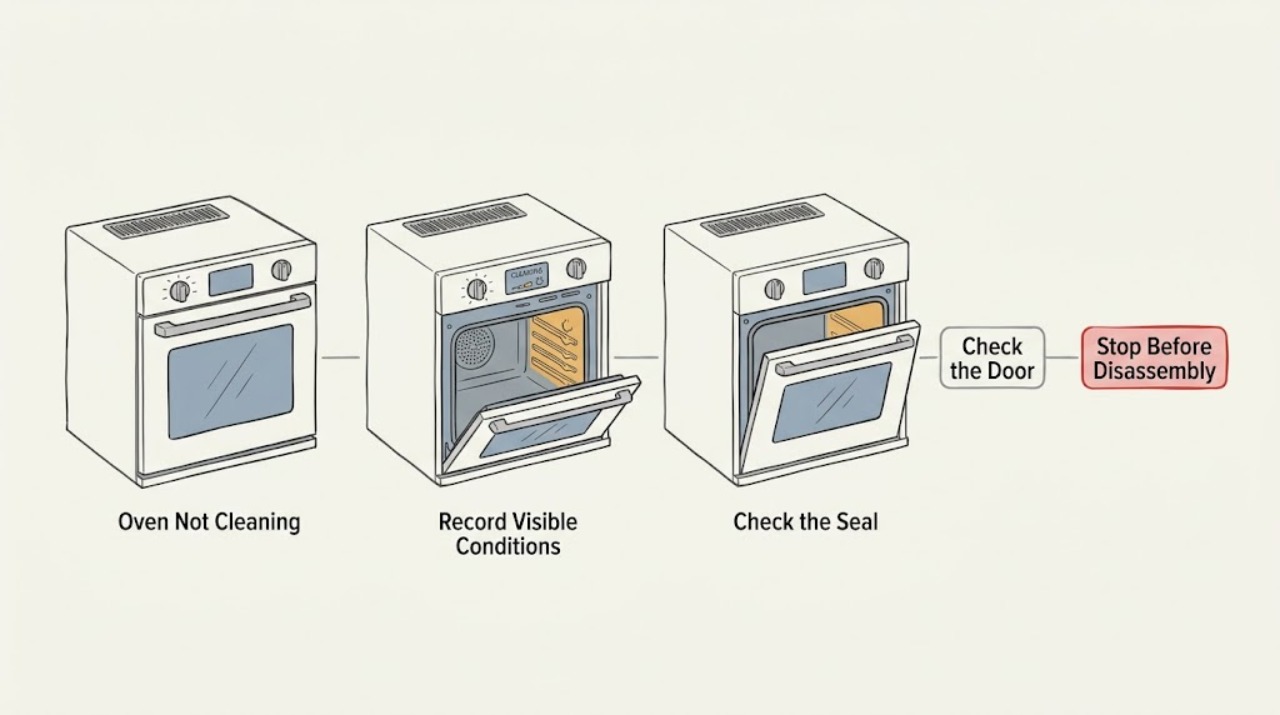
Work through in order
Diagnostic checks
Use only checks that match the exact appliance or system and its official guide.
-
Check 1
Let the oven cool fully, turn all controls off, and record the model number and every cleaning-related control or message; do not open a hot locked door or start a cycle while the cause of smoke or odor is unclear.
Expected result: The oven has Routine Clean, Steam Clean, AquaLift, or high-temperature Self-Clean, or the feature and message are not clear.
Next step: Use the matching owner's manual and continue only after the cavity is cool. If the feature is unavailable or the message persists, request service rather than trying another control sequence.
Why this matters
Why: Whirlpool cleaning procedures and limits differ by feature and model. A hot or locked condition can be a normal cool-down state, while an unknown message needs model-specific interpretation.
-
Check 2
For a hand-cleaning complaint, inspect the cool cavity, door interior, racks, and bottom for the type and location of soil; do not scrape the gasket, heating element, burner, or any surface that the manual says not to disturb.
Expected result: The residue is a recent light spill, baked-on heavy soil, cleaner residue, foil or liner, or a clean surface with the smell or residue returning.
Next step: When fully cool, use only the manual-approved cloth, mild detergent, nonabrasive pad, or other method. Never mix chemicals; if the cavity is clean but the problem returns, arrange service.
Why this matters
Why: Routine spills can be removed with the model-approved method, while heavy or old soil may exceed a moisture-assisted cycle. Foil, unapproved cleaner, or residue in a protected area can damage surfaces or create smoke.
-
Check 3
If the model has Steam Clean or AquaLift, compare the manual's required water, empty-cavity, rack, door, and cool-down conditions before running it; do not add chemicals or open the door while the cycle is hot.
Expected result: The feature is absent, the cavity was not cool or empty, the cycle completes but soil remains, or the cycle will not activate.
Next step: Follow the exact manual only after the oven cools. Remove residual water and loosened soil only when the manual says it is safe; if the feature will not activate or repeated approved cycles do not help, request service.
Why this matters
Why: Steam Clean and AquaLift are feature-specific and are intended for limited soil. A hot-cavity message, an unapproved additive, or a cycle that will not start can explain the result without proving a failed part.
-
Check 4
If the model has high-temperature Self-Clean, verify from the cool front that racks, cookware, foil, and loose soil have been handled as the manual directs, the vent is unobstructed, and the door closes fully; do not move or scrub the door gasket.
Expected result: The door is not fully closed, the cycle refuses to begin, heavy soil or smoke is present, the vent is blocked, or the cycle has completed and the door remains locked while hot.
Next step: Correct only a plainly visible, manual-approved preparation issue while cool. Wait for normal cool-down and never force the door; stop the process and call service for persistent lock, smoke, heat, or cycle faults.
Why this matters
Why: Whirlpool says a fully closed door is required for the lock and cycle, heavy soil can increase smoke, and the door remains locked until cool-down is complete. A damaged gasket or blocked vent needs professional attention.
-
Check 5
Note what the display and cycle do when the problem occurs: no response, a cooling or hot message, a lock indicator, an error, an interrupted cycle, or a completed cycle that leaves soil; do not enter a technician diagnostic mode.
Expected result: The same message returns, the cleaning cycle stops partway, the door stays locked beyond the manual's cool-down behavior, or the cycle completes normally but soil remains.
Next step: Record the message and model, use the manual's normal Cancel or service guidance once, and arrange qualified appliance service for a recurring or abnormal cycle. Do not keep restarting it.
Why this matters
Why: A returning message or abnormal interruption suggests a control, latch, temperature, or heating fault. Normal completion with residue points more toward soil level or feature limits than a failed control.
-
Check 6
Separate ordinary cleaning odor from a safety symptom by noting whether there is smoke, an unusual flame, gas odor, sharp electrical or plastic smell, arcing, excessive heat, or a breaker trip; keep the oven off while documenting it.
Expected result: There is only the expected odor during an approved cycle and it clears, or a danger sign persists or appears suddenly.
Next step: For any danger sign, stop using the oven and seek the appropriate emergency or qualified service help. For an ordinary but ineffective cycle, provide the cleaning feature, soil type, and model to appliance service.
Why this matters
Why: Some odor and smoke can accompany high-temperature cleaning, but persistent or unusual smoke, gas, electrical, or thermal symptoms are not a cleaning-performance problem.
-
Check 7
Prepare a service handoff with model, feature name, cycle selected, cavity temperature or lock state, soil type, products used, water or additive used if applicable, displayed message, and whether smoke, odor, heat, or interruption occurred.
Expected result: The record supports a method or preparation issue, or it shows a recurring cycle, latch, control, heating, vent, gas, or electrical concern.
Next step: Request qualified Whirlpool appliance service for recurring or unexplained cleaning failure, persistent lock, or any component symptom. Keep the oven unused until a safety concern is cleared.
Why this matters
Why: A complete history prevents a technician from repeating an unsafe cycle and helps distinguish cleaning limits from a component fault.
Use your observations
Decision map
Find the observation that best matches what you see, then follow the next safe action.
-
PATH 01Next step
What you see
The oven is cool and the complaint is a visible light or moderate spill after hand cleaning.
Do this next
Use the exact manual's cool-cavity routine method and a nonabrasive approach. Do not use unapproved oven cleaner or scrape protected parts; call service if residue is in an inaccessible area or returns with smoke.
Why this path and its safety boundary
Why it matters: The result may reflect the cleaning method or age of the spill rather than a failed cleaning cycle.
-
PATH 02Next step
What you see
The feature completes but heavy or baked-on soil remains, or the cycle did not activate because the cavity was hot.
Do this next
Follow the exact feature manual, remove residue only after safe cool-down, and request service if the feature will not activate or approved use produces abnormal behavior.
Why this path and its safety boundary
Why it matters: These moisture-assisted features have model-specific preparation and soil limits.
-
PATH 03Next step
What you see
The door is not accepted as closed, a message appears, the cycle stops, or the latch remains abnormal after cool-down.
Do this next
Do not force the door or repeat the cycle. Record the message and arrange qualified appliance service if the manual's normal preparation and cool-down do not resolve it.
Why this path and its safety boundary
Why it matters: A door-latch, control, temperature, or model-preparation condition may be preventing the cycle.
-
PATH 04Next step
What you see
Smoke is heavy or persistent, there is gas odor, abnormal flame, a sharp burning smell, arcing, uncontrolled heating, or a hot or tripping electrical connection.
Do this next
Stop using the oven. For gas odor, do not operate switches, light a flame, or investigate; leave and seek gas-safety help from a safe location. For fire or electrical danger, use emergency or qualified electrical help.
Why this path and its safety boundary
Why it matters: The situation exceeds safe cleaning guidance and continued operation can create fire, gas, or shock risk.
Helpful context
Understand the symptom
The cleaning feature determines the diagnosis
Routine hand cleaning is for ordinary spills and residue. Steam Clean and AquaLift are lower-temperature moisture-assisted features intended for lighter soil and may leave material that needs wiping. High-temperature Self-Clean uses intense heat and has its own rack, vent, door, smoke, and cool-down rules. Do not substitute one method for another because the controls look similar.
Why a cycle may not start
A cleaning cycle can wait for the cavity to cool, require a closed door, depend on a particular control sequence, or be unavailable on that model. A locked door can be normal during or after Self-Clean, but it must never be forced. A displayed message or interruption should be handled through the model manual rather than a guessed reset.
Heavy soil and smoke need a boundary
Whirlpool notes that heavier soil can create more smoke during high-temperature cleaning and that steam or AquaLift methods are limited. Wipe loose soil only when cool and use the documented method. Persistent smoke, a gas odor, electrical smell, arcing, or heating that will not stop is a service or emergency issue, not a reason to run another cycle.
Safety boundary
Stop conditions
- Stop immediately for smoke that does not clear, flame outside normal operation, gas odor, hissing, a sharp electrical or plastic smell, arcing, uncontrolled heating, or a hot or repeatedly tripping electrical connection.
- Do not force a locked door, open it while a steam or cleaning cycle is hot, touch the gasket or heating and gas components, or run another cycle to reproduce an abnormal symptom.
- Do not mix cleaning chemicals, add products to Steam Clean or AquaLift water unless the exact manual explicitly allows it, use an unapproved oven cleaner, or disassemble the oven.
Only after diagnosis
Potential parts
- cleaning-cycle door latch or control
Consider this category only after a qualified diagnosis confirms that the exact model has a latch or control fault rather than a hot-cavity, door-position, mode, or preparation issue.
Confirm the full model number and manufacturer fit information; do not choose a part from a similar display or cycle symptom. - oven gasket or vent component
Consider this category only when a qualified inspection finds a damaged seal or vent-related fault that explains smoke, heat loss, or cleaning-cycle behavior.
Confirm model-specific fit and installation procedure, and do not move or replace a gasket as a workaround for a locked or hot door.
When checks do not resolve it
Need a professional?
Request qualified Whirlpool appliance service when the exact manual-approved cleaning method does not work, a Steam Clean, AquaLift, or Self-Clean cycle will not start or repeatedly stops, a door remains locked abnormally, a message returns, or a gasket, latch, control, heater, burner, or vent fault is suspected. Use emergency gas, fire, electrical, or medical help for the corresponding safety signs.
Common questions
FAQ
Why does my Whirlpool oven still have stains after Steam Clean or AquaLift?
Those features are intended for limited soil and may need wiping or another manual-approved cycle. Heavy or baked-on residue can exceed the feature's cleaning ability; do not add unapproved chemicals.
Why will my Whirlpool Self-Clean cycle not start?
The cavity may not be cool, the door may not be fully closed, the feature may not be available on that model, or a control or latch fault may be present. Use the exact manual and never force the door or repeat an abnormal cycle.
Can I use oven cleaner in a Whirlpool Steam Clean or AquaLift cycle?
No, unless the exact manual explicitly says otherwise. Whirlpool's Steam Clean and AquaLift guidance prohibits unapproved oven cleaners or additives; use the documented method only.
When should I stop using a Whirlpool oven during cleaning?
Stop for heavy or persistent smoke, gas odor, abnormal flame, burning electrical smell, arcing, uncontrolled heating, a hot or tripping connection, or an abnormal locked door. Seek qualified or emergency help as appropriate.
Read the exact guide
Official sources
- Steam Cleaning the OvenWhirlpool Product Help · Whirlpool range models equipped with Steam Clean; exact water and controls vary by model.
- Cleaning and Maintenance of RangeWhirlpool Product Help · Whirlpool range cleaning guidance; available features and exact controls vary by model.
- Using AquaLift Oven Cleaning Cycle - RangeWhirlpool Product Help · Whirlpool range models equipped with AquaLift; exact controls and cavity behavior vary by model.
- Oven Door Locked - Wall OvenWhirlpool Product Help · Whirlpool wall-oven product-help guidance; exact latch and cooling behavior varies by model.
- Why does my oven smell like gas?Whirlpool · Whirlpool residential oven odor guidance; gas and electric model behavior differs.
- Routine Oven Cleaning - RangeWhirlpool Product Help · Whirlpool range routine-cleaning guidance; use the exact manual for special finishes and cycles.
- High Temperature Self-Clean Cycle InformationWhirlpool Product Help · Whirlpool ovens and ranges with high-temperature Self-Clean; exact cycle controls vary by model.
- TROUBLESHOOTINGWhirlpool · The opened owner's manual is model-specific and demonstrates why the exact manual controls the procedure.
Community feedback
Share a repair observation
Share a plain-text repair observation. Accepted observations are published automatically; this page may take a moment to update.