
On this page
Start here
Quick answer
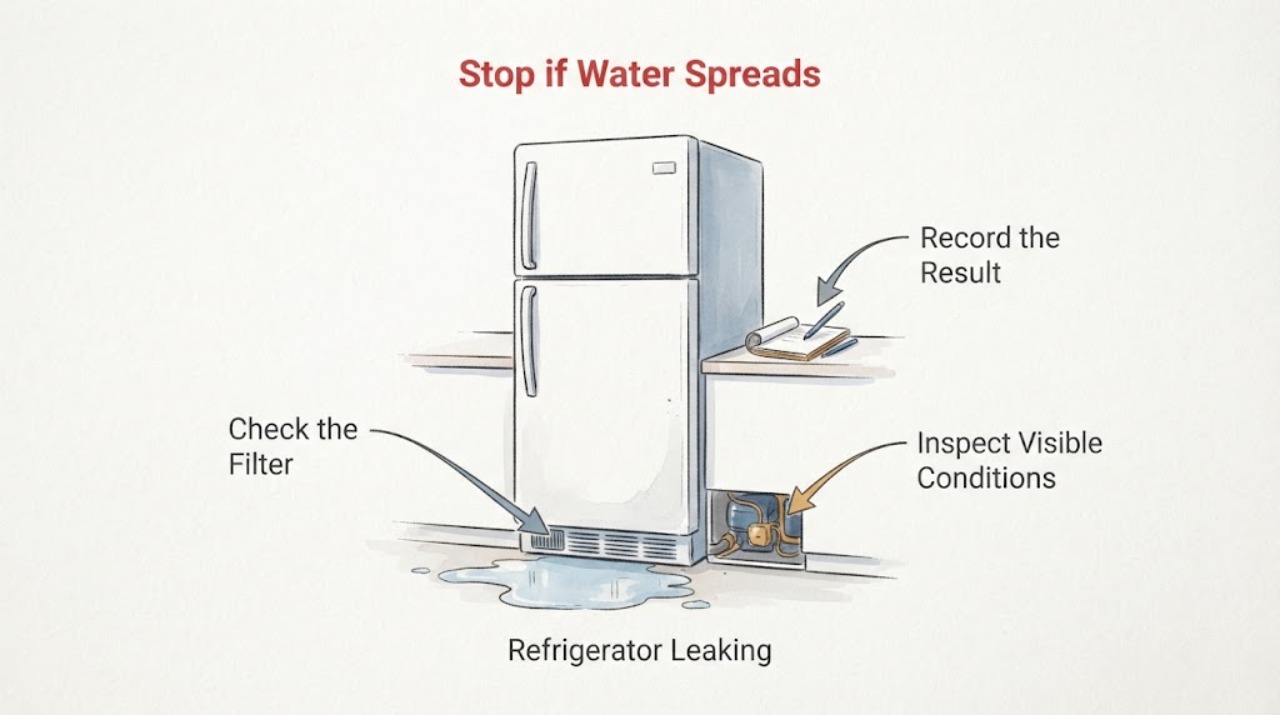
Start by locating where the water first appears: on an interior shelf, at the filter or dispenser, behind the Whirlpool refrigerator, or on the floor. A recently changed filter can leak when it is not fully seated or its seal is damaged; a rear puddle points toward the visible supply line or a connection; water pooling inside or beneath the refrigerator can involve the defrost drain. For a water-line check, unplug the refrigerator and close the household shut-off valve first. If the line, filter housing, vessel, or electrical area is damaged, or water keeps returning after the model-specific checks, stop using the refrigerator and arrange service.
Work through in order
Diagnostic checks
Use only checks that match the exact appliance or system and its official guide.
-
Check 1
Dry the visible water and place a dry towel or shallow tray at the first wet point. Without pulling the refrigerator or touching wiring, note whether water begins inside on a shelf or floor, at the filter or dispenser, behind the cabinet, or at the front floor after a defrost or dispensing event.
Expected result: The first wet point is inside the food compartment, around the filter or dispenser, behind the refrigerator, or on the floor with no visible rear source.
Next step: Continue with the location-specific check below. If water is near electrical components, unplug the refrigerator when safe and leave it off for service rather than repeatedly testing it.
Why this matters
Why: The location narrows the next check: interior water favors condensation or a defrost-drain path; filter or dispenser water favors the filter and dispenser path; rear water favors the household supply line and fittings; a floor puddle without a visible rear leak can involve drainage, leveling, or a hidden source.
-
Check 2
If the wet point is at the filter area or dispenser, turn off dispensing and inspect the filter, filter head, and visible sealing area according to the model manual. Look for a filter that is not fully seated, a missing or damaged O-ring, cracks, cross-threading, or moisture at the filter cap; if the filter was just replaced, remove and reinstall it straight as the model specifies.
Expected result: The filter is loose, damaged, missing its O-ring, cross-threaded, or wet at the housing, or the filter area is dry and the only event is a few drops after dispensing.
Next step: Correct only the accessible filter installation described by the manual and wipe the area dry. If the housing or filter is cracked, the O-ring is missing, or the drip returns, stop using the water system and arrange Whirlpool service or a model-matched part assessment.
Why this matters
Why: Whirlpool identifies poor seating, damaged seals, a cracked housing, and incompatible or overdue filters as possible filter-area leak causes. A few drops immediately after dispensing can be normal, while a steady filter-area drip needs correction or a model-specific replacement.
-
Check 3
If water is behind the refrigerator, unplug the refrigerator for safety and close the household water shut-off valve before inspecting only the accessible supply tubing, valve, and connection points. Look for a crack, kink, loose fitting, or water at the wall-side or refrigerator-side connection; do not remove a rear cover or pull hard on the tubing.
Expected result: The tubing is cracked or kinked, a connection or shut-off valve is wet, the tubing is firmly seated and dry, or the line cannot be safely reached.
Next step: Straighten only an obvious accessible kink and snug an accessible fitting only as the installation instructions permit, then keep the water supply closed until the area is dry. Replace a damaged line or have a technician handle a hidden valve, inaccessible connection, or recurring leak.
Why this matters
Why: Whirlpool says a damaged line, kink, loose connection, or leaking valve can cause a rear leak. A clear, dry visible line makes a hidden connection, internal valve, or another leak path more likely; it does not prove the water system is sound.
-
Check 4
If water is on a shelf or collecting beneath the freezer or inside the cabinet, check whether a warm container is sweating, food containers are cracked, or the water is recurring from the bottom-back of the freezer. Keep food from covering the visible defrost-drain opening, but do not probe, flush, or disassemble a concealed drain path.
Expected result: A warm container or cracked container explains the isolated wet spot, water repeatedly pools inside or beneath the freezer, or no container source is present.
Next step: Remove or replace only the visibly leaking container and monitor once. For recurring pooling, ice around the drain, or water beneath the cabinet, leave the drain path to a qualified technician and arrange service.
Why this matters
Why: Whirlpool notes that condensation on a warm item and cracked containers can wet a shelf. Recurrent interior or beneath-cabinet water is more consistent with a defrost-drain blockage or another internal drainage issue; Whirlpool recommends professional inspection for accumulated water inside or beneath the refrigerator.
-
Check 5
If water reaches the front floor without a clear filter or supply-line source, compare the refrigerator's position with the leveling instructions in the owner manual. Check whether the leak follows a defrost or water event and whether the cabinet is visibly tilted; do not force a leveling foot or move a loaded refrigerator by yourself.
Expected result: The refrigerator is visibly out of level, the leak follows water accumulation at the front of the drain pan, or the refrigerator appears level and the source remains hidden.
Next step: Use the matching manual for any leveling adjustment and keep the appliance stable. If leveling does not stop the leak, the source is concealed, or water reaches electrical parts, stop using the refrigerator and arrange professional service.
Why this matters
Why: Whirlpool explains that an unsuitable refrigerator angle can allow too much water to accumulate at the front of the drain pan and leak onto the floor. A level cabinet with an unexplained or recurring puddle makes a concealed drain pan, drain tube, or water connection problem more likely.
Use your observations
Decision map
Find the observation that best matches what you see, then follow the next safe action.
-
PATH 01Next step
What you see
Water starts at the filter housing or dispenser, especially after a filter change, and the rear supply line is dry.
Do this next
Reinstall the filter only as the model manual shows and inspect its O-ring and housing. Stop using the water system and arrange service if the filter or housing is damaged or the leak returns.
Why this path and its safety boundary
Why it matters: A filter seating or seal problem is more likely than a defrost leak. A few drops immediately after dispensing can be normal, but a steady drip or wet housing needs attention.
-
PATH 02Next step
What you see
Water is behind the refrigerator and a visible supply line, fitting, or shut-off valve is cracked, kinked, or wet.
Do this next
Unplug the refrigerator and close the water shut-off valve, then arrange model-appropriate line or connection service. Do not remove covers or continue dispensing while the leak is active.
Why this path and its safety boundary
Why it matters: The household supply path is more likely than an interior condensation or drain cause. A dry visible section does not rule out a hidden connection.
-
PATH 03Next step
What you see
Water repeatedly pools on a shelf, beneath the freezer, or at the front floor while the filter and visible supply line are dry.
Do this next
Keep food from covering the drain opening, follow the manual for a permitted leveling check, and arrange qualified service for recurring pooling or a concealed drain problem.
Why this path and its safety boundary
Why it matters: A defrost-drain, drain-pan, leveling, or concealed internal water path is more likely. Whirlpool directs professional inspection when water accumulates inside or beneath the refrigerator.
-
PATH 04Next step
What you see
Water reaches wiring or the motor area, the cabinet or filter housing is cracked, the supply line cannot be isolated, or the leak continues after one model-specific check.
Do this next
Disconnect power when safe, close the water supply if the shut-off is accessible, keep the refrigerator unused, and arrange professional Whirlpool service.
Why this path and its safety boundary
Why it matters: The risk and likely repair path exceed a safe visual adjustment. Continued operation can increase water damage or electrical risk.
Helpful context
Understand the symptom
A puddle is a location clue, not a diagnosis. Water on a shelf, a drip at the filter, a trail from the back, and water under the front can come from different systems. Wipe up standing water, keep food away from the spill, and begin with the place where the water first becomes visible rather than replacing a part based only on the size of the puddle.
Use the model number to open the matching Whirlpool owner manual before changing a filter, adjusting leveling, or working around an unfamiliar connection. Whirlpool's manuals page specifically uses the model number to locate installation, use, and troubleshooting information for refrigerators.
Only after diagnosis
Potential parts
- model-specific refrigerator water filter
Consider only when the filter is cracked, damaged, missing its O-ring, or remains the leak source after correct installation.
Use the exact filter specified for the refrigerator model; do not infer fit from appearance. - model-specific refrigerator water supply tubing
Consider only when the accessible supply line is visibly cracked or damaged and the matching installation instructions identify a replacement line.
Confirm the tubing and connections against the model installation instructions or have a technician install it.
When checks do not resolve it
Need a professional?
Arrange qualified Whirlpool refrigerator service when water repeatedly pools inside or beneath the cabinet, the defrost-drain or drain pan is concealed, a filter housing or water line is cracked, a shut-off valve or connection remains wet after isolation, the leak reaches electrical components, or the source remains hidden after the model-specific checks. Provide the model number, first wet location, whether the refrigerator has an ice maker or dispenser, whether the filter was recently changed, and whether closing the water supply stopped the leak.
Common questions
FAQ
Why is my Whirlpool refrigerator leaking only after I changed the water filter?
The filter may not be fully seated, may be cross-threaded, or may have a missing or damaged O-ring. Remove and reinstall it straight as the model manual directs, then stop using the water system if the housing or filter is cracked or the drip returns.
What should I check if water is leaking from behind the refrigerator?
Unplug the refrigerator and close the household water shut-off valve before checking accessible tubing, fittings, and the valve for cracks, kinks, or wet connections. A hidden or recurring leak needs service.
Can a few drops from the Whirlpool dispenser be normal?
Whirlpool says a few drops after releasing the dispenser lever can be normal; hold the glass under the dispenser briefly after releasing it. A steady drip, water at the filter housing, or a recently installed filter that leaks needs the filter and seal checks.
Should I clear the refrigerator defrost drain myself?
Do not probe or disassemble a concealed drain path. Whirlpool recommends professional inspection when water builds up inside or beneath the refrigerator; use the owner manual for the model's permitted maintenance and arrange service for recurring pooling.
Read the exact guide
Official sources
- How to Check the Water Supply LineWhirlpool · Whirlpool refrigerator water supply line installation, kink, damage, valve, and connection checks
- Water Inside of RefrigeratorWhirlpool · Whirlpool refrigerator interior, filter-area, dispenser, and shelf water troubleshooting
- Kitchen And Laundry Appliance Manuals | WhirlpoolWhirlpool · Whirlpool model-number lookup for refrigerator owner manuals and troubleshooting documents
- Leaking at the Bottom - Bottom Freezer RefrigeratorWhirlpool · Whirlpool bottom-freezer refrigerator rear supply line, fittings, valve, and filter leak checks
- What to Do if There is Water on the FloorWhirlpool · Whirlpool refrigerator floor-leak source localization, filter and water-connection checks, and model manual routing
- How to Fix a Refrigerator That Is Leaking Water | WhirlpoolWhirlpool · Whirlpool refrigerator leak causes, defrost drain, water line, leveling, model manual, and service guidance
- What to Do if the Water Filter is Damaged or DrippingWhirlpool · Whirlpool refrigerator water-filter housing, O-ring, seating, damage, and leak checks
Community feedback
Share a repair observation
Share a plain-text repair observation. Accepted observations are published automatically; this page may take a moment to update.