
On this page
Start here
Quick answer
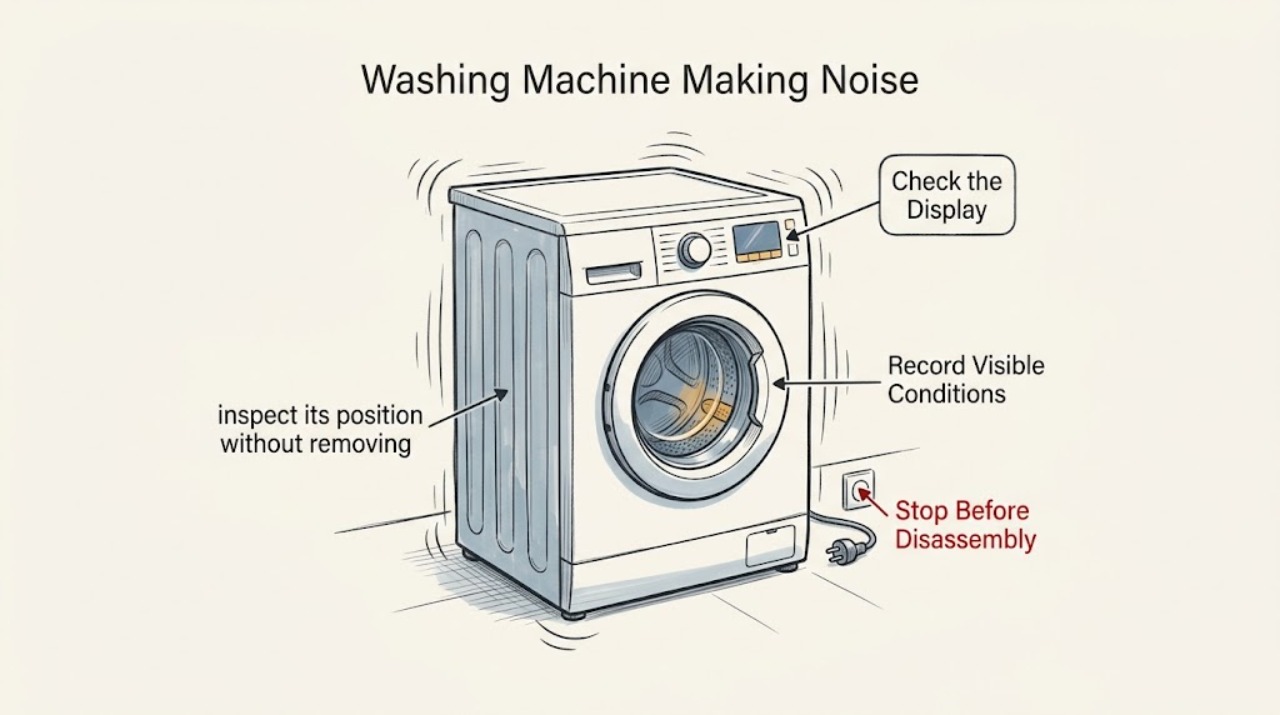
First note whether the noise occurs while filling, washing, draining, or spinning. A brief click, water movement, pump hum, or light zip sound can be normal, but a new grinding, metal scrape, repeated knock, or violent movement is not. For a Zanussi machine, check the load, level, transit bolts if it was recently installed, hose contact, and any visible filter or drum obstruction using the model manual. Stop if there is leaking, severe movement, metal-on-metal noise, smoke, a burning smell, or an electrical symptom. Do not remove covers or reach into the drum, pump, or motor; arrange qualified service when the noise persists.
Work through in order
Diagnostic checks
Use only checks that match the exact appliance or system and its official guide.
-
Check 1
Listen from a safe distance and record the programme stage, approximate location, and sound type: filling, washing, draining, or spinning; hum, click, gurgle, rattle, knock, scrape, or grind.
Expected result: The noise occurs only during water entry or draining, only at high spin, with every programme, or at a particular point such as the door or rear hose area.
Next step: If the sound is harsh, worsening, or paired with a leak, error, smoke, burning smell, or violent movement, stop the programme and keep the machine off. Otherwise continue with the external checks below.
Why this matters
Why: Stage-specific water and pump sounds may be normal, while a new continuous scrape, repeated knock, or noise paired with poor draining or spinning is a fault clue. The location and timing help separate hoses and load balance from drum, pump, motor, or suspension concerns.
-
Check 2
For noise during spin, pause the programme using the normal control, wait for the drum to stop, and redistribute the load. Do not force the door. Avoid a single heavy item or an overloaded drum, and then use the model-approved spin setting only if there is no safety symptom.
Expected result: The load was bunched, very small and heavy, overloaded, or the noise remains with a balanced load.
Next step: Do not repeat the spin test if the machine walks, strikes nearby objects, leaks, or makes metal-on-metal noise. Arrange service for persistent noise or any visible damage.
Why this matters
Why: An uneven load can make the control reduce or delay spin and can create knocking or vibration. If a balanced load still produces the same abnormal sound, load balance is not a sufficient explanation.
-
Check 3
With the machine stopped, inspect its position without removing panels: check that it sits firmly on a hard, level floor, does not rock, has clearance from walls or cupboards, and, if recently installed, confirm the transit-bolt instruction in the exact manual before taking any action.
Expected result: The cabinet rocks, a foot is not firmly planted, the machine touches surrounding furniture, or transit hardware may still be installed.
Next step: Correct only an accessible installation issue allowed by the manual. If the machine remains unstable, the hardware status is unclear, or the noise is present with an empty drum, stop use and request a technician.
Why this matters
Why: Poor leveling, an unstable floor, contact with nearby surfaces, or retained transit hardware can amplify spin vibration. The installation manual controls whether and how any transit hardware is handled for that model.
-
Check 4
Inspect the visible inlet and drain hoses from outside the cabinet. Look for a hose kink, a hose trapped behind the machine, or a hose touching the cabinet, and check whether draining noise is paired with slow drainage. Do not pull the machine out across a wet floor or disconnect a hose with water pressure present.
Expected result: The noise is a gurgle or suction sound during draining, the pump hums loudly, or a hose is bent or vibrating against the cabinet.
Next step: Make only a safe external hose adjustment permitted by the installation instructions. If water remains, the appliance leaks, the filter is not clearly accessible, or the pump noise continues, keep it off and arrange service.
Why this matters
Why: Zanussi links drain-hose position and restriction with gurgling, suction-like sounds, and a noisier pump; hose contact can add rattling. Slow drainage or an error can also indicate a blockage or pump fault that needs model-specific handling.
-
Check 5
After disconnecting power and only if the model manual describes an accessible filter or drum inspection, look for a visible coin, button, strap, or other object without reaching past guards or dismantling the machine. Check for a repeated scrape when the drum is empty only by turning no part that the manual does not permit you to handle.
Expected result: A visible object is present, the filter is blocked, the drum has a rough scrape, or no accessible obstruction is found.
Next step: Remove only an easily accessible object using the manual procedure and stop if water is hot or uncontrolled. For internal noise, a damaged drum, loose suspension, or repeated abnormal sound, leave the machine off and request qualified repair.
Why this matters
Why: Small objects can reach a filter or drum area and create rattling or grinding. A rough scrape with no visible object, persistent bearing-like rumble, or repeated noise with an empty drum points toward an internal component or suspension issue that cannot be identified safely from sound alone.
Use your observations
Decision map
Find the observation that best matches what you see, then follow the next safe action.
-
PATH 01Next step
What you see
The sound is a brief fill, pump, water-movement, door-click, or light fastener sound, and the machine drains and spins normally.
Do this next
Monitor the sound and keep the model manual available. If it becomes louder, continuous, or affects a programme, stop and reassess the other branches.
-
PATH 02Next step
What you see
The noise is mainly during spin and the machine rocks, strikes nearby surfaces, or the load is bunched.
Do this next
Stop the programme, redistribute the load, and check level, floor stability, clearance, hoses, and transit-bolt status according to the exact manual. Persistent vibration needs service.
-
PATH 03Next step
What you see
The noise is gurgling, suction-like, or a loud pump hum during draining, especially with slow drainage or an error.
Do this next
Check only external hose routing and the manual-described accessible filter procedure. If water remains, the machine leaks, or the noise persists, stop use and arrange service.
-
PATH 04Next step
What you see
The machine makes a new grinding, metal scrape, repeated hard knock, or rough rumble with an empty or balanced drum.
Do this next
Keep the appliance off and arrange qualified inspection. A motor, pump, drum support, bearing, or suspension issue requires model-specific diagnosis; do not open the cabinet.
-
PATH 05Next step
What you see
There is uncontrolled movement, a leak, exposed or wet electrical equipment, smoke, a burning smell, a damaged door or drum, or repeated electrical interruption.
Do this next
Stop immediately. If safe and dry, isolate the appliance from power without touching damaged equipment; do not stand in water, restart it, or remove panels. Obtain urgent qualified appliance or electrical help.
Helpful context
Understand the symptom
Match the sound to the programme stage
The same machine can sound different while filling, washing, draining, balancing, and spinning. Zanussi lists water movement, pump and motor operation, door clicks, and light fastener rattling among sounds that can occur during normal use. The useful distinction is a brief expected sound versus a new or sustained mechanical sound, especially if washing, draining, or spinning performance has changed.
Why the machine can shake or knock
An unbalanced load, an unstable floor, a machine that rocks on its feet, a hose touching the cabinet, or transit hardware left after installation can turn normal spin forces into loud vibration. A single bulky item can be enough to unbalance a drum. If these external causes are ruled out and the sound remains with an empty drum, the next step is a technician inspection rather than a cabinet repair.
Protect the machine while you diagnose
Keep hands away from moving parts and do not run repeated cycles to reproduce a harsh sound. If a filter is visibly accessible on your model, follow the exact manual procedure and disconnect power before any permitted cleaning. Water, a hot surface, exposed wiring, or a damaged door or drum changes the task from routine observation to service.
Safety boundary
Stop conditions
- Stop immediately for smoke, a burning smell, sparks, exposed wiring, a hot or damaged plug, repeated electrical interruption, or water near electrical equipment.
- Stop for violent shaking, walking, hard impacts, a damaged door or drum, a leak, or a metal-on-metal scrape.
- Do not reach into a moving drum, pump, filter housing, or motor area; disconnect power before any manual-approved cleaning and wait for hot water to cool.
- Do not remove cabinet panels, force the door, pull hoses under pressure, or continue running the machine to reproduce a harsh noise.
Only after diagnosis
Potential parts
- drum suspension component
Consider this only if a qualified technician confirms a suspension or damping fault after checking load balance, leveling, floor stability, and installation.
Confirm the full model identifier and the manufacturer service documentation before selecting any part. - drum bearing or support assembly
Consider this only when a technician confirms a persistent rough rumble, grinding, or drum-support fault that is not caused by a load, hose, or visible obstruction.
Fit and repair method vary by model; do not infer a part or attempt cabinet repair from the noise alone.
When checks do not resolve it
Need a professional?
Arrange qualified Zanussi or appliance service when abnormal noise persists after safe load, installation, and hose checks; when it occurs with an empty drum; or when draining, spinning, or error behavior is affected.
Common questions
FAQ
Why does my Zanussi washing machine make noise during spin?
An unbalanced load, unstable floor, poor leveling, retained transit bolts after installation, loose hoses, or a visible object can cause spin noise. If a balanced, stable machine still makes a new grinding or hard knocking sound, keep it off and request service.
Is a humming sound during draining normal?
A pump hum can be normal while water is being removed. Gurgling or suction-like sound can relate to drain-hose routing. Slow drainage, an error, a leak, or persistent excessive noise means the machine should remain off pending a model-specific check.
When should I stop using the washing machine for noise?
Stop for violent movement, hard impacts, metal scraping, leaking, smoke, a burning smell, sparks, wet electrical equipment, a damaged door or drum, or repeated electrical interruption. Do not open the cabinet or keep restarting it to reproduce the sound.
Read the exact guide
Official sources
- How to stop your washing machine vibrating and reduce noise / unbalanced load / reduce vibration during rinseZanussi · Zanussi washing machines; installation stability, clearance, unusual loads, and service escalation.
- Washing Machine Noisy or Shaking During Spin Cycle?Zanussi · Zanussi front-load and top-load washing machines; load, transit-bolt, hose, filter, drum, and normal-sound checks.
- Zanussi Washing Machine Does Not Spin – Causes and SolutionsZanussi · Zanussi washing machines and washer dryers; load, level, drain filter, normal-use, and persistent-fault checks.
- Zanussi Washing Machine Making Unusual Noises During Draining or Spinning – Causes and SolutionsZanussi · Zanussi washing machines and washer dryers; drain-hose position, hose contact, pump hum, normal sounds, and service boundary.
Community feedback
Share a repair observation
Share a plain-text repair observation. Accepted observations are published automatically; this page may take a moment to update.