
Thermador appliance guidance
Thermador Cooktop Repair Guides
Troubleshooting and repair guidance for published Thermador Cooktop problems, symptoms, and maintenance questions.
Published Thermador Cooktop guides
Choose the guide whose symptom or condition most closely matches what you are seeing.
-
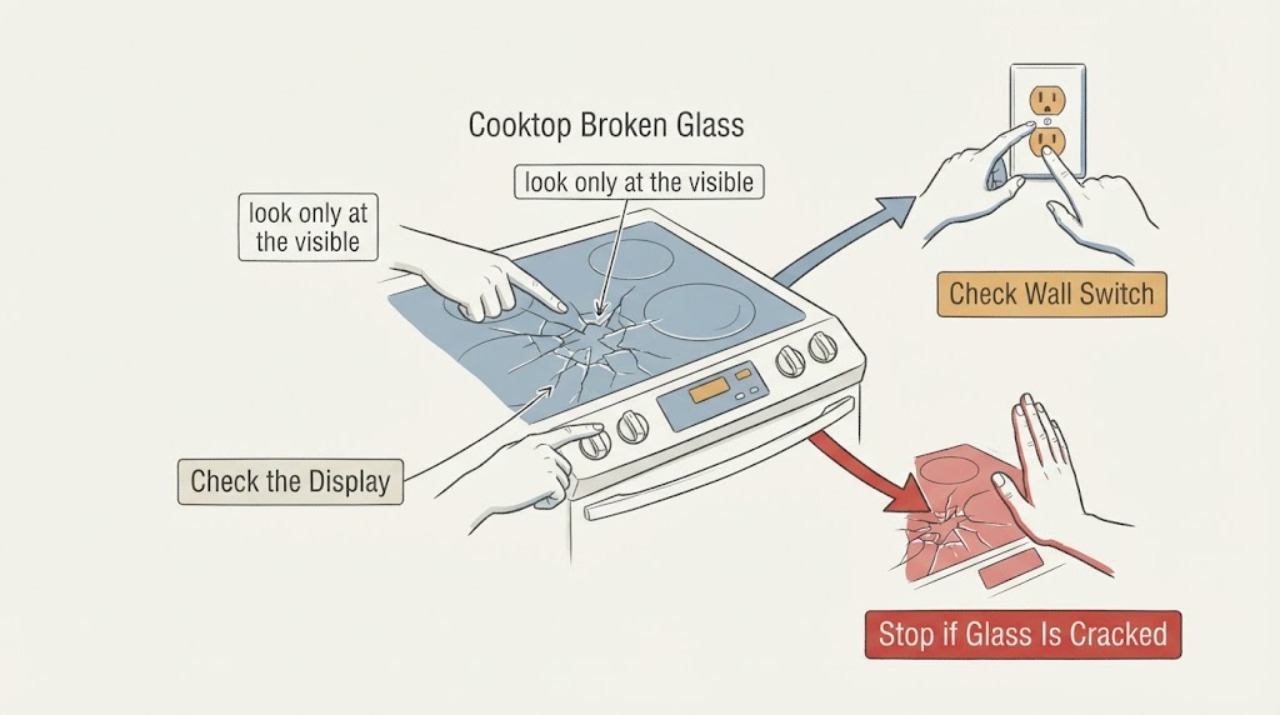
Thermador Cooktop Broken Glass: Stop Using It and Arrange Safe Service
Do not use a Thermador cooktop with fractured or cracked glass. Thermador says a cracked electric cooktop is no longer usable and that the fuse should be switched off to reduce electric-shock risk.
-
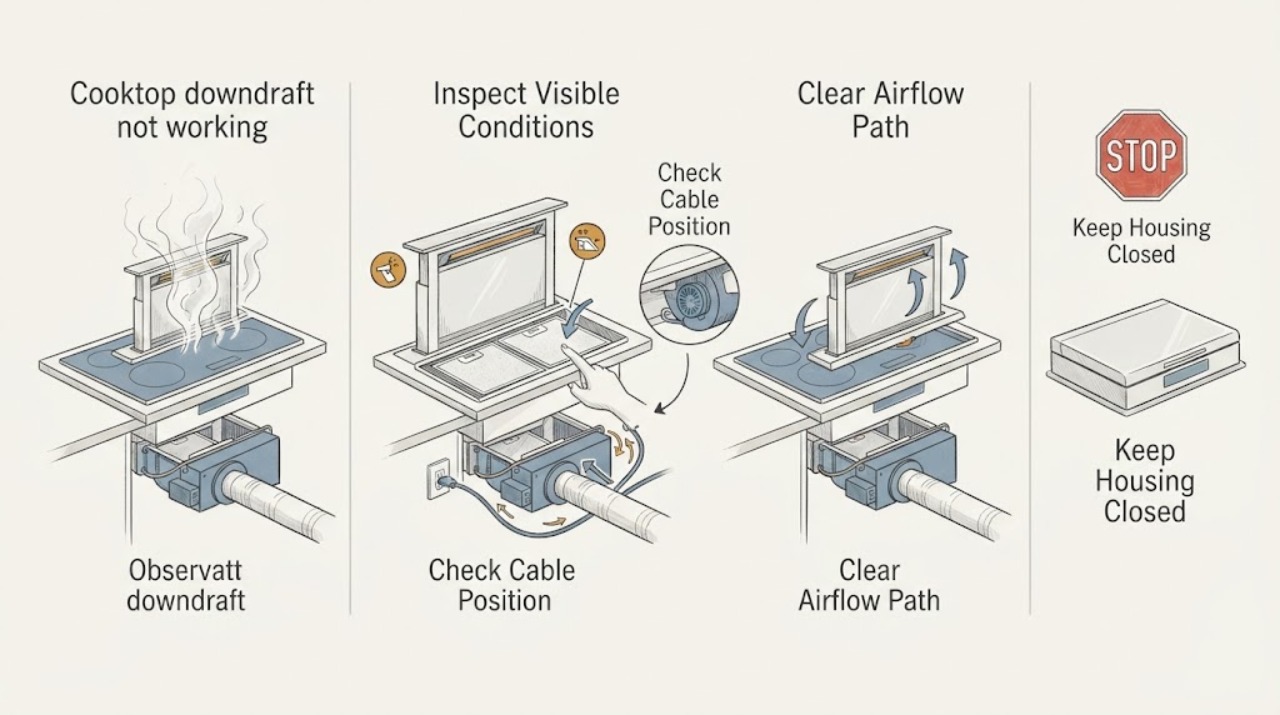
Do I Need to Replace My Entire Thermador Cooktop if the Downdraft Is Broken?
No. A downdraft that does not rise, run, or move air does not by itself mean the entire Thermador cooktop must be replaced.
-
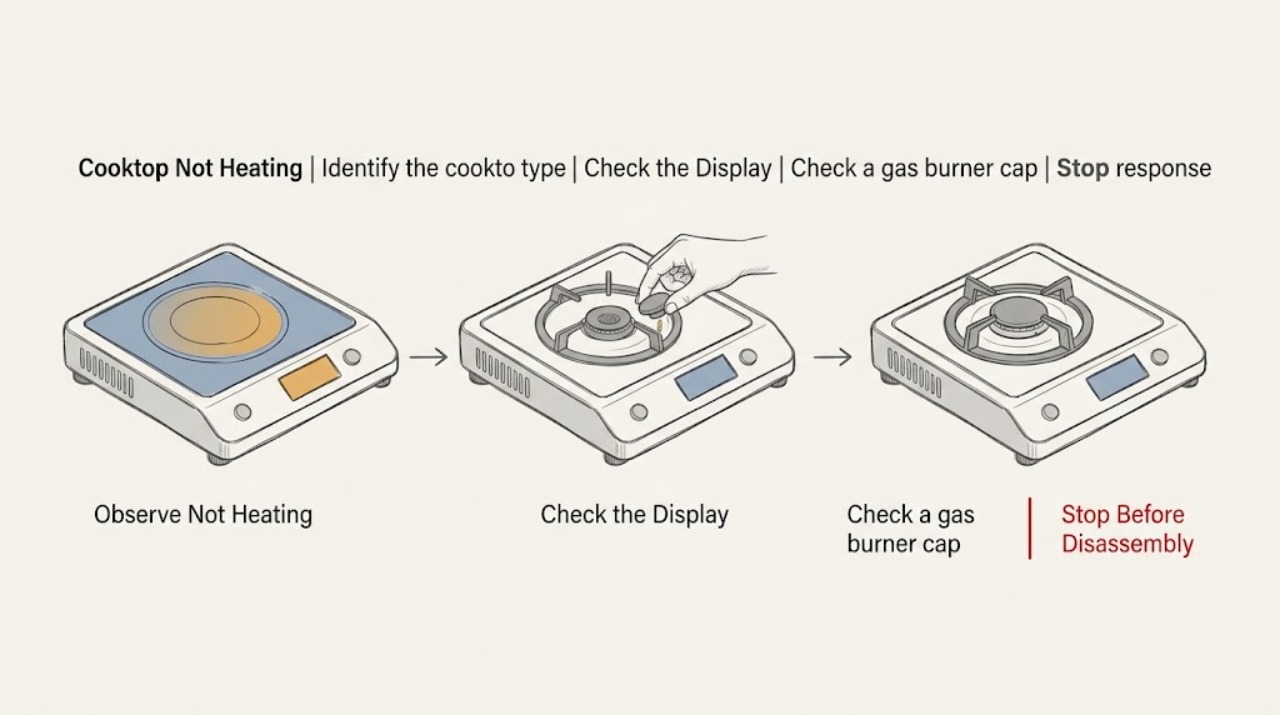
Thermador Cooktop Not Heating
First identify whether the Thermador cooktop is gas, electric, or induction, because not heating has a different safe first check in each case. Confirm that the controls and household supply are on, then use only the matching low-risk check: a gas burner needs a correctly seated, dry cap and clear visible ports; an electric element needs the selected control and a stable supply; an induction zone needs a centered, induction-compatible pan of adequate size.
-
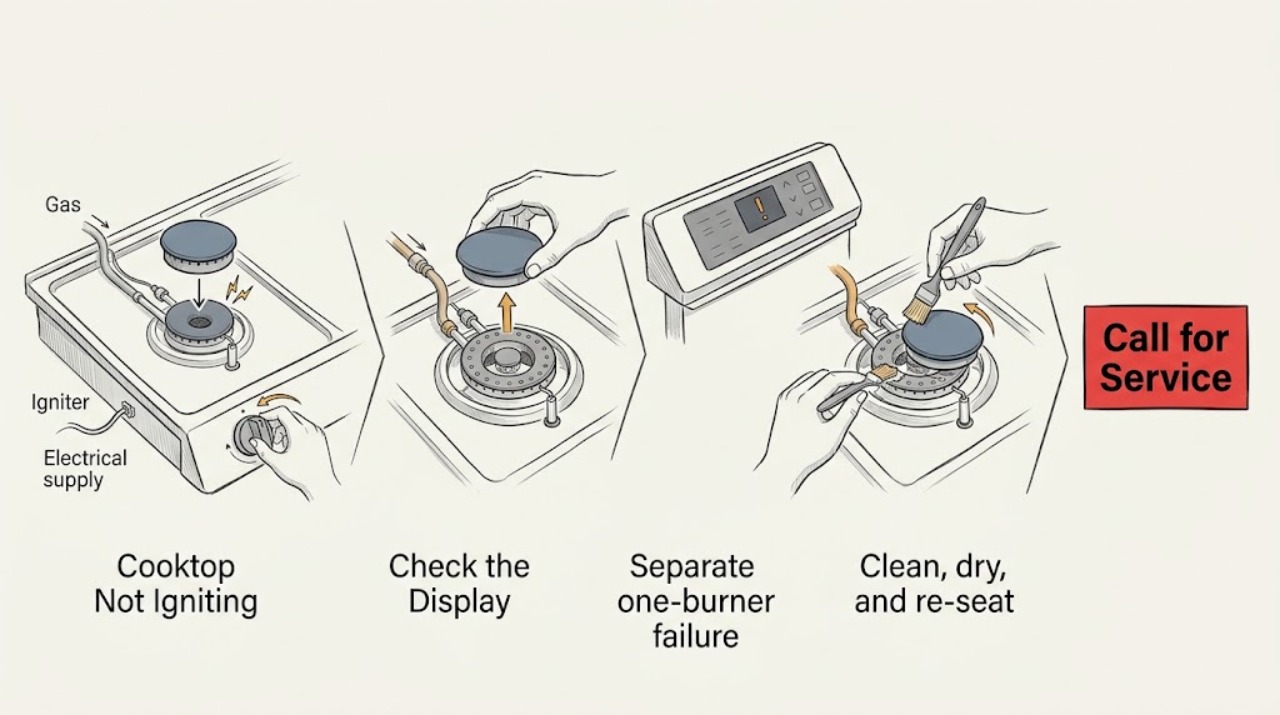
Thermador Cooktop Not Igniting: Dry and Re-seat the Burner Safely
For a Thermador gas cooktop that will not ignite, first stop if you smell unburned gas, hear gas escaping, see a flare-up or delayed ignition, or the igniters continue clicking after every control is OFF. Turn the controls off, leave the area without operating switches or appliances, and contact the gas supplier or emergency help from outside.
-
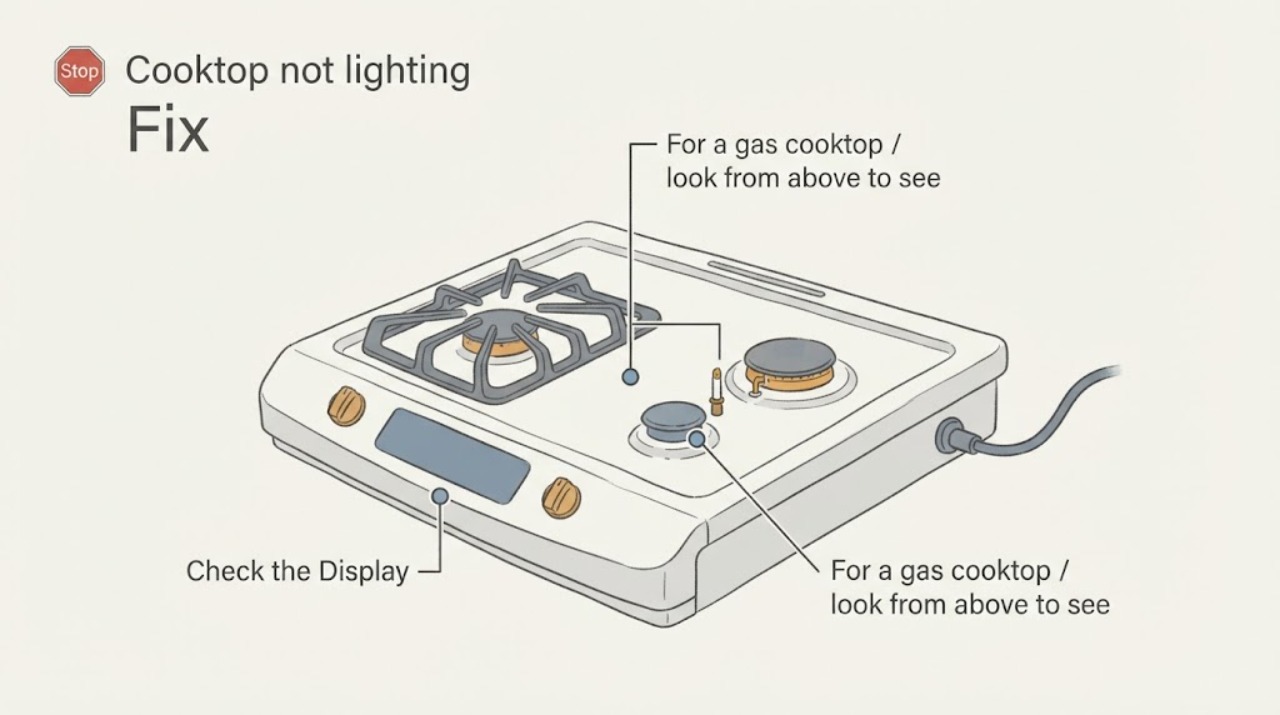
Thermador Cooktop not lighting | Fix Guide
The word lighting applies to a Thermador gas cooktop, so first confirm that the appliance has gas burners rather than electric or induction zones. With the controls off and no gas odor, check that the gas supply and electrical supply are available, then look from above for a displaced burner cap or a damp or dirty igniter after the surface has cooled.
-
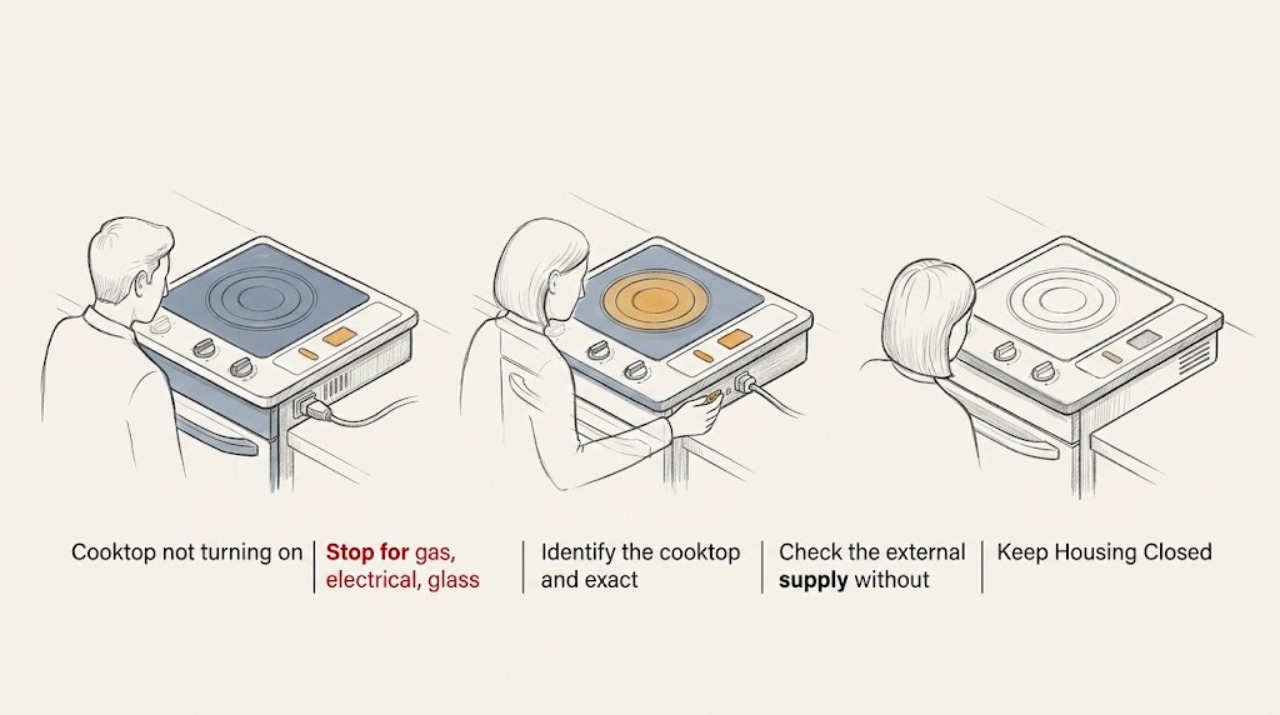
Thermador cooktop not turning on: identify the type, then check power safely
Do not assume a Thermador cooktop is gas, electric, or induction from the symptom alone. First stop for gas odor, persistent sparking, a cracked glass surface, water on or inside the controls, smoke, an arc, a hot or damaged cord, or a repeated breaker trip; leave or switch off power only when it can be done safely and arrange qualified service.
-
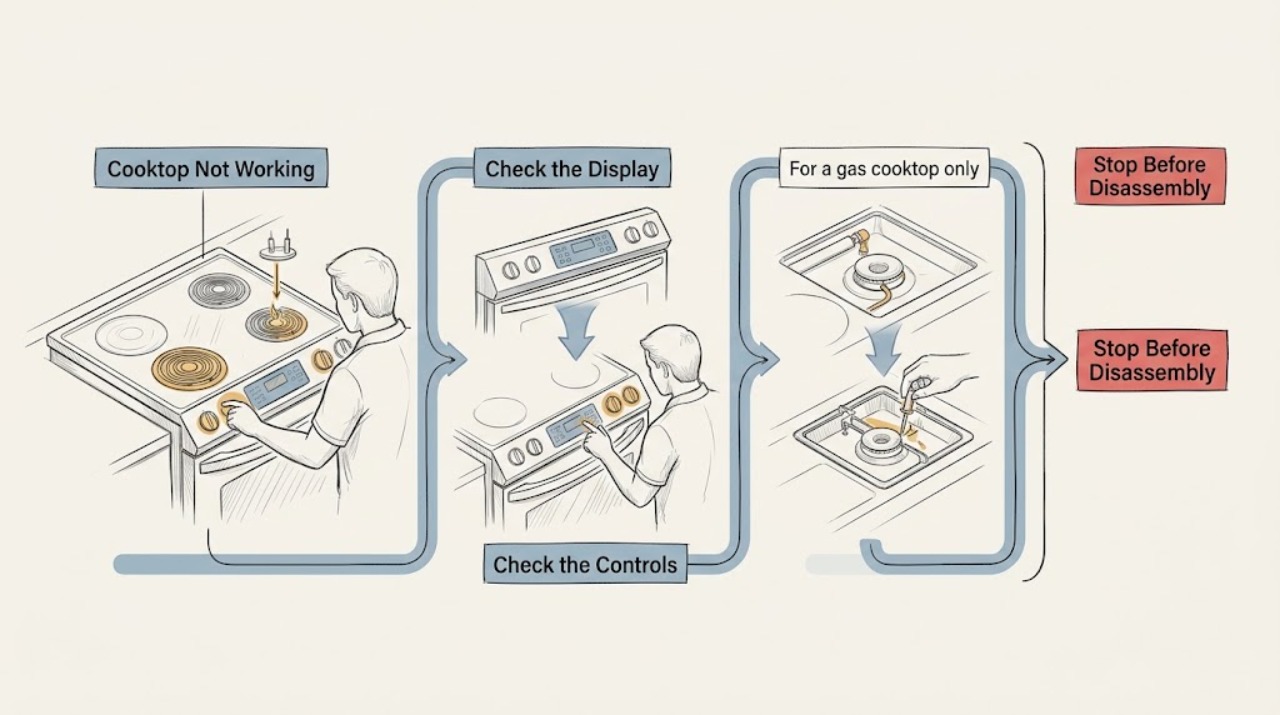
Thermador Cooktop Not Working: Split the Diagnosis by Power, Heat, and Fuel
A Thermador cooktop that is not working must first be identified as gas, electric, induction, or an unknown configuration. Check only external controls and power: confirm the main switch and accessible breaker or fuse, note whether the display is dark or shows an error, and make sure the cooking zone or gas control is actually selected.
-
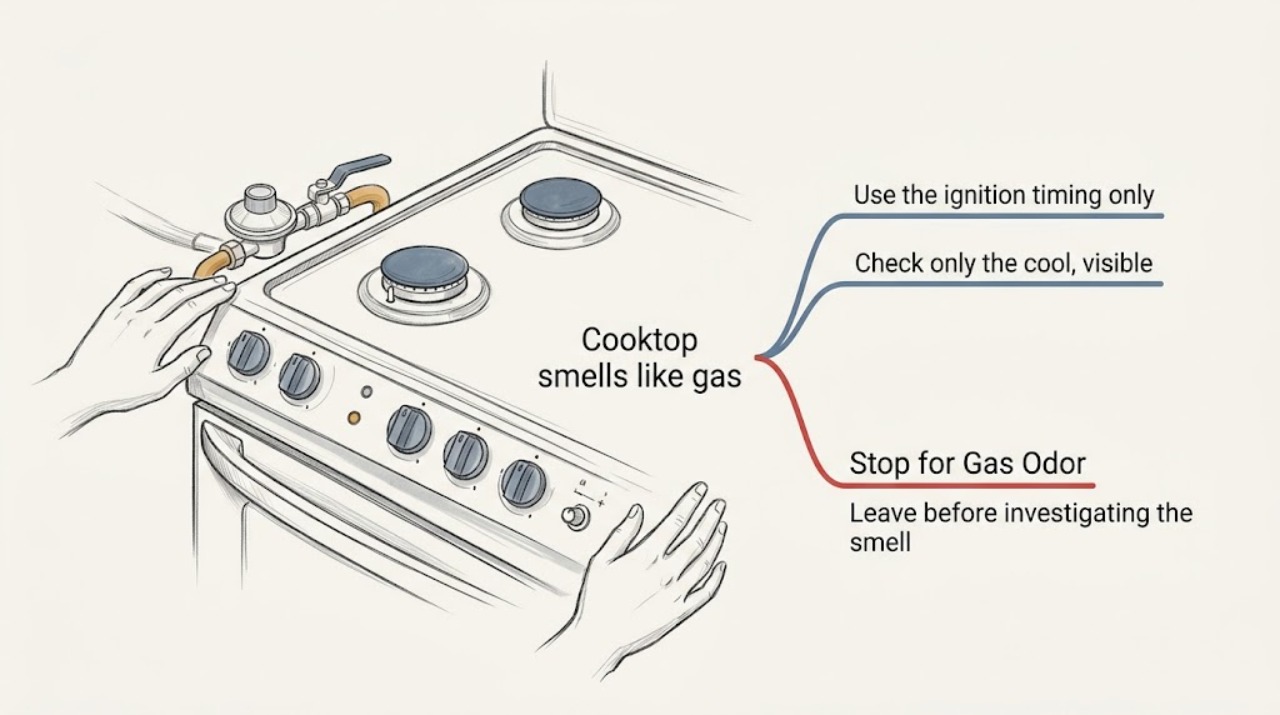
Thermador cooktop smells like gas: stop using it and get the leak checked
Treat a Thermador cooktop gas smell as a safety issue, not a normal cleaning problem. If the odor is strong, persistent, returns after ignition, or is accompanied by hissing, do not relight a burner, smoke, use a flame, operate switches, unplug anything, or use a phone inside.
-
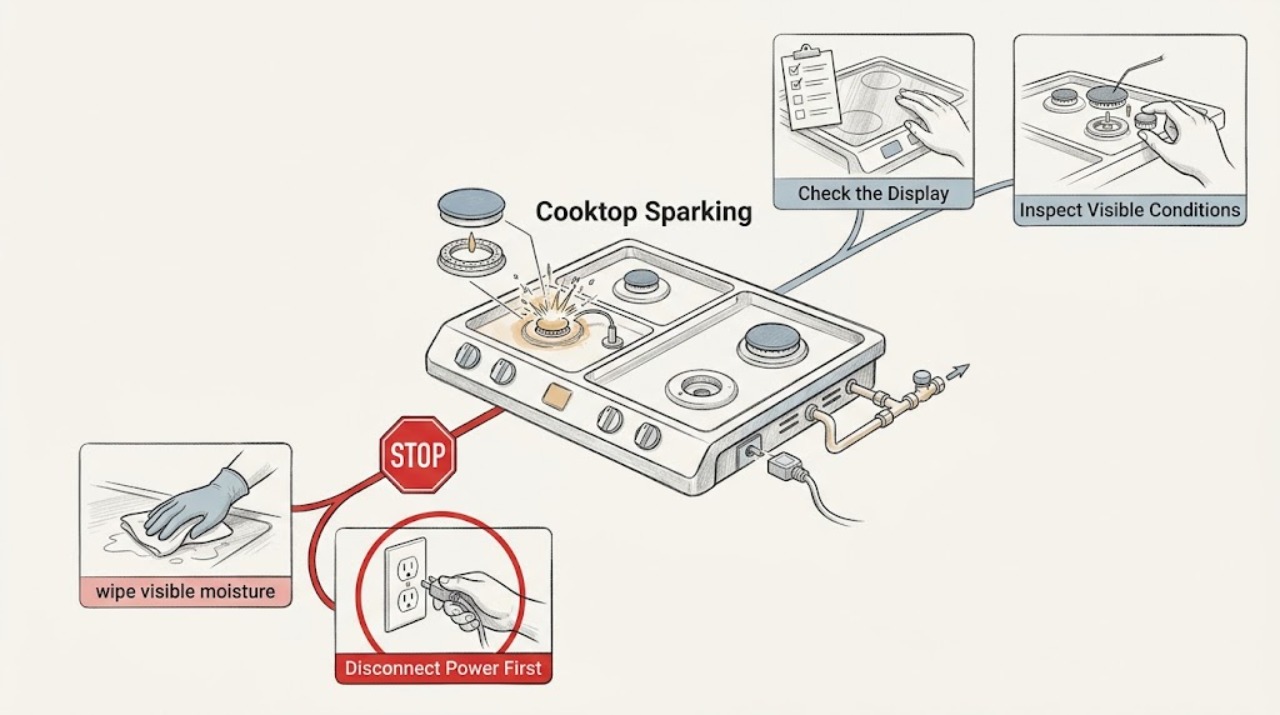
Thermador Cooktop Sparking: Separate Normal Ignition from a Fault Safely
A Thermador gas cooktop normally sparks while a burner knob is being turned to ignite a burner, and some ExtraLow models click as the flame cycles. Sparking that continues after every knob is OFF, occurs without a knob being pressed, or appears after a spill or wet cleaning surface may come from a damp or dirty igniter, a misplaced burner cap, clogged or wet burner ports, a draft, a stuck knob, or a fault that needs service.