
Wolf appliance guidance
Wolf Cooktop Repair Guides
Troubleshooting and repair guidance for published Wolf Cooktop problems, symptoms, and maintenance questions.
Published Wolf Cooktop guides
Choose the guide whose symptom or condition most closely matches what you are seeing.
-
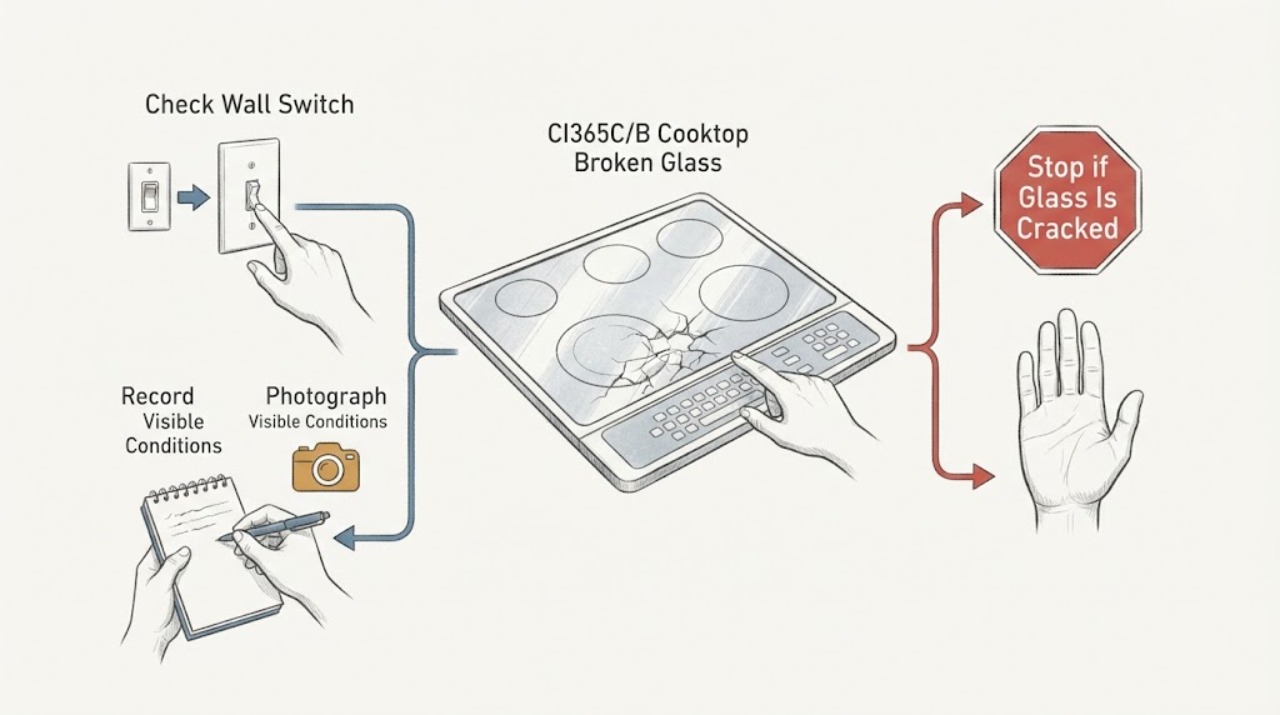
Wolf CI365C/B Cooktop Broken Glass: Choosing the Right Replacement
For a Wolf CI365C/B cooktop with broken glass, do not choose a replacement by appearance, dimensions, or a listing that names glass alone. Wolf's cracked-glass guidance says the top cannot be patched and that a replacement glass top comes with the keyboard attached; the glass alone is not replaceable.
-
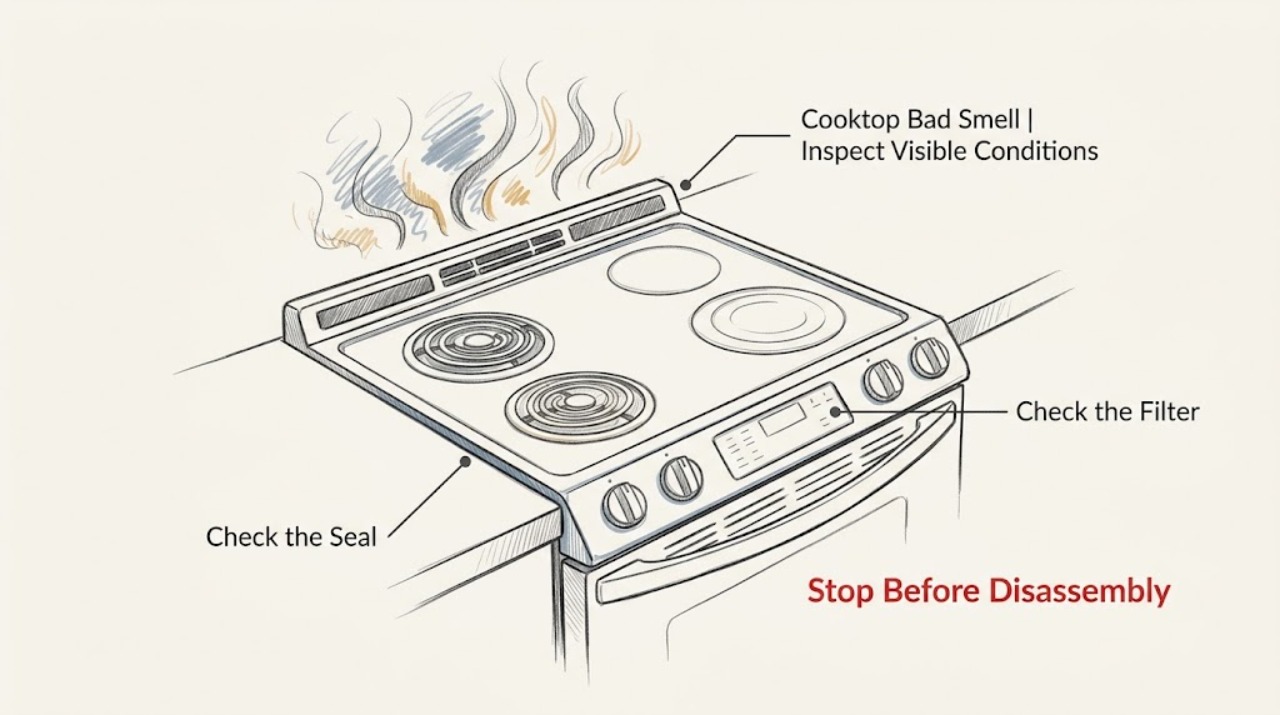
Wolf Cooktop Bad Smell: Separate Gas, Burnt Residue, and Cleaner Odors Safely
Treat the odor by type before doing any troubleshooting. If it smells like gas or rotten eggs, the smell is present while the cooktop is off, it is excessive or does not subside, or a carbon-monoxide alarm is active, do not light anything or operate electrical switches: leave the area and contact the gas supplier or emergency services from outside.
-
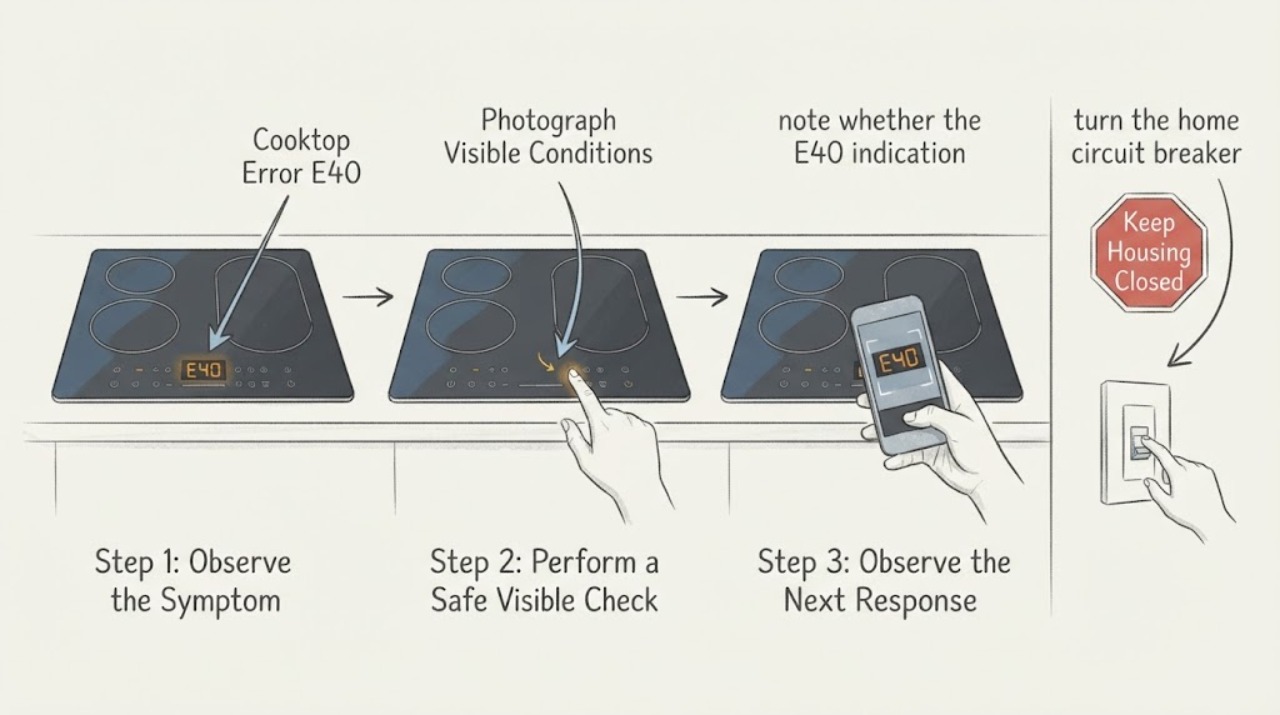
Wolf Cooktop Error E40: Identify the Model Before Resetting
Wolf E40 is model-family specific. On an IR Induction Range, Wolf describes E40 as a generator hardware sync error and instructs the owner to switch the range circuit breaker off for 30 seconds, restore power, and retest once.
-
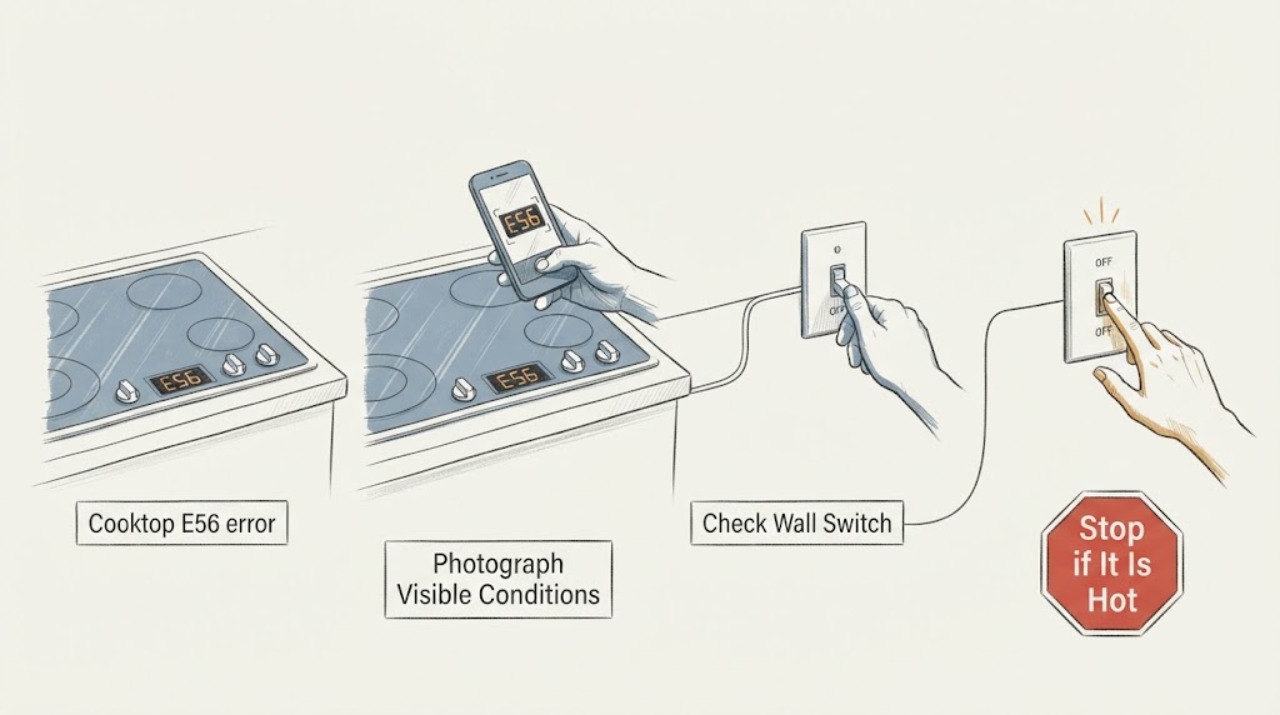
Wolf cooktop E56 error: match the model before resetting an over-temperature code
Do not assign E56 one universal Wolf cooktop meaning. First record the complete model, whether the appliance is an IR30450 or IR36550 induction range, a standalone electric or induction cooktop, or another Wolf product, and photograph the full display.
-
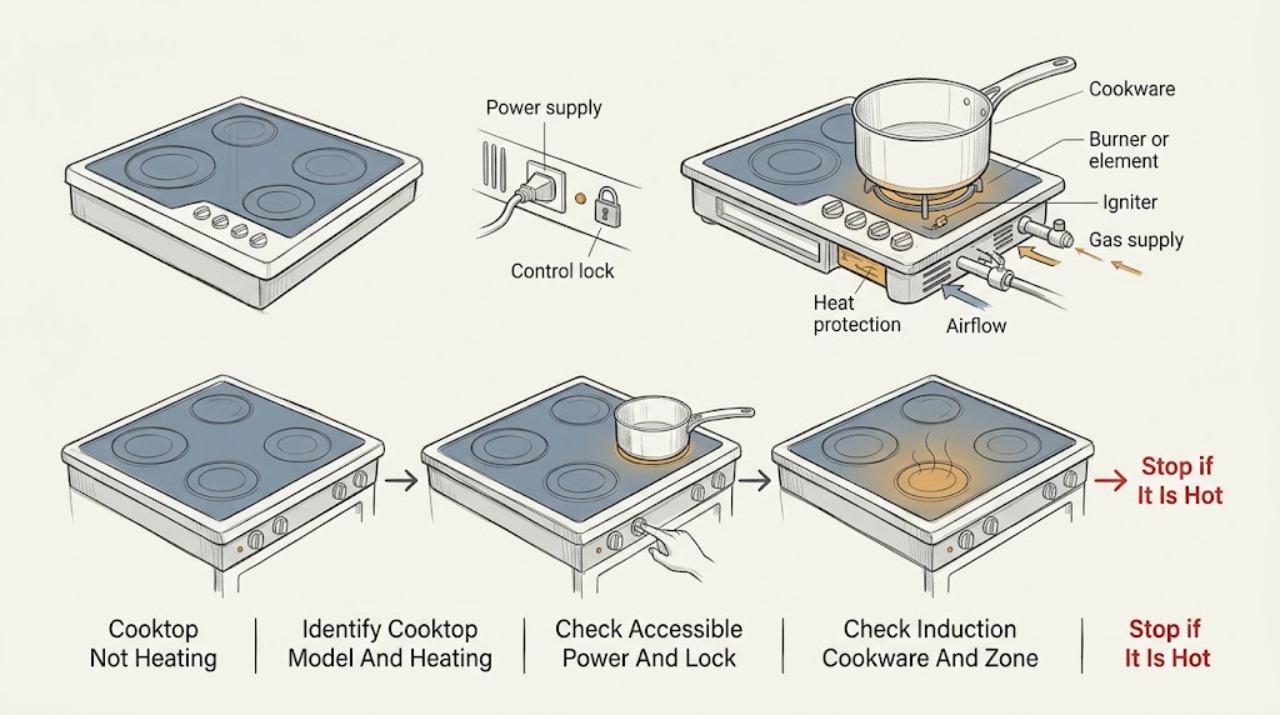
Wolf Cooktop Not Heating: Check Power, Controls, Cookware, and Burner Type
A Wolf cooktop that is not heating needs a different check for gas, electric, and induction models. First record the exact model and whether the whole unit or one zone is affected.
-
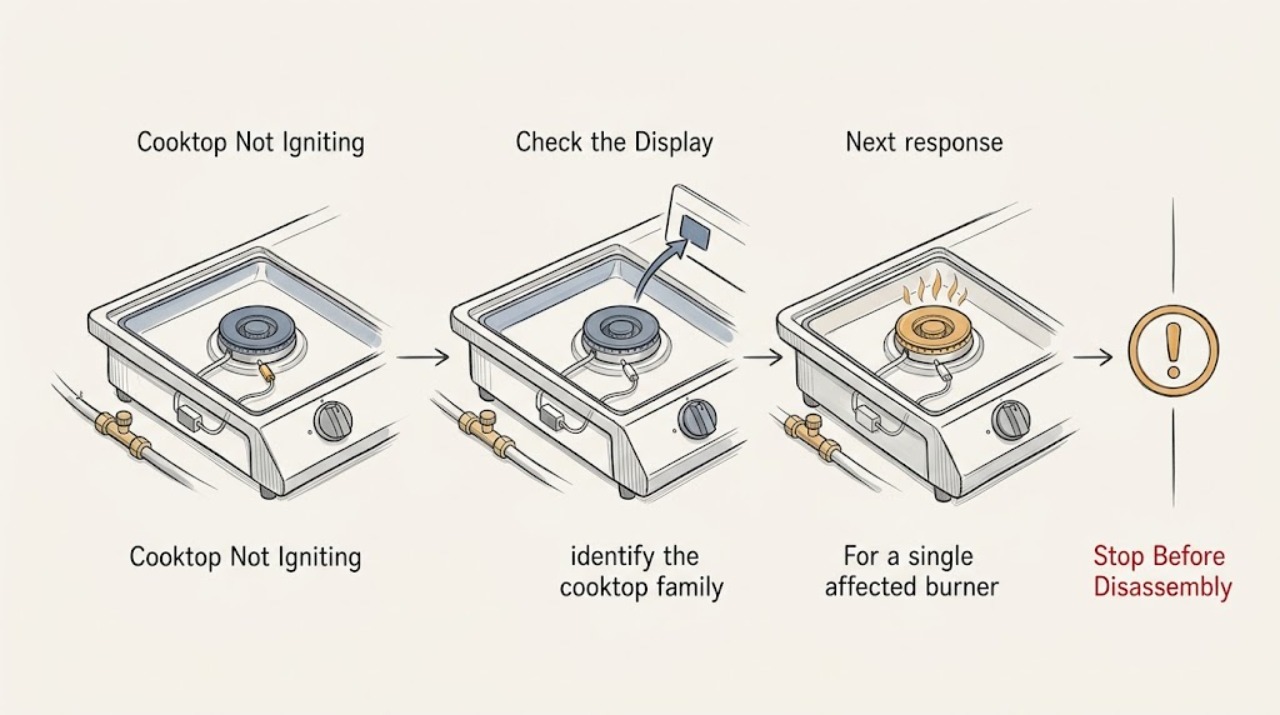
Wolf Cooktop Not Igniting: Separate Gas, Spark, and Burner Problems
For a Wolf gas cooktop that will not ignite, first stop if you smell excessive or persistent gas, see an abnormal flame, or hear sparking when no burner is being used. Otherwise note whether the ignitor clicks, whether a spark is visible, and whether one burner or every burner is affected.
-
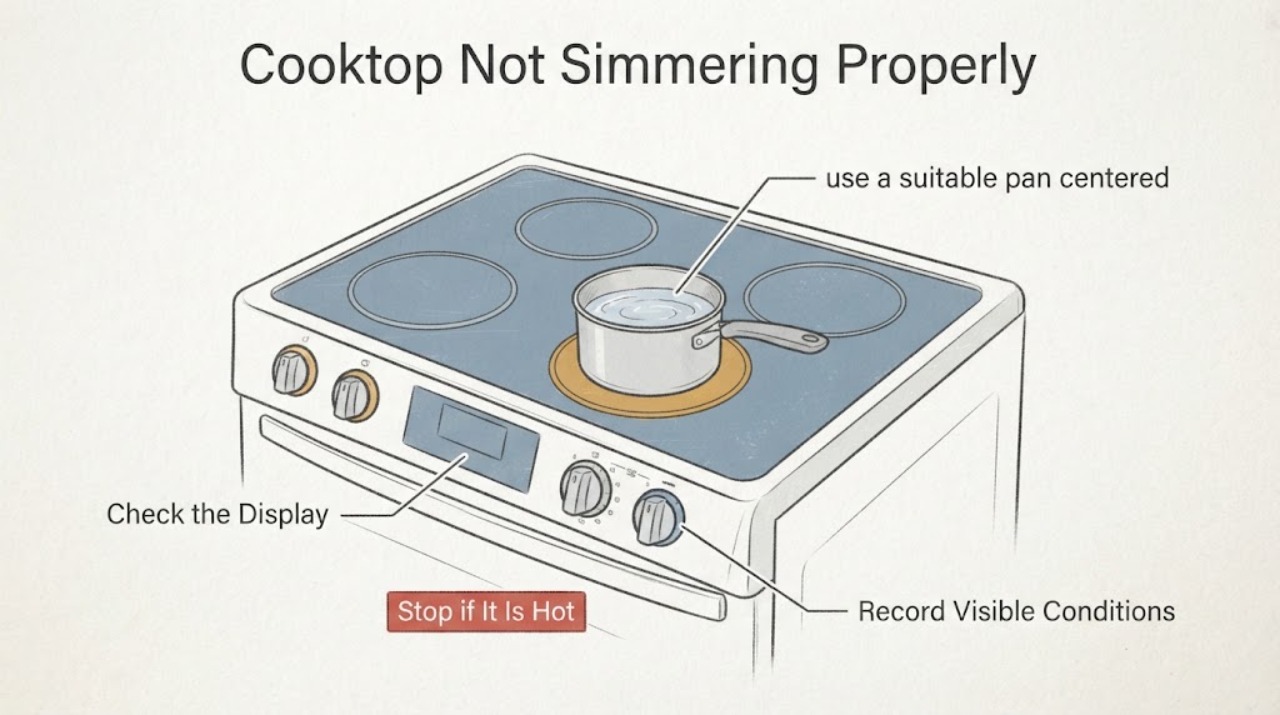
Wolf Cooktop Not Simmering Properly: Check the Simmer Setting and Cookware
First identify whether your Wolf cooktop is gas, electric, or induction and record the model, because the simmer control is different and some Wolf modules do not have a simmer setting. On a Wolf gas burner, turn the knob to the lowest detent, push in, continue turning to move the flame to the second tier, and then choose the simmer variation.
-
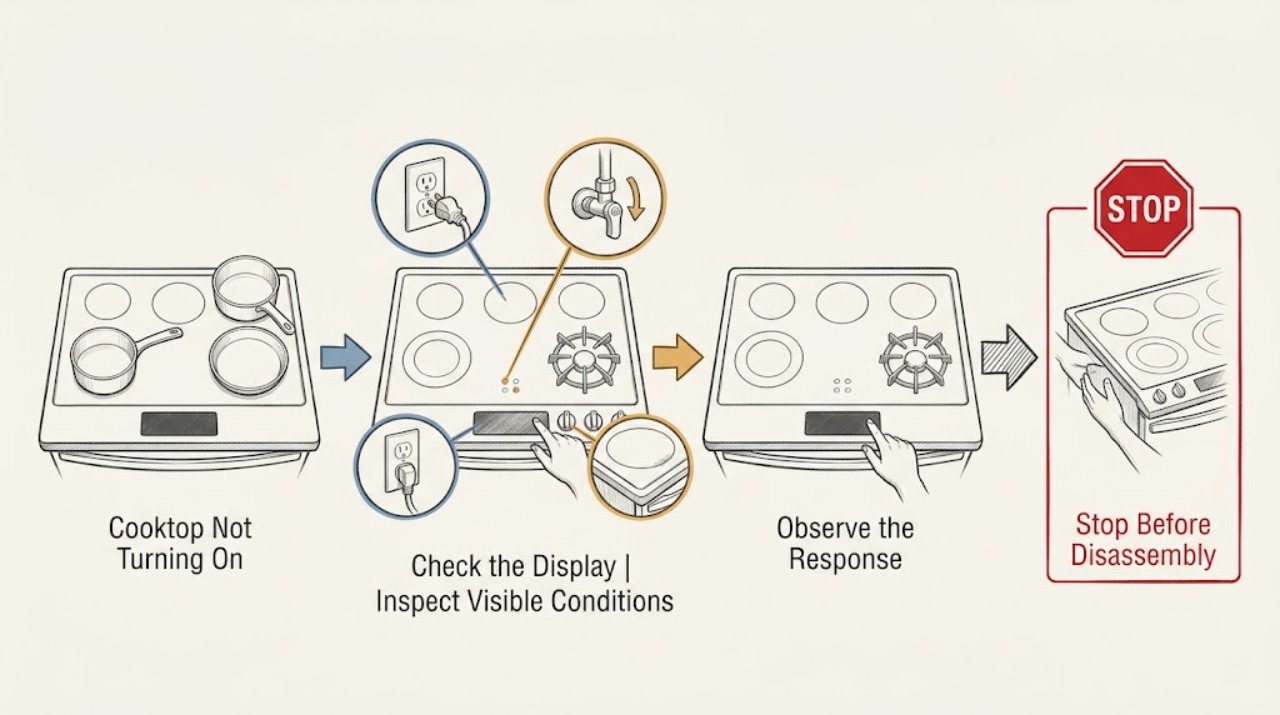
Wolf Cooktop Not Turning On: Check Power, Controls, and the Correct Cookware
First identify whether the Wolf cooktop is gas, electric radiant, or induction and whether the whole unit is dead or only one zone is affected. Stop immediately for gas odor, smoke, sparks, arcing, a burning smell, a hot or damaged connection, a cracked surface, uncontrolled heat, or a breaker that trips again.
-
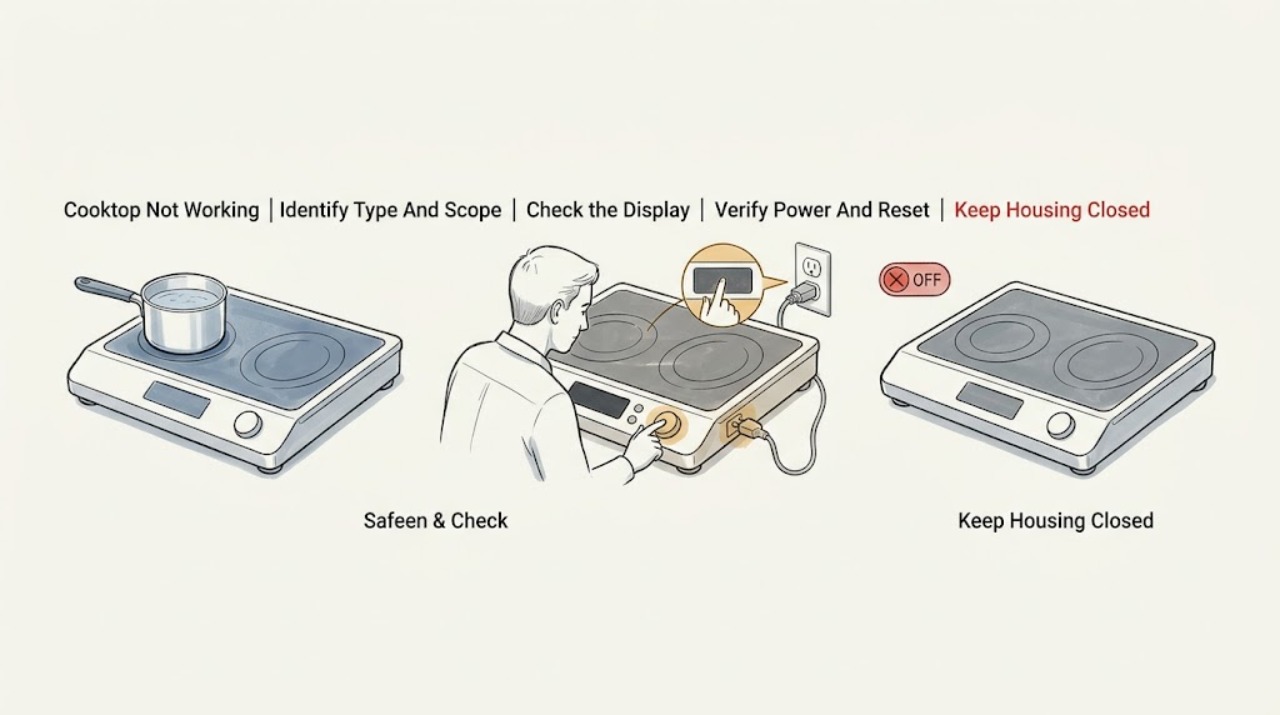
Wolf Cooktop Not Working
A Wolf cooktop that is not working may be unpowered, locked, in Showroom or another control mode, using unsuitable cookware, or affected by a gas-burner or installation problem. First identify whether the surface is gas, electric, or induction and whether every zone or only one is affected.
-
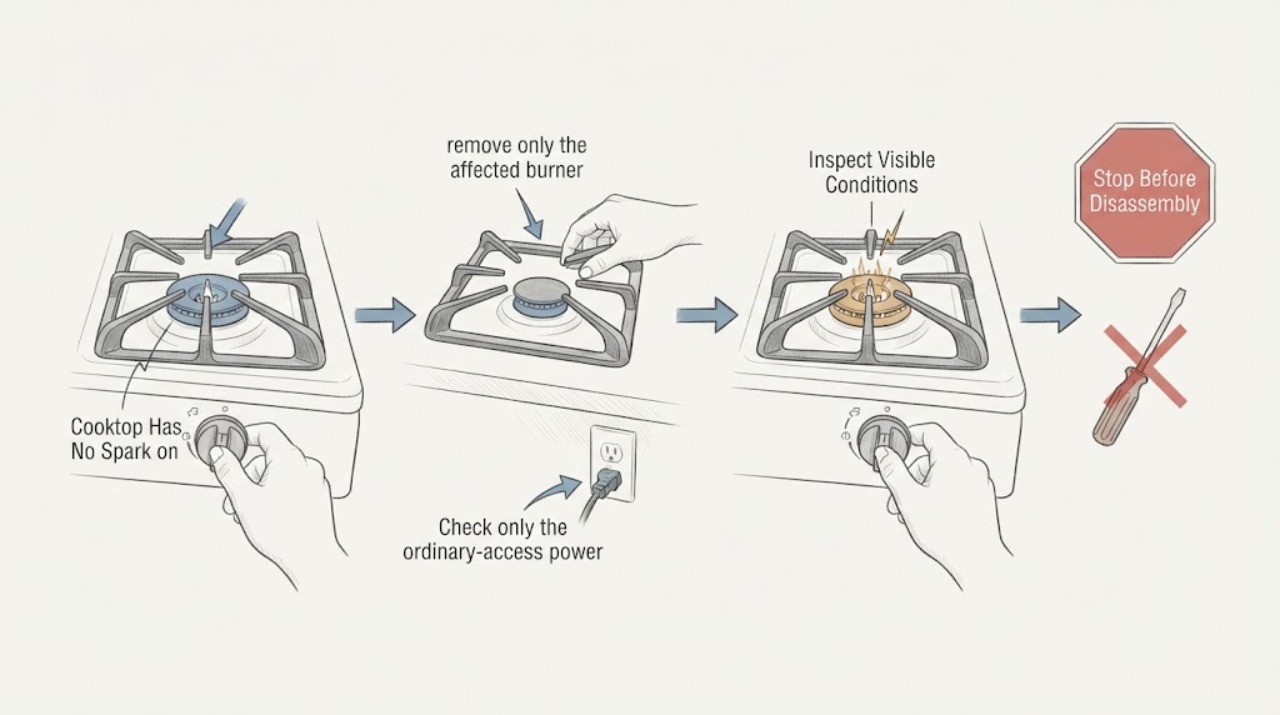
Wolf CT36G/S Cooktop Has No Spark on Two Burners: Safe Checks
If two burners on a Wolf CT36G/S have no spark while other burners still spark, treat it as a partial ignition symptom. Wolf describes an individual spark electrode for each surface burner, so working burners make a total power loss less likely, but they do not prove which local electrode, switch, module, or burner assembly is faulty.