
On this page
Start here
Quick answer
An underground downspout drain is likely restricted when the visible downspout backs up, the outlet stays dry, or water overflows and pools along the buried route. Observe the visible inlet, outlet, overflow point, surface depressions, and weather pattern from level ground; do not dig, probe, disconnect, pressure-wash, or enter standing water. If water reaches the foundation, sewage or electrical hazards are present, soil is collapsing, or the route becomes unsafe, keep clear and arrange high-priority gutter and drainage service.
Before you begin
Safety first
- Do not dig, excavate, probe, disconnect, lift buried-drain covers, pressure-wash, enter standing water, or redirect runoff by altering soil or pipework yourself.
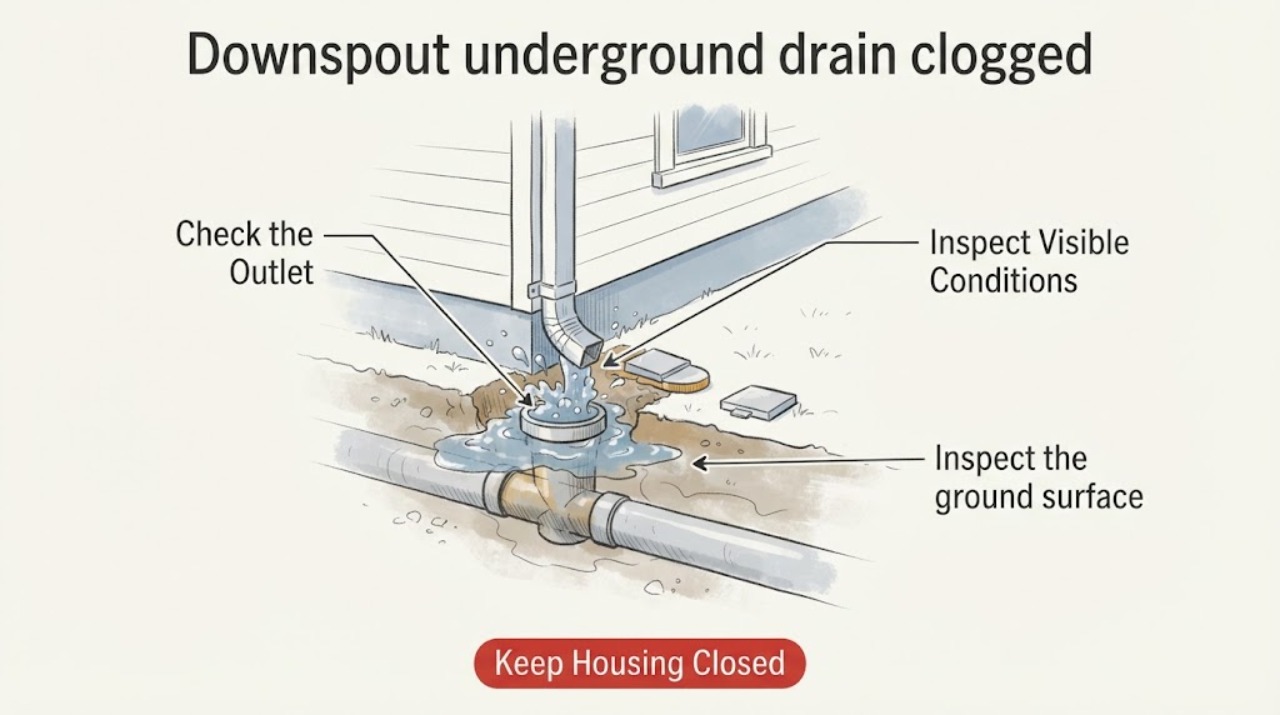
Work through in order
Diagnostic checks
Use only checks that match the exact appliance or system and its official guide.
-
Check 1
From level ground, view the visible downspout inlet connection and the known or visible underground-drain outlet without reaching, disconnecting, or inserting anything. Note whether the inlet appears backed up, the outlet is dry, or water is escaping before the buried route.
Expected result: A backed-up inlet with a dry outlet differs from visible flow at the outlet, a disconnected end, or overflow from an above-ground joint.
Next step: Take dated photos of both visible ends and request gutter or drainage service. Do not probe, detach, or pressure-wash the underground route.
Stop if: Stop and keep clear if the outlet is near traffic, standing water, exposed wiring, an unstable edge, or a buried utility marker.
Why this matters
Why: The inlet-versus-outlet pattern helps a drainage professional decide whether to inspect the underground drain or an above-ground connection; it cannot identify a hidden blockage on its own.
-
Check 2
From a dry perimeter, observe where runoff overflows or reappears on the surface: at the downspout, a cleanout or outlet, a buried line's low spot, a foundation edge, or a nearby drain. Do not dig, lift covers, step into pooled water, or handle runoff.
Expected result: A single above-ground overflow differs from water emerging along the buried route, repeated pooling over one section, or no visible outlet flow at all.
Next step: Photograph the location and mark it from a safe distance in the service request; keep people and vehicles away from pooling or eroded ground.
Stop if: Stop immediately for fast-moving water, deep or contaminated pooling, a sinkhole-like depression, a crumbling edge, or water near electrical equipment.
Why this matters
Why: The reappearance pattern can indicate a restriction, disconnected or damaged buried section, or an unsuitable discharge path, but hidden conditions require professional equipment and site controls.
-
Check 3
Inspect the ground surface from a safe perimeter around the suspected underground route and building foundation. Note ponding, soil washout, new depressions, erosion, foundation staining, damp walls, or runoff flowing back toward the home without probing or excavating.
Expected result: A firm, dry surface differs from a wet foundation edge, washed soil, a growing depression, or water collecting where the buried drain should discharge.
Next step: Keep the area isolated and ask the professional to assess the buried drainage, outlet, soil stability, and foundation exposure together.
Stop if: Stop and isolate the area if soil is collapsing, a void is visible, the foundation is being reached by water, or a path or vehicle area is undermined.
Why this matters
Why: Surface damage may show that the underground route is not carrying water safely or that water is affecting the building; it does not prove the pipe's exact failure.
-
Check 4
Compare dated photos and notes from calm, dry conditions with the timing of ordinary rain, snowmelt, leaf fall, or debris events. Observe whether the same overflow and outlet pattern repeats after weather without creating a hose or pressure test.
Expected result: Overflow only after heavy runoff differs from back-up that recurs after modest rain or appears even in dry weather.
Next step: Share the weather timeline, recent gutter work, and dated photos; leave the buried route untouched until assessed.
Stop if: Stop if weather becomes severe, ground conditions are slippery or unstable, or observing would require entering runoff or traffic.
Why this matters
Why: Timing helps a professional separate capacity or debris symptoms from a persistent blockage, broken connection, or drainage-path problem.
-
Check 5
From a safe distance, note whether the downspout outlet or pooling area is near a foundation opening, crawlspace entrance, basement window, electrical equipment, public path, or driveway. Do not move the outlet, cover a drain, or redirect water by digging.
Expected result: A discharge area away from building and access hazards differs from water entering the building, collecting at a foundation, approaching electricity, or blocking a route.
Next step: Keep people and vehicles away from the affected area and tell the responding professional exactly which building, electrical, or access feature is threatened.
Stop if: Stop immediately for sewage, chemical odor, electrical arcing, smoke, flooding into the building, or an unstable surface.
Why this matters
Why: The location changes urgency even when the blockage is not visible and may require coordinated gutter, drainage, water-damage, electrical, or emergency response.
Use your observations
Decision map
Find the observation that best matches what you see, then follow the next safe action.
-
PATH 01Next step
What you see
Water is entering the building, undermining soil, approaching electrical equipment, blocking access, or causing a collapse-like depression.
Do this next
Keep clear and request urgent drainage, water-damage, electrical, or emergency help as indicated; do not enter water, excavate, or operate equipment.
-
PATH 02Next step
What you see
The inlet backs up while the visible underground outlet remains dry or overflow occurs repeatedly at one surface location.
Do this next
Request professional inspection of the buried drain and all visible connections; do not probe, disconnect, or pressure-wash the route.
-
PATH 03Next step
What you see
The outlet flows visibly, but water still pools or returns toward the foundation or access route.
Do this next
Arrange assessment of the discharge path, grading, and foundation drainage rather than assuming the buried pipe is clear.
-
PATH 04Next step
What you see
The condition appears only after severe runoff and is not safely observable from the ground.
Do this next
Wait for calm, dry conditions, retain a safe photo and weather record, and have a professional inspect instead of digging or creating a flow test.
Helpful context
Understand the symptom
A buried drain can be blocked, disconnected, crushed, silted, or poorly discharged, and a surface overflow cannot distinguish those conditions by itself. Comparing the visible downspout inlet with the outlet and documenting where water appears on the ground gives a professional a useful starting pattern.
Observe only from stable ground after severe weather has passed. Do not excavate, push a rod into an opening, separate the pipe, use high pressure, or walk into pooled water to find the buried route. Hidden utilities, unstable soil, contaminated water, and foundation damage can all change the safe response.
Protect the building and people first. If runoff is entering the home, undermining soil, approaching electrical equipment, or blocking a walkway or driveway, keep everyone away and request urgent professional assessment rather than attempting a temporary buried-pipe repair.
Only after diagnosis
Potential parts
- downspout-cleaning-tool
Only consider a cleaning tool after a qualified drainage professional confirms the route, access point, pipe condition, and safe method.
Buried pipe material, bends, depth, blockage type, hidden utilities, and discharge arrangement vary; a tool must not be forced into an unknown route. - hose-nozzle
Only consider a water accessory if a professional confirms a controlled, low-risk method for the identified pipe and discharge path.
Do not use high pressure or introduce water into a blocked or damaged route where it could worsen foundation pooling, pipe damage, or hidden discharge. - drain-screen
Consider only after the route and outlet are flowing and a professional confirms that screening will reduce debris without creating another restriction.
Screen fit, maintenance, and hydraulic behavior depend on the inlet and pipe configuration; it cannot repair a crushed, disconnected, or buried obstruction.
When checks do not resolve it
Need a professional?
Arrange high-priority gutter or drainage service when an underground downspout drain backs up, its outlet stays dry, overflow repeats, or runoff pools near the home. Escalate urgently for foundation entry, sewage, electrical risk, erosion, collapse-like soil, or blocked access.
Safety scope: Do not dig, excavate, probe, disconnect, lift buried-drain covers, pressure-wash, enter standing water, or redirect runoff by altering soil or pipework yourself.
Common questions
FAQ
How can I tell if an underground downspout drain is clogged?
From safe ground, compare the visible inlet and outlet and note where overflow or surface pooling appears. A backed-up inlet and dry outlet suggest a restriction, but a disconnected, crushed, or poorly discharged buried route can look similar.
Can I dig up or rod the buried downspout drain?
No. Do not excavate or probe it as a DIY diagnostic. Buried utilities, unstable soil, contaminated water, and foundation or pipe damage make professional assessment safer.
Why does water pool near the foundation even when the outlet is visible?
The discharge path, grading, buried connection, or downstream drainage may be unsuitable even if some water reaches the outlet. Document the pooling and have the complete route and foundation drainage assessed.
When is an underground downspout blockage urgent?
Treat water entering the building, foundation pooling, sewage or chemical contamination, electrical proximity, erosion, a sinkhole-like depression, unsafe footing, or blocked access as urgent conditions and keep clear while arranging help.
Read the exact guide
Official sources
- Safety Guidelines: Reentering Your Flooded HomeCenters for Disease Control and Prevention · Supports escalating standing water near electricity, contaminated water, unsafe access, and drainage that sends water toward foundations or crawlspaces.
- Soak Up the Rain: Disconnect / Redirect DownspoutsU.S. Environmental Protection Agency · Supports explaining that downspouts may connect to buried pipes and that runoff redirection must avoid property damage and unsafe conditions.
- Stormwater MaintenanceU.S. Environmental Protection Agency · Supports using inspection records, maintenance timing, and visible inlet/outlet or debris observations before selecting professional drainage work.
Community feedback
Share a repair observation
Share a plain-text repair observation. Accepted observations are published automatically; this page may take a moment to update.