
Repair service
Gutters Guides
Gutter cleaning, repair, and water-management guidance.
Published gutters guides
Choose the guide that best matches the service and problem you are seeing.
-
Downspout clogged water at joint: What to Check and What to Do Next
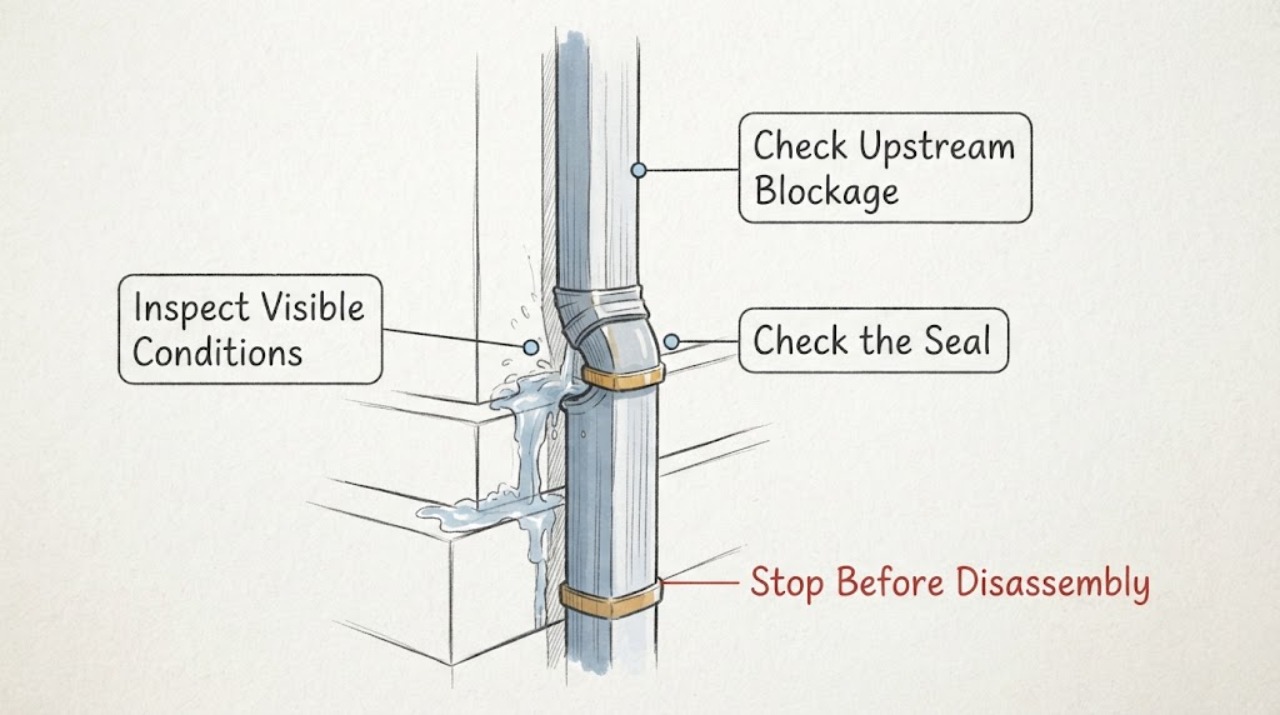
Watch the downspout from the ground during rain and identify whether water is backing up above a joint, escaping from an open or split joint while the outlet still flows, or pooling at the discharge end. A blocked gutter, outlet, or downspout can push water out at the weakest joint; a free-flowing outlet with a spray at one seam points more toward a loose connection, failed seal, split section, or misaligned overlap.
-
Downspout clogged: What to Check and What to Do Next
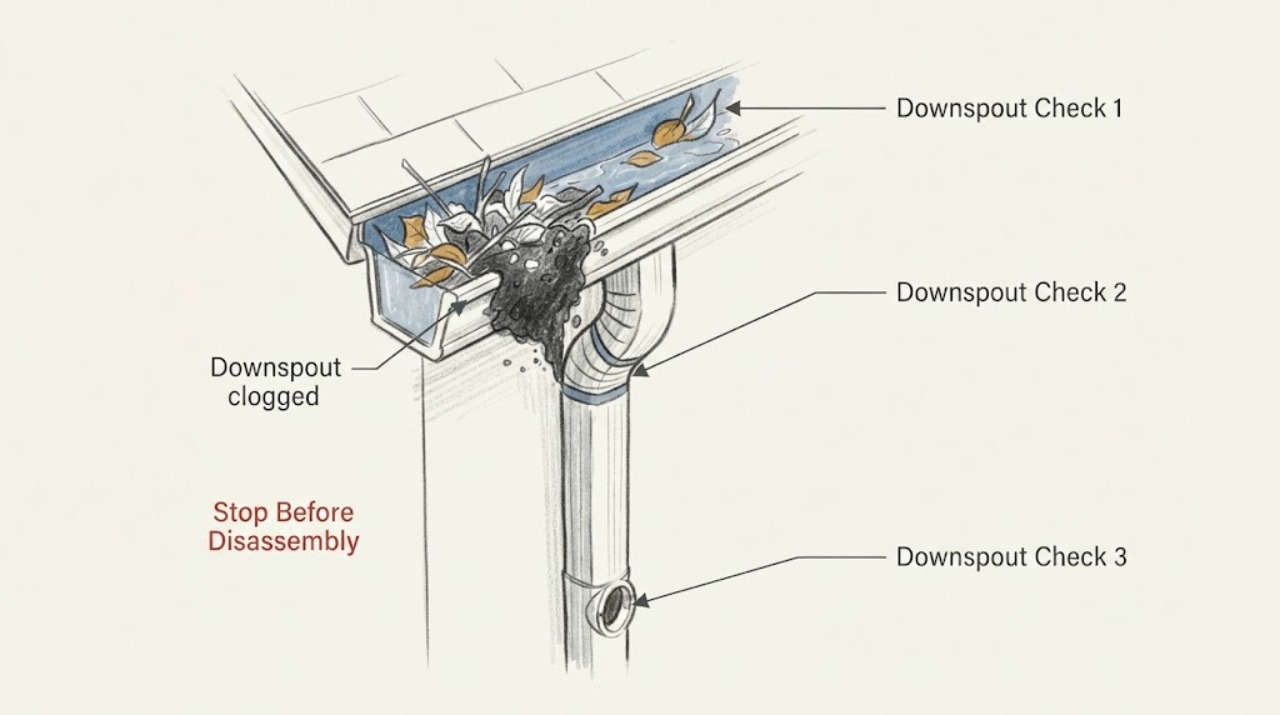
First determine whether water is failing to enter the downspout, stopping inside its visible sections, or exiting normally but pooling at the discharge point. From the ground, clear only loose debris at reachable openings, then use a garden hose at a reachable outlet to check flow.
-
Downspout discharges near foundation short outlet: What to Check and What to Do Next
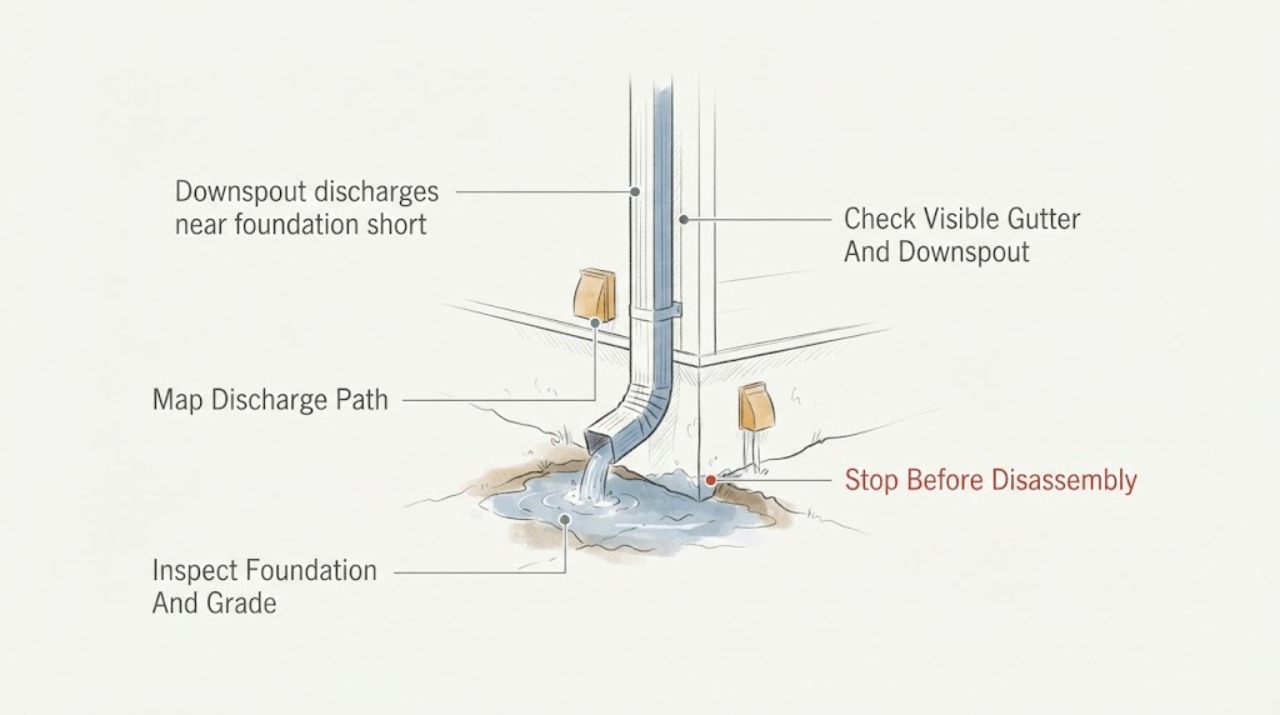
A short downspout outlet that releases roof water near the foundation should be evaluated by observing where the water actually travels, not by adding an extension blindly. During or immediately after rain, record the outlet position, pooling, erosion, soil slope, foundation stains, basement dampness, and whether other downspouts or roof valleys add water to the same area.
-
Downspout discharges near foundation: What to Check and What to Do Next
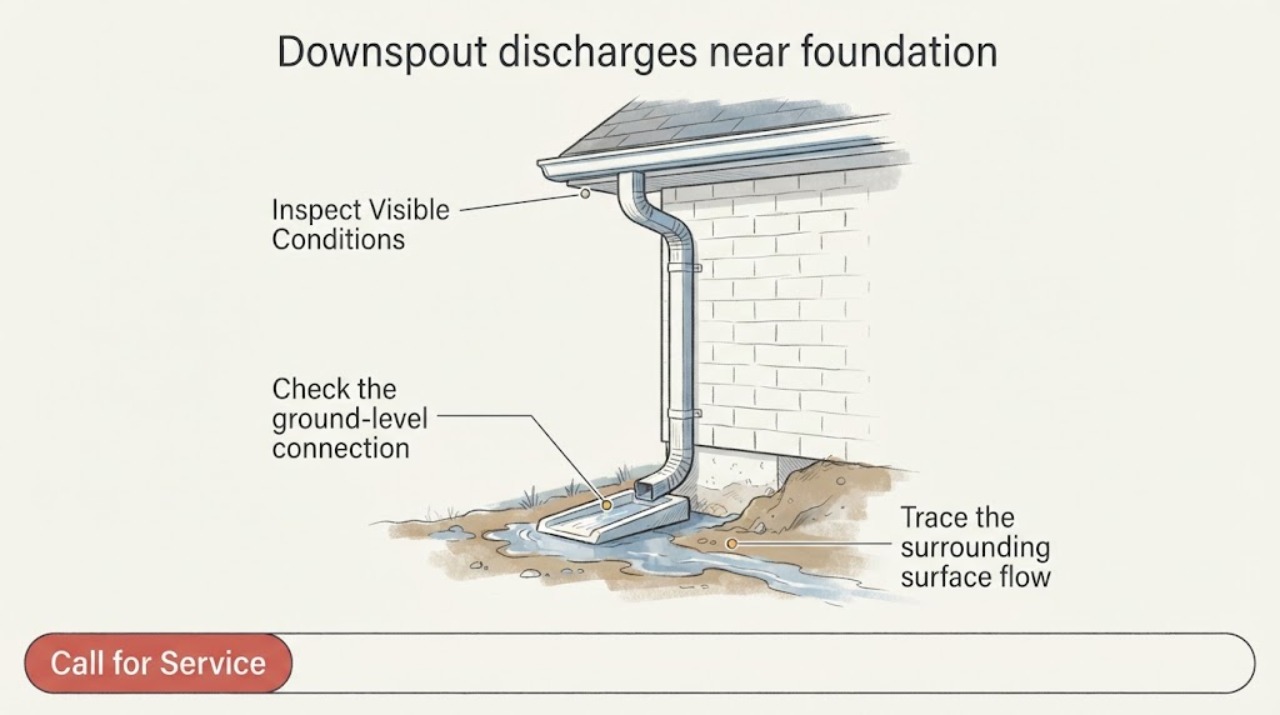
A downspout that releases water next to the foundation should be evaluated during or just after rain, but the homeowner check is ground-level observation only. Photograph where the stream lands, whether water pools or erodes soil, whether an extension or splash block is disconnected or blocked, and whether the surrounding ground or paved surfaces direct water toward the house.
-
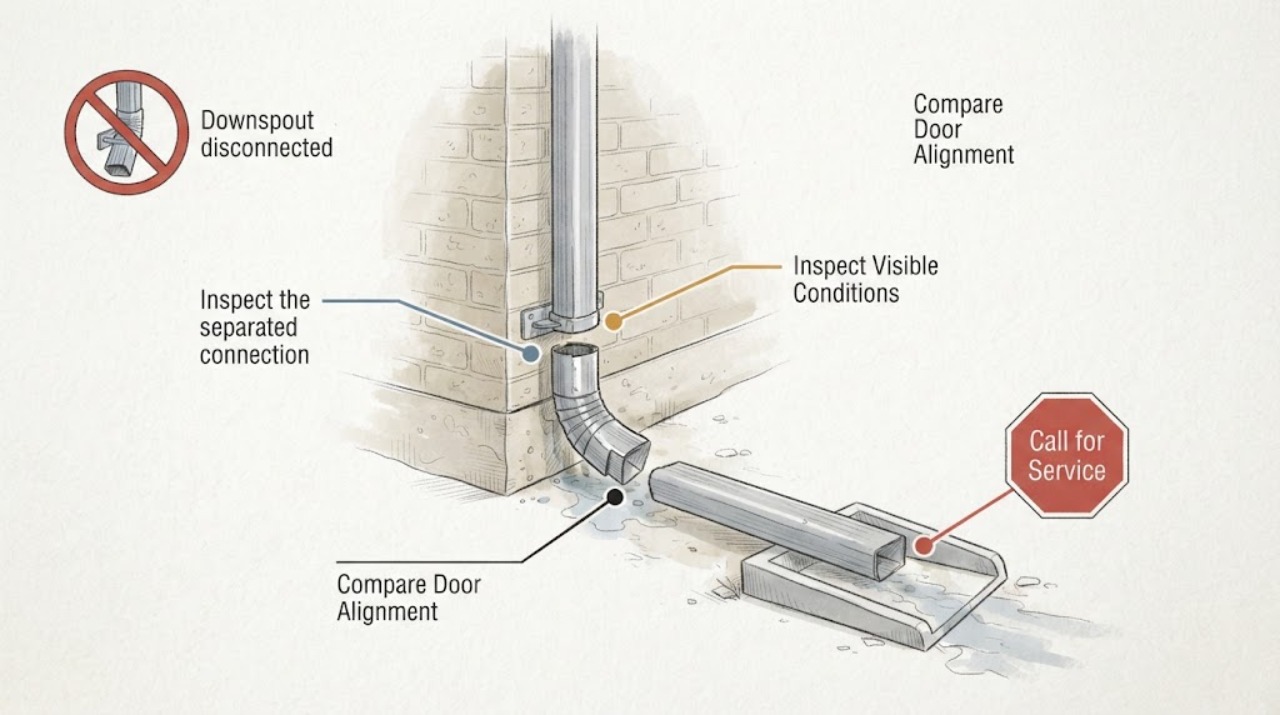
Downspout disconnected: What to Check and What to Do Next
A disconnected downspout can send roof runoff beside the foundation, onto a walkway, or into an area that erodes or floods. From ground level, photograph the separated connection, the discharge direction, wall attachments, and any pooling or foundation impact.
-
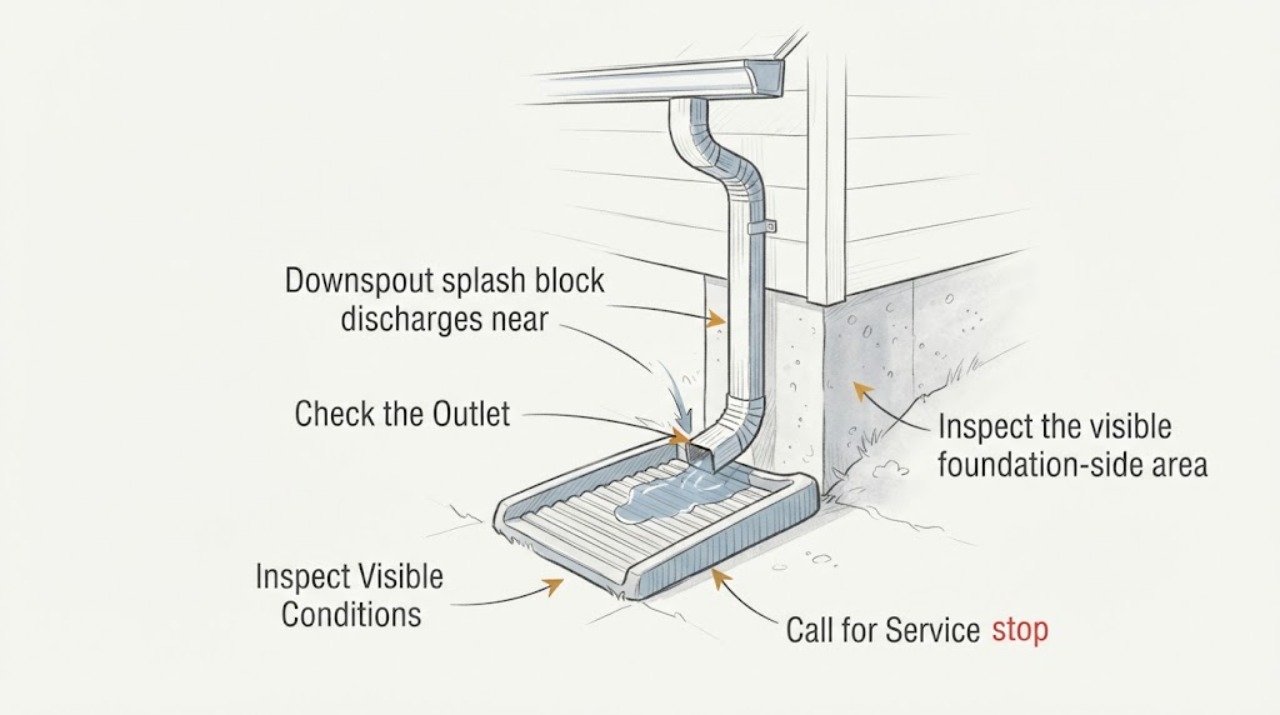
Downspout splash block discharges near foundation: What to Check and What to Do Next
A splash block that releases roof runoff close to the foundation can saturate soil, cause erosion or ponding, and contribute to seepage. From ground level, confirm where the downspout ends, which way the water travels, whether the grade carries it away, and whether the foundation or basement shows related moisture.
-
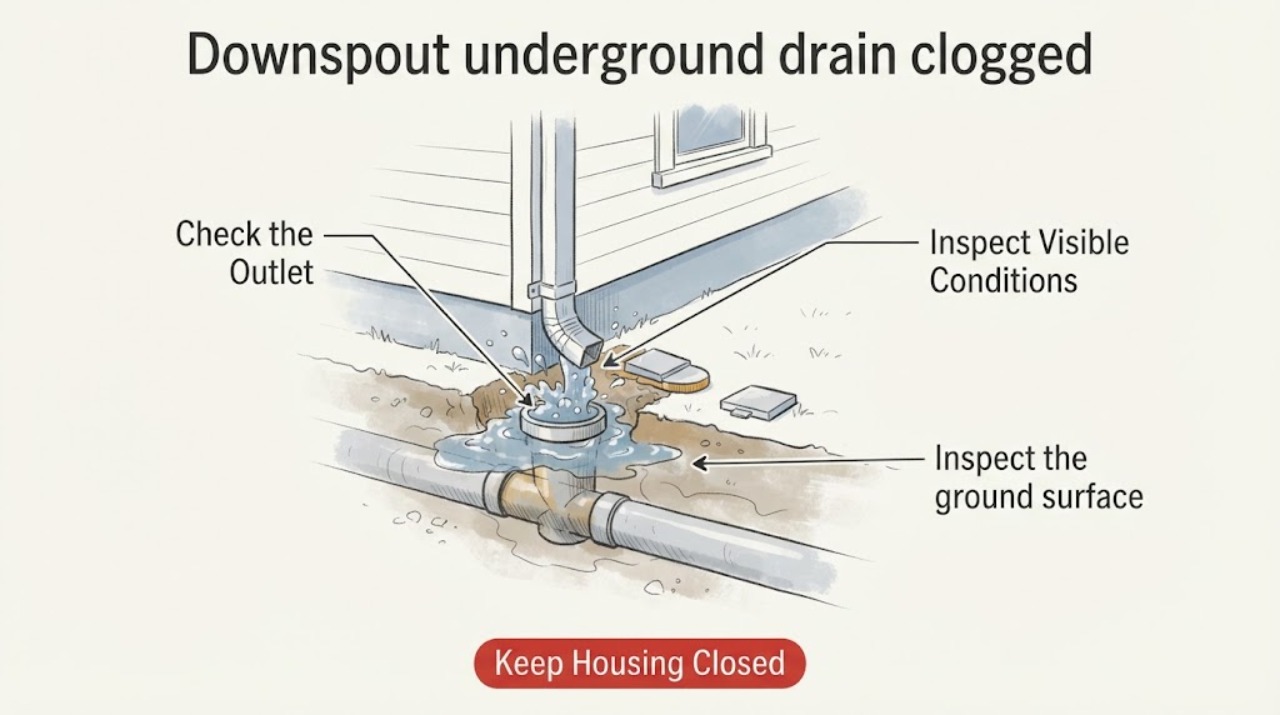
Downspout underground drain clogged: What to Check and What to Do Next
An underground downspout drain is likely restricted when the visible downspout backs up, the outlet stays dry, or water overflows and pools along the buried route. Observe the visible inlet, outlet, overflow point, surface depressions, and weather pattern from level ground; do not dig, probe, disconnect, pressure-wash, or enter standing water.
-
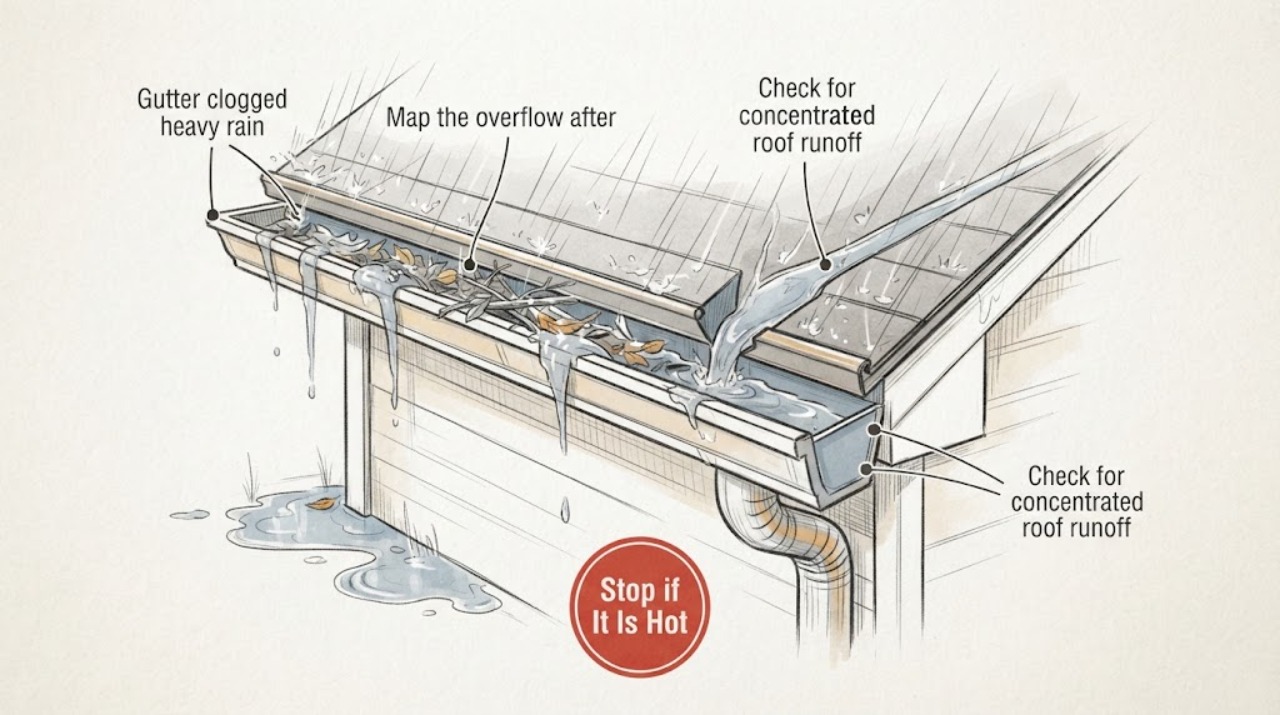
Gutter clogged heavy rain: What to Check and What to Do Next
Treat heavy rain as the event that reveals the problem, not proof that the gutter is clogged. After the storm has passed and from stable ground, record exactly where water overflowed, whether it came from one short section or a long run, and whether the downspout outlet discharged.
-
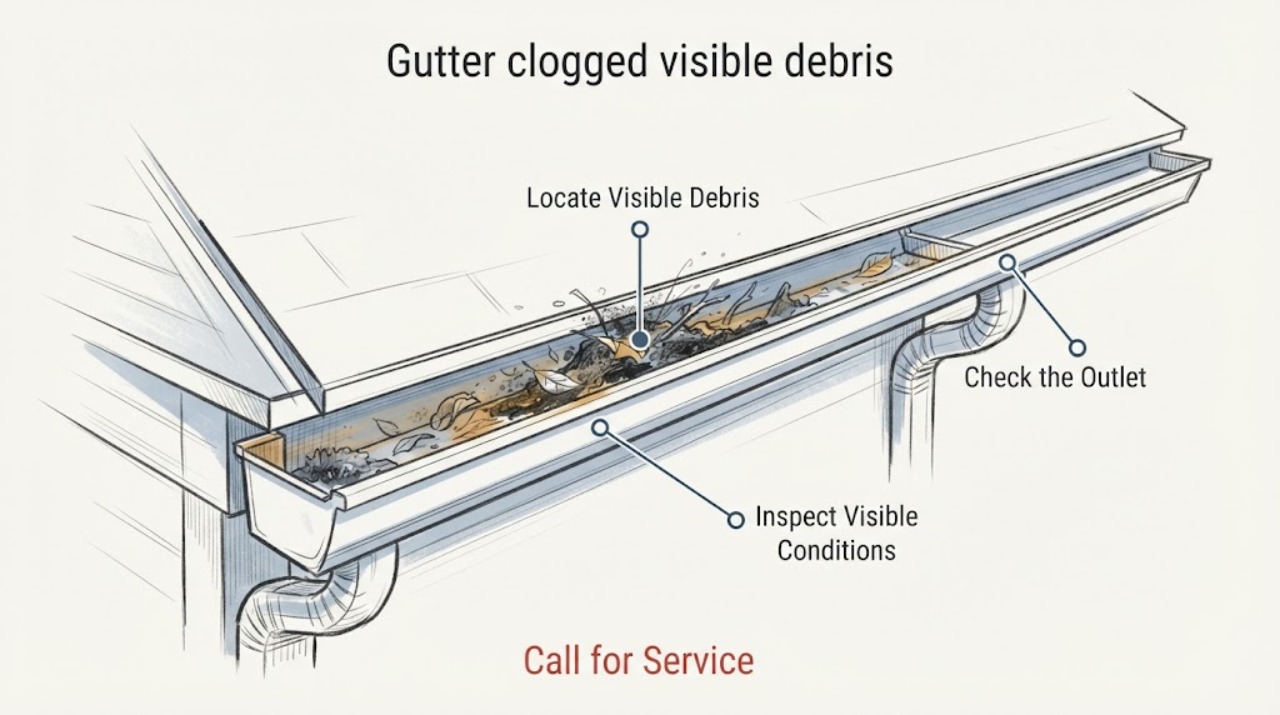
Gutter clogged visible debris: What to Check and What to Do Next
Visible leaves, twigs, or sediment are a clue that a gutter may be clogged, not proof that the whole run is blocked. From the ground, first note where the debris is concentrated, whether the nearest outlet or downspout shows spillover or no discharge during normal rain, and whether the gutter line sags or overflows along its length.
-
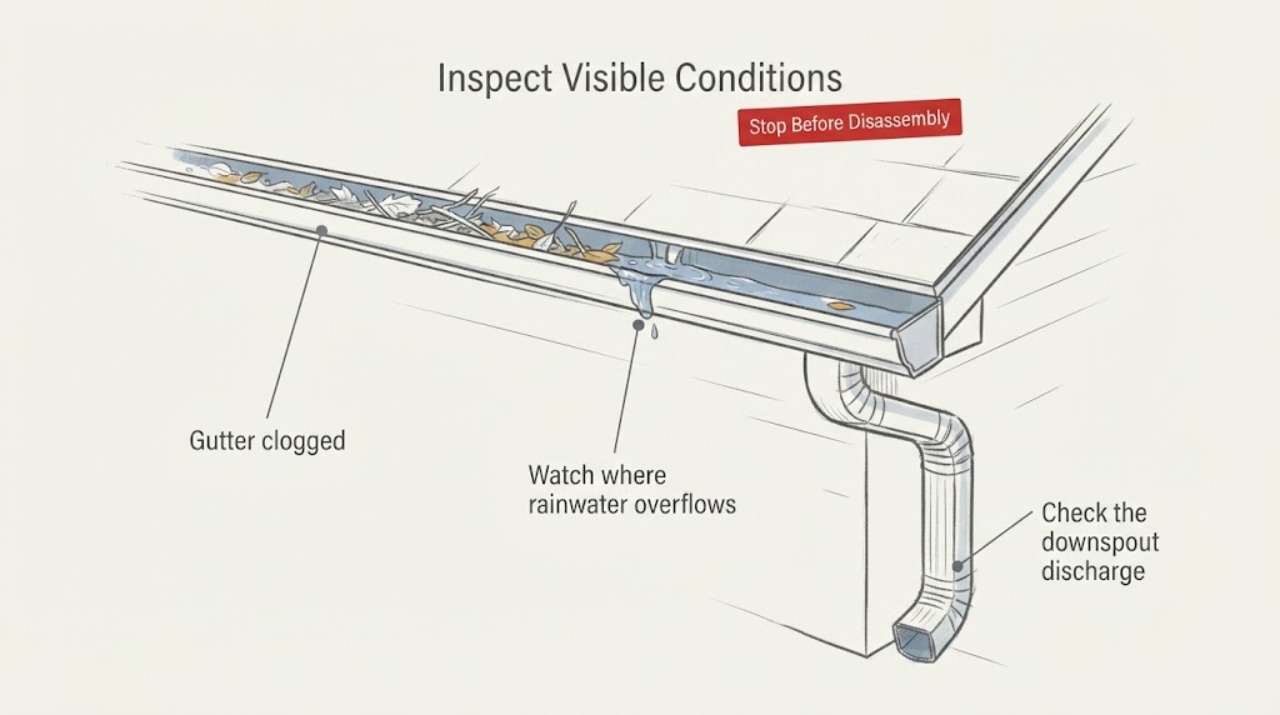
Gutter clogged: What to Check and What to Do Next
Treat an overflowing gutter as a drainage and access problem, not a reason to climb onto the roof. From the ground or a safe window, note where water spills, whether the downspout discharges, whether water is pooling or eroding soil near the building, and whether the pattern repeats after ordinary rain.
-
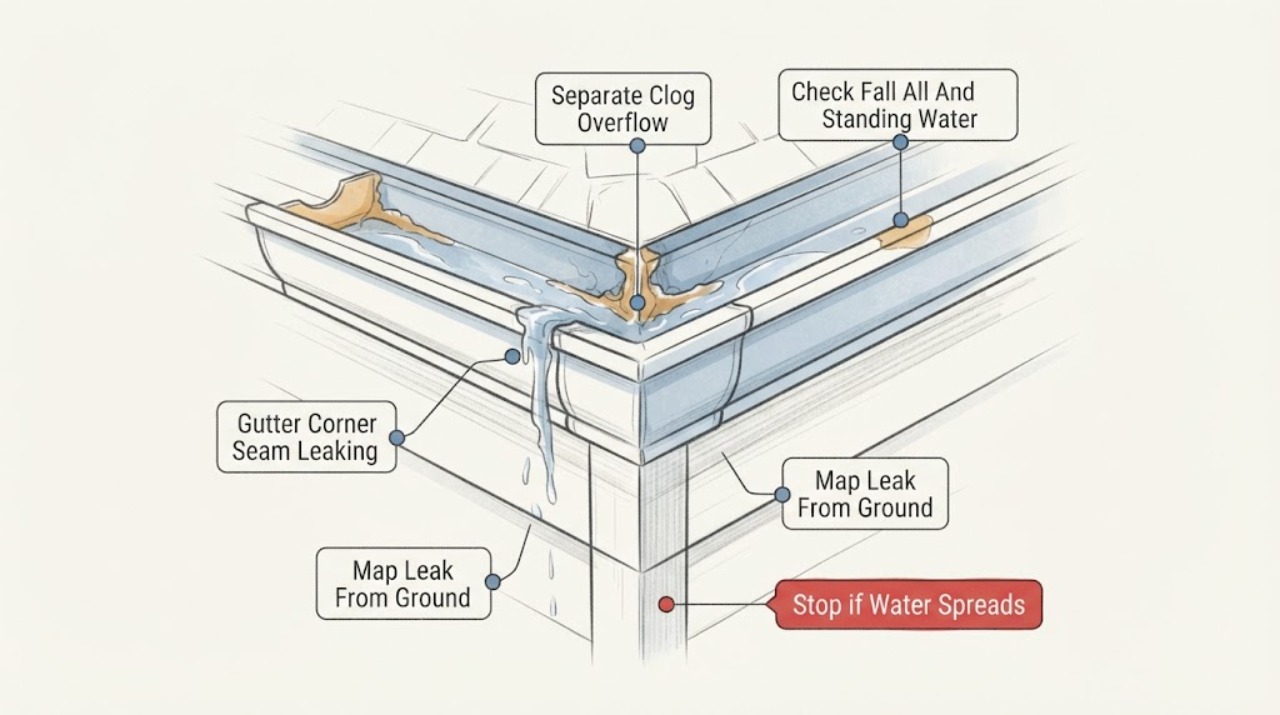
Gutter Corner Seam Leaking: Is It Sealant Failure or a Bigger Drainage Problem?
A leaking gutter corner can be a failed miter seal, but water at the corner can also be caused by a clog, overflow, incorrect fall, a shifted or poorly fitted miter, loose fasteners, or water arriving from the roof above. Observe the gutter and downspout from the ground during and after rain, keep off wet roofs and unsafe ladders, and have the joint repaired only after its fit, support, drainage path, and sealant compatibility are understood.
-
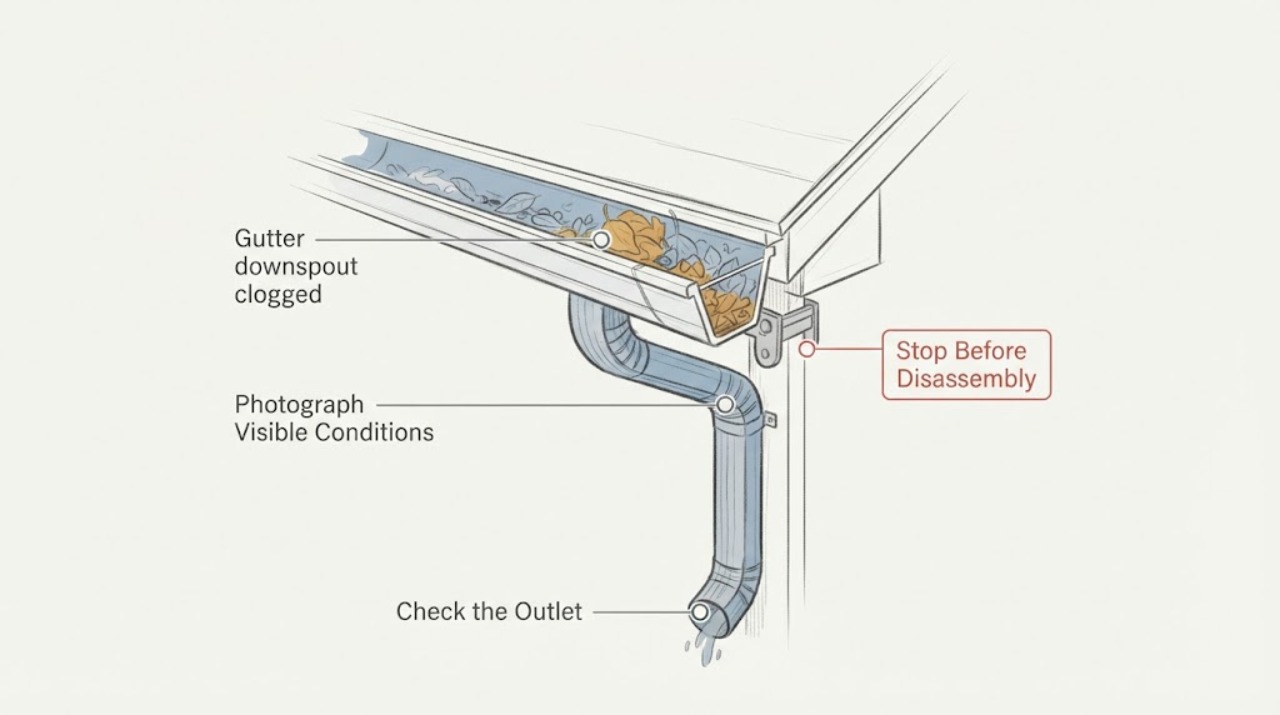
Gutter downspout clogged: What to Check and What to Do Next
Treat a gutter downspout that does not discharge as a drainage and fall-risk issue, not a reason to climb onto the roof or lean a ladder against the gutter. From the ground or another stable, safe viewpoint, observe the outlet during natural rain, photograph overflow and the downspout route, and check for pooling or erosion near the foundation.
-
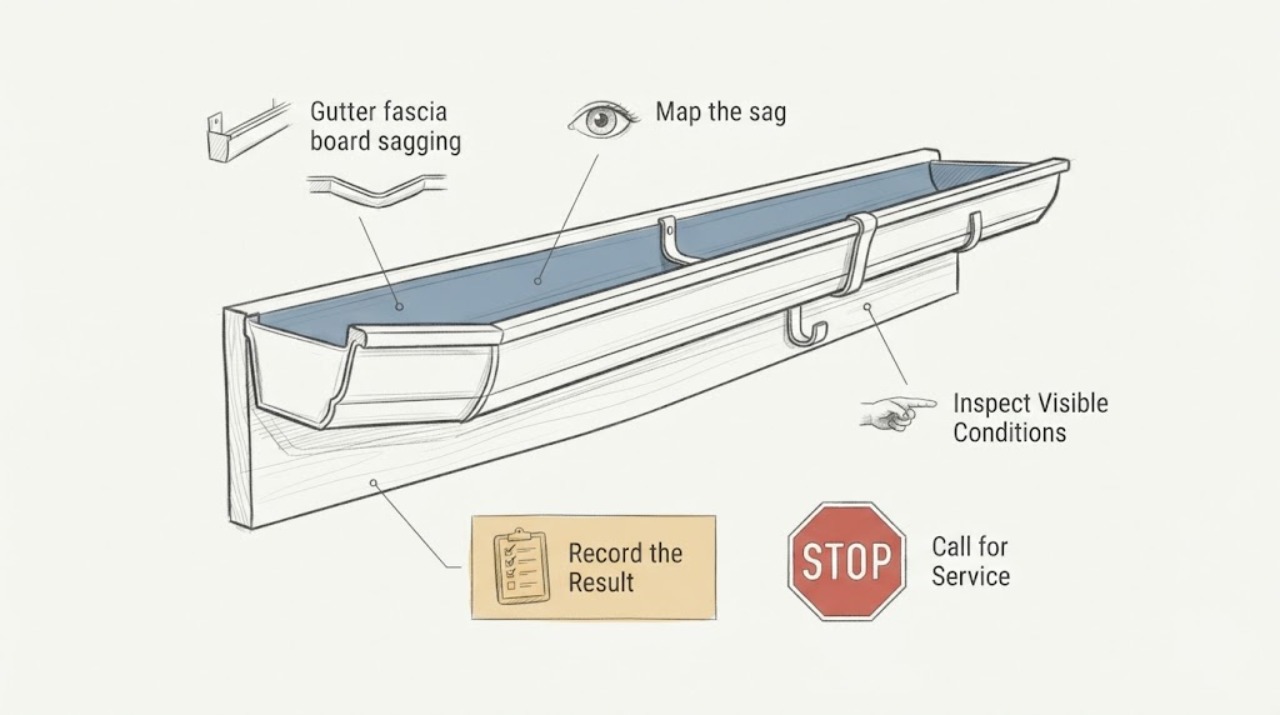
Gutter fascia board sagging: What to Check and What to Do Next
A sagging gutter and fascia board should not be corrected by simply driving in new fasteners. Water overload, a blocked or undersized gutter, loose hangers, rotten fascia, roof-edge runoff, or structural movement may be involved.
-
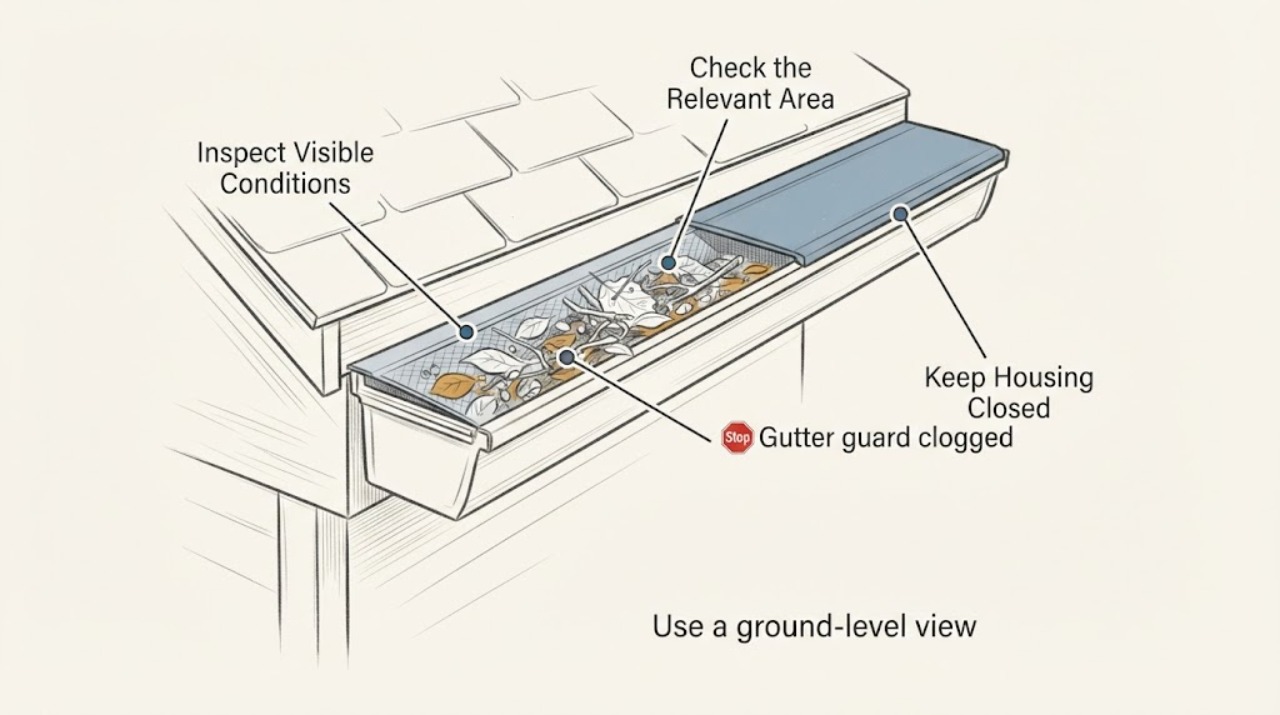
Gutter guard clogged: What to Check and What to Do Next
If a gutter guard appears clogged, limit yourself to observations from the ground: watch the system during or just after rain, note overflow and downspout discharge, and photograph any visible debris mat, sag, gap, or displaced section without touching the guard. Do not climb, reach into the guard, or clean from a roof or ladder.
-
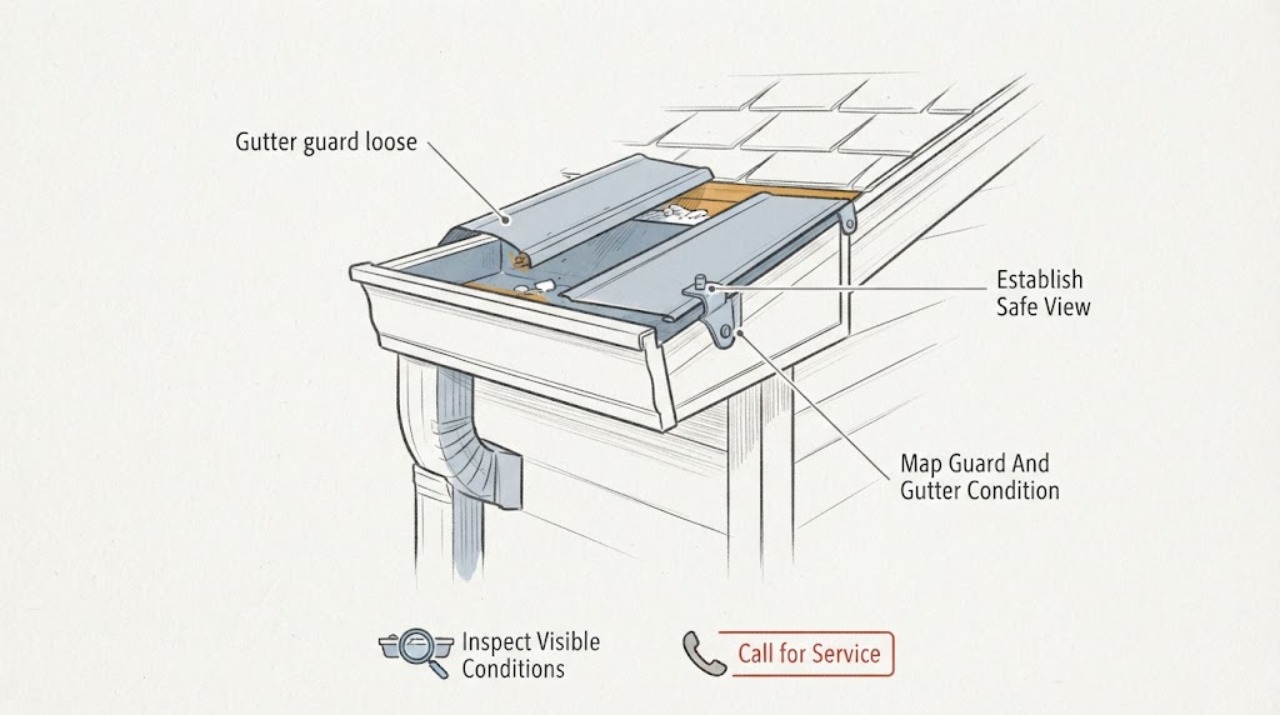
Gutter guard loose: What to Check and What to Do Next
Do not climb, reach, or try to push a loose gutter guard back into place. From the ground or a safe window, photograph the entire roofline and the affected section, and note whether the guard is lifted, bowed, shifted, missing, or hanging over the gutter.
-
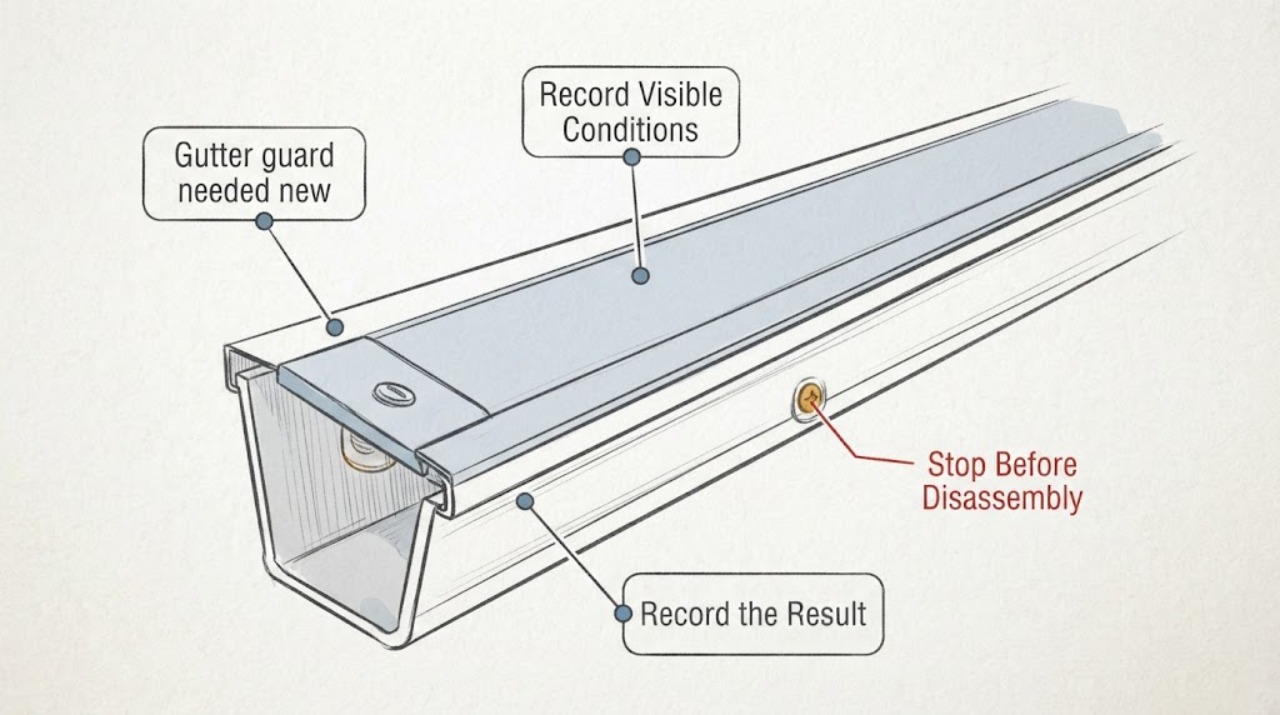
Gutter guard needed new: What to Check and What to Do Next
If the gutters are new, decide about a guard only after the installer or quote identifies the gutter profile, width, material, hanger support, slope, roof-edge detail, and downspout plan. A guard can reduce leaves and other large debris, but it does not correct an undersized, poorly sloped, sagging, or badly discharged gutter.
-
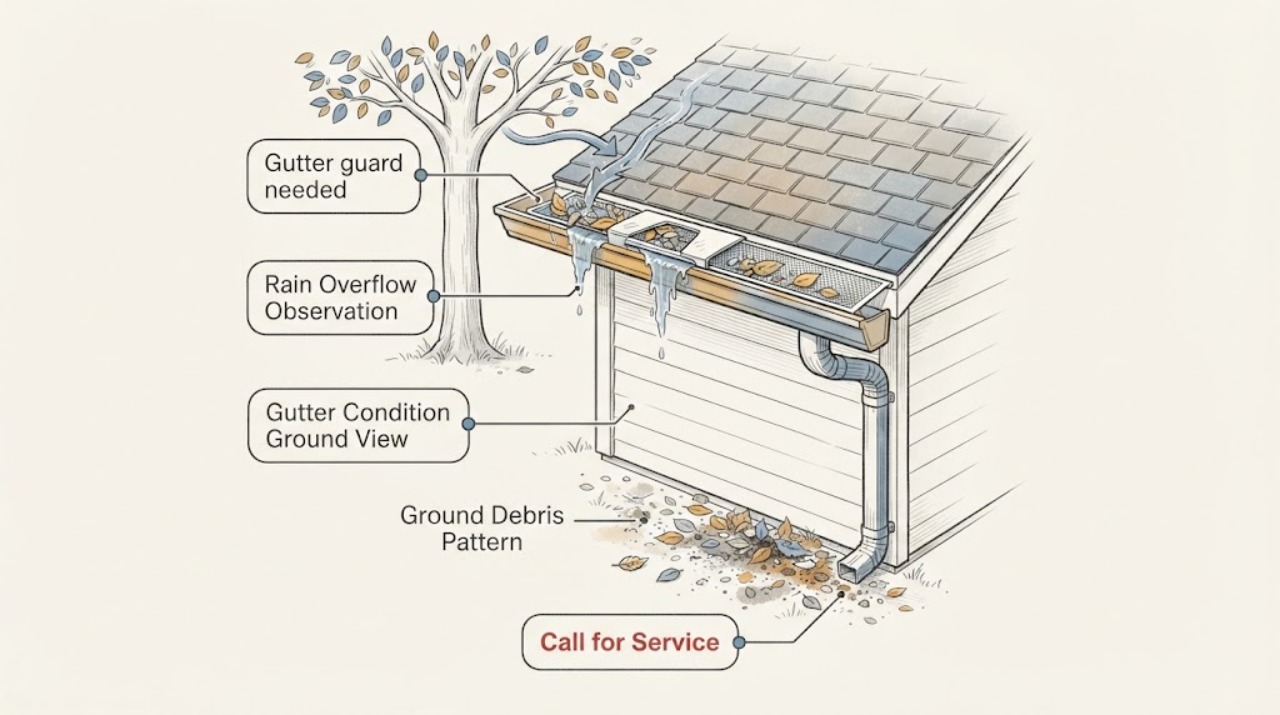
Gutter guard needed: What to Check and What to Do Next
A gutter guard is a project decision, not a reason to climb onto the roof or ladder and install a product yourself. From safe ground or a window, note how much tree debris reaches the roofline, whether gutters overflow during ordinary rain, whether sections sag or separate, and whether downspouts discharge away from the home.
-
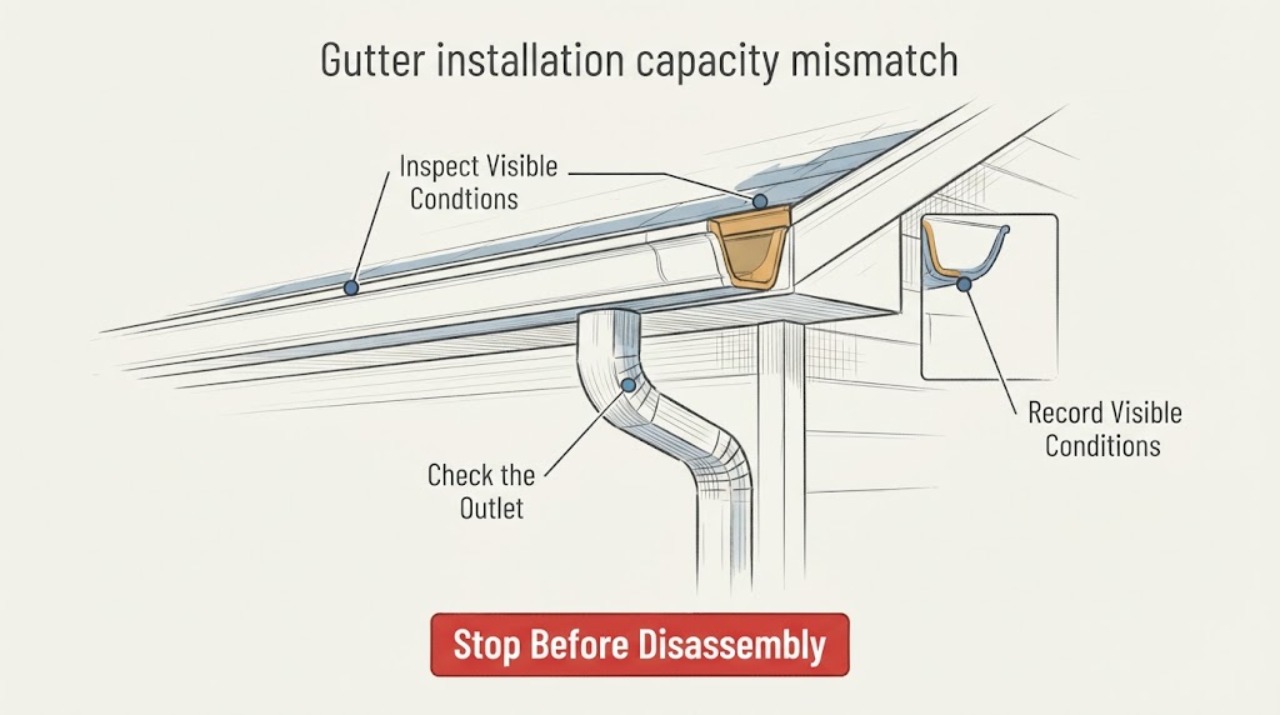
Gutter installation capacity mismatch: What to Check and What to Do Next
If a recently installed or replaced gutter system overflows during ordinary rain even when no obvious debris is present, the issue may be a capacity or layout mismatch rather than a simple cleaning problem. Observe the overflow pattern, visible downspout discharge, roof sections that feed the affected run, and any wetness or erosion at ground level.
-
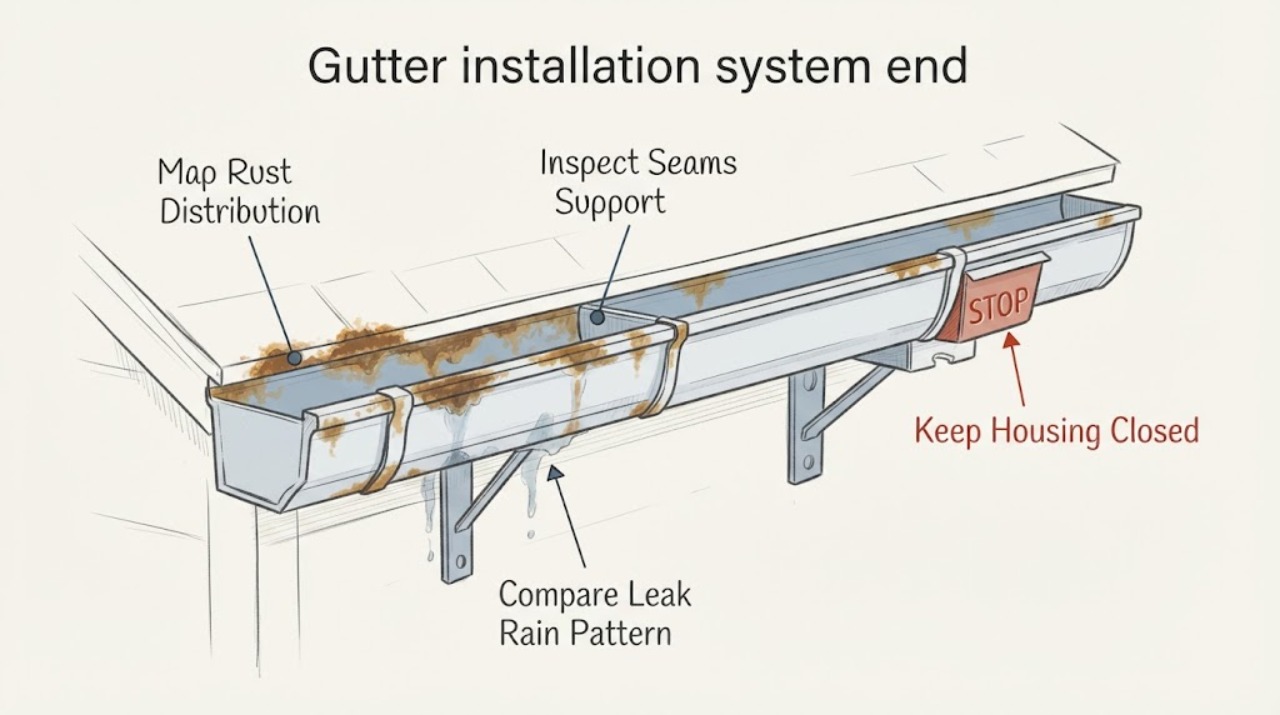
Gutter installation system end of life widespread rust: What to Check and What to Do Next
Widespread rust is a condition to map, not an automatic verdict that the entire gutter system is beyond repair. From the ground, distinguish a surface coating stain or discoloration from pinholes, through-rust, splits, leaking seams, bent runs, sagging, and gutter sections pulling away from the fascia.
-
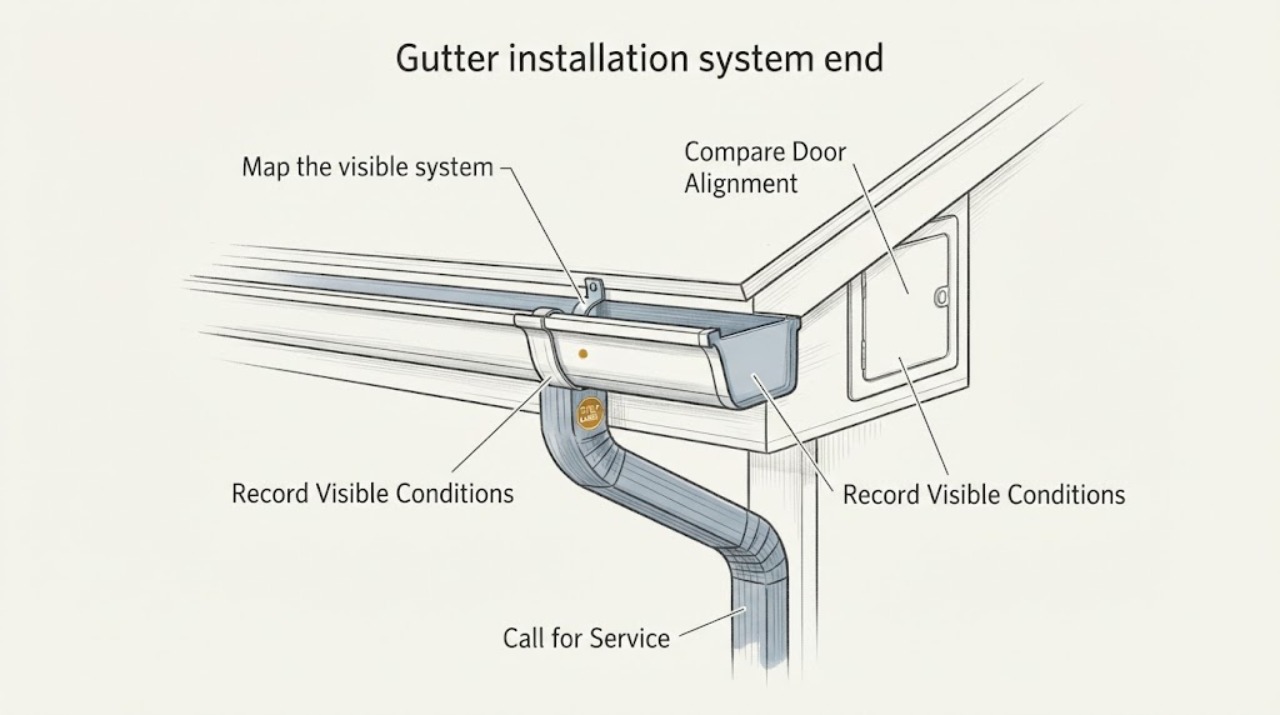
Gutter installation system end of life: What to Check and What to Do Next
A gutter system is a replacement-project question when several sections sag, corrode, leak at seams, overflow, detach, or repeatedly send water toward the building despite ordinary service. From the ground and only in safe, settled weather, document the visible pattern, downspout discharge, foundation moisture, and repair history.
-
Gutter leaking seam drip at joint: What to Check and What to Do Next
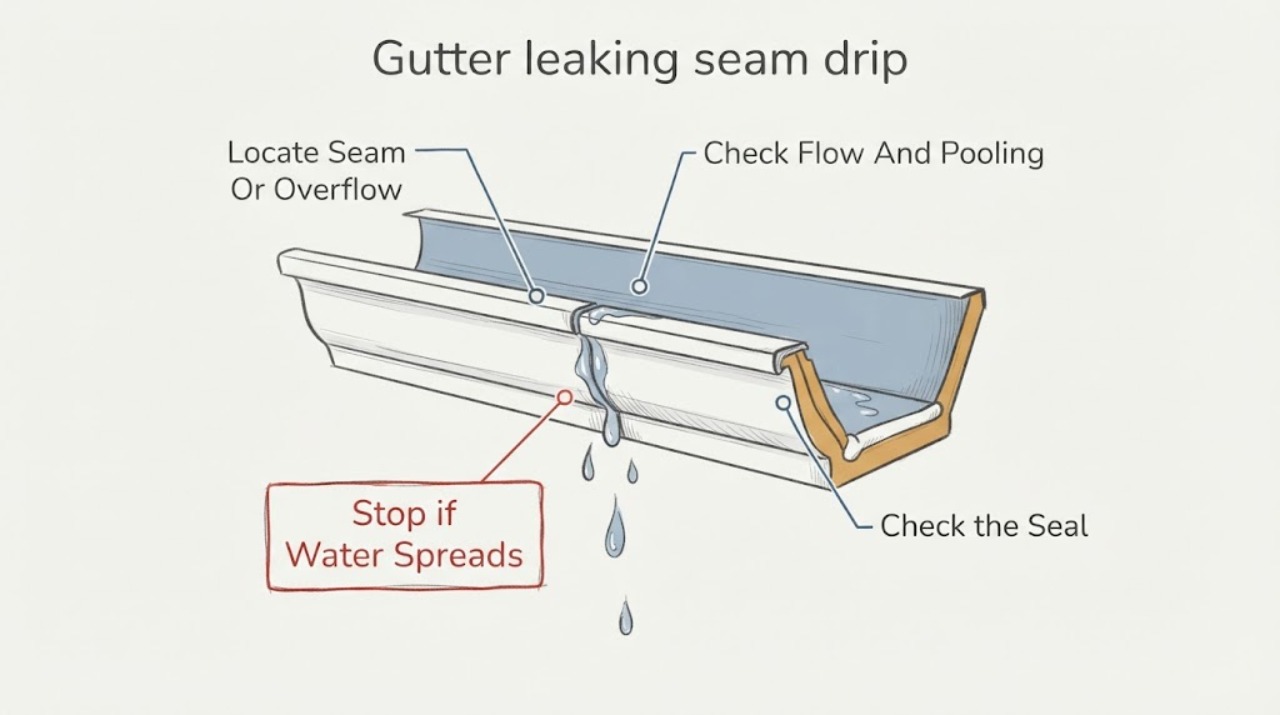
A drip at a gutter seam is usually either a failed joint seal or water escaping from an upstream blockage, sag, or overflow that only appears at the joint. First observe the area during light rain or a controlled flow from a safe, reachable position and distinguish water coming through the seam from water spilling over the top edge.
-
Gutter leaking seam in rain: What to Check and What to Do Next
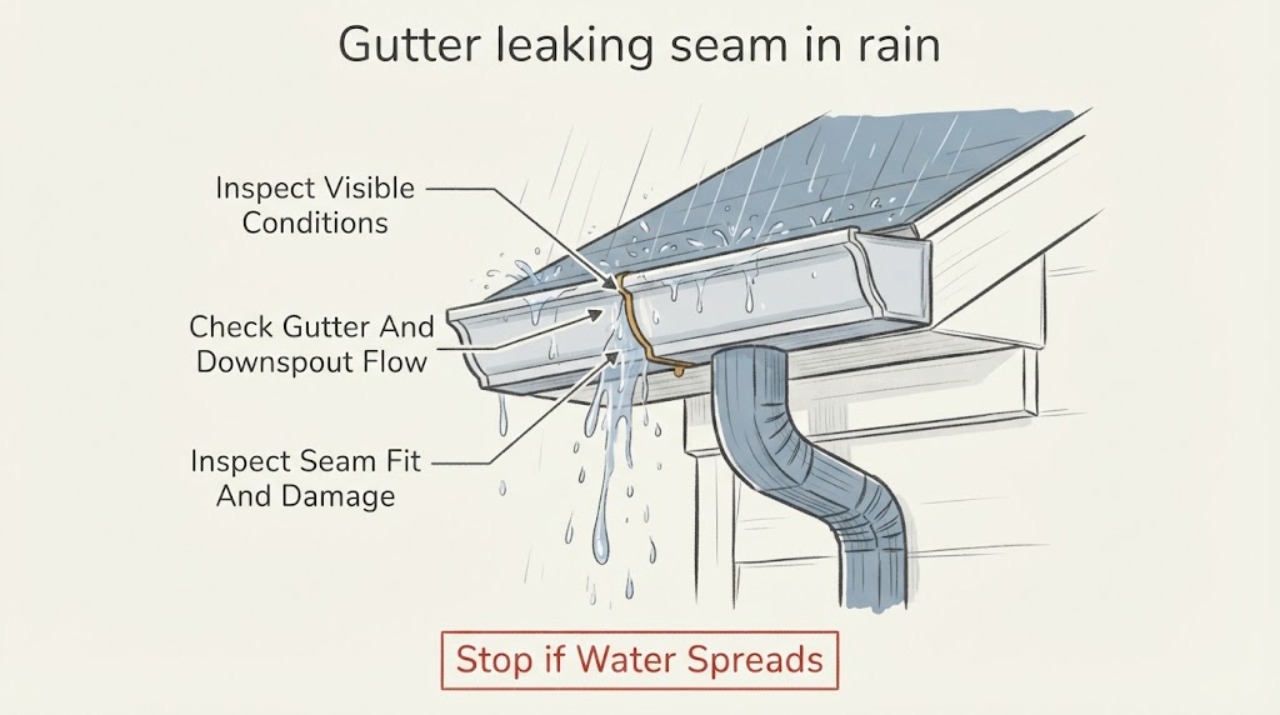
If a gutter seam leaks in rain, first determine whether water is coming through the joint or backing up and escaping because the gutter or downspout cannot carry the flow. A leak that appears at one aligned seam while the channel and downspout flow normally points to failed sealant or a loose lap.
-
Gutter leaking seam rust: What to Check and What to Do Next
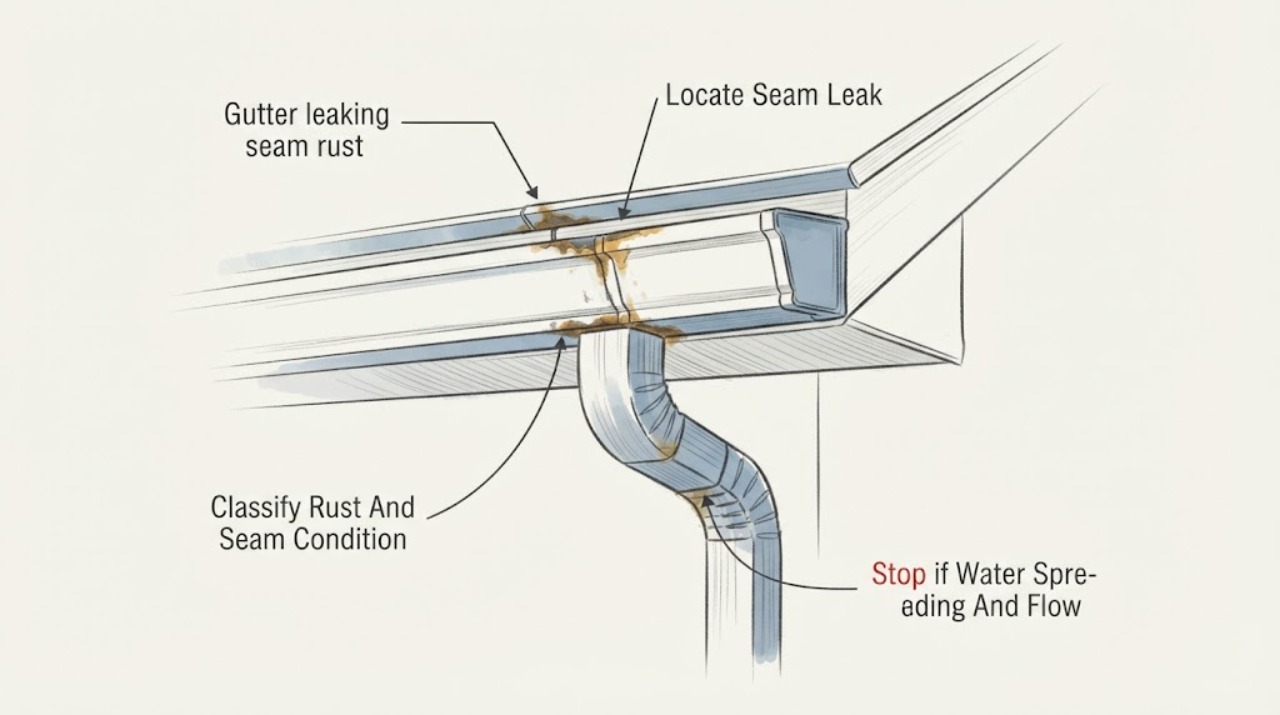
A rusty gutter seam can be a surface-coating problem, a joint that has opened, or a hole where corrosion has perforated the metal. First observe the leak during rain or a cautious ground-level water test and mark the exact point: seam, end cap, downspout outlet, or gutter bottom.
-
Gutter leaking seam: What to Check and What to Do Next
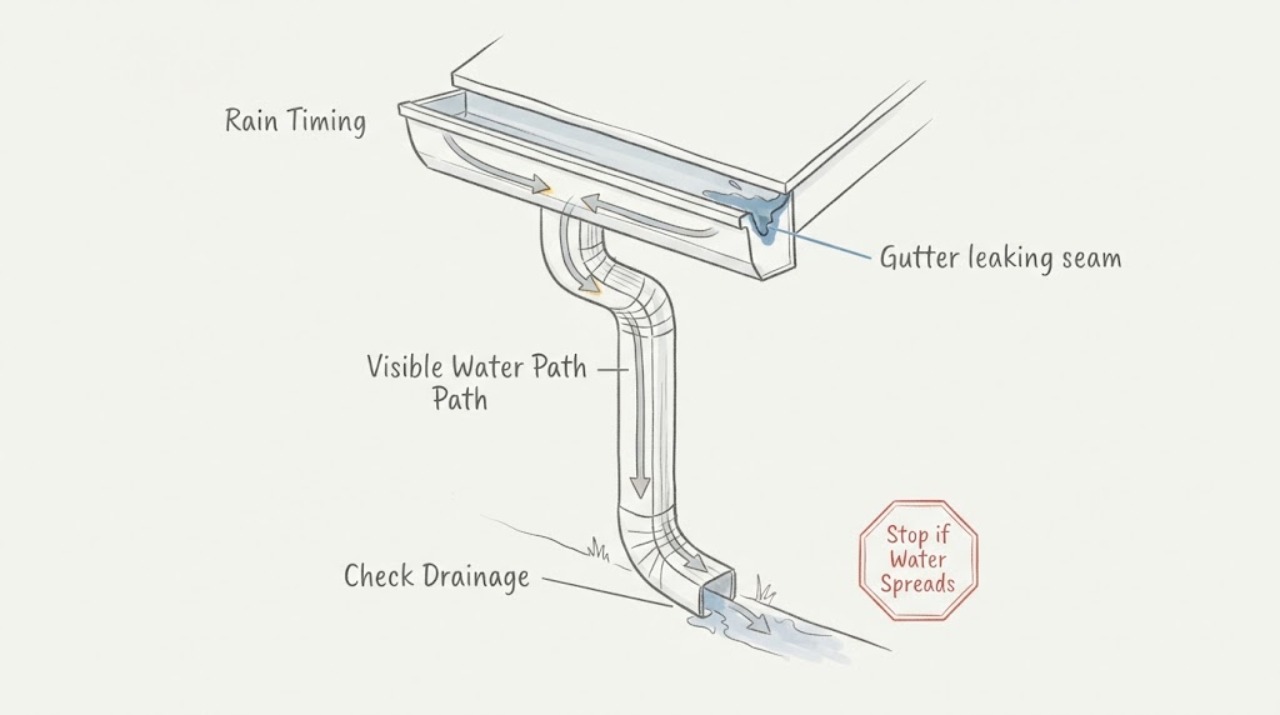
A leak that appears at a gutter seam may come from an open or failed joint, but water can also run from an overflow, a sag, a downspout restriction, roof flashing, or the end cap before it reaches the visible drip. From indoors, a safe window, or ground level, record exactly when the leak appears, where water lands, whether the gutter overflows, and whether the wall or foundation is getting wet.
-
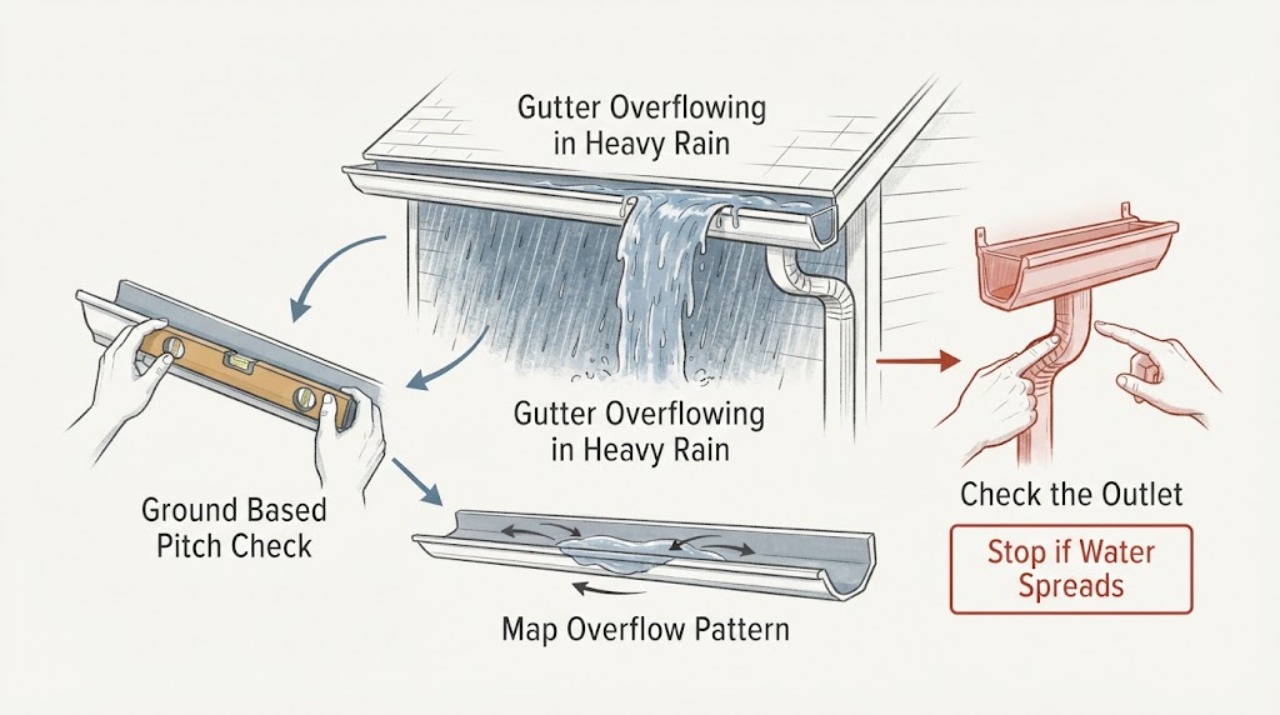
Gutter Overflowing in Heavy Rain: Inadequate Pitch Checks and Next Steps
If a gutter overflows in heavy rain and the water collects at one low section, inadequate fall or a sagging channel is a plausible path, but a blockage, concentrated roof-valley flow, undersized gutter, or limited downspout capacity can look similar. Observe the overflow from a safe position during or just after rain, record exactly where it starts, and on a dry day look for standing water or a visible low point without using a ladder or walking on the roof.
-
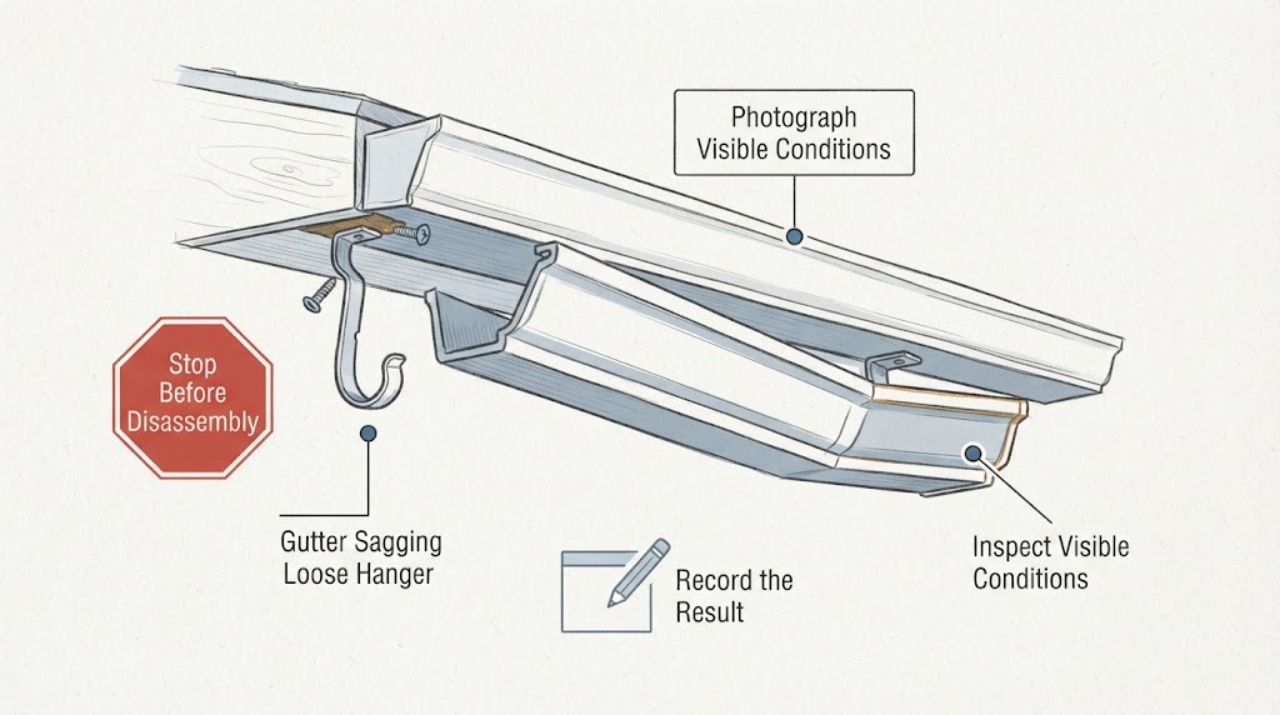
Gutter Sagging Loose Hanger: What to Check and What to Do Next
A loose hanger can let a gutter drop out of its designed fall, so water may pool at the low spot, spill over the front or back, or pull the gutter and its fasteners farther from the fascia. Start from a safe ground-level position: photograph the full run, compare the low point with nearby supports, and observe the water path during light rain if that can be done without climbing or touching the gutter.
-
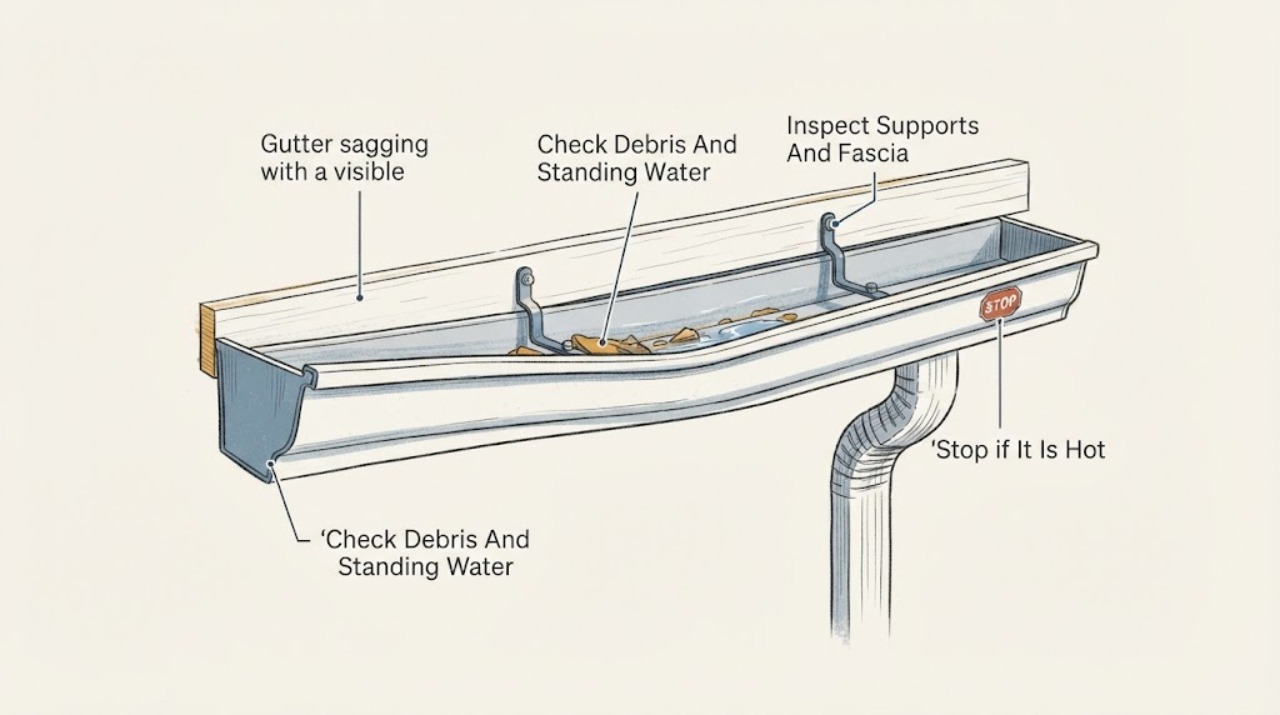
Gutter sagging with a visible dip: What to Check and What to Do Next
A visible dip means the gutter may have lost support, pitch, or both. From the ground, note whether the sag is between hangers, whether the gutter is pulling away from the fascia, and whether debris or standing water is adding weight.
-
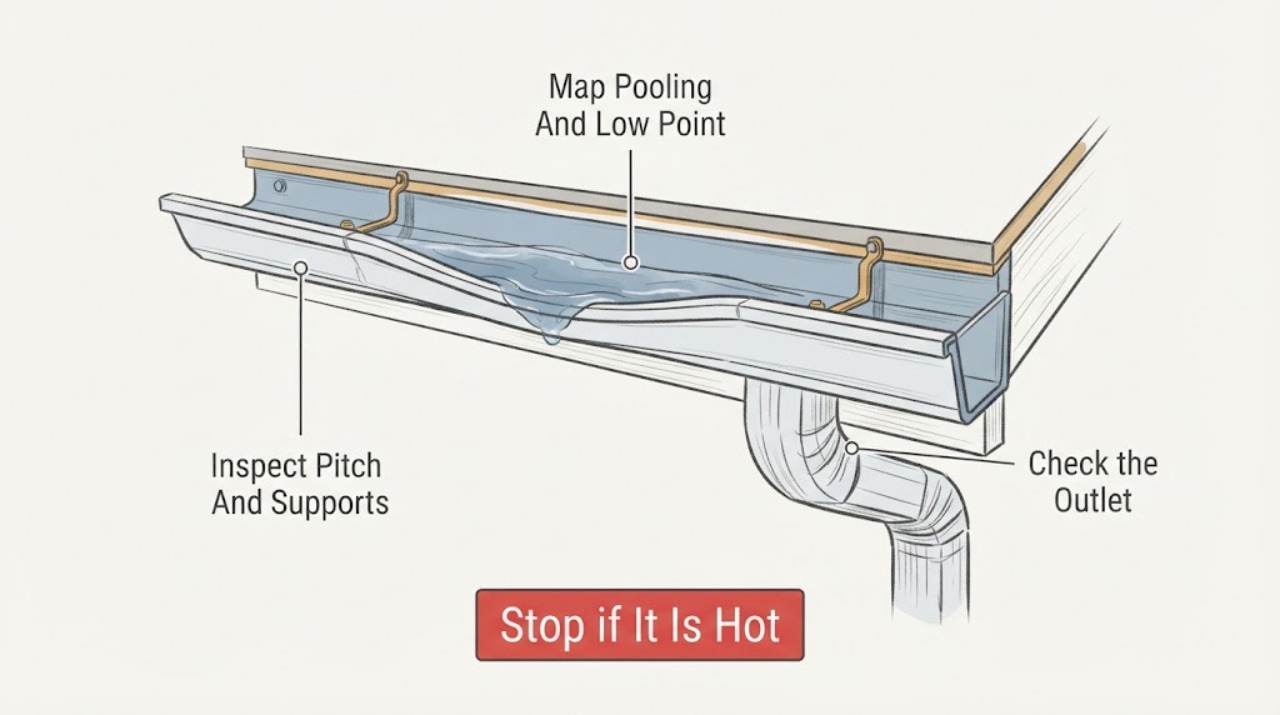
Gutter sagging with water pooling: What to Check and What to Do Next
Water pooling in a visibly sagging gutter usually means the run has lost its fall toward the downspout, but a blocked outlet, wet debris, loose hanger, pulled fastener, damaged fascia, or permanently bent section can be the reason. From the ground, photograph the low point and trace the outlet and downspout.
-
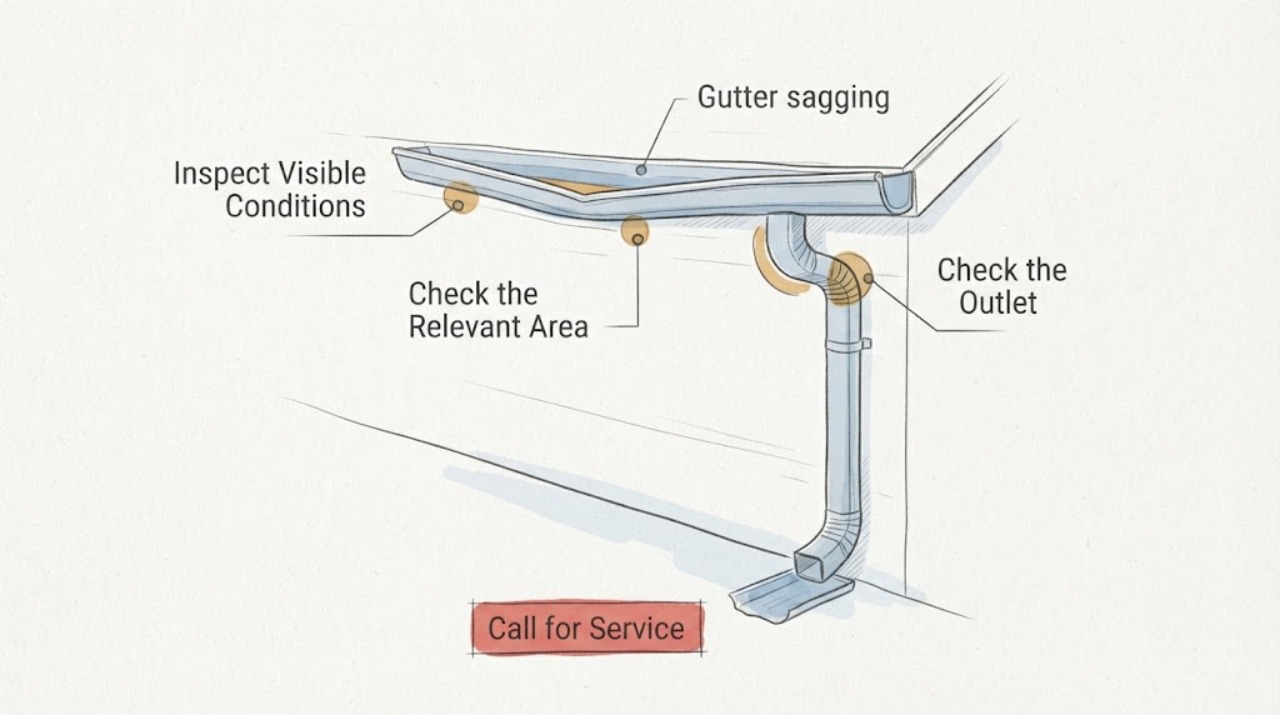
Gutter sagging: What to Check and What to Do Next
Do not use a ladder, climb onto the roof, touch the gutter, or try to refasten it yourself. From safe ground-level and indoor viewpoints in calm, dry conditions, look for a low span, a changed slope, separation from the fascia, overflowing during a recent rain, detached joints, downspout separation, or water and soil erosion near the foundation.
-
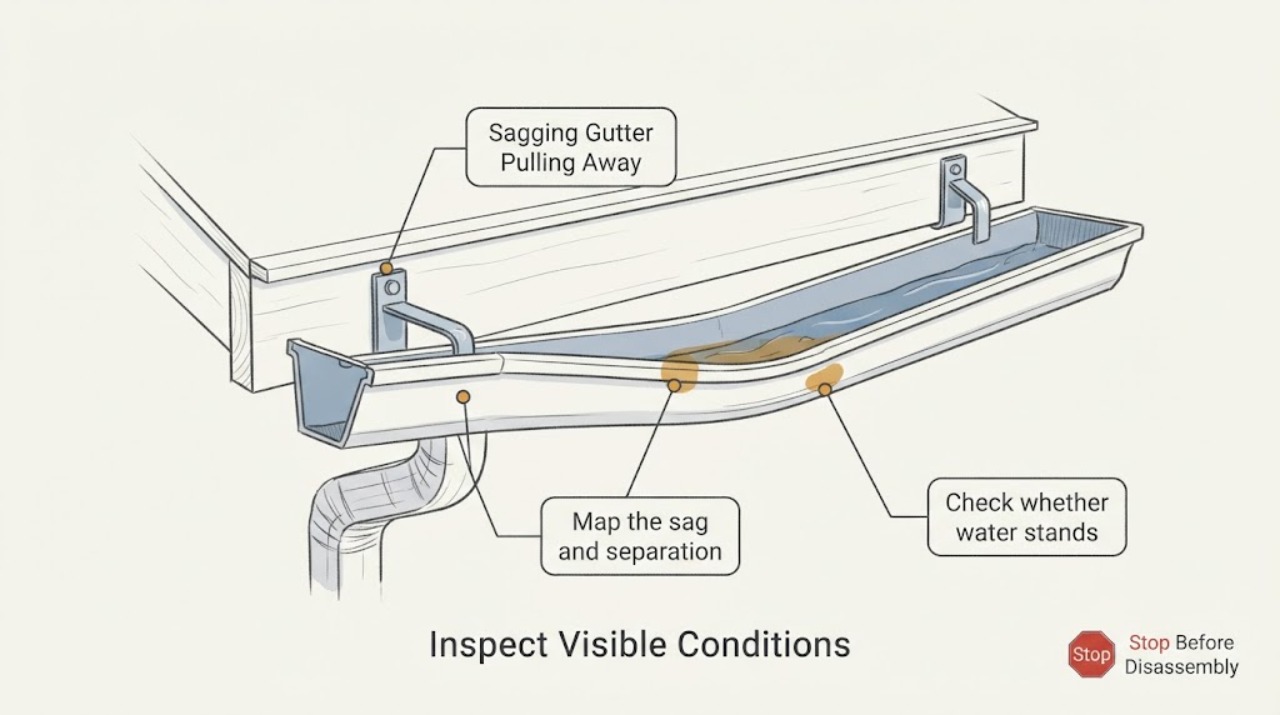
Sagging Gutter Pulling Away From Fascia: What to Check Next
A sagging gutter that is pulling away from the fascia is usually a water-path and attachment problem, not just a cosmetic dip. From the ground, document where the gutter is low, whether water stands or overflows, whether hangers or fasteners appear to pull out, and whether the fascia is soft, split, stained, or visibly rotten.