
On this page
Start here
Quick answer
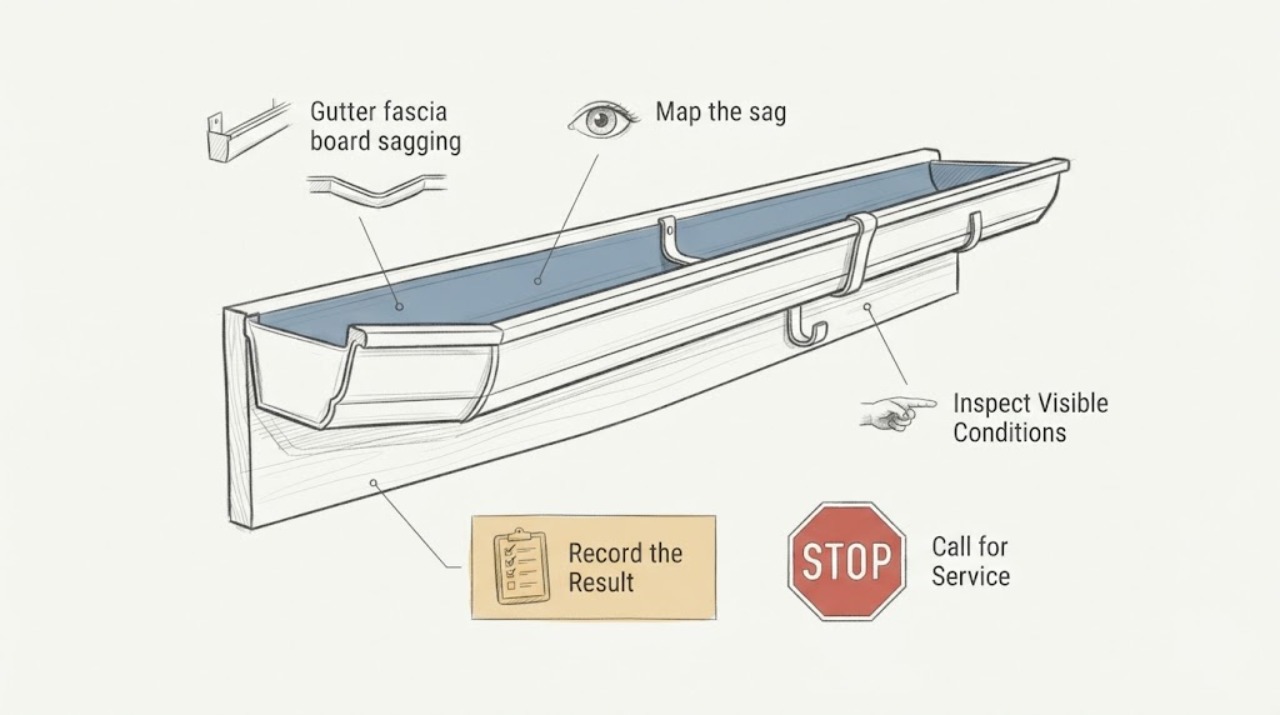
A sagging gutter and fascia board should not be corrected by simply driving in new fasteners. Water overload, a blocked or undersized gutter, loose hangers, rotten fascia, roof-edge runoff, or structural movement may be involved. From the ground, document the sag, downspout flow, overflow marks, staining, and fascia condition. Do not climb, clean from a ladder, remove the gutter, or brace the board; arrange high-priority gutter and fascia inspection, especially if the assembly is pulling away or water is entering the wall.
Work through in order
Diagnostic checks
Use only checks that match the exact appliance or system and its official guide.
-
Map the sag from the ground
Photograph the gutter and fascia from both ends and mark the lowest point, any section pulling away, and the nearest downspouts. Compare the gutter line with nearby roof or trim lines without touching the assembly.
Expected result: Record a localized dip, a long sag, an open end, a detached section, separated joints, or a gutter that appears full of water or debris.
Next step: Provide the photos and map to a gutter professional and keep people away from the area until support is checked.
Stop if: Stop immediately if the gutter is visibly detached, twisted, hanging over a walkway, or could fall.
Why this matters
Why: A localized dip can involve a hanger or joint; a long sag or fascia separation can indicate widespread support or wood damage. USDA guidance says gutter and downspout systems must be properly sized, managed, and maintained to prevent property damage.
-
Observe runoff without climbing or flushing
During or shortly after ordinary rain, observe from the ground whether water exits the downspout, spills over the front or back edge, pours at a joint, or runs behind the gutter onto the fascia. Do not use a hose, reach into the gutter, or stand below a loaded section.
Expected result: Record normal visible discharge, overflow at the sag, overflow at one joint, water behind the gutter, or no discharge from a downspout.
Next step: Photograph the runoff path and request inspection of the gutter, outlets, downspouts, fascia, and roof-edge flashing. Do not attempt a ladder cleaning.
Stop if: Stop for active wall leakage, water near electrical equipment, a gutter that shifts under runoff, or any need to access the roof edge.
Why this matters
Why: Overflow or no visible downspout discharge can indicate debris, blockage, inadequate slope, or capacity trouble. Water behind the gutter can wet and decay fascia and adjacent wall materials.
-
Look for visible fascia damage
From the ground and from inside the upper room if safely accessible, look for peeling paint, dark staining, soft-looking wood, swelling, rot, cracked trim, insect damage, or a gap between gutter and fascia. Do not probe the wood or remove trim.
Expected result: Record a clean dry fascia, staining only, visible decay or swelling, a separated fastener line, or interior water marks below the roof edge.
Next step: Include the fascia condition in the service request and ask that the support substrate and roof-edge water path be evaluated before reattachment.
Stop if: Stop if the fascia is bulging, crumbling, detached, or the interior ceiling or wall is wet.
Why this matters
Why: USDA Forest Service guidance explains that fascia is continually exposed to moisture and that leaking or overflowing gutters further wet the trim, making decay more likely. A soft fascia cannot reliably hold a new hanger.
-
Check where the downspout sends water
From the ground, trace each visible downspout to its outlet and observe whether water is directed toward the wall, foundation, erosion, or a blocked discharge area. Note loose joints or a missing extension without pulling on the pipe.
Expected result: Record a stable outlet away from the wall, discharge against the foundation, a disconnected joint, ponding, erosion, or no visible outlet.
Next step: Photograph the outlet and ground condition for the provider; request correction of the drainage path as part of the gutter repair.
Stop if: Do not dig, reroute buried drainage, disconnect a downspout, or enter a wet or eroded area.
Why this matters
Why: NRCS guidance warns that downspouts directed toward buildings can cause property damage, and EPA moisture guidance emphasizes directing runoff away from structures. Poor discharge can keep the fascia and wall wet even after the gutter is reattached.
-
Prepare the repair handoff
Compile the sag map, runoff photos, fascia and interior moisture observations, downspout outlet condition, recent storms, visible debris, and any prior fastening or patch repair. Ask the provider to evaluate the substrate and roof-edge flashing, not just the gutter face.
Expected result: The record identifies a support failure, fascia decay, overflow or blockage pattern, harmful discharge route, or an unresolved sag that cannot be safely viewed closer.
Next step: Request high-priority gutter and fascia service for detachment, active overflow, rot, wall moisture, or any elevated work. Keep the area clear until inspected.
Stop if: Do not climb, clean, brace, rehang, drill, seal, or replace the gutter assembly as a DIY step.
Why this matters
Why: The gutter, hangers, fascia, downspouts, and roof-edge drainage interact. Replacing one visible part without correcting water load or rotten substrate can leave the sag and leakage path in place.
Use your observations
Decision map
Find the observation that best matches what you see, then follow the next safe action.
-
PATH 01Safety boundary
What you see
The gutter is pulling away, twisted, hanging, or could fall.
Do this next
Keep people and vehicles clear and request prompt gutter and fascia service; do not touch the assembly.
Why this path and its safety boundary
Safety stop: No ladder access, bracing, re-hanging, or fastener work is included.
-
PATH 02Safety boundary
What you see
Water overflows or runs behind the gutter and fascia shows staining, swelling, or rot.
Do this next
Request inspection of gutter capacity, outlets, downspouts, fascia substrate, roof-edge flashing, and wall moisture before reattachment.
Why this path and its safety boundary
Safety stop: Do not cover the evidence with caulk, paint, or a new hanger.
-
PATH 03Safety boundary
What you see
A stable-looking dip is visible but no active overflow or fascia damage can be seen from the ground.
Do this next
Arrange a non-emergency professional inspection and monitor only from the ground after rain.
Why this path and its safety boundary
Safety stop: Do not assume the dip is cosmetic or safe to load with a hose test.
-
PATH 04Safety boundary
What you see
A downspout directs water at the wall or foundation, or the ground is ponding or eroding.
Do this next
Document the outlet and request drainage correction with the gutter repair.
Why this path and its safety boundary
Safety stop: Do not disconnect, dig, or reroute the outlet yourself.
Helpful context
Understand the symptom
Gutters carry roof runoff, and their weight increases when they hold water or debris. USDA guidance notes that fascia at the roof edge is exposed to moisture and can decay, while leaking or overflowing gutters wet the trim further. A sag may therefore be a gutter-support symptom, a fascia failure, or evidence of a roof-edge drainage problem.
Keep this inspection at ground level. Do not climb a ladder or roof, lean on the gutter, pull a downspout, remove hangers, drill the fascia, or reach into a gutter. If water is actively entering the wall, the fascia is detached, or the gutter could fall, keep people clear and request prompt service.
Document the load and the damage
Take a wide photo of the roof edge and close photos from the ground. Note where the sag begins and ends, whether the gutter slopes toward a downspout, whether joints or hangers are separated, and whether water stains or rot are visible below. Do not try to restore slope while the gutter is loaded.
A temporary fastener or seal can fail again if the fascia is soft, the roof edge sheds water onto it, or the drainage route is blocked. The repair must address support and runoff together.
Only after diagnosis
Potential parts
- gutter-hanger
Only after a professional confirms the fascia substrate and gutter profile can support the specified hanger.
- fascia-repair-bracket
When the repair plan calls for reinforcement after the water path and substrate condition are evaluated; it is not a substitute for rotten wood repair.
When checks do not resolve it
Need a professional?
Request high-priority gutter and fascia service for a hanging or detached gutter, active overflow, fascia decay, wall moisture, foundation ponding, or any elevated inspection or repair. Keep clear of the assembly until it is assessed.
Common questions
FAQ
Why is my gutter sagging if the hangers are still attached?
The fascia may be soft, a hanger may have pulled out, water or debris may be loading the gutter, or the roof-edge drainage path may be sending water behind it. Attached hardware does not prove the substrate is sound.
Can I just add a gutter screw to stop the sag?
Do not add fasteners without checking the fascia, water load, and roof-edge drainage. A new screw in decayed wood may not hold and can hide the need for substrate repair.
Should I clean the gutter before repairing the fascia?
This topic is professional-service only. Do not climb or reach into a sagging gutter. Have a professional evaluate debris, outlets, fascia, and downspouts as one system.
Can a downspout cause fascia damage?
Yes. Overflow, a blocked outlet, or water directed toward the wall can keep roof-edge materials wet. Document the discharge path and ask for drainage correction with the fascia and gutter repair.
When should I call for gutter and fascia repair?
Call promptly for a detached or hanging gutter, active overflow, visible rot or swelling, water behind the gutter, interior staining, foundation ponding, or any repair requiring ladder or roof access.
Read the exact guide
Official sources
- Build Green: Wood Can Last for CenturiesU.S. Department of Agriculture Forest Service · Use for fascia moisture exposure, decay risk, and the effect of leaking or overflowing gutters.
- A Homeowner's Guide to Sustainable Home DrainageUSDA Natural Resources Conservation Service · Use for gutter capacity, overflow, downspout routing, and property-damage risk.
- Moisture Control Guidance for Building Design, Construction and MaintenanceU.S. Environmental Protection Agency · Use for tracing runoff, fascia and cladding protection, and visual drainage-system observations.
Community feedback
Share a repair observation
Share a plain-text repair observation. Accepted observations are published automatically; this page may take a moment to update.