
On this page
Start here
Quick answer
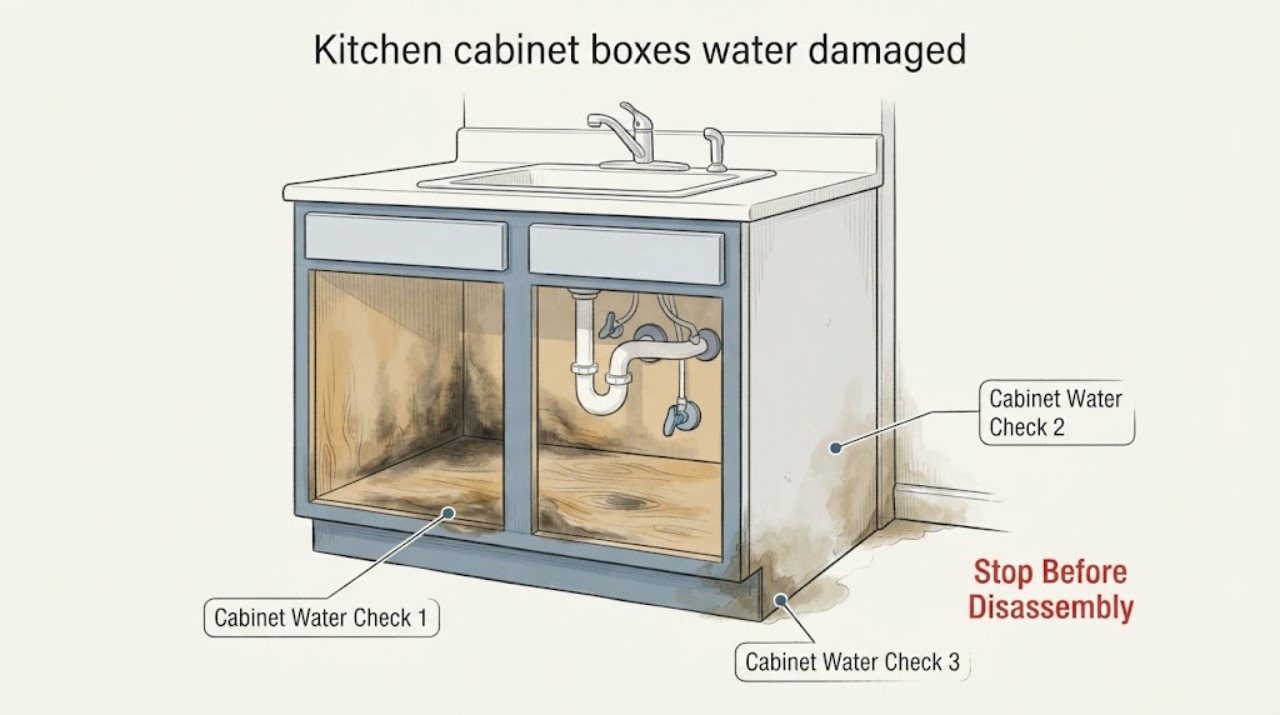
Stop the leak first, then document how far water reached before deciding whether a cabinet box can dry and be repaired or needs replacement. From a safe, dry position, remove contents and drawers, open the doors, blot reachable standing water, and inspect for swelling, delamination, soft panels, odor, or moisture behind the sink base. Dry, cleanable surfaces may be salvageable after the water problem is fixed; a swollen or crumbling box, hidden moisture, contaminated water, visible mold, or damage that returns calls for a qualified water-damage or cabinet professional. Do not demolish the cabinet, cut plumbing, or attempt mold remediation yourself.
Work through in order
Diagnostic checks
Use only checks that match the exact appliance or system and its official guide.
-
Check 1
From a dry standing position, identify where water is coming from and photograph the leak path before moving items. If a local shutoff is clearly accessible and the floor and nearby electrical equipment are dry, close that valve; do not cut a pipe or open a wall.
Expected result: Water that appears at a supply or drain connection, continues while the fixture is unused, or returns after wiping indicates an active plumbing or appliance leak. Water that appears only after the sink or dishwasher runs suggests a use-related connection that still needs repair.
Next step: If the source cannot be stopped safely, stop handling the cabinet and call a plumber or water-damage professional. If it is stopped, continue with a non-destructive extent check.
Stop if: Stop if water is near electrical equipment, the shutoff is stuck, or the source is inside a wall or fixed cabinet section.
Why this matters
Why: Cabinet drying cannot succeed while new water is entering. The source must be repaired before the box can be judged for salvage or replacement.
-
Check 2
Remove loose contents and removable drawers, open the cabinet doors, and blot reachable standing water with towels. Inspect the sink base, toe-kick edge, cabinet bottom, back corners, adjacent floor, and wall surface without prying, drilling, or removing fixed panels.
Expected result: A dry, firm surface with a limited stain suggests the visible damage may be cosmetic or localized. Swelling, lifted laminate or veneer, soft particleboard, a musty odor, damp flooring, or moisture that reappears after blotting indicates that water remains in or behind porous material.
Next step: Record each affected area and, if available, compare readings from dry-looking and visibly wet sections with a moisture meter according to its instructions. Do not open concealed cavities to chase a reading.
Stop if: Stop and seek professional cleanup if floodwater, sewage, visible mold, or a strong persistent odor is present.
Why this matters
Why: The pattern distinguishes a cabinet component that may dry from a box or surrounding assembly that needs a professional moisture assessment. Hidden moisture can persist even when the front looks dry.
-
Check 3
After the source is repaired, allow safe ventilation and inspect the box again for drying progress; keep doors and drawers open and use ordinary air movement only when no mold is visible or suspected and electrical use is safe.
Expected result: If the cabinet becomes dry, firm, and odor-free without new staining, a cabinet professional can evaluate whether cleaning, refinishing, or limited hardware work is reasonable. If moisture, odor, swelling, or discoloration persists, the material has not recovered.
Next step: Do not paint or caulk over a damp or moldy surface. If mold is visible or suspected, stop air movement that could spread it and arrange qualified remediation; keep occupants away from the affected area as appropriate.
Stop if: Stop DIY cleanup if mold has started, the water was contaminated, or anyone develops breathing or irritation symptoms.
Why this matters
Why: Drying and source control come before paint, caulk, or replacement decisions. Porous material that cannot be cleaned and dried completely may not be a sound repair candidate.
-
Check 4
Once the area is dry enough to inspect safely, compare the cabinet box, hinges, drawer openings, countertop support area, toe-kick, and adjacent floor for alignment and firmness; do not remove the box or countertop to investigate.
Expected result: Doors that no longer align, hinges pulled from swollen material, a sagging or soft sink base, delaminated edges, crumbling panels, or a countertop that has lost support indicates structural cabinet-box damage. Hardware that works normally while the box stays rigid points to a more limited component issue.
Next step: Have a cabinet replacement or water-damage professional assess the box and adjacent construction before ordering parts. Provide photographs, the leak source, the affected cabinet dimensions, and the observed moisture or odor pattern.
Stop if: Stop using the cabinet or sink area if the box is unstable, the countertop is unsupported, or the floor feels soft.
Why this matters
Why: Hardware can sometimes be replaced without replacing a sound box, but swelling, delamination, or loss of stiffness can prevent a reliable repair and may extend into the floor or wall.
Use your observations
Decision map
Find the observation that best matches what you see, then follow the next safe action.
-
PATH 01Next step
What you see
The leak is active or the water source is unknown
Do this next
Protect people and contents, use only a clearly accessible shutoff when safe, and call a plumber or water-damage professional before opening the cabinet structure.
-
PATH 02Next step
What you see
The box is firm, dries fully, and has no mold or persistent odor
Do this next
Ask a cabinet professional whether cleaning, refinishing, or limited hardware replacement is appropriate.
Helpful context
Understand the symptom
Why the cabinet box matters
A wet door or adjustable shelf is different from a swollen cabinet box. The box carries the sink base, hinges, and countertop loads, and water can travel behind its finished surfaces or into the wall and floor. A cabinet can look dry at the front while its bottom, toe-kick, back panel, or adjoining flooring remains damp. The first decision is therefore whether the water source is stopped and the box is drying, not whether a cosmetic panel can be repainted.
Keep the first response low-risk
If the leak is active, use an accessible local shutoff only if you can do so without touching wet electrical equipment; otherwise leave the area and call a plumber. Do not pull a fixed cabinet apart to reach a pipe. If floodwater, sewage, or visible mold is involved, treat the cabinet and the surrounding cavity as a professional cleanup job rather than a normal cabinet repair.
Safety boundary
Stop conditions
- Stop if the cabinet area contains standing water near electrical equipment, sewage or floodwater, visible mold, or a strong persistent odor.
- Do not demolish the cabinet, cut plumbing, pry fixed panels, or open a wall to chase hidden moisture.
- Stop using the sink or cabinet if the box is unstable, the countertop has lost support, the floor is soft, or the leak returns.
Only after diagnosis
Potential parts
- Cabinet hardware
Only after a cabinet professional confirms that the box is dry, firm, and suitable for hardware repair.
Match the existing hinge or drawer hardware type and mounting pattern; water-damaged box material may not hold replacement hardware. - Moisture meter
For comparing accessible cabinet and adjacent surfaces during a non-destructive assessment.
Use readings as a comparison aid, not as a substitute for a professional assessment of hidden or contaminated areas. - Sink leak alarm
After the source is repaired, as an optional early warning for a future under-sink leak.
Place only where it remains reachable and cannot interfere with plumbing, cabinet doors, or electrical equipment.
When checks do not resolve it
Need a professional?
Call a qualified plumber first when the source is active or unknown. Call a water-damage or mold-remediation professional for contaminated water, visible mold, hidden moisture, persistent odor, or an area that cannot be safely dried. Call a cabinet professional when the box is swollen, delaminated, soft, misaligned, or no longer supports its hardware or countertop reliably.
Have this ready
- Share the leak source and whether it is stopped, photographs of the sink base and adjacent floor or wall, the duration of wetness if known, visible swelling or delamination, any odor or mold, and which doors, drawers, hinges, or supports no longer align.
Common questions
FAQ
Can a water-damaged kitchen cabinet box be repaired?
Sometimes, if the source is fixed and the box dries fully while remaining firm, aligned, and free of persistent odor or mold. Swelling, delamination, soft panels, hidden moisture, or lost support usually requires a professional repair-versus-replacement assessment.
Should I use a fan on a wet cabinet?
Safe ventilation and drying may help when no mold is visible or suspected and electricity is safe, but do not use air movement that could spread suspected mold. Follow professional cleanup guidance for moldy or contaminated areas.
Do I need to replace the whole kitchen after a sink leak?
Not automatically. First stop the leak and document the affected box, floor, wall, and hardware. A cabinet professional can distinguish a dry, sound box from porous or structural damage that cannot be reliably restored.
Read the exact guide
Official sources
- Homeowner’s and Renter’s Guide to Mold Cleanup After DisastersCenters for Disease Control and Prevention · Official CDC guidance used for opening kitchen cabinets and drawers to dry, recognizing professional cleanup conditions, and avoiding unsafe DIY mold work.
- What You Can Do to Protect Your Respiratory Health During Disaster CleanupCenters for Disease Control and Prevention, National Center for Environmental Health · Official CDC safety guidance used for hidden mold around cabinets, exposure precautions, and stopping work when respiratory symptoms occur.
- What are the basic mold cleanup steps?U.S. Environmental Protection Agency · Official EPA guidance used for moisture control, fixing leaks, drying items, handling porous materials, and avoiding paint or caulk over mold.
Community feedback
Share a repair observation
Share a plain-text repair observation. Accepted observations are published automatically; this page may take a moment to update.