
Repair problem
Basement Flooding Troubleshooting Guides
Published FixGraph guidance for diagnosing and responding to basement flooding.
Matching published guides
Choose a guide that matches the service, equipment, and conditions you are seeing.
-
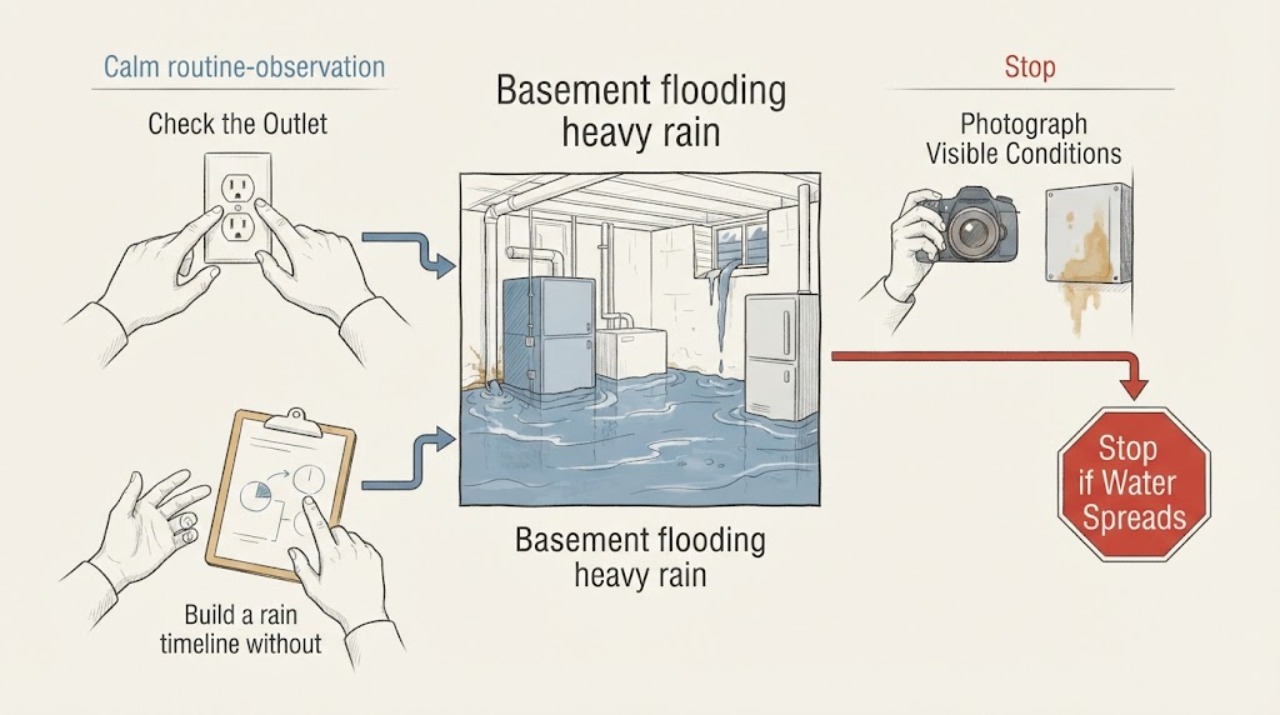
Basement flooding heavy rain: What to Check and What to Do Next
For basement flooding after heavy rain, first stay out of standing water and isolate the electrical and sewage risk from a dry position. Record when rain began, when water appeared, whether it rose or receded with the storm, and where it first entered: wall or floor joints, foundation cracks, window wells, floor drains or fixtures, or the sump area.
-
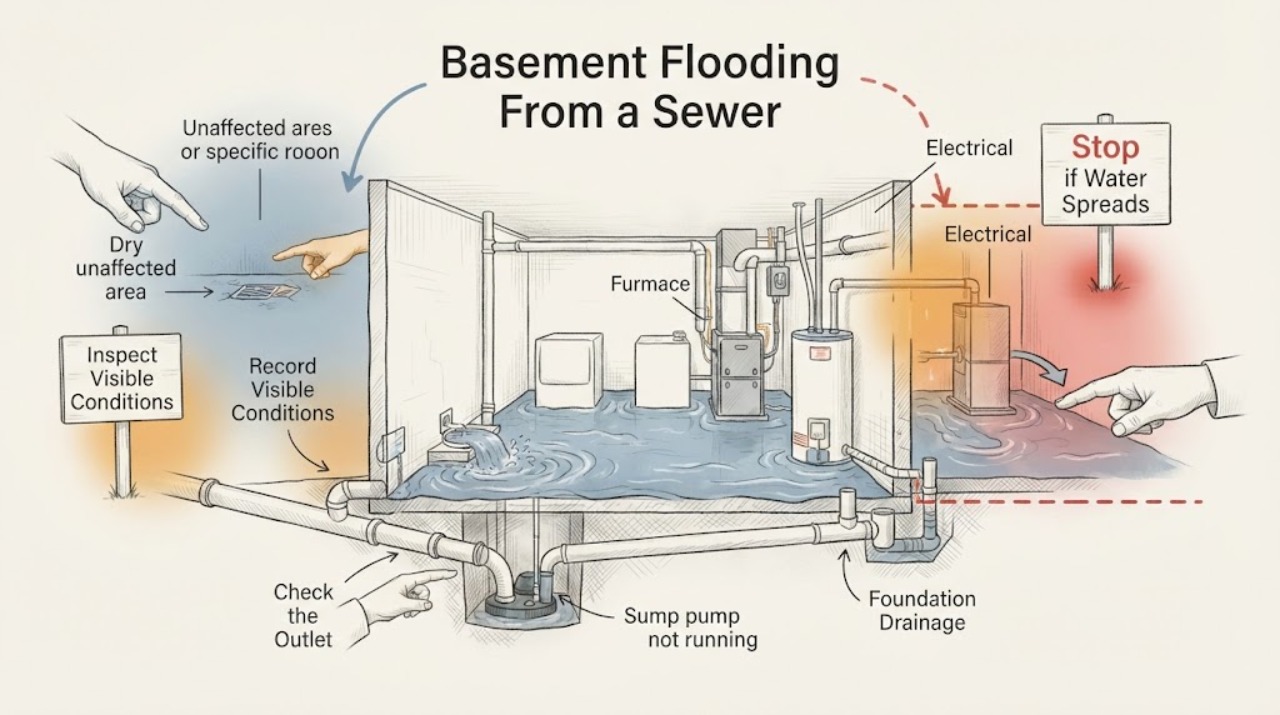
Basement Flooding From a Sewer Backup: What to Check and What to Do Next
Treat basement floodwater as contaminated until its source is known. Keep people and pets out, and never step into water to reach a breaker, outlet, appliance, or pump.
-
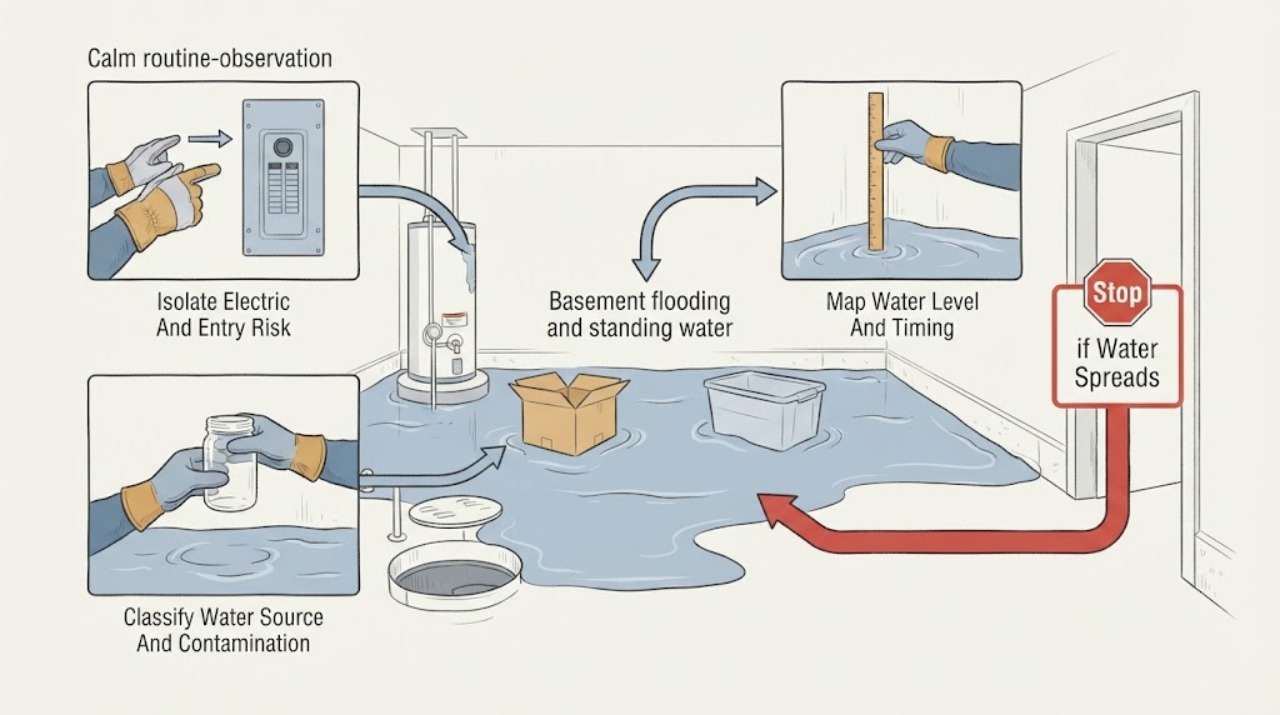
Basement flooding and standing water: What to Check and What to Do Next
Treat basement standing water as an electrical, contamination, and building-safety problem before treating it as a pumping job. Do not enter the water or use electrical tools.
-
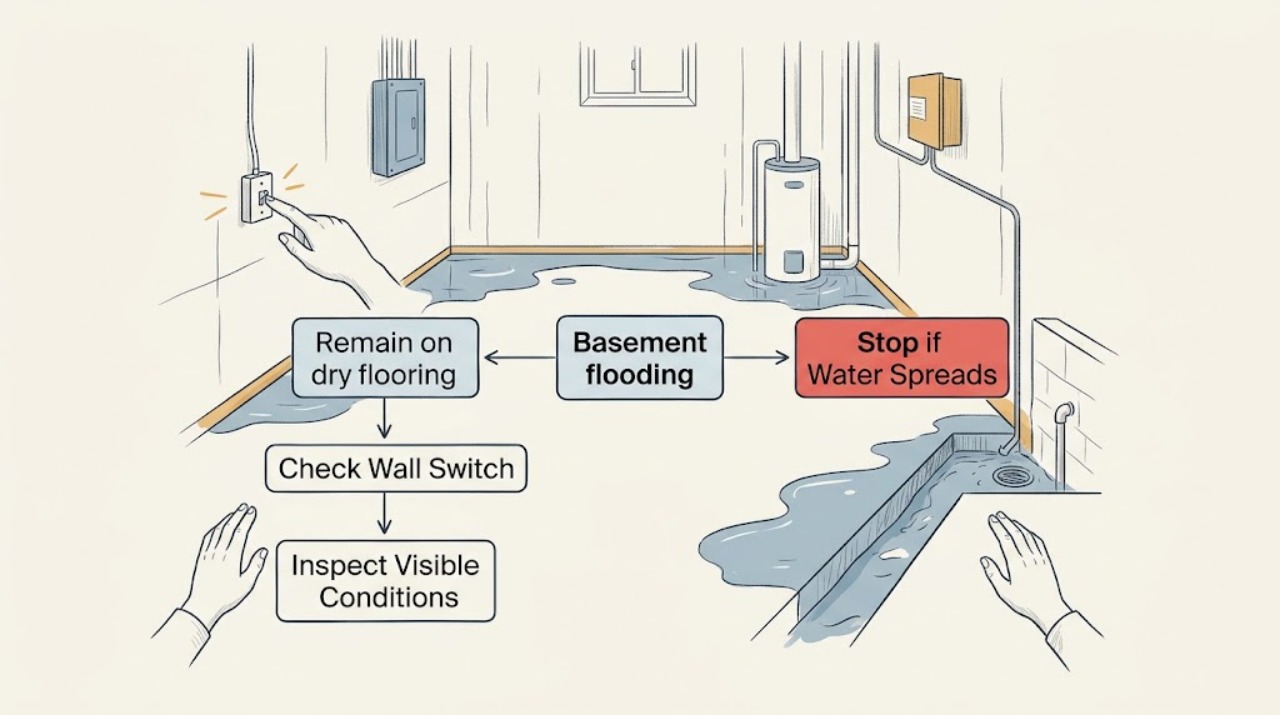
Basement flooding: What to Check and What to Do Next
Treat a flooded basement as a safety incident first, not a cleanup project. Stay in a dry, safe location and observe the visible water level, access route, electrical equipment, gas or chemical warnings, structural movement, and signs of sewage without entering standing water or touching equipment.
-
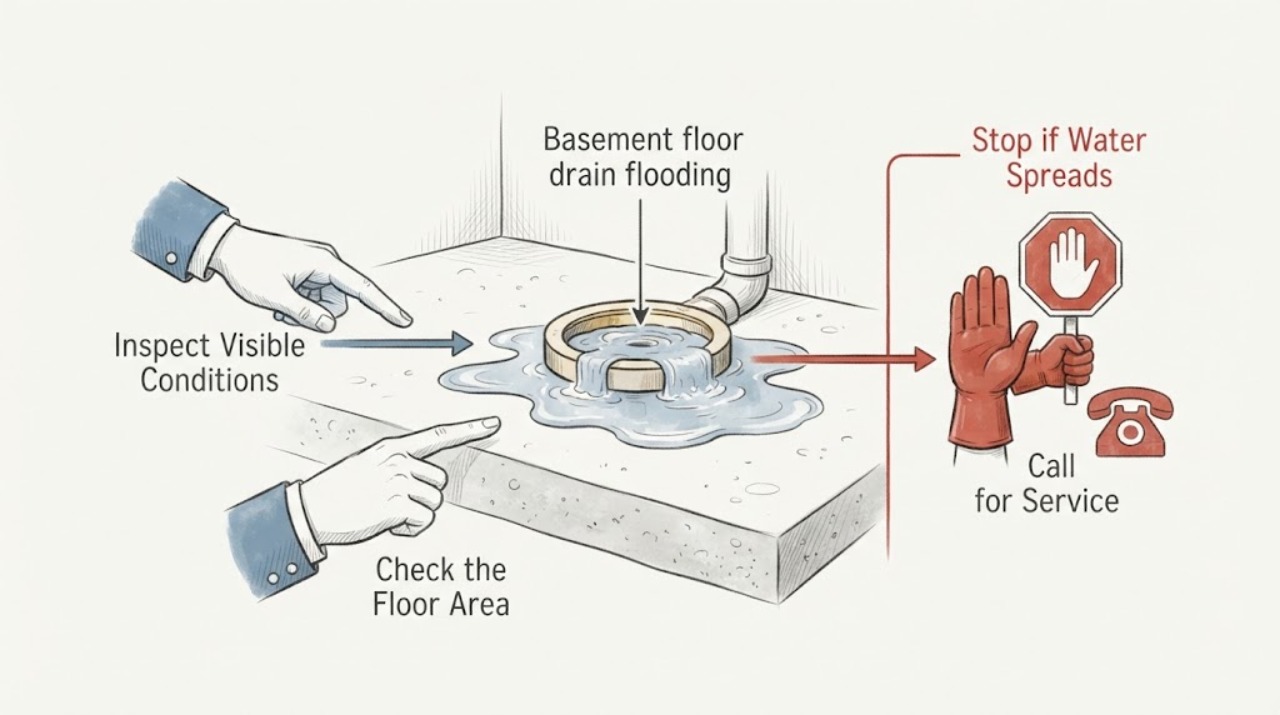
Basement floor drain flooding: What to Check and What to Do Next
Treat a flooded basement floor drain as an urgent safety and contamination event, not a routine drain clog. Stay out of standing water and observe only from a dry, stable location: identify whether the water is clear or contaminated-looking, whether it rises when it rains or when household water is used, and whether electrical or structural hazards are nearby.
-
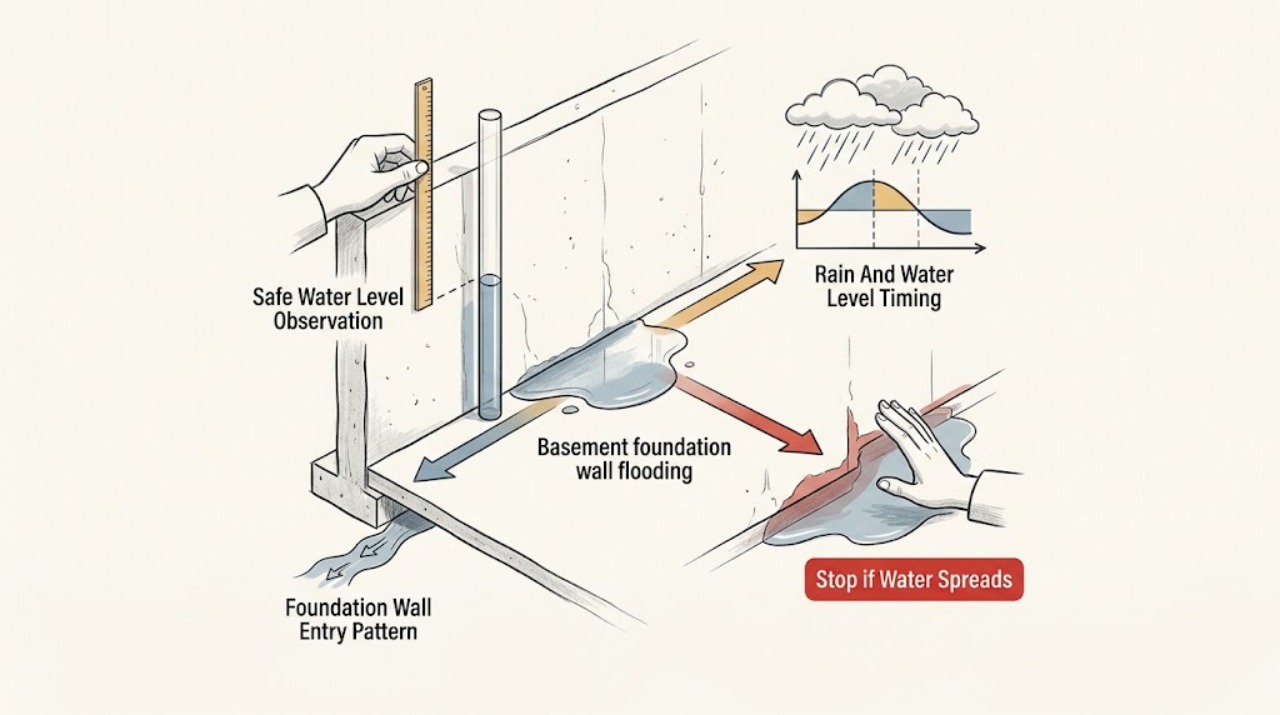
Basement foundation wall flooding: What to Check and What to Do Next
Treat water entering at a basement foundation wall as an urgent water-damage and safety event. Stay in a dry, stable location; do not walk into standing water, touch wet electrical equipment, handle sewage, pump against an uncertain structure, scrape or open the wall, or start DIY mold cleanup.
-
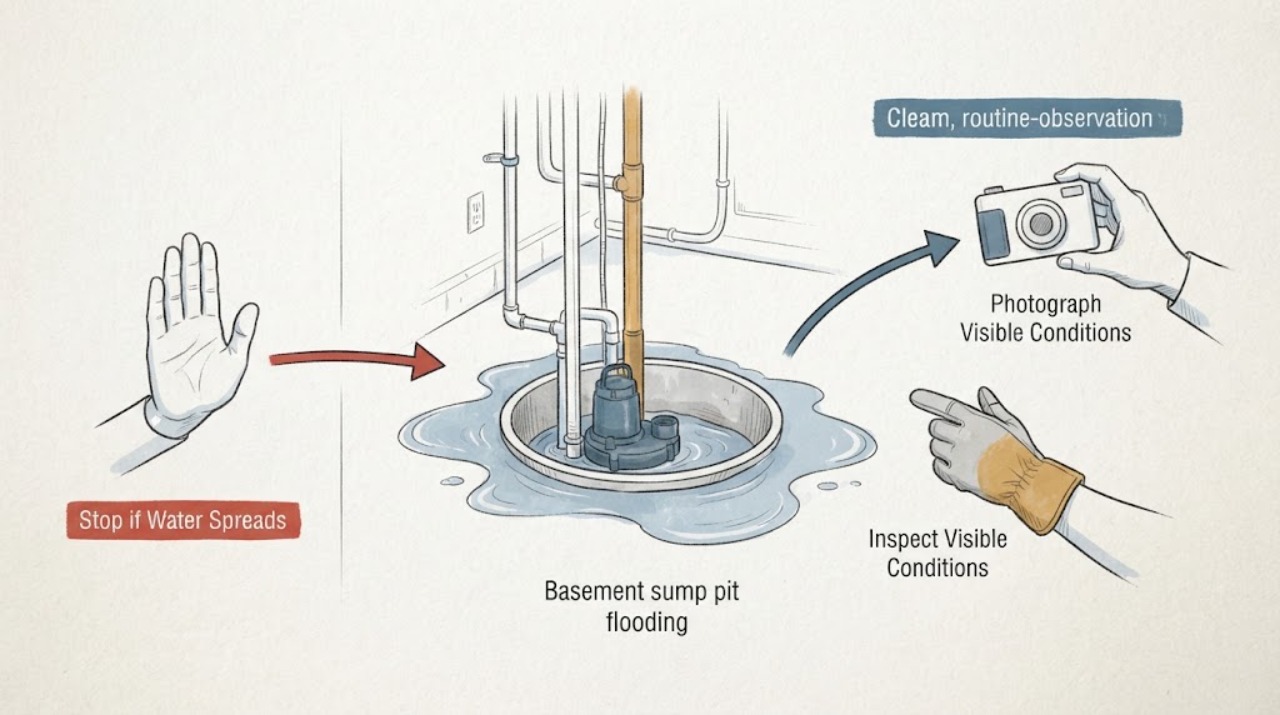
Basement sump pit flooding: What to Check and What to Do Next
Treat a flooded basement around a sump pit as a safety and water-mitigation emergency, not a pump-repair experiment. From a dry, safe location, document the water level and source, whether the pump is visibly running or silent, whether the float appears obstructed, whether discharge water is leaving or returning, and whether heavy rain is overwhelming the system.