
On this page
Start here
Quick answer
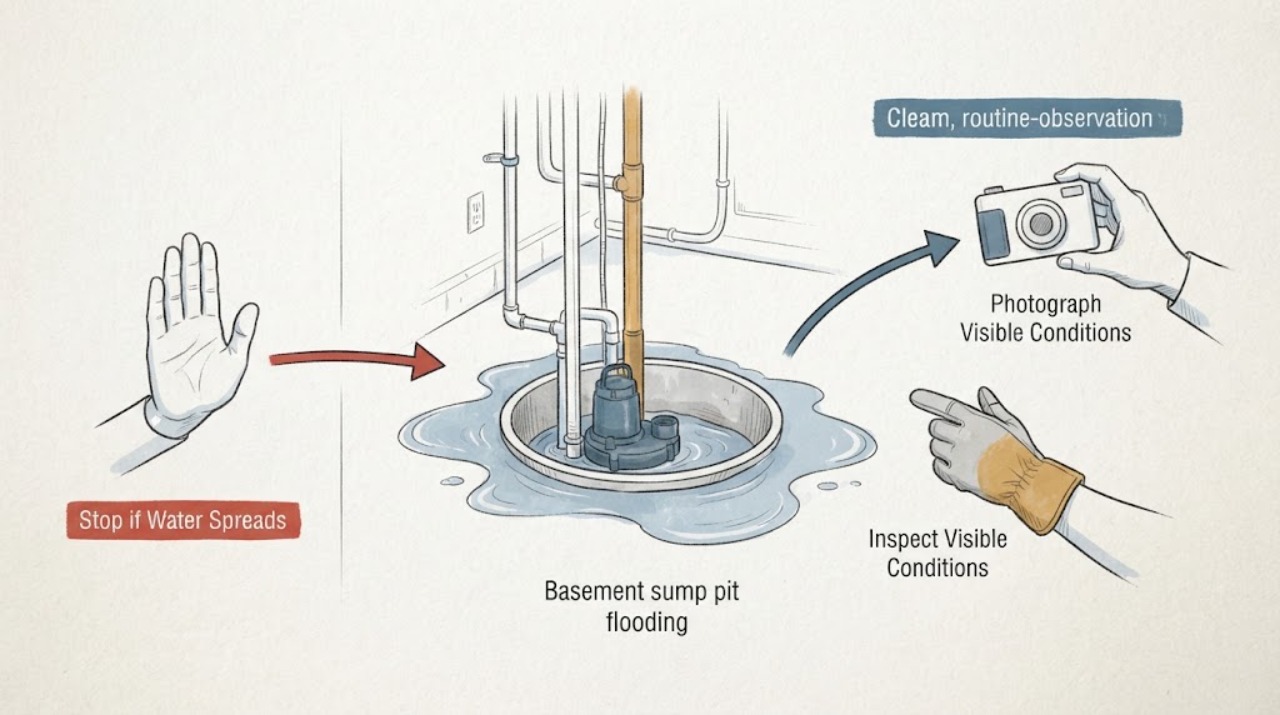
Treat a flooded basement around a sump pit as a safety and water-mitigation emergency, not a pump-repair experiment. From a dry, safe location, document the water level and source, whether the pump is visibly running or silent, whether the float appears obstructed, whether discharge water is leaving or returning, and whether heavy rain is overwhelming the system. Never wade through water or touch a pump, outlet, cord, breaker, or appliance in a wet area. If water has reached electrical equipment, sewage or other contamination is present, the structure is shifting, or the inflow is rising, move away and have the utility or a qualified professional handle shutoff and mitigation. A pump that runs but cannot keep up may have a blocked or returning discharge path, a capacity problem, or more incoming water than the system can remove; only a professional should determine which.
Before you begin
Safety first
- Do not enter standing water, touch wet electrical equipment, reach into the pit, move the float, remove the cover, reset or unplug the pump, dig or disconnect discharge piping, operate cleanup equipment, or perform mold remediation until qualified professionals confirm the area and equipment are safe.
Work through in order
Diagnostic checks
Use only checks that match the exact appliance or system and its official guide.
-
Check 1
From a dry doorway, landing, or other safe position, photograph the basement and the sump-pit area without stepping into water. Note the water's visible extent, whether it is still rising, whether the water looks clear or contaminated, and whether any outlet, appliance, cord, or electrical equipment is within or beside it.
Expected result: Record a stable, receding, or rising level; water entering from the pit, floor, wall, or drain; and any odor, discoloration, floating material, structural cracking, sagging, or movement.
Next step: Keep everyone out of the wet area and contact the electric utility or a qualified electrician for any electrical-water hazard, plus a water-mitigation or plumbing professional for the flooding source. Do not wade in or handle the pump.
Stop if: Stop immediately for submerged outlets, wet electrical equipment, sewage or chemical odor, structural movement, rapidly rising water, or an unsafe route to leave the area.
Why this matters
Why: A rising level or water near electrical equipment is an immediate safety boundary. Contaminated water, structural signs, or water entering from more than the pit means ordinary pump troubleshooting is not an appropriate next step.
-
Check 2
From a dry location, listen and look for the pump's visible operating sign, alarm, or movement. Compare that with the home's known power status and any visible water or damage at the cord and outlet; do not touch, unplug, reset, or test electrical equipment in the wet area.
Expected result: Note whether the pump is silent, appears to run continuously, starts and stops, or cannot be seen clearly. Record whether the rest of the building has power and whether the pump outlet, cord, or control appears wet or damaged.
Next step: Give the observation to an electrician, plumber, or water-mitigation professional. Leave the pump and its electrical connection alone until the area and equipment are declared safe.
Stop if: Stop if there is a burning smell, arcing, smoke, heat, buzzing, exposed wiring, or any need to stand in water or reach over the pit.
Why this matters
Why: A silent pump with an outage or wet power connection can be a power-safety issue. A pump that runs without lowering the water suggests a discharge, backflow, capacity, or incoming-water problem. Repeated resets cannot safely distinguish these causes.
-
Check 3
If the pit and pump can be seen from a completely dry, stable position, look for a float that appears wedged against the pit wall, cover, pipe, or debris. Do not reach into the pit, move the float, remove the cover, or use a tool to free anything.
Expected result: Record whether the float appears free, visibly obstructed, submerged beyond view, or impossible to assess. Note whether the water level changes while the pump is running and whether the pump remains silent when the level is high.
Next step: Keep the pit undisturbed and request qualified sump-pump or plumbing service. Include a photo of the pit from the safe position and the observed pump behavior.
Stop if: Stop if the pit cannot be viewed without leaning over water, the cover is unstable, the water is contaminated, or the floor is slippery or damaged.
Why this matters
Why: A visible obstruction may explain why the pump does not start, but the pit can contain electrical, biological, or mechanical hazards that are not visible. A professional should verify the float, pump, and controls rather than treating a visual clue as permission to reach in.
-
Check 4
From a safe indoor or outdoor position, follow the visible discharge route without touching the pipe or entering weather-exposed hazards. Look for water emerging at the outlet, water returning toward the foundation, a disconnected-looking section, a kink, or an outlet buried or blocked by visible debris.
Expected result: Record a clear discharge, no visible discharge, water pooling at the outlet, water flowing back toward the building, or a route that cannot be safely seen. Note whether the basement flooding began after rain or continued during dry weather.
Next step: Keep away from the pipe and ask a plumber or water-mitigation professional to assess the discharge, check-valve or backflow behavior, drainage, and pump capacity. Do not dig, disconnect, or redirect the discharge yourself.
Stop if: Stop for lightning, fast-moving water, unstable ground, downed lines, contaminated runoff, or any need to handle the discharge system.
Why this matters
Why: No discharge while the pump appears to run can indicate a blocked, disconnected, frozen, or otherwise failed discharge path. Water returning near the foundation can add to inflow. Rain-linked flooding may reflect incoming water beyond the pump's capacity, but only site assessment can confirm that.
-
Check 5
Create a short event record from safe observations: recent rainfall or snowmelt, the first time water was noticed, whether the level rose after the pump started, power interruptions, the visible discharge behavior, and any prior alarms or service visits.
Expected result: Classify the event as power-linked, float or control-symptom, discharge or backflow-symptom, or inflow-linked, while marking the cause as unconfirmed. Record photos before materials are moved and note any mold, odor, or water-damaged contents.
Next step: Send the record to a qualified water-mitigation, plumbing, or sump-pump professional and request a coordinated assessment before cleanup or rebuilding.
Stop if: Stop documenting if it requires entering the flooded area, moving wet contents, disturbing mold or sewage, or operating any electrical equipment.
Why this matters
Why: A dated record helps the professional separate a pump-control problem from a drainage or water-volume problem and prioritize electrical, plumbing, structural, and contamination hazards. It also prevents a single quiet interval from being mistaken for a repair.
Use your observations
Decision map
Find the observation that best matches what you see, then follow the next safe action.
-
PATH 01Next step
What you see
Standing water has reached outlets, appliances, cords, the pump connection, or other electrical equipment.
Do this next
Stay out of the water and do not touch the equipment or enter to reach a disconnect. From a dry safe location, contact the electric utility or a qualified electrician to handle shutoff and inspection.
-
PATH 02Next step
What you see
The pump is silent while the pit is high, and the power status or outlet condition is unknown or unsafe.
Do this next
Treat it as an electrical or control assessment, not a reset opportunity. Keep away and request electrician or sump-pump service.
-
PATH 03Next step
What you see
The pump appears to run but water stays high or continues rising.
Do this next
Have a professional assess discharge blockage, backflow or return, pump condition, and whether incoming water exceeds the system's capacity. Do not reach into the pit or alter the discharge.
-
PATH 04Next step
What you see
The float appears obstructed or cannot be seen without reaching over the pit.
Do this next
Leave it untouched and request qualified sump-pump service. A visual obstruction does not make the pit safe to enter.
-
PATH 05Next step
What you see
Flooding follows heavy rain, snowmelt, surface runoff, or a sewer or drain backup.
Do this next
Keep people away and ask a water-mitigation or plumbing professional to assess inflow, drainage, backflow, contamination, and the pump system together.
-
PATH 06Next step
What you see
The water is contaminated, mold is visible or strongly suspected, the structure is damaged, or wet materials extend beyond the pit area.
Do this next
Do not clean, demolish, or run fans in the affected area. Arrange professional remediation and structural or electrical assessment as appropriate.
-
PATH 07Next step
What you see
The water has receded and no electrical, structural, or contamination hazard is present.
Do this next
Keep the area dry and document the event, but still have the sump, float, discharge route, backflow protection, and backup plan inspected before the next major rain event.
Helpful context
Understand the symptom
Start with the hazard boundary
Standing water can conceal electrical hazards, unstable flooring, sewage, and contaminated materials. Observe from a dry position and keep children, pets, and unnecessary occupants away. If the only route to the main electrical disconnect crosses water, do not enter to reach it; contact the electric utility or a qualified electrician. Do not move a pump, reach into the pit, or plug in a wet appliance while trying to save the basement.
The pit symptom does not identify the cause
A high water level can result from loss of power, a pump that is not responding to its float, a discharge line that is blocked or sending water back toward the foundation, or incoming groundwater and stormwater that exceed the system's ability to remove it. A quiet pump and a running pump require different professional checks, so record what is visible and audible instead of repeatedly resetting or testing equipment.
Mitigation follows a safe assessment
After the electrical and structural hazards are controlled, a water-mitigation professional can remove water, dry materials, and assess contamination or mold risk. The sump arrangement, discharge route, drainage conditions, alarms, and backup strategy should then be reviewed so the next heavy-rain event does not repeat the same failure.
Only after diagnosis
Potential parts
- water leak alarm
Consider this only as a future monitoring aid after the professional confirms a safe, dry placement and the flooding cause has been assessed.
Choose a device suitable for the location and keep it away from standing water and electrical hazards; an alarm does not replace pump, drainage, or mitigation service. - wet-dry vacuum
Consider this only if a qualified professional confirms that electricity, water quality, and the building are safe for the specific cleanup equipment and method.
Do not operate electrical cleanup equipment in a wet area until electrical safety has been confirmed; contaminated or extensive flooding requires professional mitigation. - dehumidifier
Consider this only after standing water, electrical hazards, and visible contamination are controlled and the professional confirms that drying equipment can be used safely.
Select equipment for the actual space and power conditions; dehumidification reduces moisture but does not repair the sump, discharge, or water-entry cause.
When checks do not resolve it
Need a professional?
Call urgently for any flooded basement, rising water, a silent or continuously running sump pump, uncertain power, discharge failure, sewage or contaminated water, mold, structural movement, or wet electrical equipment. Use the electric utility or a qualified electrician for electrical-water hazards and a water-mitigation or plumbing professional for the flooding system and cleanup.
Safety scope: Do not enter standing water, touch wet electrical equipment, reach into the pit, move the float, remove the cover, reset or unplug the pump, dig or disconnect discharge piping, operate cleanup equipment, or perform mold remediation until qualified professionals confirm the area and equipment are safe.
Have this ready
- Provide safe-position photos, water-level trend, first wet location, pump sound or alarm behavior, visible float condition, discharge observations, rainfall or outage timing, odors or contamination, and any signs of electrical, structural, mold, or material damage.
Common questions
FAQ
Can I walk into the basement to check the sump pump?
Not if standing water may have reached outlets, cords, appliances, or other electrical equipment, or if the structure is questionable. Observe from a dry location and have the utility or a qualified electrician handle electrical safety.
What does it mean if the sump pump runs but the basement still floods?
The discharge may be blocked or returning water toward the foundation, the pump may be failing, or incoming water may exceed the system's ability to remove it. A plumber or water-mitigation professional should assess all of those possibilities.
Should I move the float or clear debris from the pit?
No. A visible obstruction is only a clue; reaching into a wet sump pit can expose you to electrical, biological, and mechanical hazards. Leave the pump and float untouched until qualified service confirms the area is safe.
Is a sump-pit flood always caused by a failed pump?
No. Power loss, a control or float problem, discharge or backflow issues, sewer or drain backup, and unusually high incoming water can produce similar symptoms. Record timing and visible behavior rather than assuming one cause.
When does basement flooding require professional cleanup?
Use professional mitigation for sewage or contaminated water, extensive wet materials, mold, structural concerns, water near electrical equipment, or uncertainty about safe entry and drying. Do not demolish, clean mold, or run electrical drying equipment while hazards remain.
Read the exact guide
Official sources
- Community Questions, Clear Answers: Flooding, Facts, and MisconceptionsUniversity of Illinois Extension · University Extension guidance for residential flooding context; used to distinguish rainfall or saturated-soil inflow, sewer-line clues, sump-pump reliance, and the value of backup and drainage assessment.
- Coming HomeU.S. Environmental Protection Agency · General flooded-home safety guidance, not a sump-pump repair manual; used for avoiding entry when electrical or structural conditions are unsafe and recognizing standing-water shock and contamination hazards.
- Mold Cleanup in Your HomeU.S. Environmental Protection Agency · General residential mold and flood guidance, not pump diagnosis; used for escalating extensive water damage, contaminated water, HVAC concerns, health concerns, and mold or wet-material risks.
Community feedback
Share a repair observation
Share a plain-text repair observation. Accepted observations are published automatically; this page may take a moment to update.