
On this page
Start here
Quick answer
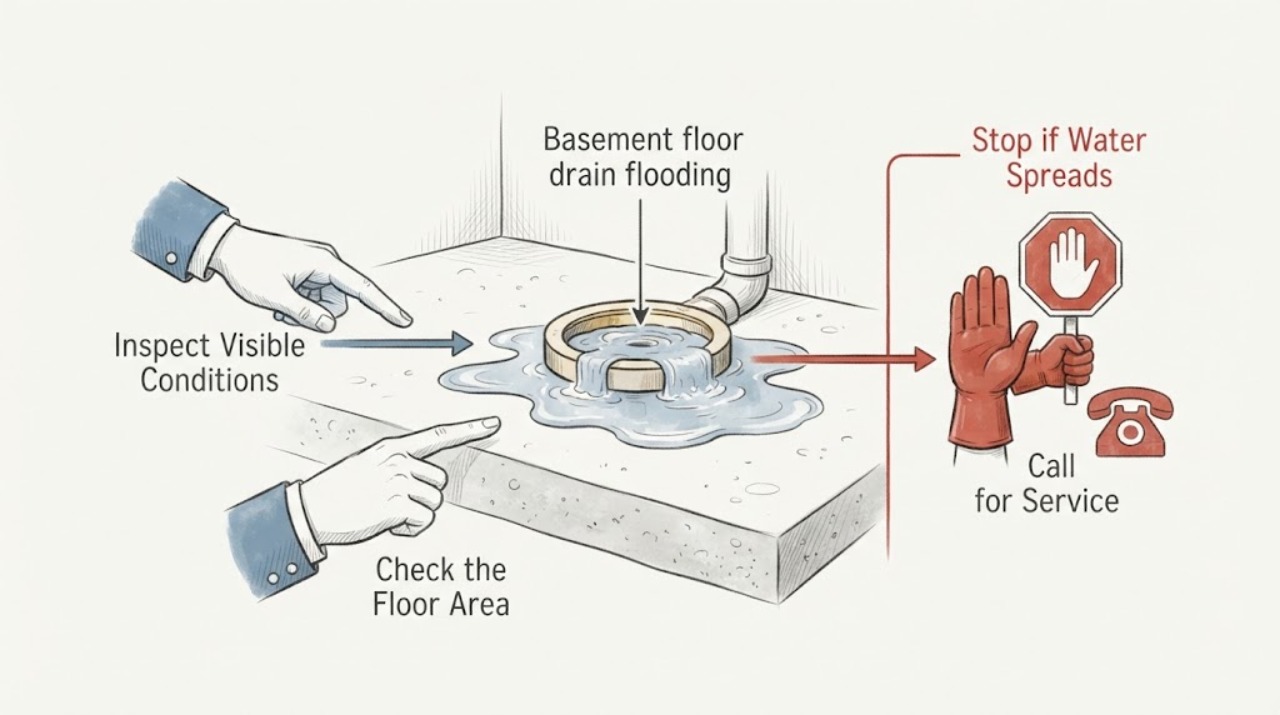
Treat a flooded basement floor drain as an urgent safety and contamination event, not a routine drain clog. Stay out of standing water and observe only from a dry, stable location: identify whether the water is clear or contaminated-looking, whether it rises when it rains or when household water is used, and whether electrical or structural hazards are nearby. If sewage, chemicals, fast-rising water, unsafe electricity, structural movement, or a blocked exit is possible, leave the area and contact emergency or qualified water-mitigation and plumbing professionals.
Work through in order
Diagnostic checks
Use only checks that match the exact appliance or system and its official guide.
-
Check 1
From a dry doorway, landing, or other stable position outside the water, visually estimate the affected area and observe whether water is still rising, spreading from the floor drain, or flowing from a wall, ceiling, fixture, appliance, or stairwell. Do not step closer to improve the view.
Expected result: The water is confined near the drain, spreading, actively rising, or its source cannot be seen safely; record the approximate location and trend without entering.
Next step: Move people and valuables away from the area only from dry, stable paths. Photograph the scene from safety and request urgent water-mitigation and plumbing assessment; do not attempt to clear or cover the drain.
Stop if: Stop and leave immediately if water rises toward an exit, the floor shifts, a wall or ceiling sags, the path becomes slippery, or you cannot maintain a dry and stable position.
Why this matters
Why: A rising or spreading level is an active mitigation emergency. Water entering from a fixture, wall, or ceiling points toward a building or plumbing source, while water emerging at the drain can also reflect a downstream backup or surcharge.
-
Check 2
Without touching the water, observe its apparent color, clarity, surface film, floating debris, and odor from the safe location. Note whether it resembles clear groundwater or plumbing water, or has a sewage, chemical, fuel, or unusually strong odor.
Expected result: The water looks clear and odorless, cloudy or dirty, contains debris or a film, or has a sewage, chemical, or fuel odor.
Next step: Keep the area isolated, avoid contact and aerosol-producing activity, and tell the responding professional exactly what was observed. Do not mop, disinfect, mix chemicals, or remove wet materials yourself.
Stop if: Stop all observation if fumes cause irritation, breathing difficulty, dizziness, or nausea, or if any person or animal may have contacted the water; leave and seek appropriate emergency or medical guidance.
Why this matters
Why: Appearance cannot prove that water is safe. A sewage-like odor, dark or cloudy water, debris, or chemical or fuel signs increase the likelihood of contamination and require professional handling and local public-health guidance.
-
Check 3
From a dry position, record whether flooding began during rain, snowmelt, a plumbing event, laundry or fixture use, or a pump or power interruption. Observe other visible drains or fixtures only from outside the water and without deliberately sending more water into the system.
Expected result: The event follows heavy weather, household water use, a pump or power event, or occurs without an identifiable trigger.
Next step: Reduce nonessential water use while waiting for qualified help, especially if a sewer or septic backup is possible. Provide the timing and affected fixtures to the plumber or mitigation professional.
Stop if: Stop if identifying the pattern would require flushing, running fixtures, entering the basement, opening a cleanout, or approaching a pump, outlet, panel, or wet appliance.
Why this matters
Why: Weather-linked flooding can involve surface, groundwater, or sewer capacity; a response to household water use can indicate a building drain restriction; a pump or power event can remove a normal drainage path. No trigger does not rule out a concealed leak or blocked line.
-
Check 4
From a dry location, look for visible electrical panels, outlets, cords, appliances, gas equipment, stored chemicals, damaged stairs, sagging materials, or other hazards near the water. Do not touch or move anything wet and do not enter to reach a shutoff.
Expected result: Electrical or gas equipment is near or in the water, a cord or outlet is wet, structural damage is visible, chemicals are floating, or no such hazard is visible from safety.
Next step: If the shutoff can be reached without entering water or approaching a hazard, follow the home's emergency plan; otherwise leave isolation to qualified responders. Keep the HVAC and basement equipment off unless professionals confirm safe operation.
Stop if: Stop and evacuate for sparks, smoke, gas or fuel odor, a warm or damaged electrical component, a shifting structure, or any need to cross water to reach a control.
Why this matters
Why: Water near electrical or fuel equipment can create shock, fire, or other hazards, while damaged stairs or materials can fail. A clear view from a dry location does not establish that the basement is safe to enter.
-
Check 5
From outside the affected area, document the floor-drain location, visible waterline, nearby room boundaries, and any prior history of rain-related or recurring backups. Take photos or notes from dry ground without opening the drain, lifting a cover, probing the pipe, or entering the basement.
Expected result: The drain is the apparent entry point, water is coming from another visible source, the waterline shows a prior pattern, or the source remains uncertain.
Next step: Give the record to the plumber, restoration professional, building manager, or local utility as appropriate. Preserve the area for safe assessment and do not attempt pumping, drain clearing, demolition, or mold cleanup.
Stop if: Stop documenting if visibility requires entering water, moving soaked materials, opening a hatch or cleanout, or standing beneath damaged ceilings or near unstable walls.
Why this matters
Why: A clear record helps distinguish a drain backup from a supply, foundation, or pump event and helps professionals plan safe isolation. Repeated events suggest an unresolved drainage or building-water condition rather than a one-time spill.
Use your observations
Decision map
Find the observation that best matches what you see, then follow the next safe action.
-
PATH 01Next step
What you see
Water is rising, spreading, or blocking the only safe exit.
Do this next
Leave by a dry, stable route, keep others out, and contact emergency responders or urgent water-mitigation professionals. Do not enter the water to save property.
-
PATH 02Next step
What you see
Water is dark, cloudy, foul-smelling, oily, chemically contaminated, or contains sewage or unknown debris.
Do this next
Treat it as contaminated. Avoid contact and cleanup, reduce nonessential water use if safe, and request qualified mitigation and plumbing or public-health guidance.
-
PATH 03Next step
What you see
Water is near an electrical panel, outlet, cord, appliance, gas equipment, or other energized or fuel-related equipment.
Do this next
Do not touch equipment or cross water to reach a control. Leave the area and have qualified responders isolate power or fuel safely.
-
PATH 04Next step
What you see
Flooding follows rain, snowmelt, a sewer or septic event, or a pump or power interruption.
Do this next
Report the timing and water appearance to a plumber, utility, septic professional, or mitigation provider. Do not open the drain or pump a potentially contaminated or structurally unsafe basement.
-
PATH 05Next step
What you see
The water is contained and visible hazards are absent from a dry viewpoint, but the floor drain still backs up or the source is uncertain.
Do this next
Keep the area unused and arrange professional assessment. Observation from safety is complete; drain clearing, pumping, drying, and any remediation require a confirmed safe plan.
Helpful context
Understand the symptom
Safety comes before finding the blockage
Floodwater can hide electrical hazards, sharp debris, sewage, and unstable flooring or walls. Do not walk into the basement water, touch a wet appliance or electrical device, enter a submerged area, or reach into the floor drain. If the electrical shutoff is reachable only by crossing water or entering an unsafe area, do not attempt it; a qualified electrician or emergency responder should isolate the hazard. Keep children, pets, and other people away.
Why the water source matters
A floor drain can receive water from a plumbing leak, foundation or surface water, a sump or pump problem, a blocked building drain, or a sewer or septic backup. Color, odor, timing, and weather or household-use patterns can help professionals triage the source, but they cannot make contaminated water safe. EPA guidance notes that sewage backups can threaten health and property and that flooded basement cleanup may be too difficult or dangerous for an untrained person.
Only after diagnosis
Potential parts
- water-leak-alarm
Consider this only after the flooding hazard is resolved and a professional confirms a dry, safe location for monitoring; an alarm does not clear a blocked drain or make floodwater safe.
Confirm the alarm's sensing method, power arrangement, notification range, and placement requirements for the basement environment. - wet-dry-vac
Consider this category only if qualified responders confirm the water is appropriate for removal, electricity is isolated and safe, and the equipment can be used without entering hazardous water; do not use it for sewage or unknown contamination without professional direction.
Confirm the equipment's electrical and water-use instructions, collection capacity, and suitability for the specific water type and environment before use. - dehumidifier
Consider this only after the water source is stopped, the room is cleared for safe electrical operation, and professionals confirm that drying will not spread contamination or mold through the air.
Confirm the unit's electrical rating, drainage arrangement, operating environment, and safe placement away from standing water.
When checks do not resolve it
Need a professional?
Request urgent help for any active or recurring basement flooding, floor-drain backup, unknown or contaminated water, electrical or structural hazard, rising level, blocked exit, or water damage that cannot be assessed from a dry safe position.
Have this ready
- Provide the drain location, water trend, color and odor, weather or household-use timing, visible source, nearby electrical or structural hazards, prior recurrence, and safe photos taken without entering the water.
Common questions
FAQ
Can I walk into the basement to find the floor-drain blockage?
No. Standing water can hide electrical hazards, sewage, debris, and unstable surfaces. Observe only from a dry stable position and leave the assessment to qualified responders when the source is not obvious.
What does a bad odor or dark water mean?
It can indicate sewage, chemicals, or other contamination, but appearance and odor cannot prove safety. Keep people and pets away, avoid cleanup, reduce nonessential water use when safe, and request qualified mitigation and plumbing guidance.
Should I turn off the basement electricity?
Only if the control can be reached from a dry, stable, hazard-free location without touching wet equipment. Never cross water to reach a panel or switch; ask qualified responders to isolate power when access is unsafe or uncertain.
Can I use a pump or wet-dry vacuum?
Not as a first response to unknown or contaminated basement water. Pumping or powered equipment requires a confirmed safe water type, safe electrical isolation, and a professional plan; do not enter the water or operate equipment near a hazard.
Read the exact guide
Official sources
- Sanitary Sewer Overflows (SSOs)U.S. Environmental Protection Agency · Distinguishing possible sewer-related basement drain backup from other water sources
- Septic Systems - What to Do after the FloodU.S. Environmental Protection Agency · Basement sewage backup, saturated drainfield conditions, electrical hazards, and trained-specialist cleanup
- Text Version of the Flooded HomeU.S. Environmental Protection Agency · Basement standing water, flood contamination, professional reentry, and safe drying boundaries
Community feedback
Share a repair observation
Share a plain-text repair observation. Accepted observations are published automatically; this page may take a moment to update.