
On this page
Start here
Quick answer
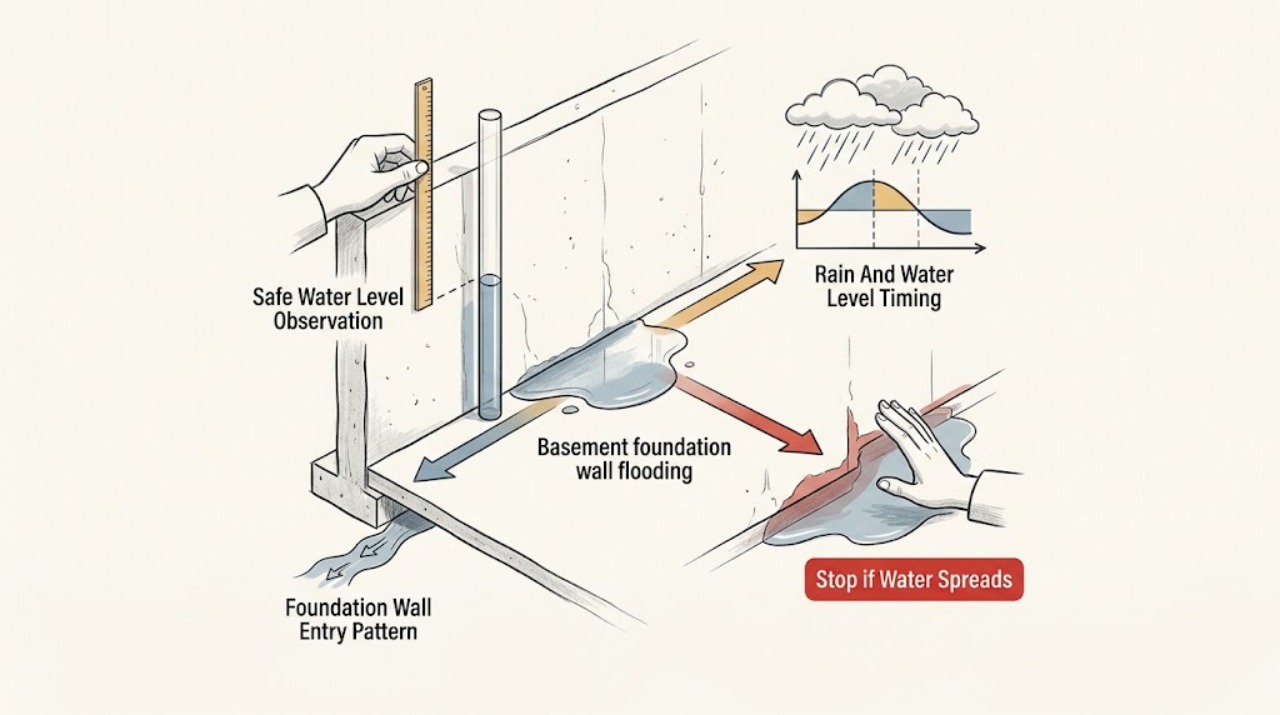
Treat water entering at a basement foundation wall as an urgent water-damage and safety event. Stay in a dry, stable location; do not walk into standing water, touch wet electrical equipment, handle sewage, pump against an uncertain structure, scrape or open the wall, or start DIY mold cleanup. From a safe position, record the water level, where the wall or joint is wet, whether the pattern changes with rain, and whether power, gas, structure, or health hazards are nearby. Keep people out of the affected area and call emergency water mitigation and, when cracking or movement is present, a qualified building or structural professional.
Work through in order
Diagnostic checks
Use only checks that match the exact appliance or system and its official guide.
-
Check 1
From a dry, stable location outside the affected area, observe and photograph the approximate water level or wet boundary without stepping into water or leaning against the foundation wall.
Expected result: Note whether water is a thin damp area, a growing pool, or rising toward outlets, appliances, stairs, or stored materials; do not estimate by entering the room.
Next step: Keep people and pets out, preserve the safe exit route, and contact emergency water mitigation. Tell the provider the observed level, location, and whether it is changing.
Stop if: Stop immediately if the only view requires entering water, approaching unstable finishes, touching equipment, or crossing a blocked exit.
Why this matters
Why: A rising boundary or water approaching electrical equipment, an exit path, or structural materials increases urgency and may make the space unsafe to enter.
-
Check 2
From a safe position, visually trace the wall without touching it and note whether moisture appears at a vertical crack, horizontal wall-to-floor joint, masonry seam, pipe or window penetration, or as a broad wet area.
Expected result: A concentrated trail at a crack or joint differs from broad seepage or water emerging around a penetration; staining above the current wet edge may show an earlier event.
Next step: Record the location with a safe-distance photo and leave all finishes, sealants, cracks, and wall coverings undisturbed for professional assessment.
Stop if: Stop if the wall bows, cracks widen, masonry shifts, finishes fall, or any inspection would require scraping, probing, opening, or removing material.
Why this matters
Why: The visible pattern helps a mitigation or building professional target the inspection, but it does not prove whether the cause is groundwater, surface runoff, plumbing, or structural movement.
-
Check 3
Record when the wetting began and whether it changes after rain, snowmelt, a plumbing event, or a dry period; compare only safe observations from the interior and from ground level outside.
Expected result: A rapid change during or after precipitation differs from a steady leak unrelated to weather, while a pattern that cannot be tied to an event remains uncertain.
Next step: Provide the timeline, weather context, and photos to water mitigation and building professionals. Do not dig outside, open a wall, or create a water test.
Stop if: Stop the exterior observation during lightning, heavy rain, flooding, unstable ground, or any condition that makes the route unsafe.
Why this matters
Why: Timing can guide the professional toward surface drainage, groundwater, plumbing, or another source without requiring a homeowner to test or expose the system.
-
Check 4
From a dry location, note whether water is near outlets, panels, furnaces, water heaters, pumps, cords, or other equipment, and whether there is sewage odor, fuel odor, smoke, or a gas warning; do not touch the equipment or water.
Expected result: Wet electrical equipment, suspected sewage, gas odor, smoke, or a blocked exit changes the event from a water observation to an immediate safety or emergency response.
Next step: Leave the area and contact emergency services, the utility, an electrician, or qualified mitigation service as the condition requires. Only a professional should determine when equipment is safe to restore.
Stop if: Never enter standing water to reach a shutoff, touch wet electrical equipment, operate powered tools, or use flames when gas may be present.
Why this matters
Why: Floodwater can contaminate a space and energize or damage electrical systems; the absence of a visible hazard does not establish that the basement is safe.
-
Check 5
From a safe location, record damaged finishes, musty odor, visible mold, soft or fallen material, stored contents, and whether anyone has breathing symptoms or cannot safely avoid the basement.
Expected result: Visible mold, strong odor, extensive wet materials, respiratory symptoms, or a space that cannot be isolated raises the need for trained remediation and health guidance.
Next step: Keep the basement closed off, photograph without disturbing materials, and arrange qualified water mitigation and structural or building assessment as indicated.
Stop if: Stop all observation and leave if symptoms worsen, structural movement occurs, water rises, or the only route requires entering the affected area.
Why this matters
Why: Water damage can continue after the surface dries, and disturbing wet or moldy materials can spread hazards; the record helps professionals set the correct scope.
Use your observations
Decision map
Find the observation that best matches what you see, then follow the next safe action.
-
PATH 01Next step
What you see
Water is near electrical equipment, equipment is wet, there is smoke, a burning smell, or a suspected gas leak.
Do this next
Do not enter or touch anything. Leave if necessary and contact the utility, electrician, fire service, or emergency service according to the hazard.
-
PATH 02Next step
What you see
Water is rising, an exit is threatened, sewage is suspected, or the water may contain contaminants.
Do this next
Keep everyone out, do not pump or handle the water, and request urgent professional water mitigation and emergency guidance.
-
PATH 03Next step
What you see
The foundation wall bows, shifts, sheds material, or a crack appears to widen or move.
Do this next
Stay away from the room and arrange urgent building or structural assessment. Do not scrape, probe, seal, or demolish the wall.
-
PATH 04Next step
What you see
The wetting starts or increases during rain or snowmelt and the structure appears stable from a safe location.
Do this next
Share the timing and safe exterior observations with a water-mitigation or building professional. Do not excavate or alter exterior drainage yourself.
-
PATH 05Next step
What you see
The source is not clear and there is no immediate visible utility or structural hazard from a dry location.
Do this next
Keep the area isolated, document the wall pattern and history, and schedule professional water-damage and foundation assessment before cleanup or repair.
Helpful context
Understand the symptom
Why the entry pattern matters
Water at a foundation wall can arrive through a crack, a wall-to-floor joint, a penetration, a failed drainage path, or another route that cannot be confirmed safely from the room. The same wall may show different patterns during rainfall, snowmelt, plumbing events, or groundwater pressure. A safe record of location, timing, and change helps professionals separate emergency mitigation from later moisture or structural assessment.
Safety comes before cleanup
Flooded basements can contain sewage, contaminated water, unstable materials, mold, and hidden electrical hazards. Do not enter a wet area to reach a panel, appliance, pump, or stored item. If a safe dry-location shutoff is not available, an electrician or utility professional must make that decision. Do not disturb damaged wall finishes or attempt to dry a potentially unsafe space with powered equipment.
Safety boundary
Stop conditions
- Do not enter standing water, touch wet electrical equipment, operate powered cleanup tools, or reach a panel or shutoff from an unsafe location.
- Do not pump against an uncertain structure, handle sewage or contaminated water, scrape or sample mold, apply chemicals, open or demolish the wall, or disturb damaged finishes.
- Leave and seek urgent help for rising water, a blocked exit, gas odor, smoke, exposed or wet electrical equipment, structural movement, or anyone developing breathing symptoms.
- Keep children, pets, and nonessential occupants out until qualified professionals determine that the area and systems are safe.
Only after diagnosis
Potential parts
- water-leak-alarm
Consider only after the area is dry and a professional confirms that a monitoring device can be placed safely away from contaminated water and electrical hazards.
Confirm sensing method, placement, power source, alert method, and environmental rating for the basement; an alarm does not repair intrusion or make a flooded area safe. - wet-dry-vac
Consider only when a qualified electrician or mitigation professional confirms the electrical environment and equipment use are safe; it is not a homeowner instruction to enter or vacuum floodwater.
Confirm equipment rating and cleanup scope with the professional, especially where sewage, unstable structure, or wet electrical systems may be present. - dehumidifier
Consider only after professionals confirm the space, power, HVAC, and air-quality conditions are safe and the source of water is controlled.
Capacity, drainage, electrical protection, and placement depend on the room and damage conditions; do not energize equipment in a wet or contaminated area.
When checks do not resolve it
Need a professional?
Call emergency water-mitigation service promptly for active or rising basement water, and request building or structural assessment for wall movement, widening cracks, bowing, or uncertain structural condition. Provide safe-distance photos, water-level change, wall entry pattern, weather or plumbing timing, utility proximity, contamination clues, and any health or access concern.
Common questions
FAQ
Should I enter the basement to find where the foundation wall is leaking?
No, not if there is standing water, wet electrical equipment, contamination, or structural uncertainty. Observe from a dry location and let qualified professionals inspect the wall.
Can I pump out basement water right away?
Do not pump against an uncertain structure or use powered equipment in a wet or contaminated area. A mitigation professional or electrician must determine whether pumping and power are safe.
Does a foundation-wall crack prove the cause of flooding?
No. A crack or joint can show an entry route, but the cause may involve groundwater, surface drainage, plumbing, or movement. Photograph the pattern without scraping or probing it and request assessment.
When should basement flooding become an emergency call?
Treat rising water, a threatened exit, gas odor, smoke, wet electrical equipment, sewage, structural movement, or breathing symptoms as urgent. Leave the unsafe area and contact appropriate emergency, utility, electrical, and mitigation professionals.
Read the exact guide
Official sources
- Moisture Control Guidance for Building Design, Construction and MaintenanceU.S. Environmental Protection Agency · Professional-oriented moisture-control reference for foundations and building assemblies; not a DIY structural repair procedure
- Flood Cleanup to Protect Indoor Air and Your HealthU.S. Environmental Protection Agency · Post-flood indoor-air and cleanup safety; scope depends on contamination, material extent, and building condition
- Safety Guidelines: Reentering Your Flooded HomeCenters for Disease Control and Prevention · General post-flood home safety; the specific building and local emergency instructions control
Community feedback
Share a repair observation
Share a plain-text repair observation. Accepted observations are published automatically; this page may take a moment to update.