
On this page
Start here
Quick answer
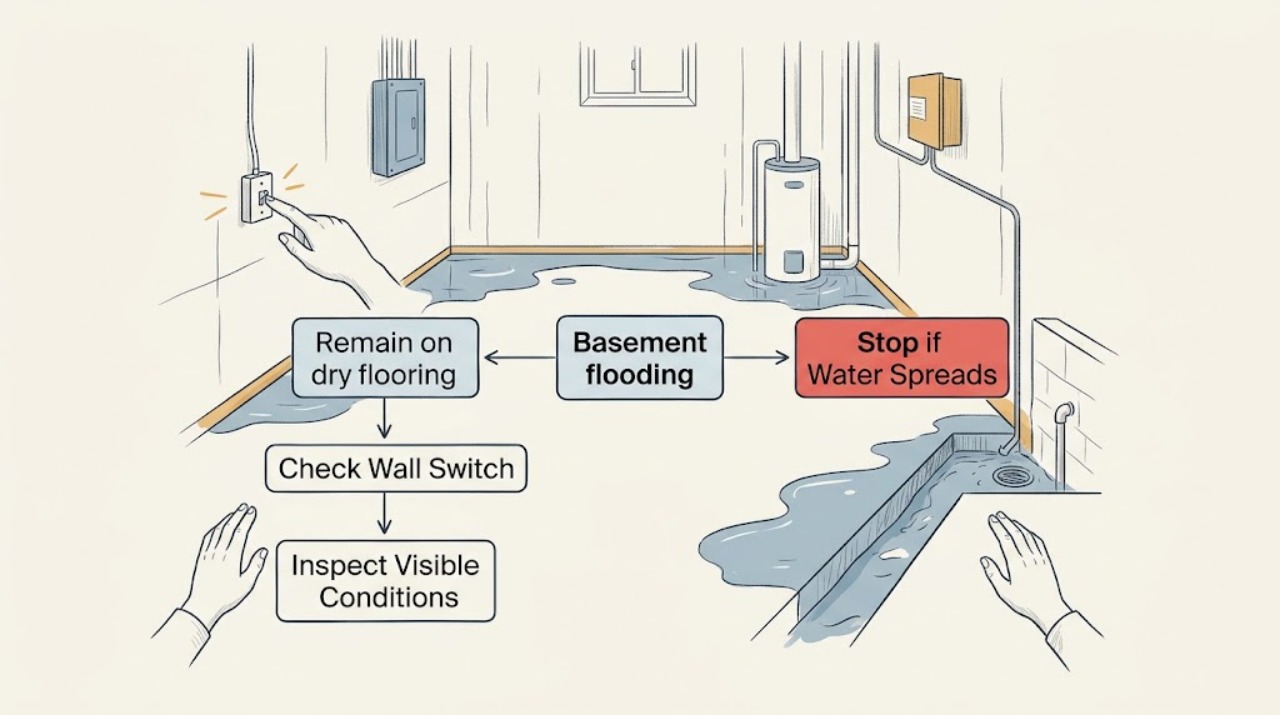
Treat a flooded basement as a safety incident first, not a cleanup project. Stay in a dry, safe location and observe the visible water level, access route, electrical equipment, gas or chemical warnings, structural movement, and signs of sewage without entering standing water or touching equipment. If water is near electrical equipment, the structure is shifting, gas is suspected, or sewage may be present, leave or keep out and call the appropriate emergency, utility, electrician, plumber, or water-mitigation professional. Do not enter the water, pump against an uncertain foundation, handle sewage, demolish materials, or start mold cleanup yourself.
Work through in order
Diagnostic checks
Use only checks that match the exact appliance or system and its official guide.
-
Check occupancy and access from a dry location
Remain on dry flooring or outside the building and look toward the basement entrance, stairs, and any visible water. Do not step into standing water, test its depth, or reach through it to retrieve anything.
Expected result: Note whether the water is rising, whether it blocks the only exit, whether stairs or flooring appear damaged, and whether anyone or any pet is still in the basement. Also note whether the building has been evacuated or declared unsafe by local authorities.
Next step: If anyone is at risk or the exit is compromised, leave by a safe route if possible and contact emergency services. Otherwise keep everyone out and continue only with observations that can be made from the dry location.
Stop if: Stop immediately if remaining on dry ground is uncertain, the building shifts, debris falls, water reaches the observation point, or a safe exit is no longer available.
Why this matters
Why: Rising water, blocked egress, a person or pet in danger, or a visibly damaged route is an emergency response issue. A lower or stationary water level does not prove that electrical, structural, or contamination hazards are absent.
-
Screen for electrical and gas hazards without contact
From a dry location, visually note the relationship between the water and the electrical panel, outlets, cords, appliances, furnace, water heater, and any visible gas piping or fuel container. Do not touch electrical equipment, operate a switch, reset a breaker, start a pump, or enter water to reach a control.
Expected result: Record whether water is near or has reached electrical equipment, whether a device or cord is wet, whether power is out, and whether there is a gas smell, hissing sound, damaged fuel container, smoke, or unusual heat.
Next step: Keep away and call an electrician or utility/emergency service through the normal local channel. Tell them what is visibly wet or affected and whether the main shutoff is reachable without entering water; do not attempt the shutoff if it is not safely accessible from dry ground.
Stop if: Stop observation and leave the building if gas is suspected, smoke or fire is present, electrical arcing is visible, the structure is unsafe, or any next step would require touching equipment or standing in water.
Why this matters
Why: Water near electrical equipment can create shock and fire hazards. A gas smell, suspected leak, smoke, or unusual heat requires immediate evacuation and the appropriate emergency or utility response; visual distance alone cannot make the system safe.
-
Look for the source and contamination clues
From the dry safe side of the area, observe visible inflow or outflow without touching the water, drains, toilets, sump equipment, pipes, or wet materials. Compare what can be seen at exterior doors, foundation walls, floor drains, and plumbing fixtures without entering the basement.
Expected result: Note whether water appears to arrive after rain through a wall or doorway, rise from a floor drain, come from a burst pipe or fixture, or contain sewage, unusual color, strong odor, chemicals, or floating waste. Record whether water use elsewhere in the building changes the flow.
Next step: Keep out and request water-damage mitigation plus the relevant plumber, sewer authority, or health authority. Report the suspected source and contamination clues so responders can bring the correct controls.
Stop if: Stop if the odor is strong, the water may be sewage or chemical-contaminated, a container is leaking, or identifying the source would require wading, touching, lifting, or disturbing materials.
Why this matters
Why: A sewage indication, unknown contamination, chemical odor, or backflow is not ordinary clean-water cleanup. An active plumbing or exterior source also needs to be controlled by the appropriate professional before mitigation; the observation does not authorize opening walls or manipulating plumbing.
-
Check visible structural and building changes
From a dry location outside the affected area, look at visible basement walls, columns, ceiling, stairs, doors, and the exterior grade if it can be seen without approaching water or unstable ground. Do not press on walls, open finishes, move stored items, or begin demolition.
Expected result: Look for new or widening cracks, bowed or leaning walls, shifted columns, sagging ceilings, jammed doors, falling debris, soil movement outside, or water continuing to rise against a wall. Note any unusual cracking or shifting sounds.
Next step: Leave the area and contact emergency services, a building official, or a qualified water-damage and structural professional when damage is visible or changing. Provide wide photos from the dry location rather than trying to inspect close up.
Stop if: Stop and evacuate if you hear shifting or unusual noises, see wall or ceiling movement, feel vibration, see falling material, or cannot remain on stable dry ground.
Why this matters
Why: Movement, bowing, falling material, or a changing crack can indicate a structural hazard. Even without visible movement, prolonged water against a foundation can require a professional assessment before pumping or entering; the safe response depends on the building and outside water conditions.
Use your observations
Decision map
Find the observation that best matches what you see, then follow the next safe action.
-
PATH 01Safety boundary
What you see
Standing water is present near electrical equipment, the panel or shutoff cannot be reached from dry ground, or any electrical arcing, smoke, or wet device is visible.
Do this next
Keep everyone out and contact an electrician and the utility or emergency service as appropriate. Do not enter water, touch electrical equipment, operate switches, or start a pump or appliance.
Why this path and its safety boundary
Safety stop: Do not reenter until qualified personnel and local authorities determine that the electrical and structural conditions are safe.
-
PATH 02Safety boundary
What you see
There is a gas odor, suspected fuel leak, smoke, fire, damaged chemical container, shifting building, blocked exit, or a person or pet in immediate danger.
Do this next
Leave by a safe route, warn others without entering the affected area, and contact emergency services or the gas/fire authority from outside. Do not create a spark, operate a switch, or return for belongings.
Why this path and its safety boundary
Safety stop: Remain out until responders or the responsible authority says the building is safe.
-
PATH 03Safety boundary
What you see
Water may contain sewage or chemicals, a floor drain or toilet has backed up, or the source is unknown and active.
Do this next
Keep the area isolated and contact a qualified water-mitigation professional plus the relevant plumber, sewer authority, or health authority. Do not touch the water, handle waste, mix cleaners, or begin mold remediation.
Why this path and its safety boundary
Safety stop: Do not enter or clean until the contamination and electrical risks have been assessed and the professional gives a safe work plan.
-
PATH 04Safety boundary
What you see
No immediate emergency sign is visible from the dry location, but the basement has standing water or wet materials.
Do this next
Keep children, pets, and other people out, document the scene from dry ground, and arrange urgent water-damage mitigation. Do not pump against uncertain outside water or foundation conditions; let the professional determine when extraction and drying can begin.
Why this path and its safety boundary
Safety stop: Do not enter, pump, move appliances or stored items, remove walls or insulation, or use fans and dehumidifiers in the affected area until the professional confirms electrical, structural, and contamination safety.
Helpful context
Understand the symptom
The safe first decision
A basement can hide electrical, structural, gas, sewage, chemical, and slip hazards below the water surface. The first useful information is what can be seen from a dry location: whether the area is occupied or accessible, where the water is relative to equipment and walls, and whether the source is still active. A dry-distance observation cannot certify that the basement is safe to enter, so the article keeps the homeowner's role to reporting and arranging the right professional response.
Do not make the flood worse
Keep children, pets, and other people out of the affected area. Do not use an electric appliance or touch a wet panel, outlet, appliance, pump, or cord. Do not enter to retrieve belongings, start a pump, move debris, open walls, or clean suspected sewage. A qualified professional can decide whether the electrical system, foundation, water source, and contamination risks have been controlled before mitigation begins.
Only after diagnosis
Potential parts
- water-leak-alarm
Consider this category only after the source and electrical conditions are assessed and a professional confirms that a future monitoring device can be placed in a dry, safe location.
Confirm the device's sensing method, notification method, and placement limits for the basement; it is an alert device, not a substitute for safe flood response. - wet-dry-vac
Consider this category only after a qualified professional confirms that the electrical supply, water contamination, building structure, and extraction plan make equipment use safe.
Match the equipment to the approved work plan and manufacturer instructions; do not operate it in standing water or use it to bypass electrical or contamination controls. - dehumidifier
Consider this category only after the area is cleared for drying and a professional confirms that electricity, HVAC, mold, and ventilation conditions are safe.
Confirm capacity, drainage, electrical safety, and placement for the specific space; a dehumidifier cannot correct an active leak or make a contaminated basement occupiable.
When checks do not resolve it
Need a professional?
Request urgent water-damage mitigation for standing water, wet materials, or an active leak. Involve an electrician for wet electrical equipment, a plumber or sewer authority for plumbing or sewage clues, a building official or structural professional for movement or damage, and emergency or utility services for gas, fire, electrical, or life-safety hazards.
Have this ready
- Provide the property location through the normal service channel, when the water appeared, visible water level and direction of flow, suspected source, whether sewage or chemicals may be involved, whether power or gas is affected, structural observations, and wide photos taken from a dry safe location. Do not enter to obtain measurements.
Common questions
FAQ
Can I walk into the basement to see how deep the water is?
No. Stay on dry, stable ground and do not enter standing water. Water depth does not reveal electrical, structural, sewage, or chemical hazards, so report what is visible and arrange professional assessment.
Should I start the sump pump or pump the basement out?
Do not start equipment or pump until a qualified professional confirms that the electrical system, water contamination, source, and foundation conditions are safe. Pumping against uncertain outside water can create additional structural risk.
What if the basement water smells like sewage?
Keep out and treat it as contaminated. Do not handle the water, waste, or wet materials; contact a qualified water-mitigation professional and the appropriate plumber, sewer, or health authority.
Read the exact guide
Official sources
- Safety Guidelines: Reentering Your Flooded HomeCenters for Disease Control and Prevention · Supports keeping out of standing water when electrical access is unsafe, arranging electrical inspection, leaving for gas concerns, and treating flooded homes as potentially contaminated.
- Dealing with Debris and Damaged BuildingsU.S. Environmental Protection Agency · Supports avoiding floodwater contact, treating water as potentially contaminated, not using pumps or septic systems before inspection, and avoiding disturbance of damaged materials.
- Flood Cleanup InfographicU.S. Environmental Protection Agency · Supports not touching wet electrical equipment, treating floodwater as potentially contaminated, and seeking experienced professionals when cleanup is dangerous.
- Text Version of the Flooded HomeU.S. Environmental Protection Agency · Supports waiting for professional safety assessment, treating basement cleanup as potentially dangerous, and separating structural, electrical, and contamination decisions.
Community feedback
Share a repair observation
Share a plain-text repair observation. Accepted observations are published automatically; this page may take a moment to update.