
On this page
Start here
Quick answer
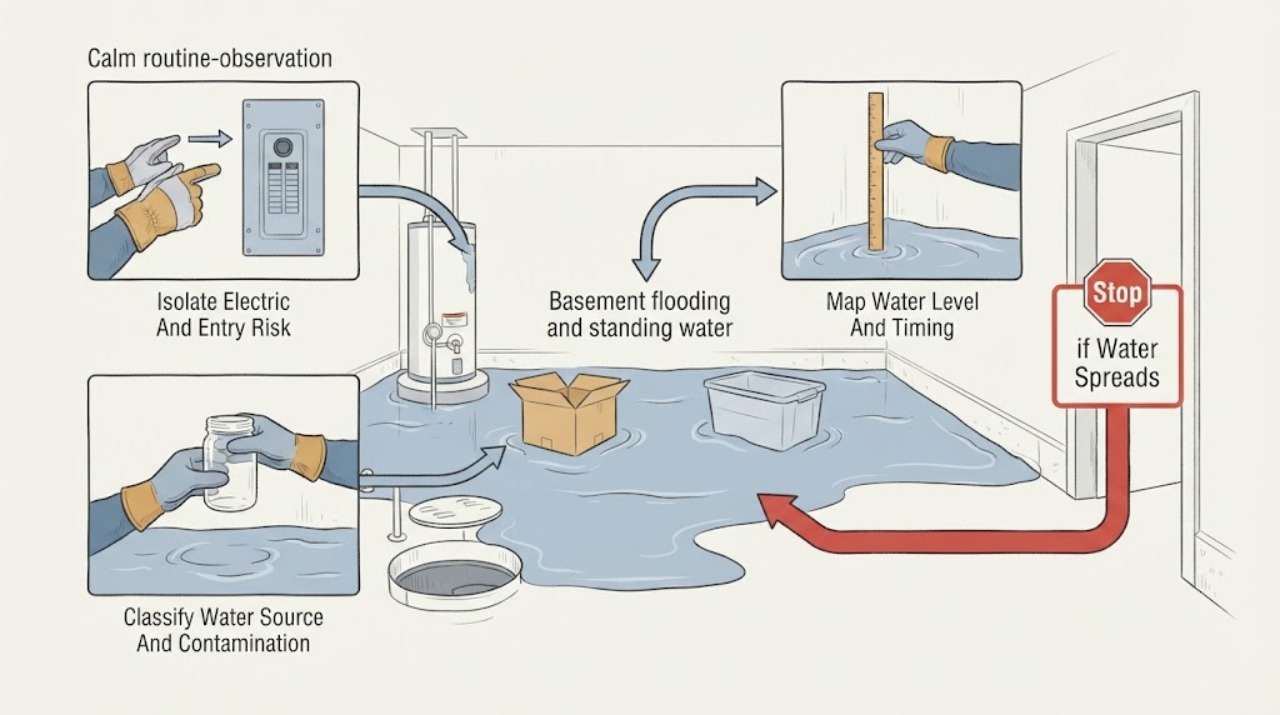
Treat basement standing water as an electrical, contamination, and building-safety problem before treating it as a pumping job. Do not enter the water or use electrical tools. If the main power can be turned off from a dry location, follow the emergency guidance; if reaching it requires entering water, call an electrician. From outside the affected area, record the water level, flow direction, weather or plumbing timing, sewage indicators, and structural changes. Floodwater may contain sewage or chemicals, and a sewer backup needs a different plumbing and disinfection response than rain or groundwater. Keep people out, arrange qualified water-damage assessment, and use pumps, generators, fans, or HVAC only after the electrical, contamination, and structural risks have been cleared.
Before you begin
Safety first
- Qualified responders determine safe entry, electrical clearance, contamination class, water source, structural condition, drying, disposal, disinfection, plumbing or drainage correction, and reoccupancy readiness.
Work through in order
Diagnostic checks
Use only checks that match the exact appliance or system and its official guide.
-
Check 1
From a dry location, keep people and pets away from the basement and look for standing water, wet outlets, submerged appliances, fallen debris, gas odor, smoke, or visibly leaning walls; use a battery flashlight from outside the affected area if needed.
Expected result: The water reaches electrical equipment, the main shutoff is only reachable through water, the building shows structural movement, or the area appears clear from a dry entry point.
Next step: If power can be turned off without entering water, use the safe dry-location shutoff guidance; otherwise call an electrician. Keep out when there is gas odor, structural damage, or no safe route, and arrange qualified assessment.
Stop if: Never enter standing water to operate a switch, never use an electrical appliance or tool in water, and do not enter a basement with leaning walls, a sagging ceiling, exposed wiring, gas odor, smoke, or unstable debris.
Why this matters
Why: Water near electricity or structural movement changes this from routine water removal to an urgent safety response. A dry visible entry does not prove that hidden wiring, floors, or walls are safe.
-
Check 2
From outside the water or from a dry safe position, photograph and describe the water's color, odor, visible solids or film, entry point, floor-drain or toilet overflow, sump activity, nearby plumbing, and whether rain, thaw, appliance use, or a sewer event preceded it; do not touch or sample the water.
Expected result: Water follows rainfall or wall/floor seepage, rises through a drain or plumbing fixture, appears after an appliance or pipe event, smells like sewage, contains solids or chemicals, or has no identifiable source.
Next step: Keep the area isolated and tell the water-damage professional whether sewage, chemicals, or a sewer/floor-drain backup is possible. For suspected sewage or chemical contamination, do not start ordinary household cleanup.
Stop if: Do not wade, handle debris, flush toilets, run fixtures, pump into another drain, or touch the water when sewage, chemicals, fuel, sharp debris, or an unknown contaminant may be present.
Why this matters
Why: Timing and route can distinguish likely rain/groundwater or a clean supply leak from a sewer-backup or contaminated-water event, but appearance cannot certify that water is safe. An unknown source requires broader plumbing and building assessment.
-
Check 3
From a safe dry viewpoint, record the highest visible water line, current level, flow direction, wet perimeter, affected rooms, and the times of rain, snowmelt, plumbing use, sump operation, or sewer activity; photograph walls, floors, contents, and any existing drain or sump opening without opening finishes.
Expected result: The water is still rising, recedes after rain stops, returns when fixtures are used, rises from a floor drain, appears around a foundation wall or window, or has stopped but left wet materials.
Next step: Give the dated timeline and water-line photos to a water-damage specialist and plumber. Keep the affected area isolated while the source, contamination class, and drying plan are determined.
Stop if: Stop for active flow that threatens exits, a collapsing or shifting wall, a soft floor, submerged equipment, sewage or chemical odor, or any need to cut walls or flooring to trace the path.
Why this matters
Why: A rising or repeatable pattern helps the professional separate surface runoff, foundation seepage, sump or pump failure, supply plumbing, and sewer-backup scope. A stopped level does not mean the affected materials, electrical system, or source are safe.
-
Check 4
From the entrance or another stable dry location, visually check for bowed or leaning basement walls, new cracks, shifted support posts, sagging ceilings, swollen drywall, loose flooring, wet insulation, mold-like growth, and HVAC or electrical equipment affected by water; do not probe, pull, or remove materials.
Expected result: Structural movement or new cracking is visible, wet materials are limited and accessible from a dry area, widespread or concealed damage is present, or the extent cannot be seen.
Next step: Keep out and request building, electrical, and water-damage professionals when structure, HVAC, wiring, or concealed materials are affected. Do not use fans across visible mold or turn on a flooded HVAC system.
Stop if: Do not enter beneath a sagging ceiling, walk on soft flooring, disturb moldy or sewage-contaminated materials, open walls, or operate HVAC or electrical equipment exposed to floodwater.
Why this matters
Why: Leaning walls, missing supports, and new cracks can make the building unsafe to enter. Wet or concealed materials can continue to support mold growth and may require removal, disinfection, electrical inspection, or restoration beyond water extraction.
-
Check 5
After qualified responders clear the electrical, structural, and contamination hazards, document what was removed or dried, what remains wet, whether the source is stopped, and whether the basement's HVAC, sump, pump, or wiring needs inspection; do not energize equipment or use a generator as a substitute for clearance.
Expected result: Water is removed and the source is corrected, wet materials remain, mold or musty odor is present, the HVAC or electrical system was flooded, or the source continues or returns.
Next step: Follow the restoration professional's drying, cleaning, disposal, and reoccupancy plan. Have an electrician clear flooded electrical equipment and a plumber or drainage professional diagnose recurring water before repairs are closed up.
Stop if: Do not turn on flooded appliances or HVAC, use a gasoline engine indoors, connect a generator to house wiring without approved equipment, or seal wet materials behind new finishes.
Why this matters
Why: A dry floor alone does not show that wall cavities, insulation, subfloor, wiring, HVAC, or sewage-contaminated porous materials are safe. Recurrence indicates an unresolved source such as drainage, sump, foundation, plumbing, or sewer capacity.
Use your observations
Decision map
Find the observation that best matches what you see, then follow the next safe action.
-
PATH 01Next step
What you see
Standing water reaches outlets or electrical equipment, the power shutoff is only accessible through water, there is gas odor or smoke, or walls, supports, floors, or ceilings appear unstable.
Do this next
Keep everyone out, call the appropriate emergency, electrician, gas, or building professional from a safe location, and do not enter to operate equipment.
Why this path and its safety boundary
Why it matters: Shock, fire, gas, fall, or structural-collapse risk overrides source tracing and cleanup.
-
PATH 02Next step
What you see
Water rises from a floor drain or plumbing fixture, has sewage odor or solids, follows a sewer event, or may contain chemicals or fuel.
Do this next
Keep people and pets away, limit water use if a sewer or septic system may be affected, and call qualified sewer, plumbing, and restoration professionals for containment, disinfection, and disposal.
Why this path and its safety boundary
Why it matters: A sanitary-sewer or contaminated-water response is more likely than clean groundwater extraction. Porous materials and personal protective measures need a controlled cleanup plan.
-
PATH 03Next step
What you see
Water appears tied to rain, snowmelt, foundation seepage, a window, sump, or a clean plumbing supply, with no sewage or chemical indicators and no electrical or structural hazard visible.
Do this next
Arrange water-damage and plumbing or drainage assessment, document the weather and recurrence pattern, and begin drying only under a qualified plan after electrical clearance.
Why this path and its safety boundary
Why it matters: A drainage, grading, foundation, sump, pump, or supply-plumbing issue is more likely, but the absence of odor or solids does not certify the water or hidden materials as safe.
-
PATH 04Next step
What you see
The water has receded, but drywall, insulation, flooring, contents, HVAC, or hidden cavities remain wet, moldy, musty, or inaccessible.
Do this next
Keep the affected area out of normal use and obtain qualified restoration, electrical, HVAC, and building assessment before closing walls, replacing flooring, or reoccupying.
Why this path and its safety boundary
Why it matters: The immediate water level has changed, but moisture and contamination can continue causing damage and mold; a visually dry surface does not establish safe reoccupancy.
Helpful context
Understand the symptom
Make the basement safe before finding the source
Standing water can hide energized outlets, fallen debris, unstable flooring, and contaminated material. CDC says to turn off power from a dry location only when that can be done without entering water, and to have an electrician check the system before it is turned back on. If the basement is inaccessible, dark, structurally damaged, or near a gas odor, keep out and request professional response rather than using a flashlight, pump, or extension cord in the water.
Separate rain or plumbing water from a sewer backup
Rain or groundwater may enter through a foundation, window, floor drain, sump, or wall, while a sewer backup can rise from a floor drain, toilet, or plumbing fixture and may contain raw sewage. EPA says floodwater can carry sewage and hazardous substances, and that sewage entering a basement can require thorough cleaning and disinfection; rugs, wallboard, flooring, and upholstered contents that contact sewage may need replacement. Do not assume clear-looking water is clean.
Drying and repair are separate decisions
Removing water does not establish that the source is corrected or that wet drywall, insulation, flooring, contents, wiring, HVAC, or the foundation is safe to keep. EPA recommends making work safe from structural, electrical, and physical hazards, drying promptly, and getting qualified help when basement cleanup is too difficult or dangerous. A sump-pump replacement, backwater protection, foundation repair, or wall removal should follow a diagnosis of the water path and damage extent.
Safety boundary
Stop conditions
- Do not enter standing water, touch wet electrical equipment, use electrical tools or appliances in water, or operate a power switch that can only be reached through water.
- Do not enter a basement with gas odor, smoke, leaning walls, new structural cracks, missing supports, a sagging ceiling, unstable flooring, or falling debris.
- Treat suspected sewage, chemical, fuel, or unknown water as contaminated; do not wade, sample, pump into another drain, handle debris, or start ordinary cleanup without qualified guidance.
- Do not turn on flooded HVAC, appliances, pumps, or wiring, use a gasoline engine indoors, or connect a generator to house wiring without approved transfer equipment and professional clearance.
- Do not close wet walls or floors, use fans across visible mold, or remove structural or concealed materials as a DIY source test.
Only after diagnosis
Potential parts
- matching sump pump and check-valve assembly
Consider this only after a professional confirms that a failed or undersized sump system caused the intrusion and identifies the required pump, discharge, backup, and electrical arrangement.
Confirm pit dimensions, flow requirements, discharge routing, check-valve arrangement, power and backup provisions, and local requirements; do not install or energize it in standing water. - backwater valve or sewer-backflow protection
Consider this only when a qualified plumber confirms sewer-backflow scope and determines that a backwater device is suitable for the building's sanitary layout.
Sizing, access, maintenance, venting, and local plumbing requirements are site-specific; a valve does not correct foundation seepage or a blocked private line. - water-damage drying equipment
Consider this only as part of a qualified drying plan after electrical, structural, and contamination hazards are cleared; equipment alone does not make floodwater safe.
Use only in accordance with the restoration plan, electrical clearance, ventilation limits, and any mold or sewage controls.
When checks do not resolve it
Need a professional?
Call urgently for water near electricity, an inaccessible power shutoff, rising water, sewage or chemical contamination, gas odor, structural movement, active foundation or plumbing flow, submerged equipment, or an unsafe entry. Arrange qualified restoration and source assessment even after clean-looking water recedes if materials, HVAC, or wiring remain wet.
Safety scope: Qualified responders determine safe entry, electrical clearance, contamination class, water source, structural condition, drying, disposal, disinfection, plumbing or drainage correction, and reoccupancy readiness.
Have this ready
- Dated photos of the water line, affected rooms, entry point, floor drains, sump, walls, contents, and electrical equipment
- Water color, odor, visible solids or chemicals, and whether a sewer or septic backup is possible
- Timing relative to rain, thaw, plumbing use, appliance operation, sump cycling, or a sewer event
- Whether power is off, whether any electrical, HVAC, or gas equipment was submerged, and any structural warning
- Materials and contents that stayed wet, visible mold or musty odor, and access limitations
- Any prior flooding, sump or drainage work, foundation repair, sewer service, or insurance documentation
Common questions
FAQ
Can I walk into a flooded basement to turn off the power?
No. If the main power can be turned off from a dry location, use that safe dry-location option. If reaching it requires entering standing water, call an electrician. Never use a switch, tool, or appliance while standing in water.
How can I tell whether basement water is a sewer backup?
Look from a dry position for water rising from a floor drain or plumbing fixture, sewage odor, solids, a connection to toilet or drain use, or a known sewer event. Do not touch or sample the water; clear-looking water may still be contaminated.
Can I pump out clean-looking basement water myself?
Not until electrical, structural, and contamination risks are cleared. Pumping can expose wet wiring, spread contaminated water, or worsen a sewer or foundation problem. Use a qualified plan for pumps, discharge, drying, and disposal.
Should I turn on fans or the HVAC after basement flooding?
Only after electrical safety and contamination conditions are assessed. Do not turn on a flooded HVAC system, and do not use fans across visible mold because they can spread it. A restoration professional can set the drying and ventilation plan.
When can I close the walls or replace basement flooring?
After the water source is corrected, electrical and structural systems are cleared, contaminated materials are removed or cleaned, and the restoration professional confirms the remaining materials are dry. A dry surface alone does not establish that wall cavities, insulation, flooring, or wiring are safe.
Read the exact guide
Official sources
- Text Version of the Flooded HomeU.S. Environmental Protection Agency · General flooded-home cleanup guidance; qualified local professionals determine the safe scope for a specific basement.
- Sanitary Sewer Overflow (SSO) Frequent QuestionsU.S. Environmental Protection Agency · General sanitary-sewer-overflow guidance; a local utility, plumber, health department, or restoration professional determines the site-specific response.
- Safety Guidelines: Reentering Your Flooded HomeCenters for Disease Control and Prevention · General flooded-home guidance; local emergency instructions and site-specific professional assessment control a particular basement.
- Coming HomeU.S. Environmental Protection Agency · General EPA flooded-home guidance; a qualified professional must verify a damaged building before entry.
- FloodingU.S. Environmental Protection Agency · General flood-recovery guidance; water source, local health instructions, and site conditions control cleanup decisions.
Community feedback
Share a repair observation
Share a plain-text repair observation. Accepted observations are published automatically; this page may take a moment to update.