
On this page
Start here
Quick answer
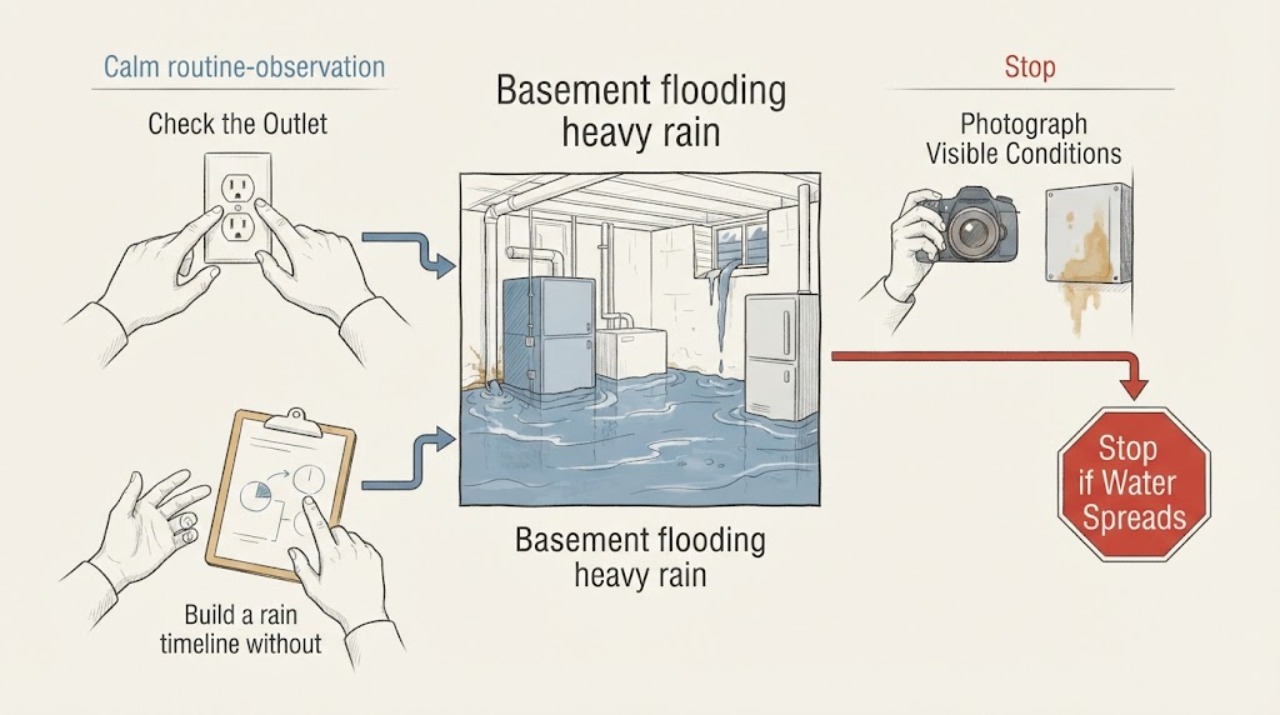
For basement flooding after heavy rain, first stay out of standing water and isolate the electrical and sewage risk from a dry position. Record when rain began, when water appeared, whether it rose or receded with the storm, and where it first entered: wall or floor joints, foundation cracks, window wells, floor drains or fixtures, or the sump area. Check exterior slope, gutters, downspouts, and pooling only from safe ground. These clues distinguish runoff or infiltration, groundwater pressure, sewer backflow, and sump or drainage failure without proving one source. After the source and electrical conditions are controlled, qualified water-damage service can map moisture and choose controlled drying, cleanup, or material removal.
Before you begin
Safety first
- Request a safe basement-flood assessment that begins with electrical and contamination screening, records the heavy-rain timeline, maps interior and exterior entry points, checks drains and sump response, and distinguishes runoff, groundwater pressure, sewer backflow, and drainage or pump failure. The provider determines whether coordinated plumbing, electrical, foundation, or restoration work is needed.
Work through in order
Diagnostic checks
Use only checks that match the exact appliance or system and its official guide.
-
Check 1
From a dry doorway, stair landing, or other stable position, check whether basement floodwater is still rising and whether it reaches outlets, cords, appliances, furnaces, panels, or a sump pump. Do not enter standing water or touch wet electrical equipment.
Expected result: Record the visible water level, whether it is rising or receding, which equipment or circuits may be affected, and whether the water looks clear, muddy, oily, or sewage-contaminated.
Next step: Keep everyone and pets out, leave the building if there is immediate danger, and call emergency services as needed. From a dry location, request qualified electrical and water-damage help before anyone enters or operates equipment.
Stop if: Stop immediately for live electrical risk, sparking, smoke, gas odor, unstable walls or floors, fast-moving water, or any need to wade, reach into water, or operate a pump.
Why this matters
Why: Water near electrical equipment, a rising level, gas odor, structural movement, or an unknown contamination level makes the basement unsafe to enter; it is an emergency mitigation and electrical assessment, not a pumping task.
-
Check 2
Build a rain timeline without entering the basement: note when heavy rain began and ended, when water first appeared, the highest visible level, and whether the level followed rainfall, continued after rain stopped, or occurred during dry weather.
Expected result: Record the rain-to-water delay, whether water retreats as rain eases, whether a floor drain or sump reacts at the same time, and whether the event is new, recurring, or only non-rain related.
Next step: Save dated photos from safe positions and compare them with local rainfall timing and prior events. Give the timeline to the water-damage provider, plumber, or foundation drainage professional instead of assigning blame to one inlet.
Stop if: Do not create a test by running fixtures, entering water, removing drain covers, or restarting equipment in or near the flooded basement.
Why this matters
Why: Flooding that starts and peaks with heavy rain points toward runoff, foundation infiltration, groundwater pressure, sewer loading, or sump demand; flooding in dry weather keeps appliance, plumbing, or sewer causes in play rather than proving a stormwater route.
-
Check 3
From dry, accessible positions, map where water first appears: wall-to-floor joints, foundation cracks, windows or window wells, stair openings, floor drains, toilets or laundry fixtures, the sump area, and any ceiling or plumbing route. Photograph flow marks and the dry-to-wet boundary without opening walls or floors.
Expected result: Record the earliest visible location, direction of flow, sediment or odor, height marks, affected rooms, and whether several entry points appeared together during the storm.
Next step: Mark each entry area on a simple sketch and note whether water is seeping, spraying, bubbling, or backing up. Request a source investigation that covers all observed routes.
Stop if: Stop if inspection requires wading, lifting a drain cover, probing a crack, moving appliances, opening a wall or ceiling, or contacting floodwater or residue.
Why this matters
Why: A wall, crack, or window-well entry is consistent with outside runoff or groundwater pressure; water emerging from a drain or fixture suggests sewer or drain backflow; a concentrated sump area suggests drainage or pump performance, but location alone does not prove the source.
-
Check 4
From safe ground outside, look at the slope toward the foundation, gutters, downspout discharge, window wells, surface pooling, and visible foundation openings. Do not use a ladder, climb a roof, enter a window well, or approach damaged utilities.
Expected result: Record whether water flows toward or away from the building, whether a window well fills, and whether gutters or downspouts overflow or discharge near the foundation.
Next step: Photograph the grade and discharge path during or soon after rain and ask a qualified drainage or foundation professional to correct the route; do not excavate or seal a crack based on one observation.
Stop if: Stop for washed-out soil, undermined walks, unstable window-well covers, lightning, overhead wires, or any need for elevated or excavation work.
Why this matters
Why: Rainwater pooling against the foundation, overflowing gutters, a downspout ending near the wall, or a filling window well supports a surface-runoff or infiltration path; a dry exterior does not rule out groundwater pressure or a buried drain problem.
-
Check 5
If the sump basin, alarm, discharge line, or floor-drain area can be seen from a dry position, note whether the pump is silent, running, alarming, or surrounded by water and whether discharge is visible outside. Do not touch the pump, float, wiring, or drain cover.
Expected result: Record alarm status, visible water level, pump sound, discharge evidence, drain bubbling or odor, and whether the condition changed as rain intensified or stopped.
Next step: Keep clear and have a qualified plumber, electrician, or water-damage provider inspect the sump, discharge, drains, and backflow conditions. Do not improvise a power connection or pump water through an unknown or contaminated route.
Stop if: Stop for standing water around the pump or panel, exposed wiring, sewage odor, fast flow, or any request to reset, unplug, open, or lift flooded equipment.
Why this matters
Why: A high basin with no response can indicate a failed pump, power or float issue, or blocked discharge; water at a floor drain or fixture during rain can indicate sewer backflow. A working pump does not exclude seepage, overwhelmed capacity, or a separate return path.
-
Check 6
From the dry boundary, document how far moisture or sediment extends across floors, walls, contents, insulation, and mechanical equipment, and whether the water appears clean or may include sewage, chemicals, or fuel. Do not scrub, cut, remove materials, or run drying equipment through an unsafe area.
Expected result: Record the highest water mark, rooms and materials affected, softness or swelling visible without probing, odors, sediment, and the areas hidden behind contents or below equipment.
Next step: Photograph the full extent before moving anything and request moisture mapping. A provider can then choose safe extraction and drying, cleanup, or removal after the source and electrical conditions are controlled.
Stop if: Stop all cleanup for suspected sewage or chemical contamination, mold-like growth, damaged structural materials, submerged equipment, or any condition that requires entering floodwater.
Why this matters
Why: A small, clean, stopped event with no electrical contact may support a controlled professional drying plan; broad, retained, soft, contaminated, or hidden damage needs water-damage restoration and may require material removal or specialized cleanup.
Use your observations
Decision map
Find the observation that best matches what you see, then follow the next safe action.
-
PATH 01Next step
What you see
Water is rising or standing water reaches outlets, cords, appliances, a furnace, an electrical panel, or a sump pump.
Do this next
Do not enter or touch the water or equipment. Keep everyone out, leave for immediate danger, and obtain emergency electrical and water-damage assessment before power is restored or any pump or vacuum is operated.
-
PATH 02Next step
What you see
Water appears at wall-to-floor joints, foundation cracks, or window wells during or shortly after heavy rain, with exterior pooling or runoff toward the foundation.
Do this next
Document the rain timing and exterior flow from safe ground and request drainage or foundation evaluation for surface runoff, infiltration, and groundwater pressure. Do not treat one crack or window well as the only source without checking the rest of the perimeter.
-
PATH 03Next step
What you see
Water comes up through a floor drain, toilet, laundry fixture, or other drain during the storm, especially with odor, sediment, or bubbling.
Do this next
Treat it as possible sewer or drain backflow. Stop unnecessary water use, keep people away from the water, and call the local utility or a qualified plumber and water-damage provider; do not pump or clean unknown water yourself.
-
PATH 04Next step
What you see
The sump basin is high while the pump is silent or alarming, the discharge is absent, or the pump area is wet.
Do this next
Treat the sump response as an equipment, power, float, discharge, or capacity problem until inspected. Do not reach into the basin, reset or rewire flooded equipment, or enter water; request qualified plumbing and electrical assessment.
-
PATH 05Next step
What you see
The water level rises gradually at several wall or floor edges after heavy rain, while the sump and drains show no single obvious failure.
Do this next
Groundwater or hydrostatic pressure remains possible even without a visible stream. Arrange professional moisture and foundation-drainage assessment rather than sealing a crack, excavating, or relying on one pump observation.
-
PATH 06Next step
What you see
The source is stopped, water is limited and clean, no electrical equipment was affected, and the area is safe for a provider to access.
Do this next
Request prompt moisture mapping and controlled drying. Delay flooring, wall, or finish replacement until concealed areas are assessed; use drying equipment only under the provider's safety plan and equipment instructions.
-
PATH 07Next step
What you see
Water is broad, remains in porous materials, reaches insulation or mechanical equipment, smells like sewage or chemicals, or the cause is hidden or recurring.
Do this next
Escalate to qualified water-damage restoration and the appropriate plumber, electrician, or foundation professional. Keep the basement isolated and do not enter, pump, scrub, cut, or open walls and floors as a DIY response.
Helpful context
Understand the symptom
Make the flooded basement safe first
During or after heavy rain, first decide whether the basement is safe to approach. From a dry doorway or stair landing, note rising water, electrical equipment, gas odors, structural movement, and possible sewage. Do not enter standing water or touch wet appliances, cords, outlets, panels, or a sump pump. If the flood occurs in dry weather, keep appliance, plumbing, and sewer sources in the investigation instead of assuming stormwater.
Use rain timing and entry location
Record when rain began, when water appeared, how the level changed, and where it first entered. Wall-to-floor joints, foundation cracks, and filling window wells can fit runoff, infiltration, or groundwater pressure. A floor drain, toilet, or laundry fixture that bubbles or backs up points toward drainage or sewer flow, while a high silent sump points toward pump, power, float, discharge, or capacity trouble. These clues narrow the inspection but do not prove a single cause.
Choose the right escalation
From safe ground outside, document slope, gutter overflow, downspout discharge, and window-well pooling. Inside, record the water mark and spread without wading, opening walls, or moving heavy equipment. After source control and electrical clearance, a provider can map moisture and choose controlled drying for a limited clean event, or restoration and material removal for broad, hidden, soft, or contaminated damage.
Only after diagnosis
Potential parts
- water leak alarm
Consider this only as an early-warning aid after the immediate flood and electrical hazards are addressed; it will not stop runoff, sewer backflow, groundwater, or a failed sump system.
Place it only in a dry, electrically safe location and follow the manufacturer's battery, connectivity, and placement instructions. - wet-dry vacuum
Consider this only if a qualified provider confirms the water is clean, the area and electrical supply are safe, and the equipment is appropriate; it is not a safe response to standing water near energized equipment or sewage.
Follow the manufacturer's electrical and liquid-recovery instructions and never operate it in a flooded or electrically unsafe area. - dehumidifier
Consider this only after the water source is controlled, electrical conditions are cleared, and the drying plan permits it; reducing room humidity cannot remove hidden water or correct a structural or sewer source.
Use only in a dry, safe setup with the manufacturer's drainage, capacity, clearance, and maintenance guidance.
When checks do not resolve it
Need a professional?
Call immediately for rising water, electrical contact, gas odor, structural movement, sewage or chemical contamination, or unsafe access. Arrange prompt qualified water-damage service for broad, hidden, soft, recurring, or retained moisture and coordinate plumbing, electrical, sump, or foundation evaluation as indicated.
Safety scope: Request a safe basement-flood assessment that begins with electrical and contamination screening, records the heavy-rain timeline, maps interior and exterior entry points, checks drains and sump response, and distinguishes runoff, groundwater pressure, sewer backflow, and drainage or pump failure. The provider determines whether coordinated plumbing, electrical, foundation, or restoration work is needed.
Have this ready
- Rain start and end time, when water appeared, highest visible level, and whether it rose or receded with rainfall
- Safe photos of the water mark, dry-to-wet boundary, first entry location, walls, floor joints, window wells, drains, fixtures, and sump area
- Exterior observations of grade, gutter overflow, downspout discharge, pooling, and window-well conditions from ground level
- Whether water appears clear, muddy, oily, sewage-contaminated, or chemically contaminated, plus any odor or sediment
- Electrical equipment, appliances, furnace, or pump exposure and what was not touched, entered, moved, opened, or operated
Common questions
FAQ
What should I do first when heavy rain floods my basement?
Stay at a dry boundary and check for rising water, electrical equipment, gas odor, structural movement, and possible sewage. Do not enter the water or touch wet equipment. Call emergency or qualified help before anyone pumps or restores power.
How can I tell runoff from groundwater, sewer backflow, or a sump problem?
Record when rain started, when water appeared, whether the level followed the storm, and where it first entered. Wall or window-well seepage, drain or fixture backflow, and a high silent sump suggest different professional inspection paths, but none proves the source alone.
What can I check outside without entering the flooded basement?
Look from safe ground for slope toward the foundation, overflowing gutters, downspouts discharging near the wall, and a filling window well. Do not climb, enter a well, excavate, or seal a crack based on one storm observation.
Why did the sump pump not prevent this flooding?
A pump can be silent because of power, float, discharge, equipment, or capacity trouble, and a working pump may still be overwhelmed or unrelated to another entry path. Do not reach into the basin or reset flooded equipment; have qualified service inspect it.
When does basement flooding need emergency water-damage service?
Call urgently for rising water, electrical contact, sewage or chemical odor, broad or hidden damage, soft materials, a failed sump response, or any unsafe access. A qualified provider should control the source and electrical risk before extraction or drying.
Read the exact guide
Official sources
- FloodingU.S. Environmental Protection Agency · Official flood safety and recovery guidance supporting avoiding floodwater, keeping clear of electrical hazards, and using qualified help for flooded basements; it does not diagnose a particular building or authorize pumping.
- Sanitary Sewer Overflow (SSO) Frequent QuestionsU.S. Environmental Protection Agency · Official sewer-system guidance supporting the distinction between storm-linked sewer loading, groundwater or stormwater infiltration, sump and pump issues, and sewer backup; local utility and site conditions determine the diagnosis.
Community feedback
Share a repair observation
Share a plain-text repair observation. Accepted observations are published automatically; this page may take a moment to update.