
Repair problem
Tree Branches Near Power Lines Troubleshooting Guides
Published FixGraph guidance for diagnosing and responding to tree branches near power lines.
Matching published guides
Choose a guide that matches the service, equipment, and conditions you are seeing.
-
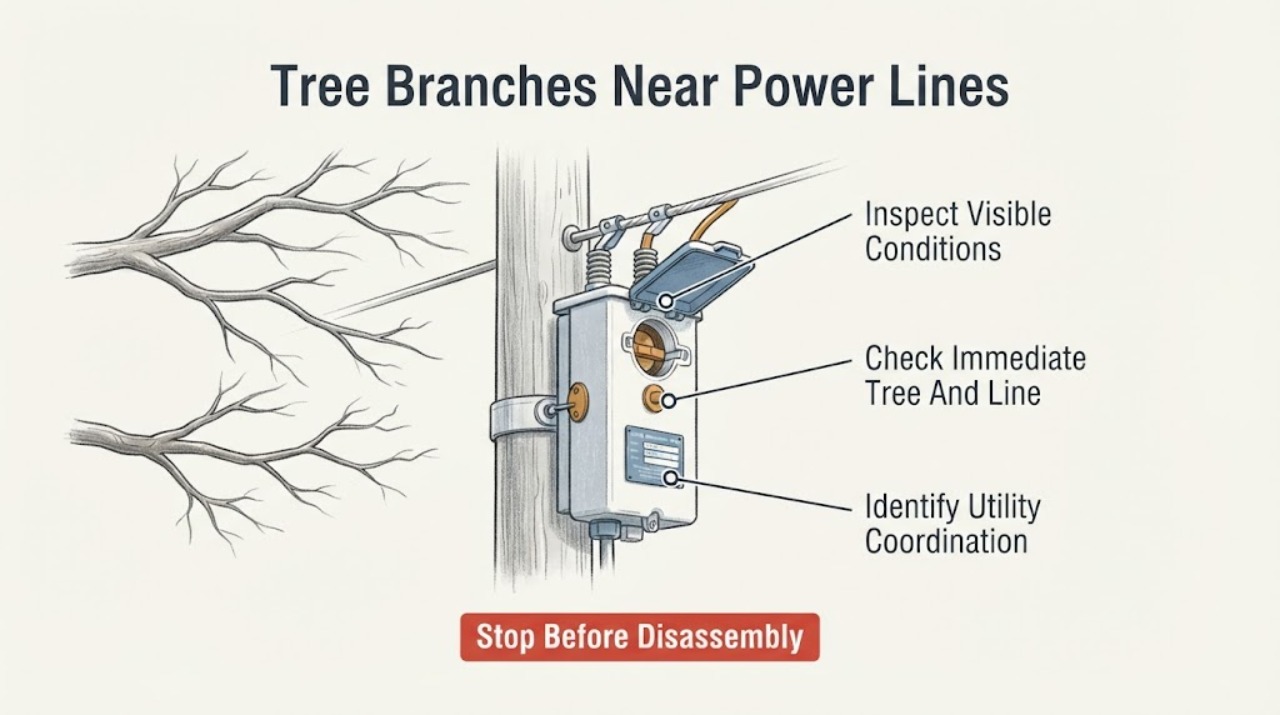
Tree Branches Near Power Lines: What to Check and What to Do Next
Treat any tree branch that touches, hangs over, or may fall onto a power line as an electrical and falling-object hazard, not a routine pruning job. From a safe ground position, document the branch and line without touching, climbing, using a ladder, or trying to measure the clearance.
-
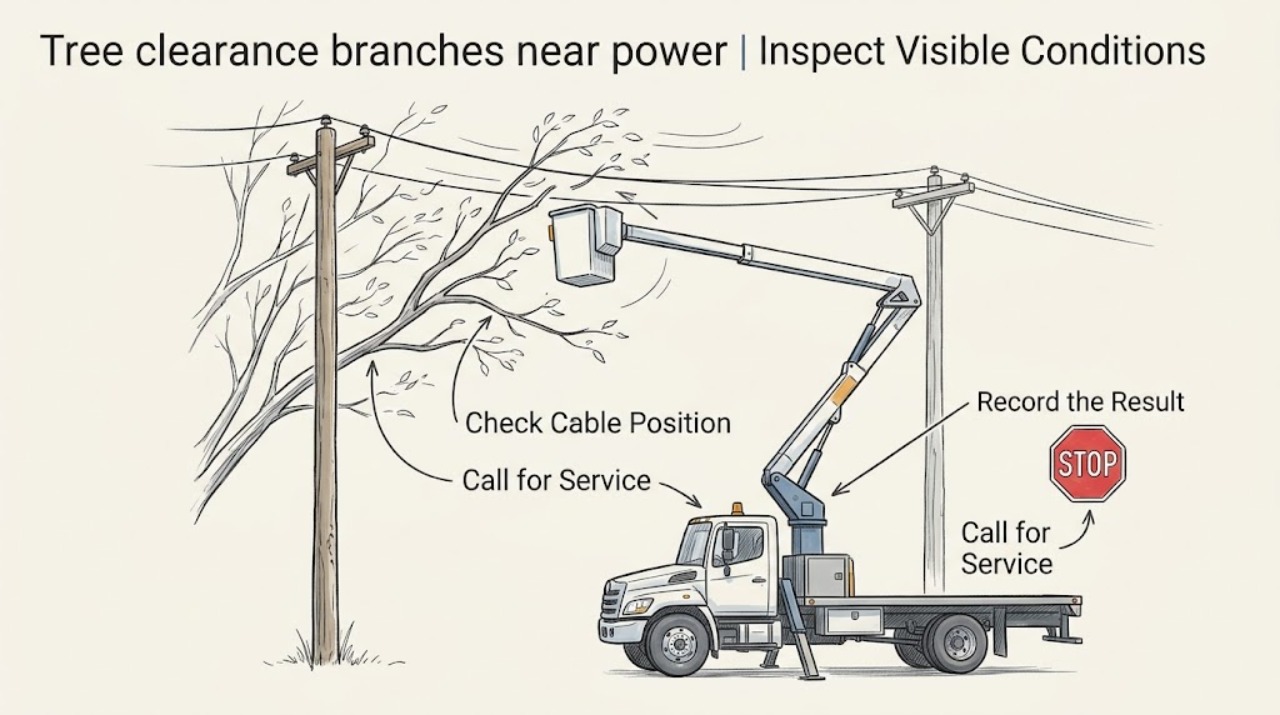
Tree clearance branches near power lines wind movement: What to Check and What to Do Next
Do not trim, climb, touch, or measure a moving branch near an overhead power line. From a safe location, note whether the branch is merely moving near the line, touching it, caught on it, or has brought a line down.
-
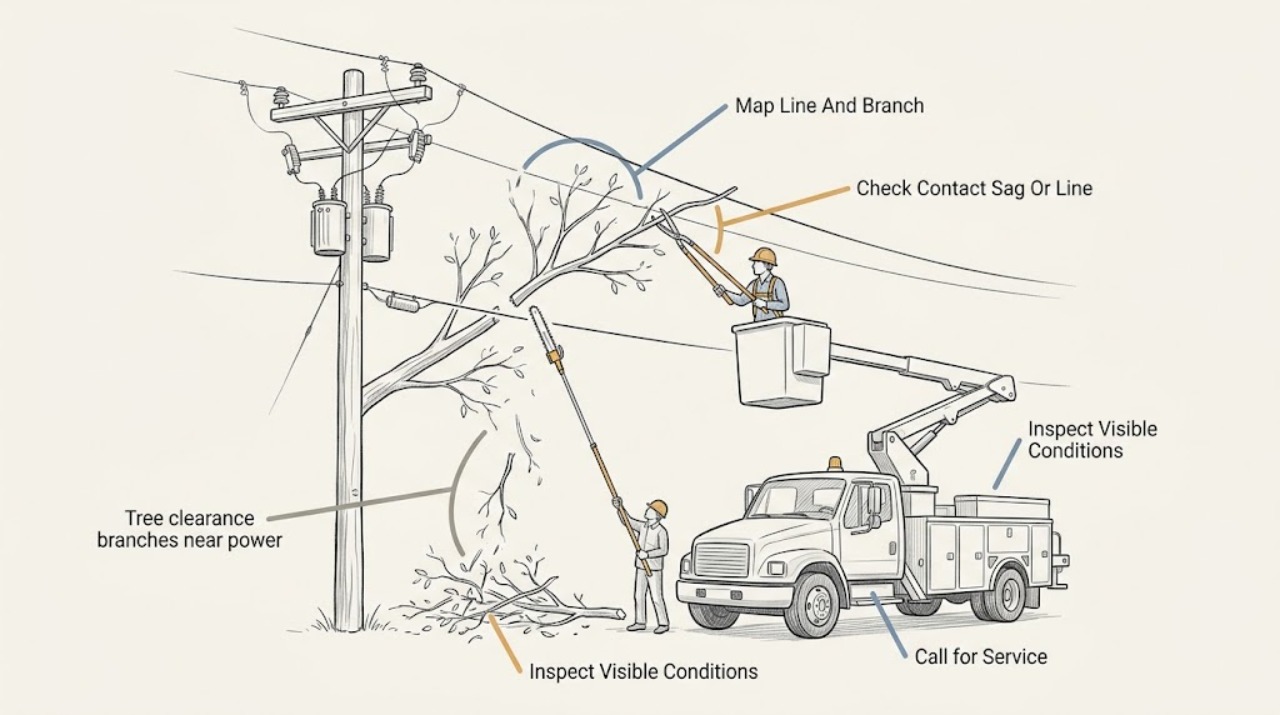
Tree clearance branches near power lines: What to Check and What to Do Next
Branches near or touching a power line are an electrical hazard, not a DIY trimming job. From a distant, safe location, document which branches appear closest, whether a line is sagging or already contacted, and whether wind, ice, or a damaged tree changes the risk.
-
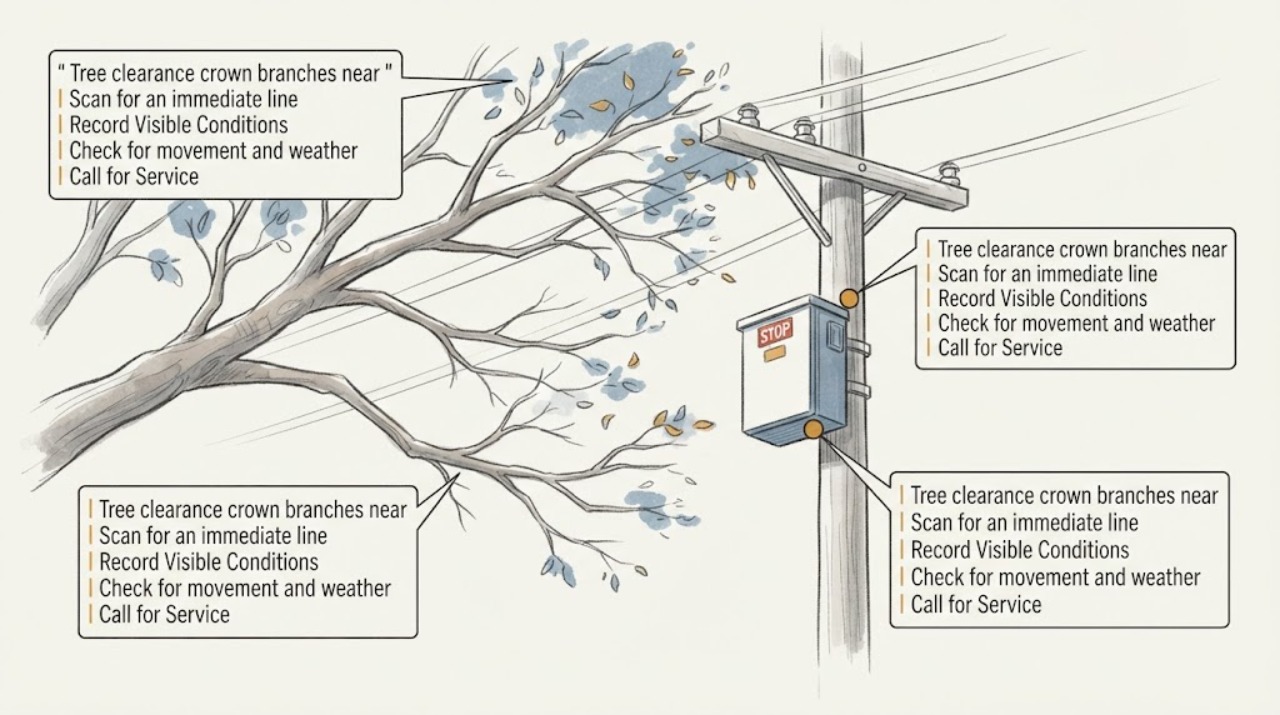
Tree clearance crown branches near power lines: What to Check and What to Do Next
Treat every overhead conductor as energized and keep people, tools, vehicles, and fallen limbs away. From a safe ground position, document which crown branches are close to or touching a line, whether a line is down, and whether weather or movement is changing the hazard.
-
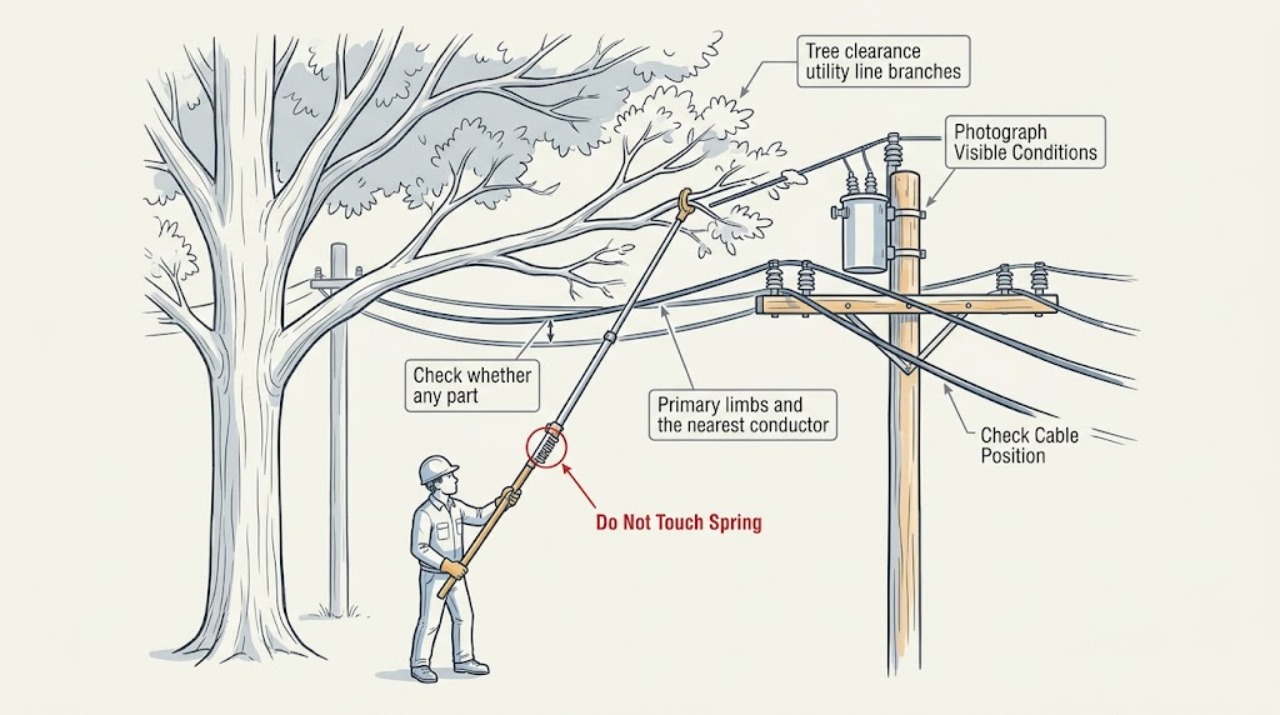
Tree clearance utility line branches near power: What to Check and What to Do Next
Treat every overhead power line as energized and keep people, ladders, tools, vehicles, and branches away. Do not trim, climb, tie back, cut, or pull a branch near a line, and do not assume a line is safe because it looks like a communications cable or because power is out.
-
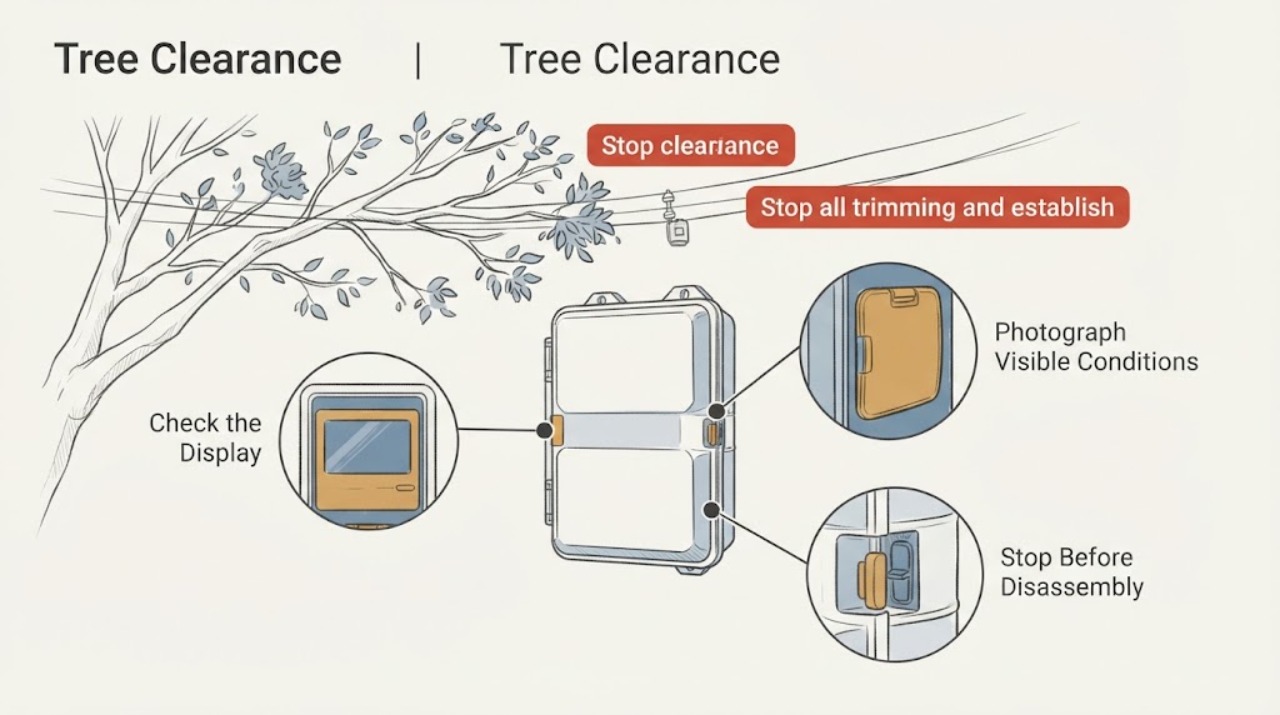
Tree Clearance: Branches Near Power Lines and Contact Risk—What to Check and What to Do Next
Treat every overhead power line as energized and keep people, branches, tools, ladders and equipment away. OSHA describes line-clearance tree work as work near energized lines and says unqualified workers must maintain at least 10 feet of approach distance for lines covered by that guidance; higher-voltage lines require greater, voltage-specific distances.
-
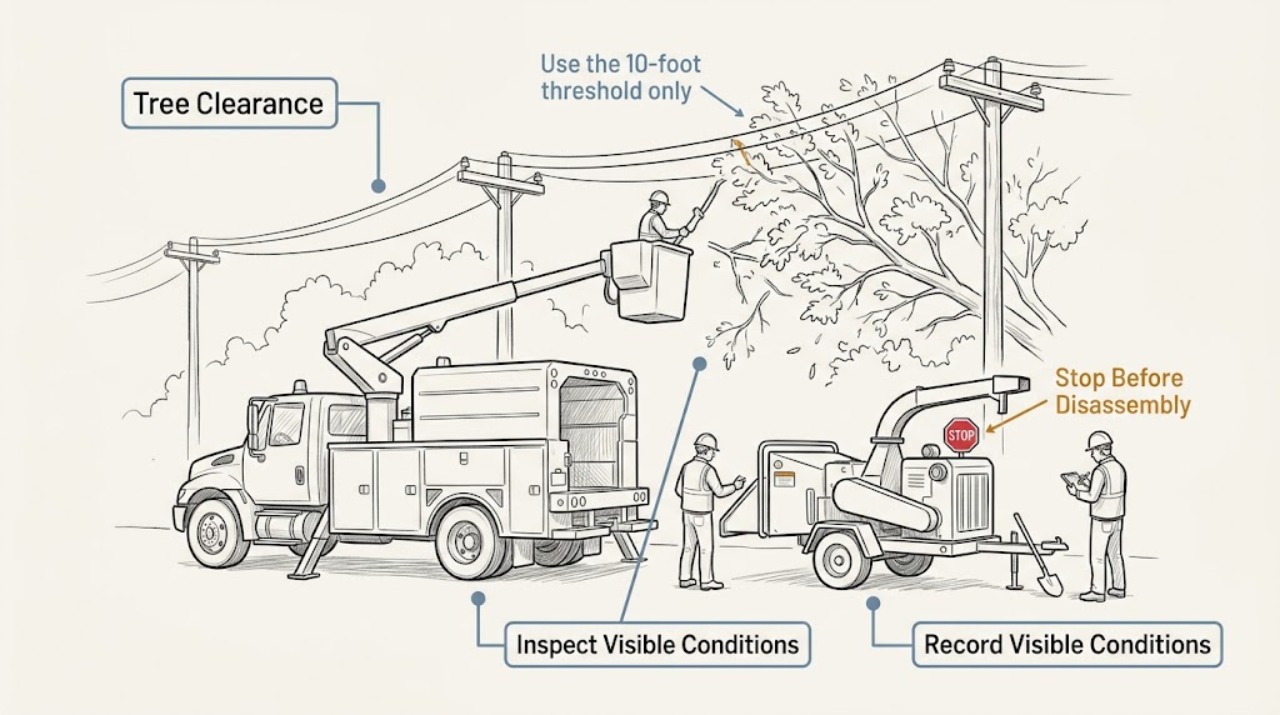
Tree Clearance: Branches Near Power Lines and Overgrowth—What to Check and What to Do Next
Treat branches or brush growing toward an overhead power line as an electrical hazard even when nothing is touching today. From the ground, identify whether the line is a neighborhood distribution line or a larger transmission line, note whether growth is dead, broken, moving, or already contacting the conductor, and stop if the distance is uncertain.