
On this page
Start here
Quick answer
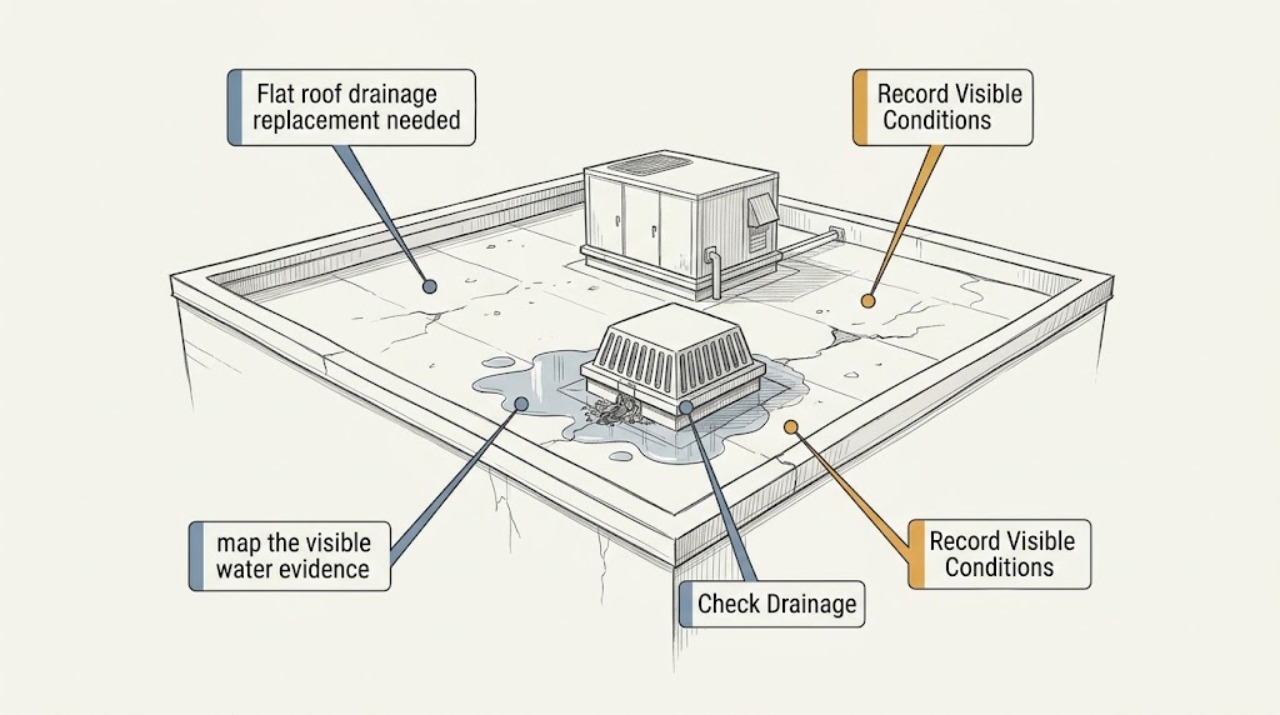
A flat roof that needs drainage replacement should be assessed by a roofing professional; a homeowner should not climb onto the roof, enter ponded water, open a drain, disturb the membrane, or apply a temporary patch. From a safe interior or ground location, record where water appears, whether a drain or overflow discharges, whether the roof or ceiling sags, whether leaks follow rain or snow, and whether the issue repeats. Low-slope roofs rely on planned drainage, and ponding can add load and damage the membrane or building. Isolate areas with active leaking, sagging, wet electrical equipment, or structural concern, then request a professional drainage and roof-system assessment.
Work through in order
Diagnostic checks
Use only checks that match the exact appliance or system and its official guide.
-
Check 1
From a dry interior or ground-level location, map the visible water evidence: note ceiling stains, drips, wall marks, damp insulation that is already exposed, exterior overflow marks, or water collecting at a safe-to-view discharge point.
Expected result: There is no current water evidence; a single localized stain or drip is present; or water is actively entering, spreading, or reaching equipment.
Next step: Photograph and date the evidence from a safe position, protect contents without climbing, and give the location to the roofer. Isolate the room or equipment area when water is active.
Stop if: Stop the observation and leave the area if the ceiling bows or drops, water reaches electrical equipment, a ceiling material appears loose, or the route is wet or unsafe.
Why this matters
Why: A stain can lag behind the roof entry point, so it does not identify the drain or membrane defect by itself. Active or spreading water increases the urgency and can create a building or electrical hazard.
-
Check 2
From the ground or a safe window, look only at the roof edge and visible drainage outlets. Note whether an outlet, scupper, downspout, or overflow appears to discharge during rain, remains dry while water is visible elsewhere, or is visibly damaged or blocked from below.
Expected result: The visible outlet discharges normally; there is overflow at an edge or outlet; the outlet is dry while ponding or leak evidence recurs; or the outlet cannot be seen safely.
Next step: Record the outlet type and timing without reaching, flushing, probing, or clearing it. Keep the roof inaccessible and ask the roofer to assess the drain, overflow, connection, and surrounding membrane.
Stop if: Stop if observing the outlet would require a ladder, roof access, standing under falling water or debris, or contact with a loose outlet or structure.
Why this matters
Why: A discharge pattern helps a professional compare the intended drainage route with the interior evidence, but a dry visible outlet does not prove that a concealed drain is blocked. A visible overflow or damaged outlet supports prompt assessment.
-
Check 3
After rain or snow has ended, record the timing and recurrence of the symptoms from indoors or the ground: note whether water evidence appears only after heavy weather, persists in dry weather, or returns at the same ceiling or wall location.
Expected result: The issue follows heavy rain or snow; it appears during dry weather; it returns at the same location; or the pattern is inconsistent.
Next step: Keep a dated log with weather, location, and severity and share it with the roofer. Do not perform a hose test or enter the roof to trace the leak.
Stop if: Stop if weather is active, wind drives water indoors, the ceiling changes shape, or water approaches electrical equipment.
Why this matters
Why: Weather timing can distinguish a bulk-water drainage event from a persistent building-moisture condition, but it cannot locate a concealed roof defect. Repeated recurrence suggests that a drainage or membrane plan needs professional review.
-
Check 4
From safe interior and ground positions, look for signs of deflection or load: note ceiling or roof-edge sagging, widening cracks, doors that changed position after a leak, unusually heavy ponding visible from a permitted viewpoint, or debris and growth at a visible outlet.
Expected result: No sagging or structural change is visible; a localized finish mark is present; or the ceiling, roof edge, or framing appears to bow, crack, or change.
Next step: Keep people and contents out from below a suspect area, photograph the change from a safe position, and report it as a potential structural concern. Do not brace, drill, drain, or load the roof yourself.
Stop if: Stop and evacuate the affected area if there is pronounced sagging, cracking, falling material, a popping sound, or any concern that the roof or ceiling may fail.
Why this matters
Why: Ponded water can increase roof load and sagging can concentrate more water, while a finish mark alone does not prove structural damage. Any visible deflection or widening crack needs prompt professional evaluation.
-
Check 5
Review the roof and drainage history from records already available: note prior drain repairs, repeated ponding or leaks, membrane work, additions such as rooftop equipment, and whether the current symptoms began after a remodel or severe weather.
Expected result: There is one isolated recent event and no prior history; or recurring leaks, repeated drain work, membrane deterioration, equipment changes, or prior ponding are documented.
Next step: Provide the history, photos, roof plans, and prior invoices to the roofing professional. Ask for the proposed drainage approach and how it will protect the existing membrane and building interior.
Stop if: Stop if records indicate hazardous materials, concealed electrical or structural work, or a need to open the roof or ceiling to investigate.
Why this matters
Why: Repeated failures or changed roof loading can indicate that a component replacement alone may not address the drainage design or roof assembly. Records help the roofer scope a replacement assessment without invasive homeowner inspection.
Use your observations
Decision map
Find the observation that best matches what you see, then follow the next safe action.
-
PATH 01Next step
What you see
There is no active leak, no visible sagging, and the outlet appears to discharge, but the concern is recurring ponding or a proposed replacement.
Do this next
Schedule a planned professional roof and drainage assessment. Provide the symptom log and history; do not enter the roof to confirm ponding.
-
PATH 02Next step
What you see
The same interior leak or ponding evidence returns after rain or snow, or the visible outlet does not match the expected drainage pattern.
Do this next
Request a professional drainage and membrane assessment, including the outlet, overflow, slope, and roof assembly. Do not flush, probe, open, or seal the drain yourself.
-
PATH 03Next step
What you see
Water is actively entering, ceiling or roof-edge sagging is visible, or cracks or falling material are present.
Do this next
Keep people and contents out of the affected area, isolate it from a safe route, and seek urgent roofing or building assistance. Evacuate if failure may be imminent.
-
PATH 04Next step
What you see
Water is near electrical equipment, wet concealed wiring is suspected, or electrical equipment has been affected.
Do this next
Do not touch the wet equipment or enter the wet area. Use qualified emergency electrical and roofing assistance after the area is made safe.
-
PATH 05Next step
What you see
Weather is active, the roof is wet or icy, or a safe ground or interior viewpoint is unavailable.
Do this next
Stop observing and wait for qualified professionals under safe conditions. Do not climb, use a ladder, enter ponding, or attempt a temporary roof repair.
Helpful context
Understand the symptom
Why replacement is a design decision
A drain, scupper, overflow, slope, and roof membrane work together. Replacing one visible component without checking the drainage path, roof structure, and membrane can leave the cause in place or create a new leak. A flat roof may appear level while still being designed to guide water to specific low points. The safe role for the owner is to document symptoms and protect the people and contents below while a qualified roofer assesses the system.
Do not make a ponding-water inspection
Do not use a ladder, walk on the roof, step into standing water, reach into a drain, remove a drain cover, cut or lift membrane, drill, scrape, seal, or place a tarp as a DIY repair. Roof surfaces can be slippery or weak, and hidden water can be near electrical equipment. Keep the observation indoors or at ground level and use a professional for any roof-level inspection or replacement plan.
When checks do not resolve it
Need a professional?
Arrange a qualified roofing professional when drainage replacement is being considered, ponding or overflow recurs, a leak returns, or the drainage route is unclear. Request urgent assistance for active leaking, sagging, falling material, structural concern, or water near electrical equipment.
Have this ready
- Interior leak or stain locations and dated photos
- Ground-level observations of outlets, scuppers, downspouts, and overflow
- Weather timing and recurrence pattern
- Any visible sagging, cracking, or change in the ceiling or roof edge
- Prior drainage, membrane, equipment, and leak history
Common questions
FAQ
Can I walk on a flat roof to check whether the drain is blocked?
No. Do not climb, use a ladder, enter ponding, reach into a drain, or disturb the membrane. Record interior and ground-level evidence and have a qualified roofer inspect it with appropriate access and fall protection.
Does replacing the drain fix a flat-roof leak?
Not necessarily. Drainage, overflow, slope, membrane, penetrations, and roof structure interact. A professional should determine whether a drain replacement addresses the cause or whether the wider system needs work.
What should I record when ponding or overflow keeps returning?
Record the date, weather, interior location, visible outlet or overflow behavior from the ground, recurrence, and any sagging or structural change. Do not perform a hose test or roof-level inspection.
What if the ceiling is sagging or water is near electrical equipment?
Keep everyone out of the affected area and do not touch wet electrical equipment. Seek urgent qualified roofing and electrical assistance, and evacuate if the ceiling or roof may fail.
Read the exact guide
Official sources
- PV System Owner's Guide to Identifying, Assessing, and Addressing Weather Vulnerabilities, Risks, and ImpactsU.S. Department of Energy · Government guidance written for roof-mounted PV sites; its observations about clogged drainage, ponding, leaks, and structural or electrical risk are used here only to support escalation and safe observation.
- Mitigating Water on RoofsGAF · Roofing manufacturer building-science guidance used for general low-slope drainage context; it is not a site-specific replacement specification.
- Fall protection during roofing inspections, investigations, and assessmentsU.S. Department of Labor Occupational Safety and Health Administration · Government occupational-safety interpretation for roofing work; it is not homeowner access permission and does not replace local requirements or a qualified roof assessment.
Community feedback
Share a repair observation
Share a plain-text repair observation. Accepted observations are published automatically; this page may take a moment to update.