
On this page
Start here
Quick answer
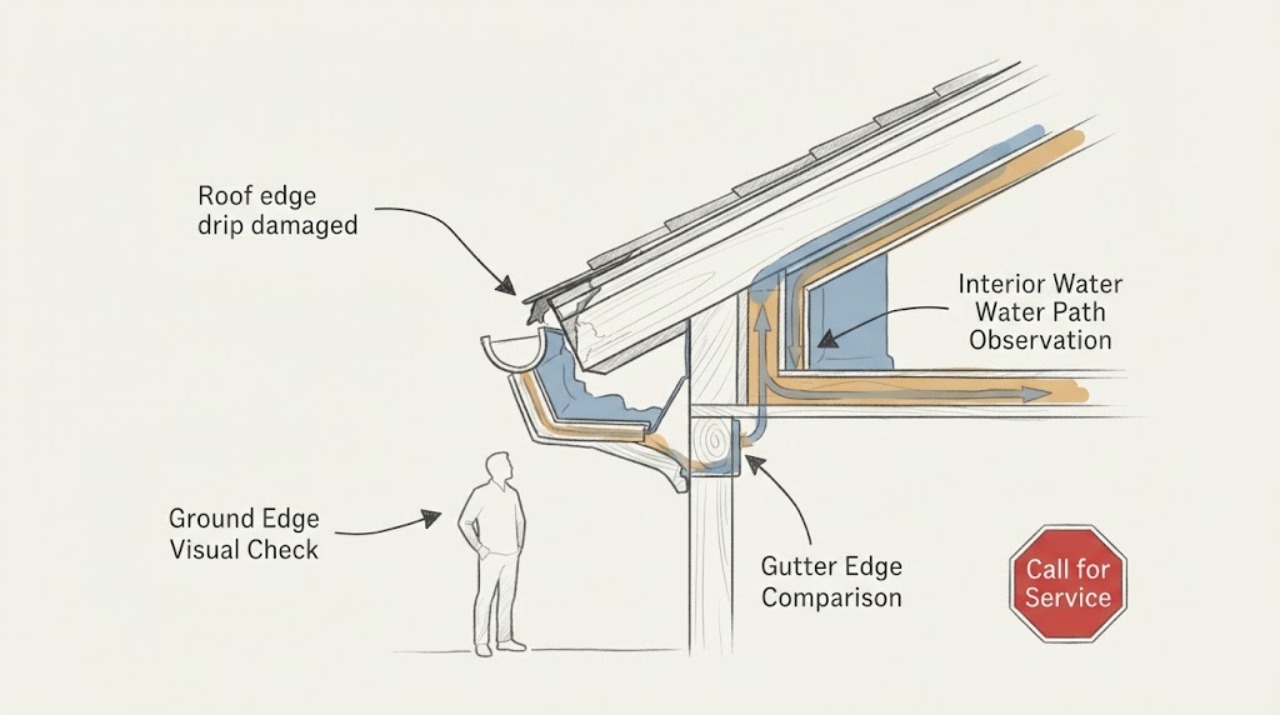
Do not climb onto the roof, use a ladder, pry at sheet metal, remove a gutter, or inspect during wind, lightning, ice, or active storms. From safe ground or a window on a dry, calm day, document whether the edge metal looks bent, missing, displaced, or separated and whether water is appearing at the ceiling, upper wall, fascia, soffit, or gutter. A drip edge is meant to direct water away from the roof edge and fascia, so visible damage can change the water path, but a ground view cannot confirm the hidden roof assembly. Keep clear of loose material and arrange a qualified roofing professional promptly; treat an active interior leak or water near electricity as an urgent safety issue.
Work through in order
Diagnostic checks
Use only checks that match the exact appliance or system and its official guide.
-
View the edge from safe ground or a window
From a stable place on the ground or behind a window, view the suspected eave or rake with ordinary vision, a phone camera, or binoculars; do not approach loose material or use a ladder.
Expected result: Note whether the visible drip-edge metal appears bent, missing, displaced, pulled away, corroded through, or interrupted, and whether the adjacent fascia, soffit, or gutter appears stained, sagging, or separated.
Next step: Photograph the location from the safe vantage point, note the side of the building and approximate length, and give those observations to a qualified roofing professional. Do not attempt to straighten, fasten, pry, cut, or seal the metal.
Stop if: Stop immediately if seeing the edge would require a roof or ladder, if material looks loose or could fall, or if wind, lightning, ice, or active rain makes the viewpoint unsafe; keep people away and wait for professional assessment.
Why this matters
Why: A visible change supports an edge or runoff-path concern, but it cannot establish the condition of the roof deck, underlayment, fasteners, or concealed flashing. GAF explains that drip edge helps direct water away from the roof edge and fascia, so a gap or displacement can be relevant without being a complete diagnosis.
-
Record where indoor moisture appears
From a safe interior location, observe the ceiling, upper wall, window-side trim, and the room below the suspected edge; look without opening finishes or touching wet surfaces.
Expected result: Record a new or enlarging stain, bubbling or peeling paint, dampness, dripping, or a ceiling that looks bowed, and note whether it appears after rain or wind. Also note whether water is near a light, outlet, appliance, or other electrical equipment.
Next step: Keep occupants and belongings clear of the affected area, photograph the change from a dry position, and request prompt roofing and water-damage assessment. If water is near electrical equipment, avoid contact and use qualified emergency help for the hazard.
Stop if: Stop and leave the area if the ceiling is sagging, material is falling, water is near electricity, there is a strong electrical odor, or the room is otherwise unsafe; do not puncture, press, dry, or remove the ceiling yourself.
Why this matters
Why: A roof-edge problem can redirect water toward fascia or walls, but an indoor stain may have a different or multiple sources. EPA advises fixing water problems promptly and not ignoring wet spots or water stains; an interior view alone cannot locate the entry point.
-
Compare the suspected section with a nearby dry section
On a dry, calm day and from ground level, compare the suspected edge with a nearby section that appears intact; observe the gutter, fascia, soffit, and visible runoff path without touching or removing anything.
Expected result: Note whether only one section has a changed gutter line, overflow marks, fascia staining, a gap between the roof edge and gutter, or water running down the wall instead of toward the gutter. Do not deliberately spray or run water to test it.
Next step: Record the comparison and the side of the building, then share it with a roofing professional; include a gutter specialist only if the professional identifies a gutter alignment or drainage issue. Leave all loose or sagging components untouched.
Stop if: Stop if the gutter or edge appears loose, if inspecting would require reaching above shoulder height or climbing, or if debris or metal could fall; do not remove the gutter or pull on the edge.
Why this matters
Why: A localized difference helps a professional focus on the affected run, while similar symptoms along several sides may indicate a broader roof, gutter, or drainage issue. GAF notes that the roof-edge and gutter relationship affects whether water enters the gutter or runs down the building face; the comparison is directional evidence, not proof of a specific repair.
-
Build a weather and symptom timeline
From safe locations, write down when the edge damage, runoff, stain, or drip was first noticed and compare it with recent rain, wind, hail, ice, or nearby exterior work; use only existing observations and photographs.
Expected result: Note whether the symptom follows every rain, only wind-driven rain, a single severe event, or no clear weather pattern, and whether it is worsening between events.
Next step: Give the timeline, safe photos, and any interior observations to the roofer when scheduling. If there is active water entry, do not wait for another storm to confirm it.
Stop if: Do not go outside to inspect during a storm, high wind, lightning, ice, or falling debris; stop any observation that requires roof access or contact with wet or energized materials.
Why this matters
Why: The pattern can help a professional distinguish an intermittent water-entry report from a visible but inactive cosmetic defect, while uncertainty remains because concealed paths can travel away from the entry point. EPA recommends addressing wet areas quickly because persistent moisture can increase damage and mold risk.
Use your observations
Decision map
Find the observation that best matches what you see, then follow the next safe action.
-
PATH 01Next step
What you see
There is active dripping, a rapidly enlarging stain, a sagging ceiling, falling material, or water near electrical equipment.
Do this next
Keep people out of the area and call qualified urgent roofing or water-damage help. Do not touch the ceiling, electrical equipment, or wet materials; use emergency services for an immediate life-safety hazard.
-
PATH 02Next step
What you see
The weather is stormy, windy, icy, or there is loose material above or around the edge.
Do this next
Do not inspect the roof edge or gutter. Stay clear of the drop zone and arrange a professional inspection after conditions are safe.
-
PATH 03Next step
What you see
A bent, missing, displaced, or separated edge is visible from ground level but there is no active interior leak.
Do this next
Save the safe photos and schedule a qualified roofing professional promptly. Do not use a sealant patch or attempt to reshape or fasten the edge.
-
PATH 04Next step
What you see
The edge appears intact from the ground but the gutter overflows, the fascia is stained, or runoff reaches the wall.
Do this next
Report the exact section to a roofing professional and, if they identify a drainage-only issue, a qualified gutter professional. Do not remove or reposition the gutter yourself.
-
PATH 05Next step
What you see
No edge defect is visible, but the same indoor stain or drip recurs after weather.
Do this next
Request a professional roof and water-entry assessment; hidden roof-edge or adjacent flashing problems cannot be ruled out from a ground view.
Helpful context
Understand the symptom
What a damaged edge can and cannot tell you
The roof edge is an assembly, not just a strip of visible metal. GAF describes drip edge as flashing that diverts water away from the roof edge or fascia and helps keep water from reaching the soffit edge or siding. A bent, missing, or displaced edge may therefore redirect runoff, but it does not prove that the edge is the only source of an interior stain. Use observations to give a roofer a precise starting point rather than trying to diagnose the hidden layers from the ground.
Keep the inspection observational
Stay on the ground or look through a window from inside. Use a phone camera or binoculars only if that can be done without approaching loose material. Never climb, lean a ladder against the gutter or roof edge, pull on flashing, cut sheet metal, remove gutter sections, apply a sealant patch, or inspect during a storm. Do not touch wet ceiling material, exposed wiring, or water near electrical equipment.
Why timing matters
EPA guidance says moisture control is central to preventing mold and recommends acting quickly when indoor leaks occur. Record when the damage or stain appeared, what weather preceded it, and whether it recurs after rain. That timeline, along with safe photos, is more useful to a professional than an improvised roof-edge repair.
When checks do not resolve it
Need a professional?
Call a qualified roofing professional promptly for any bent, missing, displaced, or separated edge, recurring leak, gutter-edge overflow, or interior water stain. Use urgent help for active water entry, a sagging ceiling, falling material, or water near electricity.
Common questions
FAQ
Can I tell from the ground whether the drip edge is the leak source?
You can document visible displacement, gaps, runoff, and nearby staining from the ground or a window, but you cannot confirm concealed roof layers or the exact entry point. Give those observations to a qualified roofer.
Should I bend the metal back or seal the edge myself?
No. Do not pry, cut, fasten, seal, or install flashing from a ladder or roof. These actions can create a fall hazard or hide damage; arrange professional assessment instead.
What should I do about an indoor stain after rain?
Photograph it from a safe, dry position, keep people and belongings away, and request prompt professional help. If the ceiling sags, material falls, or water is near electricity, leave the area and treat it as urgent.
What information should I give the roofer?
Provide safe photos, the edge location, the weather and symptom timeline, whether the gutter or fascia shows overflow or staining, and whether indoor moisture is active. Do not manipulate the edge or gutter to collect more evidence.
Read the exact guide
Official sources
- TAB-R-141: Drip Edges and ShinglesGAF Technical Services · Technical context for how the roof edge, shingles, and gutter edge relate; exact installation is not a homeowner procedure here and local requirements may differ.
- What Is a Roof Drip EdgeGAF · General explanation of drip-edge purpose and why the roof edge and fascia relationship matters; not a diagnosis of this property.
- A Brief Guide to Mold, Moisture and Your HomeU.S. Environmental Protection Agency · General guidance for responding to indoor moisture after a suspected roof leak; it does not identify the roof entry point.
- Text Version of the Mold House TourU.S. Environmental Protection Agency · General warning that roof-related wet spots and stains warrant professional attention; not a repair method.
Community feedback
Share a repair observation
Share a plain-text repair observation. Accepted observations are published automatically; this page may take a moment to update.