
On this page
Start here
Quick answer
Do not climb onto the roof or touch lifted material. After the storm and wind have fully passed, document what is visible from the ground and from safe interior rooms: raised or missing edge shingles, displaced flashing or fascia, debris on the ground, ceiling or wall staining, dampness, drafts, and any change after rain. Keep clear of downed lines, unstable structures, and loose overhead material. If there is active water entry, structural movement, a sagging ceiling, exposed electrical equipment, or material that could fall, leave the affected area and request urgent roofing or emergency service. Send dated photos and the location of each observation to a qualified roofer; temporary fastening, tarping, and all roof access belong to professionals.
Work through in order
Diagnostic checks
Use only checks that match the exact appliance or system and its official guide.
-
Check 1
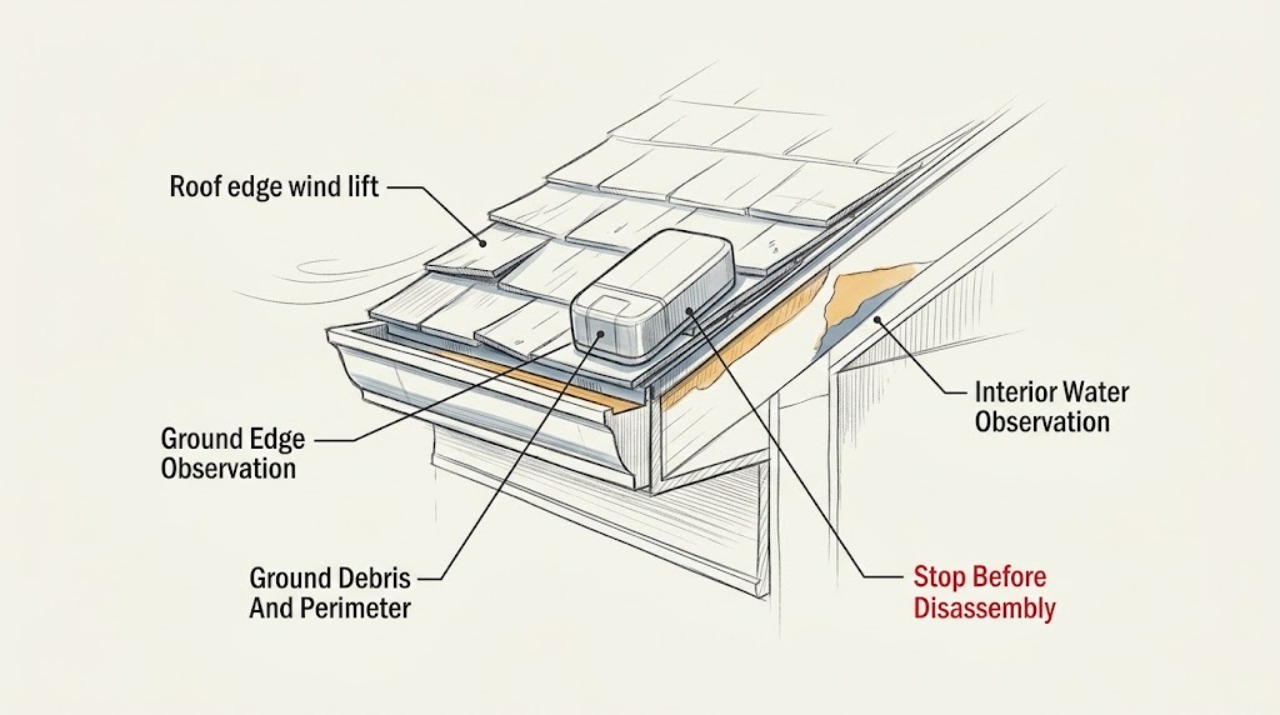
Only after the storm has fully passed, stand on stable ground away from the building edge and look at the roof perimeter, eaves, fascia, and soffit without using a ladder, roof access, or any tool.
Expected result: Record whether edge shingles look raised, curled, missing, or creased; whether fascia or soffit appears displaced; and whether any material is hanging or moving.
Next step: Take zoomed photos from the same safe location, mark the side of the building, and send them to a qualified roofer for an urgent assessment.
Stop if: Stop and move away if material is hanging, shifting, falling, or located above a walkway, vehicle, or entry; do not stand underneath it or attempt to secure it.
Why this matters
Why: Those signs support a wind-lift or edge-damage concern, but the hidden attachment and water-shedding layers still require a professional inspection.
-
Check 2
From a safe distance, observe the ground around the affected roof edge and nearby gutters or downspouts without picking up debris, moving a branch, or approaching a power line.
Expected result: Record loose shingles, fragments, bent or detached visible metal, blocked or displaced gutters, and whether debris is concentrated below one edge.
Next step: Photograph the debris in place, keep people and pets away, and ask the roofer or emergency service how it should be handled; do not remove or fasten it yourself.
Stop if: Stop immediately for downed or low electrical lines, sparking equipment, unstable trees, gas odor, or debris blocking a safe exit; keep away and contact the appropriate emergency utility or public-safety service.
Why this matters
Why: Ground debris can corroborate wind exposure and help identify the affected roof side, while detached or unstable components increase the risk of further damage and falling material.
-
Check 3
From a safe interior room, look at ceilings, upper walls, and the area below the affected roof edge without opening the ceiling, entering a visibly damaged attic, or touching wet electrical fixtures.
Expected result: Record new stains, dripping, dampness, bubbling paint, musty odor, sagging, or sunlight visible through an interior roof boundary if it can be seen without entry into an unsafe space.
Next step: Move people and belongings away from the affected area if it is safe, document the location, and request prompt roofing service; have an electrician assess any wet electrical equipment.
Stop if: Leave the room if the ceiling is sagging or cracking, water is near electrical equipment, the building shifts, or there is a gas, smoke, or fire hazard. Call emergency help as appropriate.
Why this matters
Why: Interior moisture or sagging suggests water intrusion or a more serious building condition and raises the urgency beyond a routine exterior inspection.
-
Check 4
Write down when the wind event occurred and compare later safe observations with rainfall timing, without inspecting during the storm or returning outside in unsafe weather.
Expected result: Record whether water appears only after rain, whether a stain is spreading, whether dripping is intermittent, and whether the visible lift was present before or after the event.
Next step: Send the dated timeline with photos and the affected interior location to a qualified roofer and, when appropriate, the insurer; preserve the original record.
Stop if: Stop monitoring from outside during wind, lightning, heavy rain, darkness, or other unsafe conditions; use professional assessment instead.
Why this matters
Why: The timing helps a roofer distinguish an acute wind opening from an older leak or a separate plumbing issue, but it does not establish the hidden repair scope.
-
Check 5
From the ground and safe interior spaces, note the roof edge's relationship to doors, walkways, vehicles, trees, utility lines, and occupied rooms without approaching the edge or planning a DIY repair.
Expected result: Record whether people could be exposed to falling material, whether a tree or line is involved, whether access is restricted, and whether the roof or structure looks visibly unstable.
Next step: Keep the area clear, tell the roofer or emergency service exactly which hazard is present, and wait for qualified personnel to define access and temporary protection.
Stop if: Do not approach a power line, unstable structure, roof edge, or loose overhead material; leave the area and contact emergency or utility services when needed.
Why this matters
Why: A falling-material, utility, or structural hazard changes the response from ordinary roofing scheduling to urgent site control and specialist coordination.
Use your observations
Decision map
Find the observation that best matches what you see, then follow the next safe action.
-
PATH 01Next step
What you see
The edge looks lifted or missing from the ground, but there is no active leak, falling material, or utility hazard.
Do this next
Keep the area clear, document the condition, and arrange a prompt professional roof inspection. Do not climb, touch, fasten, or cover the lifted material.
-
PATH 02Next step
What you see
There is active water entry, a spreading stain, damp insulation or wall, or water near electrical equipment.
Do this next
Move people away from the affected area if safe and request urgent roofing service; have an electrician address wet electrical equipment. Do not open finishes or improvise a roof repair.
-
PATH 03Next step
What you see
A ceiling sags or cracks, the building shifts, roof material is falling, or the structure appears unstable.
Do this next
Leave the affected area and contact emergency or building-safety services. Do not enter the attic, roof, or room until qualified personnel say it is safe.
-
PATH 04Next step
What you see
Downed or low power lines, sparking, gas odor, or a damaged tree is near the roof edge.
Do this next
Stay away and contact the utility or emergency service responsible for the hazard; tell the roofer not to approach until the site is cleared.
-
PATH 05Next step
What you see
The lift is visible but the weather remains wet, windy, dark, icy, or otherwise unsafe.
Do this next
Wait in a safe location, avoid storm-time inspection, and arrange professional assessment when conditions permit. Do not tarp, fasten, or touch material.
Helpful context
Understand the symptom
Why the edge matters
Wind can catch the perimeter of roof coverings and loosen the seal or the surrounding edge assembly. A visible lift can therefore be more than a cosmetic issue, but a ground view cannot confirm the hidden condition of the fasteners, underlayment, deck, or flashing. The useful first step is a safe damage record for a qualified inspection.
Make the site safe first
Wait until the storm has passed and avoid wet, icy, dark, or high-wind conditions. Do not approach downed lines, touch a lifted shingle or flashing, stand beneath hanging material, use a ladder, enter a visibly damaged room, or improvise a roof covering. If the building appears structurally unsafe, leave and contact emergency or building-safety help.
Build a useful handoff
A roofer can use a dated photo set, a simple map of the affected edge, the storm timing, and the interior water pattern to plan the inspection. Keep original images and note what was observed from the ground or inside; do not create evidence by moving debris or opening finishes.
When checks do not resolve it
Need a professional?
Have this ready
- Provide dated ground-level photos, the affected building side, storm and rain timing, ground debris location, interior stain or drip location, access limits, and any utility, tree, or falling-material hazard.
Common questions
FAQ
Can I push a lifted shingle back down?
No. A wind-lifted edge can have hidden damage, and touching it can worsen the opening or put you below unstable material. Photograph it from the ground and arrange a professional roof inspection.
What should I do if the roof edge is leaking after wind?
Keep people away from the affected interior area, document the leak and stain, and request urgent roofing service. If water is near electrical equipment or the ceiling is sagging, leave the area and involve an electrician or emergency service as appropriate.
Should I use a ladder to see the lifted edge better?
No. This topic is limited to ground and safe interior observations. A qualified roofer can choose safe access and inspect the edge without asking you to take a fall or storm-damage risk.
Do I need to repair the whole roof?
Not necessarily. The extent depends on the edge material, attachment, hidden layers, water entry, and overall storm damage. A qualified inspection and written scope are needed before deciding between repair and replacement.
Read the exact guide
Official sources
- Storm Damage Roof Repairs: Resources GuideGAF Roofing · GAF identifies missing, cracked, or curled shingles, debris, water stains, and ground-level documentation as useful post-storm observations and recommends professional roof help.
- What to Do If Shingles Blow Off Your RoofGAF Roofing · GAF cautions against climbing a wet or visibly damaged roof, recommends ground-level documentation, and describes professional inspection of exterior and interior storm damage.
- Understanding Roof Storm Damage: Causes, Signs, How to Inspect and Next StepsGAF Roofing · GAF explains that wind can loosen roof-edge shingles, lists interior and ground-level signs, and directs homeowners to professional inspection after storms.
Community feedback
Share a repair observation
Share a plain-text repair observation. Accepted observations are published automatically; this page may take a moment to update.