
On this page
Start here
Quick answer
Treat suspected fascia rot as a water-entry and structural-condition question, not a trim-painting project. From safe ground or a window, record visible discoloration, swelling, separation, gutter sagging, runoff, and any interior stain or dampness; do not probe the wood, pull the gutter, cut the fascia, climb, or inspect during a storm. Fascia often supports or borders the gutter, so rot may be a consequence of clogged or misdirected water, damaged drip edge, flashing, or a roof leak. Arrange a qualified roofing or exterior-building assessment promptly, with urgent help for loose material, active interior water, a sagging ceiling, or electrical hazards.
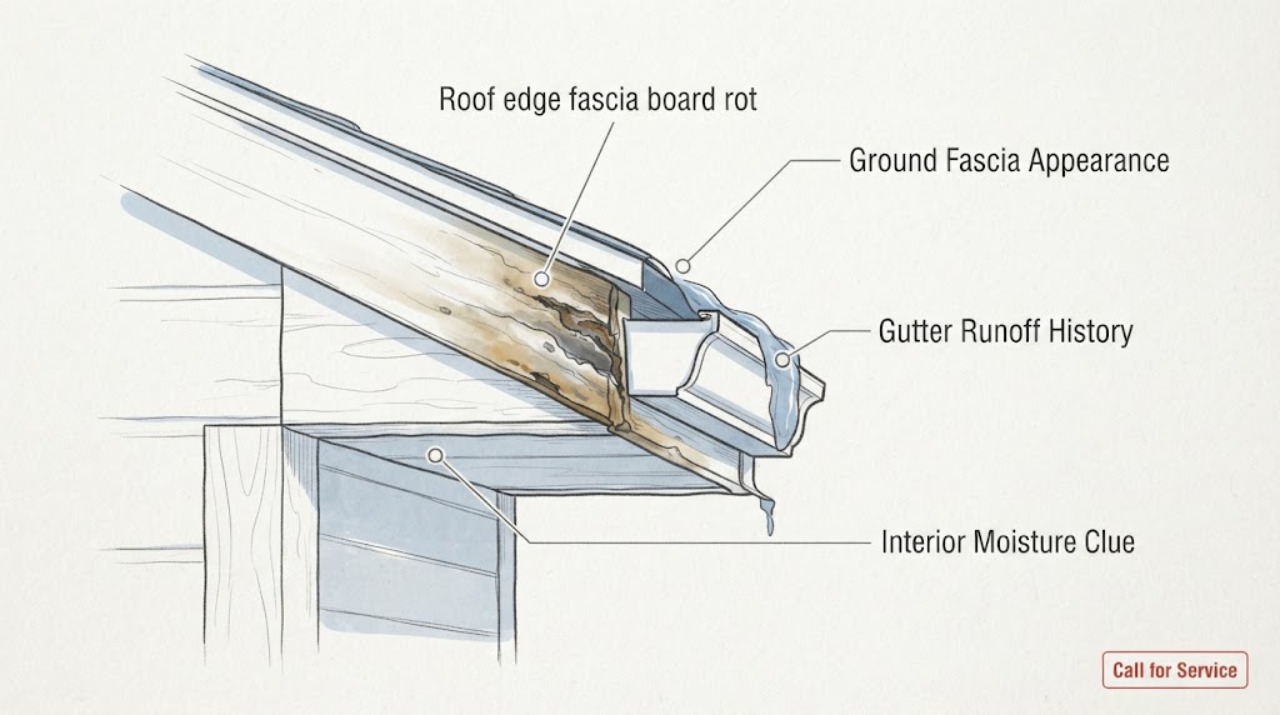
Work through in order
Diagnostic checks
Use only checks that match the exact appliance or system and its official guide.
-
View the fascia and soffit from safe ground
From stable ground or a window, view the suspected eave or rake with ordinary vision, a phone camera, or binoculars; do not use a ladder, reach toward the edge, or touch the fascia, soffit, or gutter.
Expected result: Note visible darkening, swelling, peeling finish, splitting, a bowed line, separated joints, sagging, missing trim, or a change compared with an adjacent section that looks intact.
Next step: Photograph the affected side and approximate length from the safe vantage point and send it to a qualified roofing or exterior-building professional. Ask for an assessment of the fascia, gutter attachment, drip edge, and upstream water path.
Stop if: Stop if the trim or gutter looks loose or could fall, if the view requires a ladder or roof access, or if wind, lightning, ice, or storm debris makes the location unsafe.
Why this matters
Why: These are signs of possible moisture damage or movement, but a surface view cannot show how far rot extends or whether the roof edge remains structurally sound. GAF distinguishes fascia from soffit and notes that both can be affected when water reaches the roof edge.
-
Record gutter and runoff history without manipulating it
From a safe place, write down whether the gutter has overflowed, sagged, separated, or been clogged in the past, and observe runoff only during ordinary safe conditions; do not clear debris, pull the gutter, or spray water to test the system.
Expected result: Note whether water spills over the front or back, pours at a joint, runs down the fascia, or appears to discharge normally, and whether the issue follows heavy rain, leaves, ice, or a recent roof or gutter project.
Next step: Share the timeline, safe photos, and affected gutter run with the professional. Ask the quote to identify the water source separately from any fascia replacement; do not attempt a temporary gutter or flashing repair.
Stop if: Stop if rain becomes heavy, lightning or high wind appears, water is near electrical equipment, or any observation requires approaching, reaching, climbing, or handling the gutter.
Why this matters
Why: A recurring runoff event can help explain why fascia stays wet, but overflow may also arise from damaged alignment, outlets, downspouts, roof-edge flashing, or a broader drainage issue. GAF says clogged gutters or downspouts can allow water beneath the eaves and soak fascia and soffits.
-
Look for related indoor moisture from a safe position
From inside a dry room, observe the ceiling, upper wall, window-side trim, and room below the suspected edge without touching, opening, or pressing any finish.
Expected result: Record new or enlarging stains, peeling or bubbling paint, dampness, musty odor, a bowed ceiling, or visible mold, and note whether the change follows rain or wind-driven weather.
Next step: Keep people and belongings clear of the affected area, photograph from a dry position, and request prompt roofing and water-damage evaluation. If water is near electricity or the ceiling is sagging, treat it as urgent.
Stop if: Stop and leave the area if the ceiling sags, material falls, water is near wiring or fixtures, there is a strong electrical odor, or the room is otherwise unsafe.
Why this matters
Why: Interior evidence suggests that the roof-edge condition may be part of a wider water-entry problem, although water can travel away from its entry point. GAF notes that persistent roof-edge moisture can eventually affect drywall and insulation; the exact source requires professional assessment.
-
Build a safe weather and work-history timeline
From safe locations, record when discoloration or soft-looking fascia was first noticed and compare it with recent rain, wind, ice, falling branches, gutter cleaning, roof work, or exterior painting; use existing observations only.
Expected result: Note whether the damage is stable or worsening, follows a particular weather direction, or appeared after a project or storm, and whether neighboring roof-edge sections show similar changes.
Next step: Give the timeline and safe comparison photos to the roofer or exterior professional and ask whether gutter, roof, fascia, or water-damage specialists need to coordinate.
Stop if: Do not inspect during storms, high wind, ice, darkness, or falling debris, and do not use a ladder, climb, pry, cut, or remove any roof-edge material to confirm the history.
Why this matters
Why: Timing helps a professional prioritize possible runoff, flashing, gutter, or storm-related causes, but it cannot identify concealed rot or structural damage. A fascia board can look cosmetic from the ground while the supporting or adjacent materials are affected.
Use your observations
Decision map
Find the observation that best matches what you see, then follow the next safe action.
-
PATH 01Next step
What you see
The fascia, soffit, gutter, or roof-edge trim looks detached, bowed, or likely to fall.
Do this next
Keep people away from the area and arrange urgent qualified exterior or roofing service. Do not touch, brace, pull, or remove the loose material.
-
PATH 02Next step
What you see
There is active dripping, a rapidly growing interior stain, a sagging ceiling, falling material, or water near electrical equipment.
Do this next
Leave the unsafe area and request urgent roofing, water-damage, or emergency help as appropriate. Do not touch the ceiling, wiring, or wet materials.
-
PATH 03Next step
What you see
Fascia discoloration follows gutter overflow, a clogged downspout, or water running behind the gutter.
Do this next
Ask a qualified professional to assess the entire runoff path, including gutter attachment, downspout, drip edge, and roof edge, before any trim replacement.
-
PATH 04Next step
What you see
There is a musty odor, indoor stain, mold, or no visible exterior source despite suspected rot.
Do this next
Request a professional roof and water-entry assessment and, if needed, qualified water-damage or mold service. Do not open walls or disturb hidden areas.
-
PATH 05Next step
What you see
The fascia looks discolored but no runoff or interior clue is visible from safe positions.
Do this next
Schedule a non-invasive professional inspection rather than painting over the area or probing the wood. Hidden moisture and edge damage remain possible.
Helpful context
Understand the symptom
Why fascia rot needs source assessment
Fascia sits at the roof edge and gutters are commonly attached to it. GAF explains that water can reach fascia and soffits when gutters or downspouts do not carry runoff correctly, and that a damaged drip edge can also be involved. Replacing visible trim without identifying the water path can leave the cause in place.
Keep the inspection observational
Stay on the ground or look through a window from a dry, stable position. Do not climb, use a ladder, press or probe the wood, remove gutter sections, cut fascia, open the roof, disturb mold, or apply a temporary seal. Roof-edge damage can be concealed and may affect components that are not safe for an ordinary homeowner to access.
Record both exterior and interior clues
A ground photo of the fascia and a safe interior note about a ceiling or wall stain can help a professional connect the visible damage to a water path. GAF notes that moisture can reach roof decking, rafters, drywall, or insulation when roof-edge problems persist. The observations do not establish the repair scope by themselves.
When checks do not resolve it
Need a professional?
Arrange high-priority roofing or exterior-building service for soft-looking, swollen, split, discolored, or sagging fascia, recurring gutter overflow, or any interior water evidence. Use urgent help for loose material, an active leak, a sagging ceiling, falling debris, or water near electrical equipment.
Common questions
FAQ
Does discolored fascia always mean the board is rotten?
No. Discoloration can reflect wetting, staining, paint failure, or rot, and a ground view cannot determine depth or structural condition. Ask a professional to assess it without probing the board yourself.
Can I paint or seal the fascia to stop the problem?
Do not cover suspected rot or apply a temporary repair before the moisture source is assessed. A coating will not correct gutter overflow, damaged flashing, or concealed water entry.
What if the gutter is attached to the soft area?
Keep clear and arrange qualified roofing or exterior service. Do not remove, brace, pull, or reattach the gutter; the support and upstream water path need professional evaluation.
What should I show the roofer?
Provide safe photos, the location and apparent length of damage, runoff and gutter history, interior stains or odor, and the weather or project timeline. Do not climb or disturb the edge to collect more evidence.
Read the exact guide
Official sources
- Roof Edge Trim, Soffits and Fascia Rotting? Here's What to DoGAF · General roof-edge context for recognizing fascia, soffit, gutter, and moisture relationships; not a homeowner repair procedure.
- What Is Roof DeckingGAF · Context for why a visible fascia problem may warrant broader professional assessment; no attic or roof inspection is instructed here.
- Stormwater Gutters DownspoutsU.S. Department of Energy Building Science Education · General drainage context for understanding why runoff and discharge matter to roof-edge and wall moisture; no repair or installation instructions are given here.
- Understanding Roof Flashing: Essential Protection for Every HomeGAF · General explanation of how roof-edge flashing guides water and protects fascia; installation details are not instructions for this article.
Community feedback
Share a repair observation
Share a plain-text repair observation. Accepted observations are published automatically; this page may take a moment to update.