
On this page
Start here
Quick answer
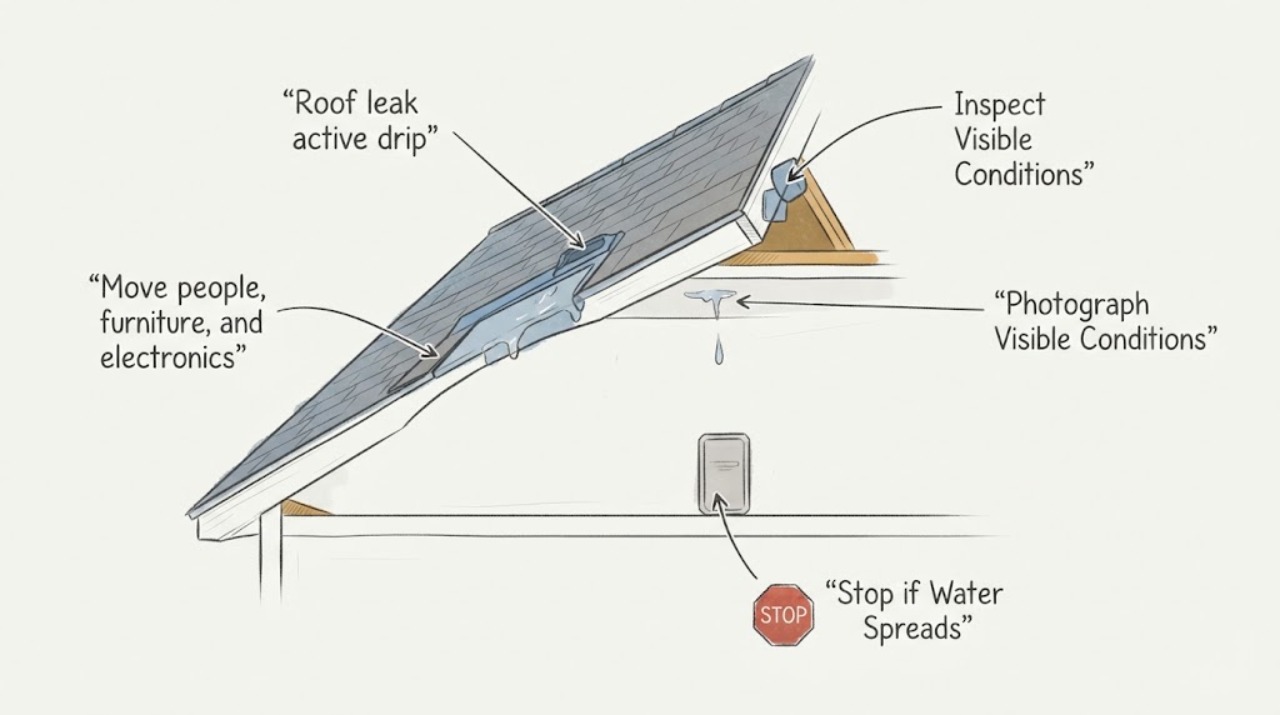
An active drip needs immediate damage control and a professional roof assessment; it is not safe to diagnose by walking on the roof or poking through the ceiling. Move people and valuables away, place a container under the drip only if the floor and surroundings are safe, and look for nearby electrical fixtures, outlets, or equipment that could be wet. If water is near electricity, the ceiling is bulging, the roof or ceiling is sagging, or there is smoke or sparking, keep away and use emergency help as appropriate. Otherwise document the drip, contain water from below, and arrange qualified roofing service. A tarp is only temporary protection and should not be installed during wind or rain by an untrained homeowner.
Before you begin
Safety first
- The homeowner scope is limited to moving contents, catching water from a stable dry floor, observing from below and from the ground, documenting conditions, and protecting the area without touching electrical or structural hazards. Do not puncture a bulging ceiling, enter wet or unsupported attic or roof areas, climb a damaged or tarp-covered roof, install a tarp in wind or rain, walk on a tarp, or patch, nail, or seal the roof as a DIY emergency repair.
Work through in order
Diagnostic checks
Use only checks that match the exact appliance or system and its official guide.
-
Check 1
Move people, furniture, and electronics away from the drip using a dry path. Place a bucket or other stable container below the water only if the floor is not slippery and no electrical equipment is in the wet area; use towels to protect nearby contents, not to reach into wiring or fixtures.
Expected result: Water is pooling rapidly, the ceiling is bulging or sagging, the container cannot be placed safely, or the drip is limited and contained.
Next step: Keep clear of a bulging or sagging ceiling and arrange urgent help. For a contained drip, continue documenting the location and arrange roofing service promptly.
Stop if: Do not puncture the ceiling, climb furniture, move a heavy soaked fixture, or work from a wet or unstable floor.
Why this matters
Why: Rapid accumulation or a deformed ceiling increases the risk of falling material and concealed water load. A contained drip still represents active water entry that can damage finishes, insulation, framing, and contents.
-
Check 2
From a dry position, look for nearby ceiling lights, smoke alarms, outlets, switches, appliances, extension cords, or panel equipment that may be wet. Do not touch the device, ceiling, or water to test it; use only a clearly accessible disconnect if it can be operated without approaching the wet hazard.
Expected result: Water is entering or pooling around an electrical device, a device is flickering, buzzing, smoking, or warm, or no electrical equipment is involved.
Next step: Keep away from the wet electrical area and obtain emergency or qualified electrical help as appropriate; do not re-energize it to test. If no electrical equipment is involved, continue safe water containment and documentation.
Stop if: Stop immediately for sparks, smoke, a burning odor, exposed conductors, a wet panel, or standing water near electrical equipment; leave the area if fire is developing.
Why this matters
Why: Water near electrical equipment can create shock, short-circuit, and fire hazards. A normal-looking device does not prove that concealed wiring or a ceiling cavity is dry.
-
Check 3
Record the drip's room, ceiling location, intensity, and timing, and photograph stains or wet areas from a stable dry position. Compare the timing with rain, wind, snow or ice conditions, recent roof work, and whether the water changes when precipitation stops.
Expected result: The drip starts during heavy rain, continues after rain, appears after wind or storm debris, or occurs without recent precipitation.
Next step: Provide the timeline and photos to the roofer. Keep the container in place and monitor safely; if the source may be plumbing or HVAC rather than the roof, report that possibility for coordinated diagnosis.
Stop if: Do not open the ceiling, pull insulation, climb into the attic, or crawl on roof decking to trace the water.
Why this matters
Why: Timing can help a roofer investigate drainage, flashing, penetrations, damaged shingles, ice dams, or a plumbing or HVAC source, but the indoor location is not proof of the roof entry point. Continued dripping can reflect stored water in the assembly.
-
Check 4
From the ground, inspect the roofline, gutters, downspouts, and visible roof planes with binoculars or optical zoom. Look for missing, cracked, or displaced shingles, damaged flashing, blocked drainage, storm debris, or an unsafe tarp; do not use a ladder or step onto the roof to get closer.
Expected result: A roof covering or flashing defect is visible; gutters or drainage are blocked; storm debris is present; or no exterior cause can be seen.
Next step: Share photos and the suspected roof plane with a qualified roofer. Do not remove debris, clean gutters, reseal flashing, or rearrange shingles while the roof is wet or unsafe.
Stop if: Do not climb in bad weather, stand on a tarp, approach a damaged or sagging roof, work near power lines, or use a metal ladder near electrical equipment.
Why this matters
Why: A visible defect can guide the professional's inspection, but water may have traveled from a different location. A hidden cause remains possible when the roof looks normal from the ground.
-
Check 5
If there is a safe, supported interior access point, look from the attic entry without stepping onto suspect decking for damp insulation, darkened sheathing, daylight, mold, or water trails. Do not disturb wet insulation or electrical components and do not assume a dry spot means the leak has stopped.
Expected result: Water trails or wet materials are visible; mold or a musty odor is present; daylight enters; or the attic looks dry.
Next step: Photograph the area from a safe position and give it to the roofer. Arrange prompt moisture assessment for wet insulation, sheathing, or mold; keep out of unsupported or damaged areas.
Stop if: Do not enter if decking is soft, wet, darkened, or unsupported, if the space is contaminated, or if water is near wiring or equipment.
Why this matters
Why: Attic evidence can help identify a roof plane or the extent of moisture, but a dry observation can miss intermittent leaks or water stored above the ceiling. Wet materials may require controlled drying or replacement.
Use your observations
Decision map
Find the observation that best matches what you see, then follow the next safe action.
-
PATH 01Safety boundary
What you see
The ceiling is bulging or sagging, water is accumulating quickly, or plaster, drywall, or other material is beginning to fall.
Do this next
Clear the room and keep everyone away from the ceiling; arrange urgent professional assessment and emergency help if structural failure or active fire is possible.
Why this path and its safety boundary
Safety stop: Do not puncture the ceiling, climb under it, or attempt to support or remove the wet material yourself.
-
PATH 02Safety boundary
What you see
Water is near a light, outlet, appliance, panel, or other electrical equipment, or the device is sparking, buzzing, smoking, or hot.
Do this next
Keep away from the wet area and obtain qualified electrical or emergency help; only disconnect power if the control is clearly accessible without approaching the hazard.
Why this path and its safety boundary
Safety stop: Do not touch the water, device, panel, or exposed wiring, and do not re-energize the area to test it.
-
PATH 03Safety boundary
What you see
The drip is contained, no electrical or structural warning sign is present, and a roof defect is visible from the ground.
Do this next
Keep the container and interior protection in place, document the defect, and arrange prompt roofing service to assess the covering, flashing, and drainage.
Why this path and its safety boundary
Safety stop: Do not climb, sweep, seal, or patch the roof while it is wet or without appropriate training and fall protection.
-
PATH 04Safety boundary
What you see
The drip follows rain or wind, but no exterior defect is visible and the attic or ceiling shows a water trail.
Do this next
Provide the timing, trail direction, and photos to a roofer; have the professional inspect upstream roof planes, penetrations, flashing, and drainage because the visible drip may be displaced from the entry point.
Why this path and its safety boundary
Safety stop: Do not open the ceiling or walk the roof to trace the leak.
-
PATH 05Safety boundary
What you see
A storm has damaged or removed roof material and rain is still possible, but the roof surface is unsafe to access.
Do this next
Protect contents from below and arrange professional temporary covering and permanent repair; temporary protection should be installed only under suitable weather, structural, and fall-protection conditions.
Why this path and its safety boundary
Safety stop: Do not install a tarp during wind or rain, walk on a tarp, use a metal ladder near power lines, or nail through shingles as an improvised fix.
-
PATH 06Safety boundary
What you see
The drip stops when precipitation stops, but wet insulation, staining, mold, or a musty attic remains.
Do this next
Arrange roof repair and a moisture or drying assessment; retain photos and note how long the area stayed wet so hidden damage is not overlooked.
Why this path and its safety boundary
Safety stop: Do not assume the roof is repaired because the drip stopped, and do not disturb moldy or wet materials without appropriate precautions.
Helpful context
Understand the symptom
Stop the interior damage first
Catch water only from a stable, dry floor and move contents out of the splash area. If the ceiling is bulging or sagging, do not puncture it: the cavity may contain a heavy pocket of water, and the surface may fail unpredictably. Keep clear of wet light fixtures, outlets, appliances, and wiring; do not touch a wet electrical device or stand in water while attempting to switch power.
The drip location may not be the roof entry point
Water can travel along roof decking, framing, insulation, or a ceiling cavity before it appears indoors. The visible drip should be documented, but it does not by itself identify a failed shingle. A qualified roofer should inspect the roof covering, flashing, penetrations, drainage, and any hidden wet or damaged materials rather than sealing only the ceiling spot.
Temporary protection is not a permanent repair
A temporary tarp can limit additional rain entry after storm damage, but OSHA warns that installation exposes workers to falls, electrocution, slippery surfaces, and damaged-roof instability. Do not climb onto a roof in rain or wind, walk on a tarp, or nail a plastic sheet through shingles as a DIY emergency fix. Arrange professional temporary protection and permanent repair.
Only after diagnosis
Potential parts
- matching roof covering material
Consider localized roof-covering replacement only after a qualified inspection confirms that the leak is confined to identifiable damaged material and adjacent layers remain sound.
Match the existing roof system, profile, exposure, slope, installation method, and weathering condition; the visible drip alone cannot select a material. - roof flashing or penetration detail
Consider this category only when inspection identifies failed flashing or a roof penetration as the water-entry path.
The detail depends on the penetration, roof covering, drainage, and existing flashing layers; sealant applied over an unknown failure is not a reliable repair. - underlayment or roof-deck repair material
Consider this category only if professional inspection finds wet, deteriorated, or structurally unsound material beneath the roof covering.
Selection depends on roof assembly, moisture extent, structural condition, and local requirements; an active drip does not identify the hidden layer or repair scope.
When checks do not resolve it
Need a professional?
Escalate immediately for ceiling deformation or falling material, water near electricity, active smoke or arcing, rapid flooding, structural instability, storm debris, or a roof that cannot be accessed safely.
Safety scope: The homeowner scope is limited to moving contents, catching water from a stable dry floor, observing from below and from the ground, documenting conditions, and protecting the area without touching electrical or structural hazards. Do not puncture a bulging ceiling, enter wet or unsupported attic or roof areas, climb a damaged or tarp-covered roof, install a tarp in wind or rain, walk on a tarp, or patch, nail, or seal the roof as a DIY emergency repair.
Have this ready
- Provide photos from safe interior and ground positions, drip room and ceiling location, timing relative to rain or wind, drip rate, visible roof or flashing defects, attic moisture or stains, roof age and repair history if known, and any electrical or structural warning signs.
Common questions
FAQ
What should I do first when my roof is actively dripping?
Move people and valuables away, catch water from a stable dry floor if safe, and keep clear of wet electrical equipment or a bulging ceiling. Document the drip and arrange prompt roofing service; do not climb onto the roof to find the entry point.
Should I poke a hole in a bulging ceiling?
No. Keep people away from a bulging or sagging ceiling and arrange urgent assessment. Do not puncture, support, or remove the wet material yourself because the ceiling or trapped water may fail unpredictably.
Can I put a tarp over the leaking roof myself?
Do not climb onto a damaged roof or install a tarp during wind or rain. OSHA identifies fall, electrical, slippery-surface, and structural hazards; arrange trained professional temporary protection and permanent repair instead.
Why is the drip not directly below the roof problem?
Water can travel along decking, framing, insulation, or a ceiling cavity before appearing indoors. Record the visible drip and any attic trail, but have a roofer inspect upstream shingles, flashing, penetrations, and drainage rather than sealing only the ceiling spot.
When is an active roof leak an emergency?
Treat a bulging or collapsing ceiling, rapid flooding, water near electrical equipment, exposed wiring, smoke, sparks, or structural instability as urgent. Leave the hazard area and contact emergency help as appropriate; do not touch or re-energize wet equipment.
Read the exact guide
Official sources
- Roof Tarping (Blue Roof) SafetyOccupational Safety and Health Administration · OSHA fact sheet addresses trained workers installing temporary roof protection; it supports the homeowner boundary against roof access or tarp installation without suitable training and protection.
- How to Identify and repair roof leaksGAF · GAF homeowner roof-leak guidance; exact roof materials, leak paths, and repair scope vary by system and site.
Community feedback
Share a repair observation
Share a plain-text repair observation. Accepted observations are published automatically; this page may take a moment to update.