
On this page
Start here
Quick answer
A brown or yellow ceiling stain can indicate a roof leak, but water can also come from plumbing, condensation, or an HVAC drain. First keep clear of a bulging ceiling and water near electrical fixtures, contain any drip from a dry floor position, and photograph the stain. Note whether it appears after rain, inspect only a safe attic access for damp insulation or daylight, and look at the roof, gutters, and flashing from the ground. A stain that returns after rain or accompanies a damp attic needs prompt professional leak tracing. Do not climb onto a wet roof, cut open the ceiling, or paint over the stain before the moisture source is fixed and the area is dry.
Before you begin
Safety first
- Homeowner checks are limited to safe interior observation and ground-level exterior observation. Roof access, ceiling opening, concealed-layer removal, structural assessment, and mold disturbance require trained professionals.
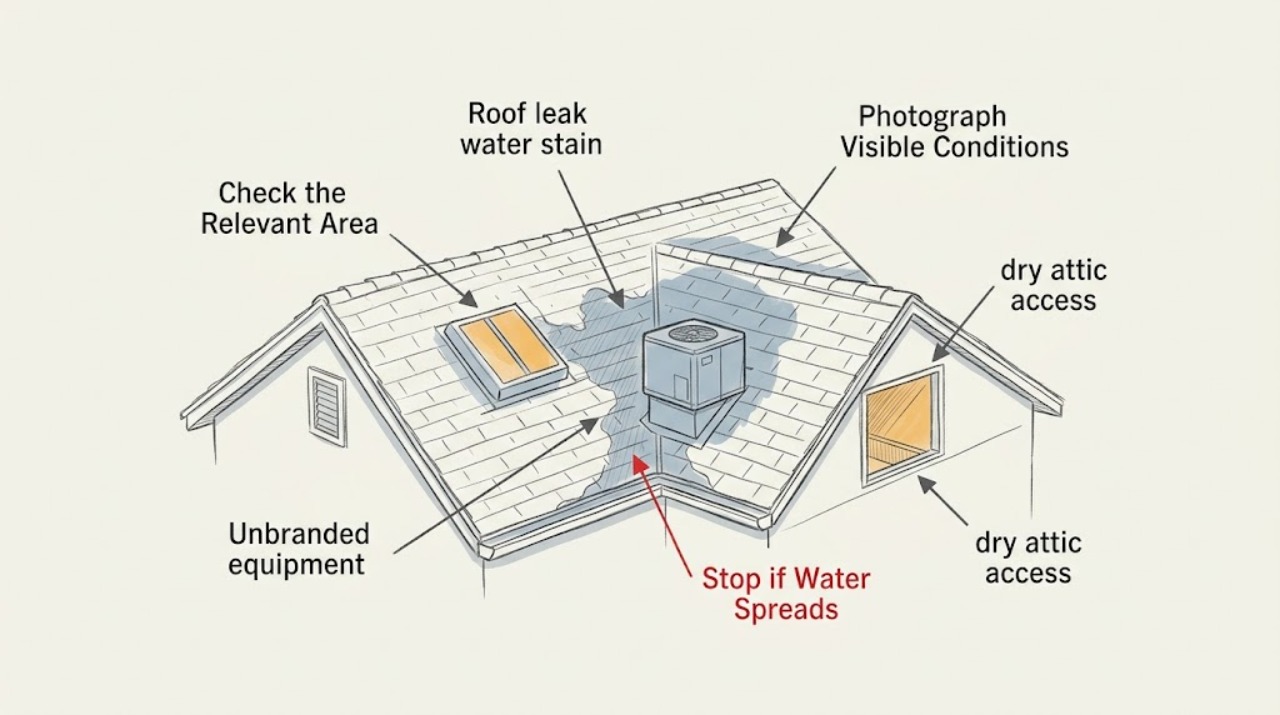
Work through in order
Diagnostic checks
Use only checks that match the exact appliance or system and its official guide.
-
Check 1
Keep people away from a sagging or bulging ceiling and from water near light fixtures or other electrical equipment. From a dry floor position, place a container under a drip, move belongings, and photograph the stain without puncturing or opening the ceiling.
Expected result: A dry, stable stain differs from active dripping, a growing bulge, rapid water entry, or water touching an electrical fixture.
Next step: Stop and seek appropriate emergency help for an electrical or structural hazard. Otherwise keep the area dry and arrange prompt roofing inspection; do not climb to place a tarp or make an exterior patch during rain or wind.
Why this matters
Why: Active or structurally concerning water entry needs immediate damage control and professional response; it is not a safe opportunity to locate the roof source from above.
-
Check 2
Record when the stain first appeared, whether it enlarges, and whether it follows rain, wind-driven rain, snow or ice, or a period with no precipitation. Photograph the surrounding ceiling and nearby walls before cleaning.
Expected result: A stain that appears soon after rain differs from one that grows when a bathroom, plumbing fixture, or cooling system runs, and both differ from an old dry mark with no change.
Next step: Give the timing record to the appropriate roofer, plumber, or HVAC professional. Do not rely on a single dry-day inspection to rule out a weather-dependent roof leak.
Why this matters
Why: Weather-linked recurrence makes roof, flashing, gutter, or ice-related entry more likely. A pattern linked to an indoor system makes plumbing or condensation more likely and should not be assigned to the roof without checking.
-
Check 3
If there is a safe, dry attic access with a firm floor, look from the access point for damp insulation, dark wood, daylight, mold or mildew, and water trails above the stained room. Stop before entering a cramped, wet, unstable, or electrically exposed area.
Expected result: Damp insulation, warped or rotted wood, daylight, or a musty odor differs from a dry attic with no visible trace; a water trail may run away from the ceiling stain.
Next step: Photograph only from the safe access point and arrange a professional inspection. Do not crawl across questionable sheathing, pull apart insulation, or disturb suspected mold.
Why this matters
Why: Moisture in the attic indicates that the problem may extend beyond the ceiling finish and insulation. A dry attic does not disprove a roof leak because conditions can change with weather or the entry point may be hidden.
-
Check 4
From the ground or another stable location, inspect the roofline with binoculars if useful. Look for missing or damaged shingles, open joints, damaged flashing, clogged gutters, debris, ice-dam signs, and roof-edge wear without climbing a ladder onto the roof.
Expected result: A visible defect above or upslope from the stain differs from an intact-looking roof; neither pattern proves the exact entry point because water can travel.
Next step: Photograph the ground-level findings and ask a qualified roofer to trace the source. Do not lift shingles, apply roof cement, clean a high gutter, or walk the roof as a homeowner test.
Why this matters
Why: Covering, flashing, gutters, penetrations, and ice-related drainage are all possible roof leak paths. An apparently intact surface can still conceal underlayment or flashing failure.
-
Check 5
Check nearby non-roof sources without disassembling them: look for a plumbing fixture, supply line, drain, duct, or air-conditioning component above or beside the stain. Compare the stain's timing with use of those systems and check only visible, dry surfaces.
Expected result: A wet pipe, drain, or HVAC condensate area that changes with indoor use differs from a stain that appears only during exterior weather.
Next step: Shut off a known local plumbing supply only if needed and safe; otherwise call the appropriate professional. Do not open walls or ceilings to chase a hidden pipe or duct leak.
Why this matters
Why: An indoor source may mimic a roof leak and needs the corresponding plumber or HVAC diagnosis. If nearby systems are dry and the stain follows rain, a roof-related source remains more likely.
-
Check 6
After the leak source is repaired, dry the affected reachable surfaces and monitor the stain through the next relevant weather or system-use event. Do not repaint or caulk until the surface is dry and the repair has been verified.
Expected result: A stain that stops changing after the source is fixed differs from continued dampness, musty odor, new bubbling, or mold returning.
Next step: Document the post-repair condition and call the roofer or water-damage professional back if moisture or mold persists. Do not cover an active stain to hide recurrence.
Why this matters
Why: Continued moisture means the source may remain active or concealed materials may need separate remediation. A dry, stable stain may remain as cosmetic damage even after the leak is corrected.
Use your observations
Decision map
Find the observation that best matches what you see, then follow the next safe action.
-
PATH 01Next step
What you see
The ceiling is bulging, water is entering rapidly, or water is near an electrical fixture.
Do this next
Move away from the hazard, avoid touching wet electrical equipment, and contact appropriate emergency help and a qualified professional. Do not puncture the ceiling or climb onto the roof.
-
PATH 02Next step
What you see
The stain or drip appears after rain, and the attic or ground-level roof check shows moisture, a water trail, damaged covering, flashing, gutter, or penetration.
Do this next
Arrange prompt roofing leak tracing and share the weather timing, photos, and observed locations. Keep the interior protected and do not attempt a roof patch from a ladder.
-
PATH 03Next step
What you see
The stain changes when a nearby plumbing fixture, drain, or HVAC system runs, while the roof and attic are dry.
Do this next
Call the matching plumber or HVAC professional and avoid opening the ceiling to trace the hidden line. Continue drying the affected area.
-
PATH 04Next step
What you see
The attic has wet insulation, mold or mildew, warped wood, or a persistent musty odor, even if the ceiling stain is small.
Do this next
Arrange roofing and, where needed, qualified water-damage or mold assessment. Do not disturb moldy insulation or enter an unstable attic area.
-
PATH 05Next step
What you see
The stain is old, dry, and unchanged, with no active drip or nearby wet material, but the source was never confirmed.
Do this next
Keep the stain documented and request a professional roof inspection, especially before repainting or during the next heavy rain. Verify dryness first.
Helpful context
Understand the symptom
A stain is a location, not a diagnosis
Rain can enter at a roof covering, flashing detail, vent, skylight, or gutter and travel through the roof deck or framing before appearing on a ceiling. A stain that looks like a roof leak can also come from a supply pipe, drain, condensation, or an air-conditioning component. Timing, weather, nearby systems, and the attic condition are more useful than the stain's color alone.
Dry first, then investigate
Protect furnishings and dry reachable surfaces, but do not seal, paint, or cut into a wet ceiling before the water source is corrected. If the area smells musty, contains visible mold, or includes wet insulation or concealed materials, use a qualified water-damage or mold professional when the affected scope is beyond safe household cleanup.
Only after diagnosis
Potential parts
- roof flashing or penetration seal
Consider this only when a qualified inspection traces the stain to damaged flashing or a roof penetration rather than a general roof-covering failure.
The correct detail depends on the roof covering, slope, penetration, and local installation requirements; do not select a generic seal from a ceiling stain. - roof covering repair material
Consider this only when the roofer confirms a localized damaged shingle, tile, membrane, or related covering that can be repaired without broader replacement.
Material, color, fastening, and weatherproofing must match the existing roof assembly and manufacturer requirements; have the contractor specify them. - water-damaged ceiling or insulation material
Consider this only after the moisture source is fixed and a professional determines that porous ceiling or insulation materials cannot be dried and retained safely.
Replacement limits depend on the material, moisture extent, mold condition, and building construction; do not cover damaged material before assessment.
When checks do not resolve it
Need a professional?
Call a qualified roofing professional promptly for a stain that returns after rain, an active drip, damaged roof covering or flashing, damp attic materials, or a leak whose source is not clear. Call a plumber or HVAC professional when timing points to an indoor system instead. Seek immediate help for a bulging ceiling, rapid water entry, water near electrical equipment, or unsafe attic or roof conditions. Do not climb onto a wet or damaged roof, puncture the ceiling, disturb suspected mold, or paint over an active stain.
Safety scope: Homeowner checks are limited to safe interior observation and ground-level exterior observation. Roof access, ceiling opening, concealed-layer removal, structural assessment, and mold disturbance require trained professionals.
Common questions
FAQ
Does a brown ceiling stain always mean the roof is leaking?
No. Plumbing leaks, condensation, or HVAC drainage can create a similar stain. Check the timing and nearby systems safely, while remembering that water can travel from a roof entry point before appearing indoors.
How can I find where a roof leak starts?
Record when the stain appears, look from a safe attic access if available, and inspect the roofline, gutters, and flashing from the ground. The first visible stain may be away from the actual entry point, so a qualified roofer should trace it.
Should I paint over a water stain after the roof is repaired?
Wait until the moisture source is fixed and the surface is completely dry. If dampness, a musty odor, or mold remains, assess the affected materials before covering the stain.
What should I do if the ceiling is bulging from a roof leak?
Keep away from the bulge and any nearby electrical equipment, contain water only from a dry safe position, and seek prompt professional or emergency help. Do not puncture the ceiling or climb onto the roof.
Read the exact guide
Official sources
- Guide to Durable AtticsU.S. Department of Energy · attic moisture intrusion, roof and flashing leaks, water signs, ventilation, and professional assessment
- How to Identify and repair roof leaksGAF · residential roof leak signs, causes, water stains, gutters, flashing, and professional repair guidance
- A Brief Guide to Mold, Moisture and Your HomeU.S. Environmental Protection Agency · home moisture response, drying, hidden mold, roof leaks, and water-damage cleanup boundaries
- How to assess roof damageGAF · residential roof and attic damage signs, ground-level inspection, flashing, shingles, decking, and moisture evidence
Community feedback
Share a repair observation
Share a plain-text repair observation. Accepted observations are published automatically; this page may take a moment to update.