
On this page
Start here
Quick answer
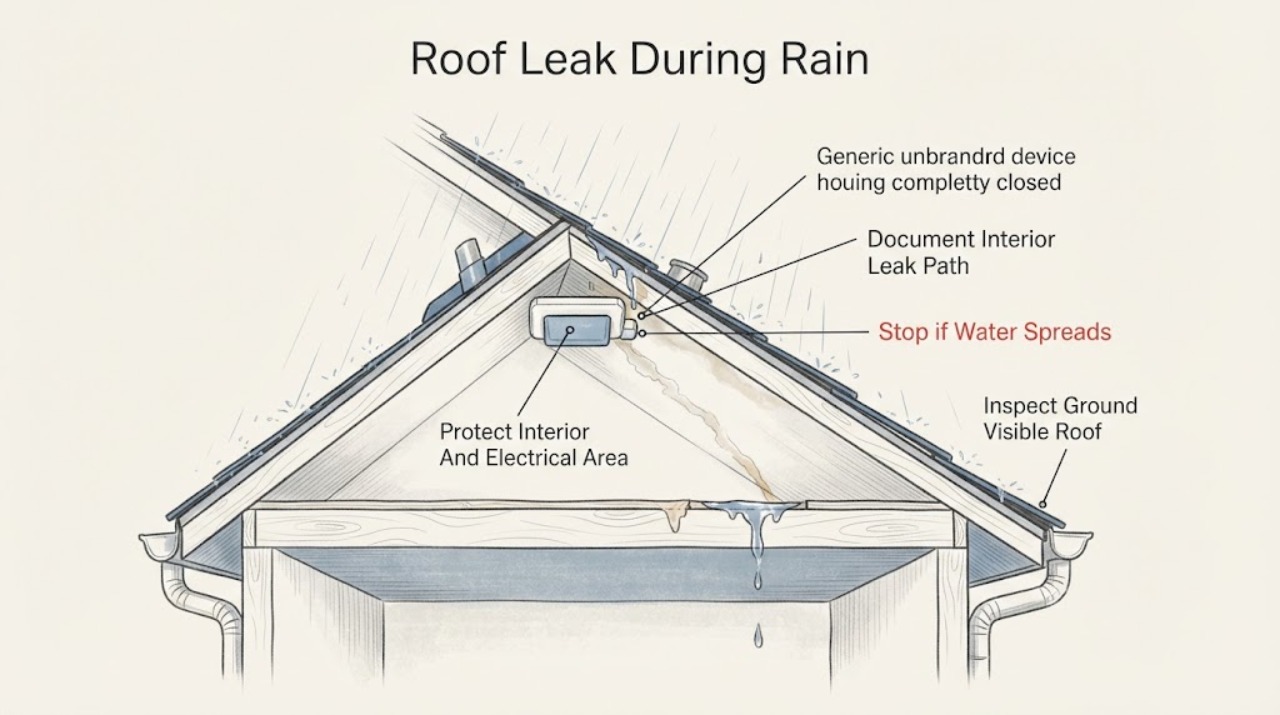
A roof leak that appears during rain should be managed from inside and from the ground, not by climbing onto a wet roof. Keep people away from ceiling areas that sag, active electrical equipment, and any unstable ceiling or attic surface. Place a container under a drip only where the floor is dry and stable, move belongings, and photograph the water path and stains. If safe, inspect the attic in daylight from a secure floor or access point for wet insulation, daylight, or sagging; do not step on the roof deck or disturb insulation. From the ground, look after the storm for missing or damaged shingles, debris, or detached flashing. A professional roofer can install a temporary tarp and locate the actual entry point; do not nail a tarp, seal a wet roof with guessed caulk, or make a roof repair during rain. Arrange prompt roofing service for any active leak, recurring stain, damaged flashing or shingles, or water entering a ceiling, wall, or electrical area.
Before you begin
Safety first
- The roofer should determine whether the water path involves the roof covering, flashing, valley, penetration, underlayment, deck, drainage, condensation, or concealed travel and should provide safe temporary protection and a permanent repair plan.
Work through in order
Diagnostic checks
Use only checks that match the exact appliance or system and its official guide.
-
Check 1
From a dry, stable position, move furniture and contents away from the drip, place a container under the water only if it can be done without climbing or standing in water, and look for nearby outlets, fixtures, appliances, or wiring.
Expected result: Water is a slow drip, a fast flow, pooling on the floor, reaching a ceiling light or outlet, spreading through a wall, or accompanied by a sagging ceiling.
Next step: Keep people out of the affected area, move contents from a dry location, and request urgent help for electrical exposure, a sagging ceiling, or uncontrolled water; do not touch wet electrical equipment.
Stop if: Do not enter standing water, support or puncture a bulging ceiling, climb furniture, touch wet outlets or fixtures, or attempt to shut off power while standing in water.
Why this matters
Why: Pooling, water near electricity, wall spread, or a sagging ceiling raises the immediate property and safety risk beyond a simple stain. A slow drip still indicates active water intrusion that can damage finishes and framing.
-
Check 2
Photograph the ceiling or wall stain, active drip, nearby room, and timing during rain; if the attic is accessible without stepping onto the roof deck or wet insulation, inspect from the access point with a flashlight.
Expected result: The attic shows daylight, wet framing or insulation, a trail from a penetration or valley, sagging material, no safe attic access, or no visible source above the interior stain.
Next step: Stay on a secure floor or access surface, photograph only what is visible, and provide the path and rain timing to a qualified roofer; leave inaccessible or unstable areas alone.
Stop if: Do not step on ceiling joists or roof decking, walk on insulation, move wet materials, enter during lightning or high wind, or probe the roof from inside.
Why this matters
Why: Daylight, wet framing, and a trail can narrow the area for the roofer, but water can travel away from the exterior entry point. No visible attic source does not disprove a roof leak.
-
Check 3
After rain and wind have subsided, inspect as much of the roof as is visible from the ground and look at gutters and downspouts without using a ladder; do not climb onto the roof.
Expected result: Missing, cracked, curled, or displaced shingles; loose or detached flashing; branches or debris; overflowing or blocked-looking gutters; or no visible exterior damage.
Next step: Photograph the exterior from the ground, keep debris and branches in place if removal would require roof access, and request a professional inspection for any damage or unexplained leak.
Stop if: Do not climb a wet ladder or roof, pull shingles or flashing, remove branches overhead, or clear a gutter while a storm, ice, wind, or unstable footing is present.
Why this matters
Why: Visible covering, flashing, or debris damage makes storm entry more plausible. A clear roofline does not rule out a concealed penetration, valley, underlayment, or flashing defect, and a gutter observation alone cannot diagnose the leak.
-
Check 4
From the ground and from safe interior views, note whether the leak aligns with a chimney, vent, skylight, roof-to-wall joint, valley, or roof edge; do not apply sealant or disturb flashing.
Expected result: Water appears below a penetration or joint, the attic trail follows a valley or wall, the leak is near a roof edge or gutter, or no alignment is clear.
Next step: Give the alignment and photographs to a roofer and ask for inspection of the penetration, flashing, valley, underlayment, and surrounding roof system.
Stop if: Do not climb to a penetration, lift shingles, remove flashing, scrape sealant, or use caulk as a temporary substitute for safe professional protection.
Why this matters
Why: These are water-management areas where flashing, seals, valleys, or drip edges may redirect or admit rain, but the visible interior alignment cannot prove the exterior failure point.
-
Check 5
If water is entering during ongoing rain or more rain is forecast, ask a qualified roofer about professional temporary tarp or emergency protection; do not install a tarp, nail plastic, or climb onto the roof yourself.
Expected result: The leak is active, the roof covering is visibly missing or damaged from the ground, the building is dry after rain, or no safe contractor access is available.
Next step: Keep collecting documentation and protect interior contents from a dry position while arranging a roofer; use emergency building or utility help if water reaches electrical equipment or structural elements.
Stop if: Do not work at height in rain or wind, use improvised roof coverings, drive fasteners through shingles, or cover vents or exhaust openings.
Why this matters
Why: An active opening can admit more water before permanent repair. Professional temporary protection can reduce additional damage, but the roof remains an unresolved safety and weatherproofing problem.
-
Check 6
Prepare a service record with the rain start and intensity if known, first interior wet point, photos and video, attic observations, ground-level roof and gutter findings, prior repairs, roof age if known, and any ceiling, wall, or electrical damage.
Expected result: The leak repeats only during rain, continues after rain, follows wind direction, appears after a storm impact, or cannot be localized safely.
Next step: Provide the record to a qualified roofing contractor and ask for a written assessment; notify the insurer or property manager as appropriate without delaying immediate safety measures.
Stop if: Do not make a permanent patch from inside, close a wet ceiling cavity, discard damaged materials before documenting, or continue occupying an unsafe area.
Why this matters
Why: Timing and location help a roofer distinguish a roof covering, flashing, penetration, drainage, condensation, or concealed water path, but they do not establish the repair without an inspection.
Use your observations
Decision map
Find the observation that best matches what you see, then follow the next safe action.
-
PATH 01Next step
What you see
Rainwater is near an outlet, light, appliance, or exposed wiring, or the ceiling is bulging, sagging, cracking, or releasing a fast flow.
Do this next
Keep away from the area and request urgent emergency, electrical, or building assistance as appropriate; do not touch wet equipment or the ceiling.
Why this path and its safety boundary
Why it matters: The immediate risk includes shock, fire, falling material, or rapid building damage in addition to the roof leak.
-
PATH 02Next step
What you see
The leak is contained in a dry area, no electrical or structural warning is present, and a secure attic access point or ground-level view is available.
Do this next
Photograph the leak, inspect only from a stable interior or ground position, keep the area protected, and arrange a roofer for diagnosis.
Why this path and its safety boundary
Why it matters: It is reasonable to document the interior path and visible exterior condition without treating that observation as a roof repair.
-
PATH 03Next step
What you see
From the ground, shingles are missing, cracked, curled, or displaced, debris is on the roof, or flashing is visibly bent or detached after the rain event.
Do this next
Keep people away from the roof edge and debris, document the damage from the ground, and arrange professional inspection and temporary protection.
Why this path and its safety boundary
Why it matters: Storm-related covering or flashing damage is more likely, but the full leak path and concealed deck damage still require professional inspection.
-
PATH 04Next step
What you see
Water enters during rain but no exterior damage is visible from the ground and the interior source does not align clearly with a roof feature.
Do this next
Keep documenting rainfall and interior spread and request a professional inspection rather than applying a guessed sealant or climbing to search.
Why this path and its safety boundary
Why it matters: A concealed flashing, valley, underlayment, penetration, roof-edge, drainage, or water-travel issue remains possible; a clear ground view does not clear the roof.
-
PATH 05Next step
What you see
Rain, lightning, high wind, ice, darkness, unstable ladders, or wet surfaces make attic or roof inspection unsafe, or the leak is active and worsening.
Do this next
Stay inside, contain water from dry footing, document what can be seen safely, and ask a professional roofer about emergency protection after conditions permit.
Why this path and its safety boundary
Why it matters: Weather and access risk outweigh the value of a closer look; an improvised repair can create a fall or additional water-entry hazard.
Helpful context
Understand the symptom
Control the interior water before searching for the roof defect
Rainwater can travel along decking, framing, insulation, and ceiling surfaces before it becomes visible, so the drip location inside is not necessarily the entry point above. Use a container only from a dry, stable position, move contents, and record the first wet area. Keep away from a sagging ceiling, wet insulation, standing water, and electrical outlets or fixtures.
Inspect from safe vantage points
If the weather has passed and the attic can be reached without stepping onto the roof deck or wet insulation, look from the access point for daylight, wet framing, or sagging. From the ground, look for missing or damaged shingles, debris, and detached or bent flashing. Do not turn an active rain leak into a fall injury by climbing a slick roof or ladder.
Temporary protection and permanent repair are separate steps
A professional roofer can install a temporary tarp to reduce additional water damage while the roof is waiting for inspection. Flashing at valleys, roof-to-wall intersections, chimneys, vents, and skylights is a common water-management boundary, but repairing or replacing it requires roof access, fall protection, and correct installation. Document the leak and have a qualified contractor identify and repair the entry path.
Safety boundary
Stop conditions
- Do not climb onto a wet, icy, windy, dark, or damaged roof or ladder; do not enter an unsafe attic, walk on insulation, or step on roof decking.
- Do not touch wet electrical outlets, fixtures, wiring, appliances, or standing water near electricity; keep away from a bulging or sagging ceiling.
- Do not nail a tarp, apply guessed sealant, pull shingles or flashing, remove branches overhead, or block vents while rain or water intrusion is active.
- Arrange prompt roofing service for any active or recurring rain leak, visible shingle or flashing damage, ceiling or wall stains, or a leak that cannot be localized safely.
When checks do not resolve it
Need a professional?
Use prompt roofing service whenever rain produces active water entry, recurring stains, visible covering or flashing damage, or a leak that cannot be localized from safe interior or ground views. Request urgent building or electrical assistance for water near electricity, a sagging ceiling, structural instability, or uncontrolled flow.
Safety scope: The roofer should determine whether the water path involves the roof covering, flashing, valley, penetration, underlayment, deck, drainage, condensation, or concealed travel and should provide safe temporary protection and a permanent repair plan.
Have this ready
- Photos or video of the first interior wet point, ceiling or wall stains, active drip, and any attic trail visible from a secure access point
- Rain and wind timing, whether the leak occurs only during rain or continues afterward, and the room or roof feature the water appears to align with
- Ground-level photos of missing or damaged shingles, debris, gutters, roof edges, valleys, penetrations, or detached flashing
- Roof age, material, prior repairs, storm impact, and any temporary protection already provided by a professional
- Any ceiling, wall, insulation, framing, electrical, mold, or contents damage and whether the area has been kept unoccupied
Common questions
FAQ
What should I do first when my roof leaks during rain?
Stay off the wet roof, keep away from sagging ceilings and wet electrical equipment, contain the drip from dry footing, move belongings, and take photos. Keep the area clear and contact a qualified roofer for an active leak.
Can I climb onto the roof to find the leak while it is raining?
No. Wet surfaces, wind, lightning, darkness, and roof damage make a fall likely. Inspect only from a secure interior access point or from the ground after conditions improve, and have a professional inspect the roof.
Can I put a tarp on the roof myself?
Ask a professional roofer about temporary tarping. Do not climb onto a wet or damaged roof, nail an improvised cover, or block vents; professional protection can reduce additional water damage while permanent repair is arranged.
Why is the leak appearing away from the roof defect?
Water can travel along roof decking, framing, insulation, and ceiling surfaces before it drips into a room. The interior stain helps document the path but does not prove the exact exterior entry point.
When is a rain-related roof leak urgent?
Treat water near outlets, fixtures, appliances, or wiring; a bulging or sagging ceiling; fast uncontrolled flow; structural instability; or active storm danger as urgent. Keep away from the area and request appropriate emergency, electrical, building, or roofing help.
Read the exact guide
Official sources
- Residential Roofing FAQsGAF · GAF recommends ground-based roof inspections for safety, lists common damage signs, and describes professional safety equipment and repair steps.
- Storm Damage Roof Repairs: Resources GuideGAF · GAF describes safe interior, ground-level, and post-storm observations, active-leak tarp protection by professionals, water-damage containment, and signs such as roof leaks and ceiling or wall stains.
- Understanding Roof Flashing Essential Protection for Every HomeGAF · GAF explains how flashing directs water away at roof joints and penetrations and identifies roof-to-wall intersections, valleys, chimneys, vents, skylights, and edges as vulnerable areas.
Community feedback
Share a repair observation
Share a plain-text repair observation. Accepted observations are published automatically; this page may take a moment to update.