
Electrical guides
Circuit Breakers Repair Guides – Page 3
Guidance for tripping breakers, panel symptoms, circuit loads, and safe next steps.
Published circuit breakers guides
Choose the guide that best matches the equipment and symptom you are seeing.
-
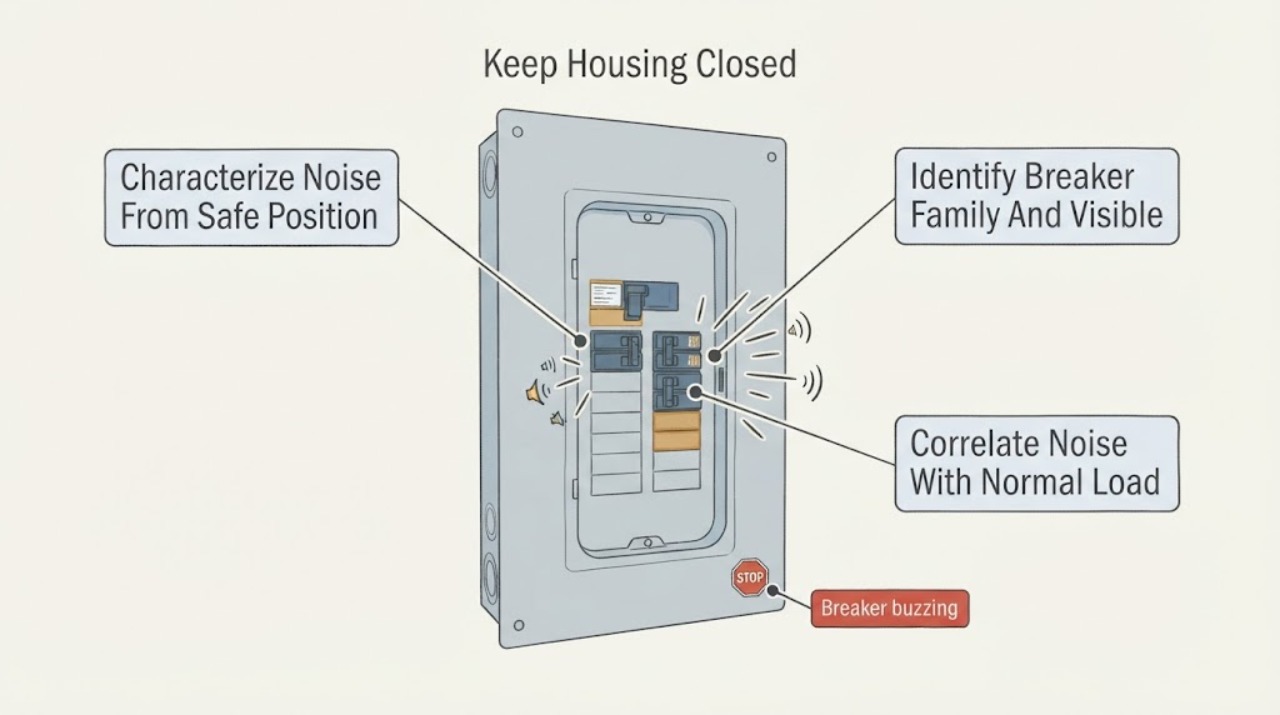
Square D breaker buzzing: What to Check and What to Do Next
A soft, steady hum from a Square D breaker can be normal for some QO or Homeline arc-fault breakers, but a new, louder, intermittent, crackling, or sizzling sound should be treated as a possible electrical fault until it is checked. Keep the panel closed and first note which breaker is noisy, whether the sound changes with a known load, whether the breaker trips, and whether there is heat, discoloration, odor, flickering, or smoke.
-
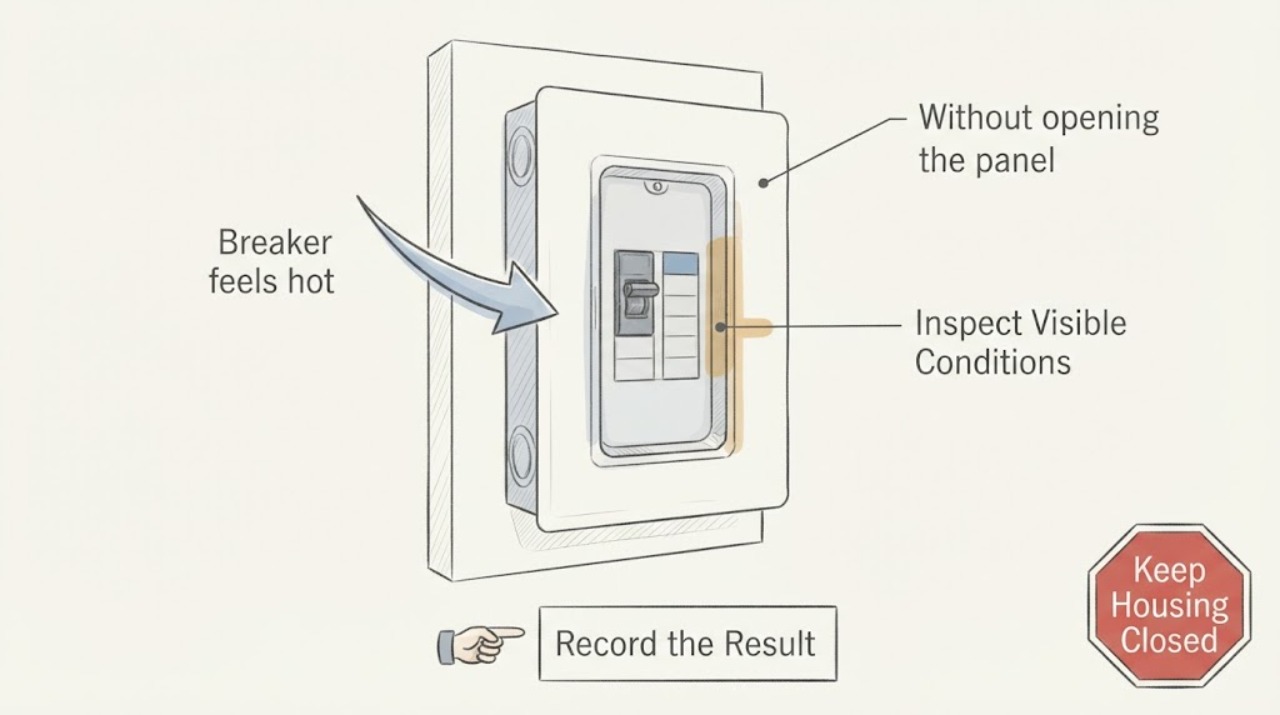
Square D breaker feels hot: What to Check and What to Do Next
A Square D breaker that feels warm is not automatically failing, and touch alone cannot establish a safe operating temperature. Do not remove the panel cover, touch terminals, tighten connections, or repeatedly reset the breaker.
-
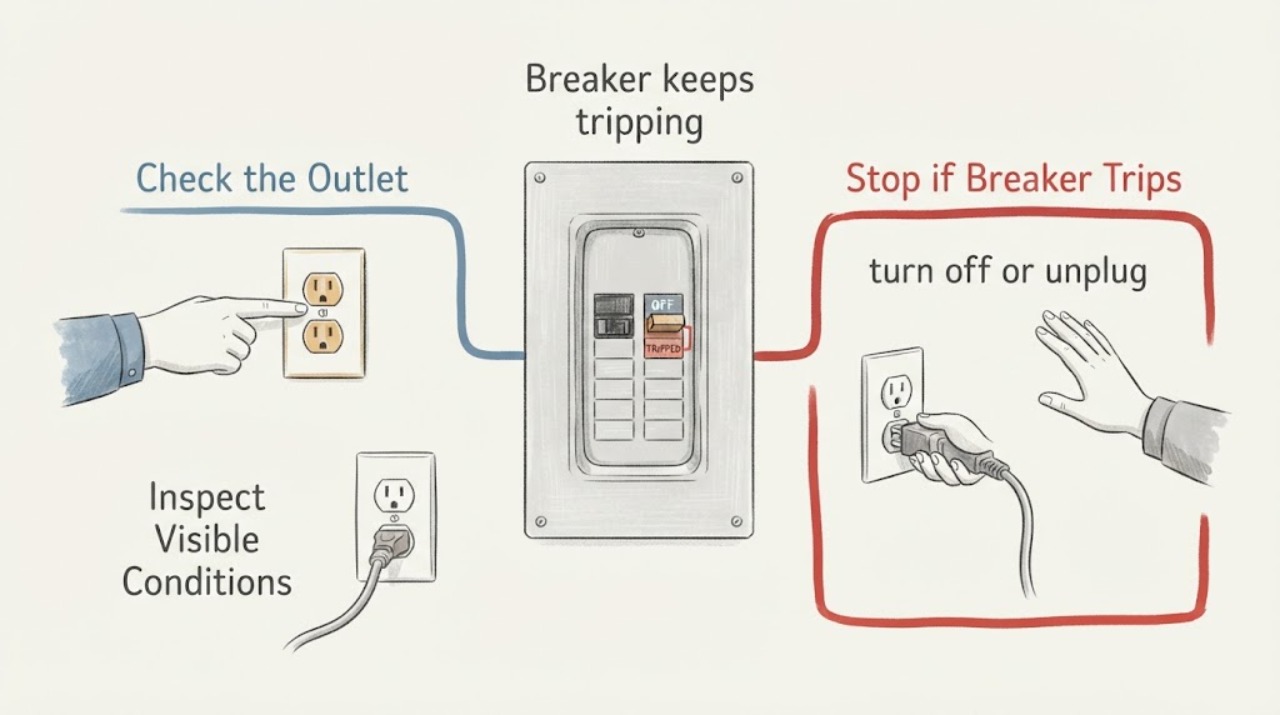
Square d breaker keeps tripping: What to Check and What to Do Next
A Square D breaker that keeps tripping is warning of an electrical condition, not asking for a larger breaker. From outside the closed panel, note whether it trips immediately or only after a load runs, which appliance or circuit is involved, and whether there is heat, discoloration, a burning odor, buzzing, smoke, or flicker.
-
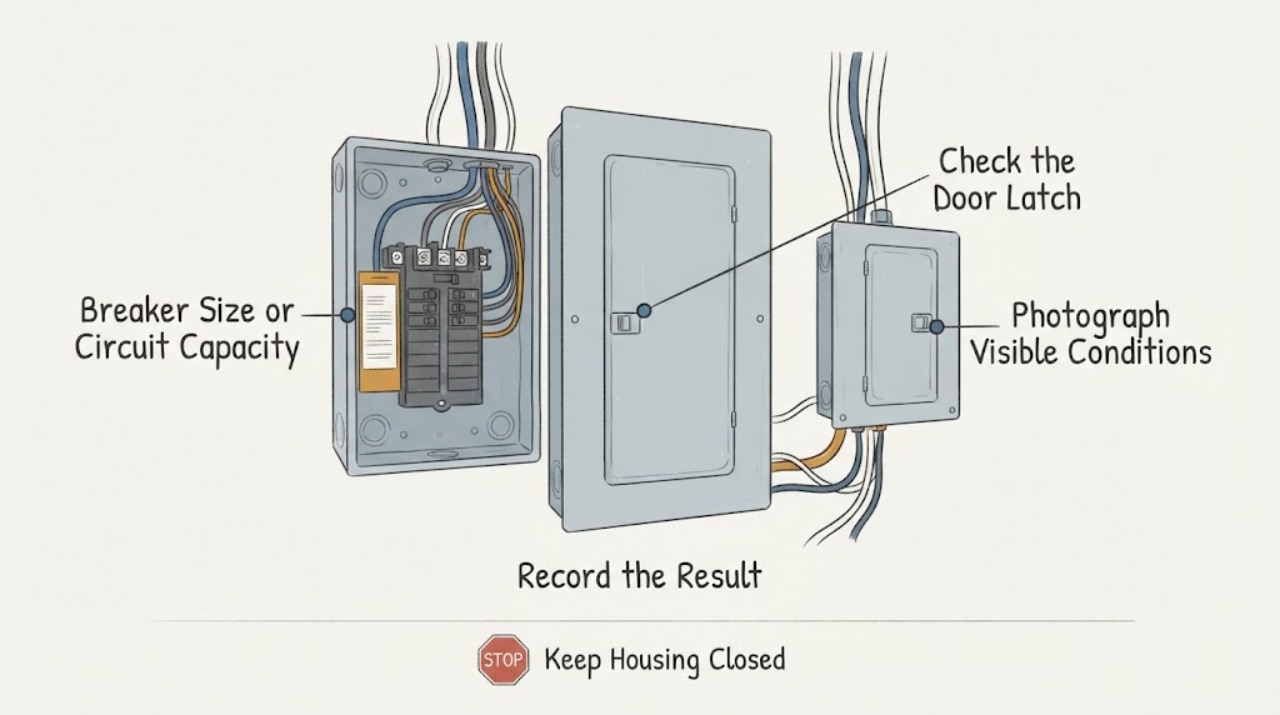
Square D Breaker Size or Circuit Capacity Concern: What to Check and What to Do Next
A Square D breaker size cannot be chosen from the handle label alone or by adding the numbers printed on neighboring breakers. The correct protective device depends on the actual load, circuit conductors, equipment installation instructions, panel/load-center listing, voltage and pole arrangement, and applicable electrical rules.
-
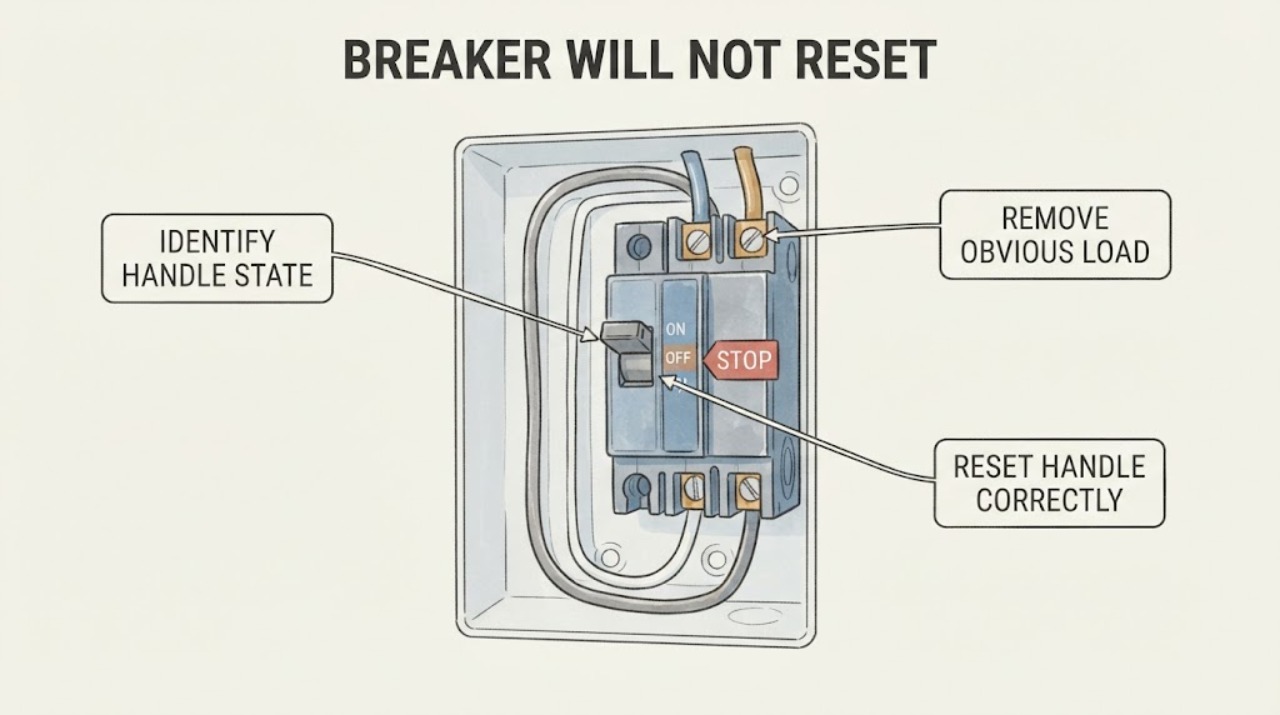
Square d breaker will not reset: What to Check and What to Do Next
A Square D breaker that will not reset may still be in its tripped position, or it may be responding to an overload, short circuit, ground fault, arc fault, connected appliance problem, or an internal or connection fault. From outside the closed panel, identify whether the handle is in the middle or otherwise not fully OFF, then move it firmly all the way to OFF before trying ON once, as Schneider Electric describes for QO branch breakers.
-
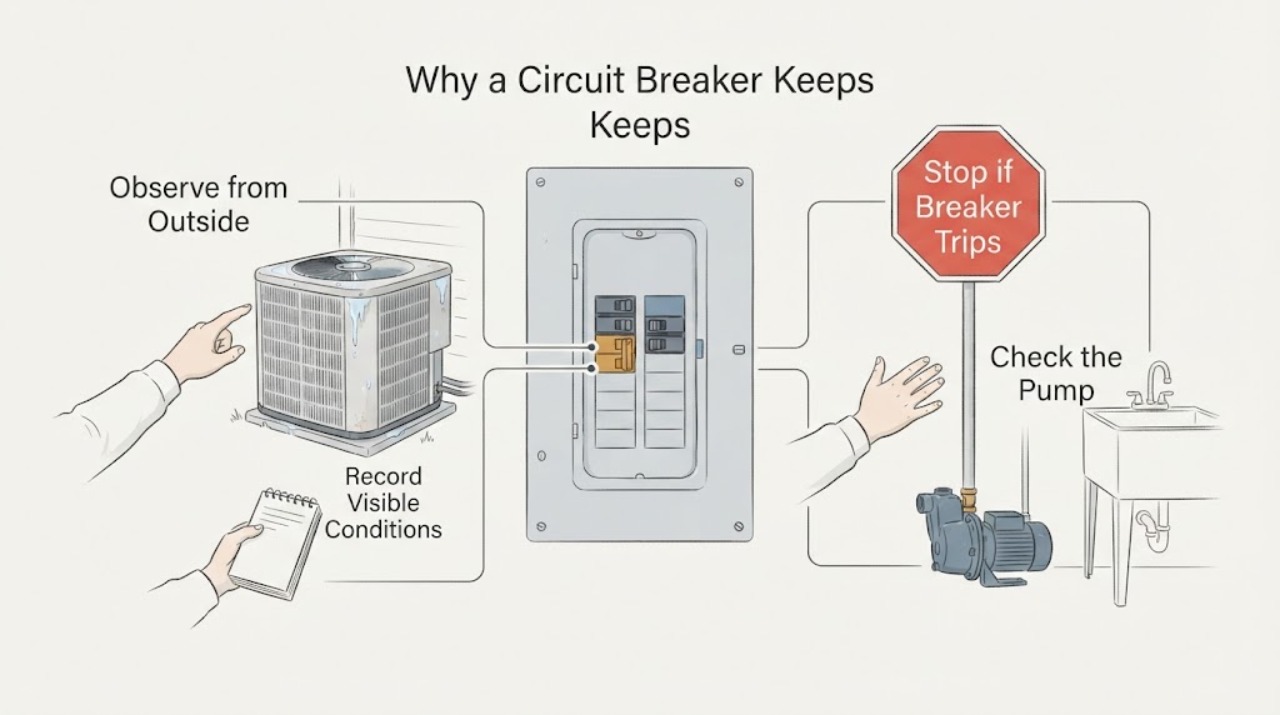
Why a Circuit Breaker Keeps Tripping During Summer
Summer timing often means the air conditioner is adding a large motor load to a circuit that is already warm, heavily loaded, or developing a fault, but the season alone does not identify the cause. From a dry, safe position, identify whether the same breaker trips when cooling starts, after the system has run, or when other loads are used.