
On this page
Start here
Quick answer
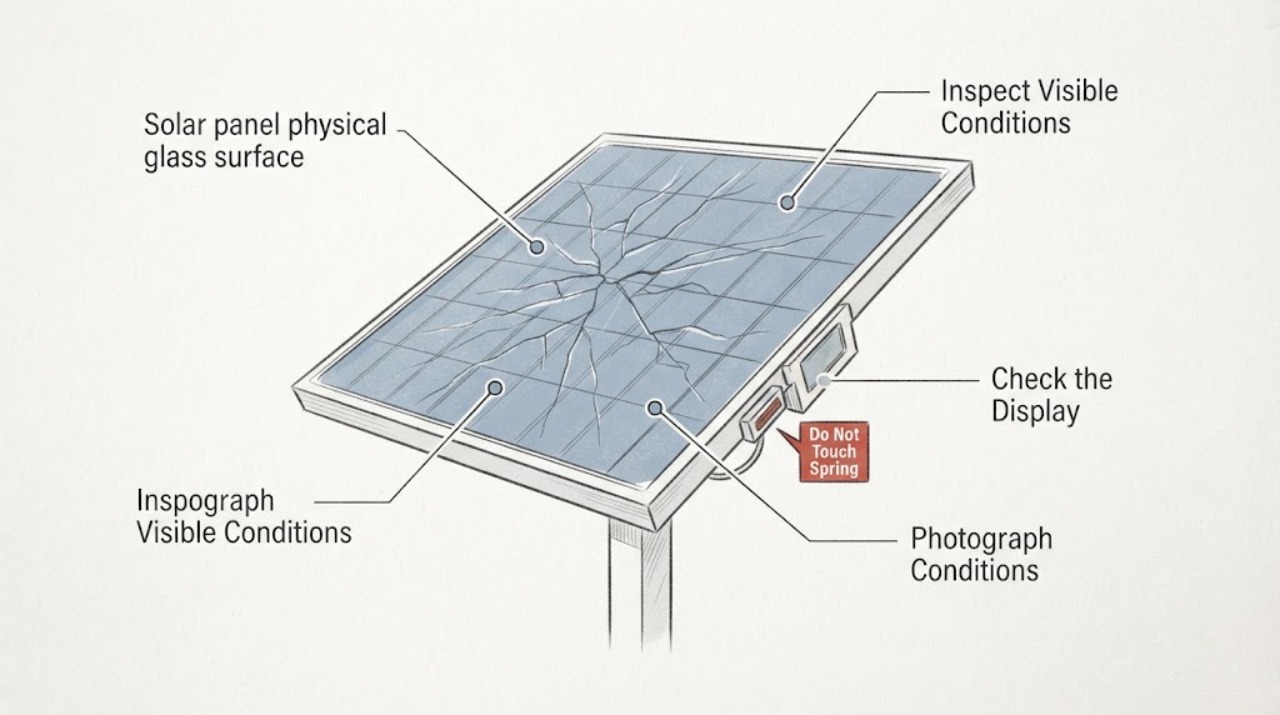
Treat cracked solar-panel glass as a damaged PV module, not a cosmetic surface defect. From the ground or another already safe viewpoint, document the crack, shattered areas, loose frame or cables, weather event, and any inverter or monitoring warning; do not climb onto the roof, touch the module, test live DC, wash it, patch it, or remove it. Broken glass and cracked backsheets can admit moisture and create electrical or fire hazards even when a module still produces power. Keep people away from the array and have a qualified solar PV professional safely isolate, inspect, electrically test, and replace or otherwise scope the damaged module before it is returned to service.
Work through in order
Diagnostic checks
Use only checks that match the exact appliance or system and its official guide.
-
Check 1
From the ground or an already safe indoor viewpoint, look at the array without climbing, touching a panel, moving debris, or approaching loose overhead components.
Expected result: Record whether the glass is hairline-cracked, shattered, visibly missing, cloudy/delaminated, or impossible to distinguish at the available distance; note any loose frame, hanging item, or exposed-looking cable.
Next step: Keep people and pets out of the area, photograph only from a safe location, and report the module row and approximate position to the solar professional.
Stop if: Stop immediately if glass, a module, racking, or cable appears loose or could fall; do not enter below or beside the array.
Why this matters
Why: Visible glass or module damage is enough to treat the module as unsafe to handle and to request professional PV inspection. A distant or uncertain view does not clear the array; hidden cracks may require specialist imaging.
-
Check 2
Document the damage pattern with a zoomed photograph taken from a safe location, without using a ladder, drone, pole, hose, or other object to get closer.
Expected result: Note the crack origin if visible, branching or edge-to-edge paths, shattered fragments, discoloration, backsheet or frame distortion, and how many modules appear affected; distinguish confirmed observations from guesses.
Next step: Send the original photos and the damage date or suspected hail/wind/impact event to the installer, maintenance provider, insurer, or qualified PV contractor.
Stop if: Do not wipe, seal, tape, scrape, polish, or otherwise contact the cracked surface.
Why this matters
Why: One broken top-sheet can justify a replacement assessment, while a wider weather pattern may require inspection of the whole array for invisible cell or mounting damage. A photo cannot confirm electrical integrity.
-
Check 3
Read only the normal user-facing inverter display or monitoring portal, without opening equipment, resetting alarms, touching disconnects, or performing electrical tests.
Expected result: Record whether production is normal-looking, reduced, offline, intermittent, or accompanied by a fault or isolation warning; note the time and whether the warning began after weather or impact.
Next step: Export or photograph the existing warning and production observation for the PV professional; leave the system state unchanged unless a qualified person provides a safe isolation procedure for the installed system.
Stop if: Do not open an inverter, test voltage/current, disconnect MC4 connectors, reset a fault repeatedly, or handle any exposed-looking conductor.
Why this matters
Why: Continued production does not make cracked glass safe. A fault or sudden production change increases the need for professional isolation and testing, while no warning still cannot rule out hidden module damage.
-
Check 4
Review the surrounding area from a safe position for storm debris, hail marks, fallen branches, water entry, loose racking, damaged conduit, or a module that has shifted.
Expected result: Record the event type and visible site conditions without touching debris, climbing, brushing snow, or checking fastener tightness; note whether damage is isolated or appears across the array.
Next step: Keep the area cordoned and provide the event and pattern to the contractor and insurer; ask for a whole-system visual and electrical inspection plan.
Stop if: Do not climb, stand on panels, remove snow or debris, touch racking, or work beneath a loose module.
Why this matters
Why: A storm or impact pattern can indicate hidden cell, frame, racking, or cable damage beyond the first cracked module. Loose or displaced equipment adds a physical hazard and may require site access controls.
-
Check 5
Gather safe-to-access records before service: module and inverter information from paperwork or labels readable without approaching the array, installation records, warranty details, and prior production history.
Expected result: Record only confirmed identifiers and dates, and note missing records, inaccessible labels, prior repairs, insurance requirements, or whether the system includes storage or other equipment.
Next step: Send the records with the photos, monitoring observations, and site-safety concerns when requesting a PV damage inspection.
Stop if: Do not remove a module, open a junction box or inverter, enter a roof area, or retrieve a label from a hazardous position.
Why this matters
Why: The records help the professional identify a physically and electrically compatible replacement and determine whether a warranty or claim process applies. Missing information is not a reason to access the roof or open equipment.
Use your observations
Decision map
Find the observation that best matches what you see, then follow the next safe action.
-
PATH 01Safety boundary
What you see
The module has broken or shattered front glass, or the frame/backsheet appears visibly damaged.
Do this next
Keep people away and have a qualified PV professional safely isolate, inspect, and scope replacement before recommissioning.
Why this path and its safety boundary
Why it matters: Weather can enter the module and the damage can create electrical or fire risk even if output continues.
Safety stop: Do not climb, touch, patch, wash, or return the damaged module to service yourself.
-
PATH 02Safety boundary
What you see
Only hairline cracks or uncertain marks are visible from the ground.
Do this next
Request professional visual and specialist imaging/electrical testing as appropriate for the array.
Why this path and its safety boundary
Why it matters: The view cannot distinguish glass cracks from cell or encapsulant damage, and hidden defects may worsen or reduce output.
Safety stop: Do not approach the panel to verify the mark or perform a live DC test.
-
PATH 03Safety boundary
What you see
The system still reports production despite the cracked surface.
Do this next
Leave the array undisturbed and provide the production observation to the PV professional for an isolation and replacement decision.
Why this path and its safety boundary
Why it matters: Power output is not a safety clearance; a damaged module can continue operating while moisture and internal faults develop.
Safety stop: Do not keep operating or reset the system solely because it still produces power.
-
PATH 04Safety boundary
What you see
The inverter or monitoring portal shows a fault, isolation warning, sudden production loss, or repeated offline state.
Do this next
Keep clear of the equipment and arrange prompt professional service with the recorded warning and time.
Why this path and its safety boundary
Why it matters: The damage may be affecting a string, module, wiring, or protective equipment and needs qualified electrical diagnosis.
Safety stop: Do not open the inverter, handle disconnects, test live DC, or reconnect anything.
-
PATH 05Safety boundary
What you see
A module, rack, cable, or debris is loose or could fall, or the array is above a walkway or occupied area.
Do this next
Keep people out of the fall zone and contact qualified emergency or PV service support; do not approach the array.
Why this path and its safety boundary
Why it matters: There is an immediate physical hazard in addition to possible electrical damage.
Safety stop: Do not climb, stand below loose components, move debris, or attempt temporary fastening.
-
PATH 06Safety boundary
What you see
The array was exposed to hail, high wind, impact, fire, or other severe weather but no crack is clearly visible.
Do this next
Document the event, preserve monitoring records, and ask for a professional whole-system inspection before normal service decisions.
Why this path and its safety boundary
Why it matters: Cell and mounting damage can be hidden, and a clear surface does not prove the modules or wiring are undamaged.
Safety stop: Do not climb or perform self-directed imaging, electrical testing, or snow/debris removal.
Helpful context
Understand the symptom
Why cracked glass changes the decision
The front glass protects the cells and internal conductors from weather. A module may continue producing after the glass cracks, but that output does not prove the module is safe or sound. Rain, snow, humidity, and later mechanical stress can worsen the damage, reduce performance, or create faults inside the module. The U.S. Department of Energy's PV owner guidance identifies broken glass top-sheets and cracked backsheets as conditions for professional inspection and module replacement.
Keep the inspection ground-level
A rooftop PV array can remain electrically energized in daylight, and a cracked surface can have sharp fragments or unstable parts. Use only ordinary ground-level views, system records already available to you, and photographs taken without entering a hazard area. Do not step on panels, climb a roof or ladder, touch cables or connectors, perform live DC measurements, open a junction box, or remove a module.
A safe repair is usually a professional replacement scope
Repair decisions depend on the glass or backsheet condition, module and string configuration, mounting, weather exposure, warranty, insurance, and results from qualified electrical and imaging tests. A professional can render the site safe, test for hidden damage, identify electrically and physically compatible replacement equipment, and recommission the system. A piece of tape, coating, or surface seal cannot restore the module's certified enclosure or make a roof safe to access.
When checks do not resolve it
Need a professional?
Call a qualified solar PV contractor or appropriately trained electrical professional promptly for any cracked or shattered module glass, cracked backsheet, frame or cable damage, monitoring fault, water intrusion, repeated production loss, or suspected storm/impact damage. Treat loose overhead equipment, exposed-looking conductors, fire or smoke, and a hazard above an occupied area as urgent safety conditions.
Have this ready
- Provide safe ground-level photos, module row/location, the crack or break pattern, suspected weather or impact date, visible loose parts or debris, monitoring/inverter warnings, production history, installation and warranty records, and whether storage is present. Do not approach the array to collect missing details.
Common questions
FAQ
Can a solar panel keep working after its glass cracks?
Yes, it may still produce, but output does not prove the module is safe. Broken glass can admit moisture and lead to internal electrical faults, performance loss, or a life-safety hazard. Keep clear and arrange qualified inspection and a replacement decision.
Can I seal a crack with tape, coating, or silicone?
Do not patch the glass yourself. A surface patch cannot restore the module's certified enclosure or confirm that cells, backsheets, wiring, and mounting are safe. Have a PV professional determine whether the module must be replaced.
Should I climb onto the roof to inspect the cracked panel?
No. Stay at a safe ground-level or indoor viewpoint. PV modules can remain energized in daylight, and roofs, ladders, cracked glass, loose racking, and cables create fall, cut, and electrical hazards. Use photographs and records for the professional instead.
What if the crack is only a hairline or appeared after hail?
Treat it as unconfirmed module damage. Hail and other impacts can cause cell cracks that are not obvious from the ground, so a qualified provider may need specialist imaging and electrical testing before deciding whether the module or a larger portion of the array needs repair or replacement.
Read the exact guide
Official sources
- PV System Owner's Guide to Identifying, Assessing, and Addressing Weather Vulnerabilities, Risks, and ImpactsU.S. Department of Energy, Federal Energy Management Program · Technical guidance developed for federal PV system owners and managers; use it as a safety and maintenance reference, not as a substitute for site-specific engineering, electrical rules, or local requirements.
- Hail Damage Mitigation for PV SystemsU.S. Department of Energy · General PV weather-damage guidance; the installed system's qualified service provider must determine the safe isolation and inspection method.
- Life Cycle of Photovoltaic Systems: Operate and Maintain an Existing Photovoltaic SystemU.S. Department of Energy, Federal Energy Management Program · Federal-system operations guidance; use qualified personnel and the applicable site procedures for a residential or commercial array.
Community feedback
Share a repair observation
Share a plain-text repair observation. Accepted observations are published automatically; this page may take a moment to update.