
On this page
Start here
Quick answer
White rings or a chalky film concentrated where irrigation spray reaches a solar panel are usually a surface mineral-residue problem, not proof that the panel has failed. First document the spray pattern and inspect the glass and frame from a safe position. If the panel is intact and access is safe, clean it while cool with ambient-temperature, low-mineral water and a soft non-abrasive implement; do not dry-scrape, use abrasive tools, or direct high-pressure water at the module. Prevent the sprinkler from wetting the array again, then use normal monitoring to see whether the affected panel behaves normally. Cracks, loose connections, water intrusion, unsafe roof access, or residue that does not respond to gentle cleaning are reasons to stop and arrange qualified solar service.
Before you begin
Safety first
- Do not open junction boxes, disconnect wiring, touch wet electrical parts, walk on modules, use high-pressure equipment, or apply acid, alkali, abrasive, or solvent cleaners.
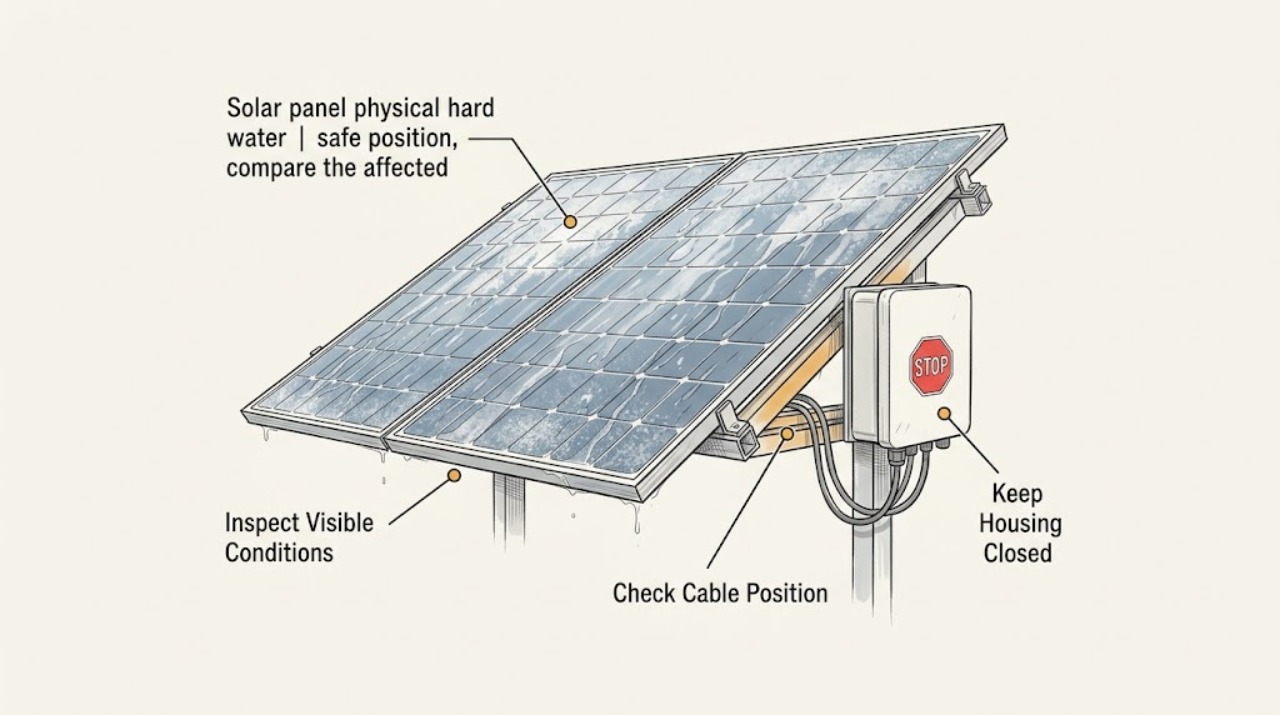
Work through in order
Diagnostic checks
Use only checks that match the exact appliance or system and its official guide.
-
Check 1
From the ground or another stable, safe position, compare the affected panel with an adjacent panel that is outside the sprinkler arc. Do not walk on, lean on, or place tools on the modules.
Expected result: Record whether the white or chalky film, rings, or streaks are concentrated along the lower edge or another area that matches the irrigation spray pattern, and photograph the comparison.
Next step: If the appearance is localized to the spray path and the glass and frame look intact, continue to the irrigation and cool-cleaning checks. If the panel is cracked, broken, or visibly separating, stop and arrange qualified solar service.
Why this matters
Why: A deposit pattern that follows repeated spray exposure makes a surface mineral residue more likely than an internal electrical fault. A patch that does not follow the spray path, or a visible crack or delamination-like change, needs a wider assessment.
-
Check 2
Observe one normal irrigation cycle from a safe location and identify which sprinkler head, deflector, or overspray reaches the panel; do not climb onto the array to reposition hardware.
Expected result: Note whether the same module or lower section becomes wet each cycle, whether the spray is direct or wind-carried, and whether the affected area dries with a visible mineral edge.
Next step: Use a ground-accessible irrigation adjustment or ask an irrigation professional or solar installer to change the spray direction and verify that the array is no longer in the watering path.
Why this matters
Why: A repeatable wetting path explains why the residue returns and makes prevention part of the repair. If the panel stays dry but the film spreads or changes, irrigation alone is less likely to explain the appearance.
-
Check 3
Before any wet cleaning, inspect the accessible glass, frame, junction-box area, and visible cable runs from a safe position for cracks, broken glass, loose-looking connections, corrosion, or water intrusion; do not touch electrically active parts.
Expected result: The result is either an intact-looking module with only surface film or a module with physical or electrical warning signs.
Next step: If any damage, exposed conductor, loose connection, or water intrusion is visible, stop, keep people clear, and contact a qualified solar professional. Continue only when the module is intact and the access is safe.
Why this matters
Why: An intact surface supports a controlled cleaning check. Damage or loose connections raises the shock and equipment-risk boundary, especially when the module will become wet, and cannot be diagnosed by removing residue alone.
-
Check 4
Only when the module is cool, intact, and safely reachable, rinse with ambient-temperature low-mineral or de-ionized water and use a soft, non-abrasive sponge or cloth for remaining film; do not dry-scrape or use abrasive, corrosive, or high-pressure cleaning methods.
Expected result: After a complete rinse and gentle pass, the film either releases and the glass looks uniformly clear, or hard spots remain, the surface looks etched, or the appearance does not change.
Next step: If the surface clears, dry or rinse without leaving another mineral load and proceed to prevention and monitoring. If it does not clear with the manufacturer-compatible gentle method, stop experimenting and ask the manufacturer or qualified cleaner to assess the coating and warranty boundary.
Why this matters
Why: Residue that releases with a cool, gentle, low-mineral cleaning is more consistent with a removable surface deposit. Persistent spots or apparent coating damage should not be attacked with stronger chemicals or harder tools.
-
Check 5
After the panel is clean and the sprinkler path has been corrected, review the inverter or monitoring app using its normal read-only view and compare the affected panel or array with its prior pattern under similar daylight conditions.
Expected result: Record whether the visible residue returns, whether the system reports a persistent fault, and whether the affected panel or array remains materially different from comparable panels after the surface is clear.
Next step: Keep photographs and monitoring observations with the installation records. Arrange qualified solar diagnosis if the fault persists, output remains abnormal, or the residue returns despite the irrigation change.
Why this matters
Why: A clean surface with no persistent alert supports monitoring after prevention. A recurring deposit pattern points back to irrigation, while a continuing fault or unexplained performance difference means the issue is not resolved by surface cleaning alone.
Use your observations
Decision map
Find the observation that best matches what you see, then follow the next safe action.
-
PATH 01Next step
What you see
White rings or chalky film are limited to the sprinkler arc, the glass and frame appear intact, and the film releases with cool low-mineral water and a soft implement.
Do this next
Prevent further spray exposure, keep the cleaning method gentle, and monitor the panel after the next comparable daylight periods.
Why this path and its safety boundary
Why it matters: The observed pattern is most consistent with removable surface mineral residue rather than a confirmed internal panel failure.
-
PATH 02Next step
What you see
The same lower edge becomes wet after each irrigation cycle, and the film returns after an otherwise successful cleaning.
Do this next
Have the sprinkler direction, deflector, or irrigation layout corrected from a safe access point, then recheck the panel after it has remained dry.
Why this path and its safety boundary
Why it matters: Recurring overspray is the unresolved cause; repeating the cleaning without changing irrigation will likely recreate the deposit.
-
PATH 03Next step
What you see
The film does not respond to the gentle manufacturer-compatible method, appears etched or patchy outside the spray path, or a monitoring fault remains after cleaning.
Do this next
Stop adding chemicals or abrasion, preserve photos and monitoring records, and ask the manufacturer or qualified solar professional to assess the module and warranty implications.
Why this path and its safety boundary
Why it matters: A simple mineral film is less certain; coating damage, another contaminant, or a system issue needs product-specific assessment.
-
PATH 04Next step
What you see
Cracked or broken glass, loose-looking connections, exposed conductors, water intrusion, smoke, arcing, or unsafe elevated access is present.
Do this next
Stop, keep people away, avoid contact with the module, and arrange qualified solar service or urgent local help for an active electrical or fire hazard.
Why this path and its safety boundary
Why it matters: The task has crossed the ordinary cleaning boundary and wetting or touching the array can increase injury or equipment risk.
Helpful context
Understand the symptom
Why sprinkler residue forms a distinct pattern
When irrigation water lands on the glass and evaporates, dissolved minerals remain behind. A lower-edge band, repeated rings, or a fan-shaped patch that matches the sprinkler arc supports a surface-deposit explanation. That visual pattern does not by itself prove that the glass coating or the electrical laminate is permanently damaged; the panel condition and the response to a safe, gentle cleaning check still matter.
Treat access and panel temperature as part of the diagnosis
Solar modules can be electrically active in daylight, and wet damaged modules carry greater shock risk. Manufacturer guides also warn that cleaning a hot panel with water can create thermal stress. Work only from a safe position with no need to walk, lean, or stand on the modules. If a roof or elevated array cannot be reached without fall exposure, leave the cleaning to a qualified provider.
A prevention check is as important as removing the film
If the same irrigation head keeps wetting the array, a successful cleaning will be temporary. Observe the sprinkler path from the ground or another safe location and have the irrigation layout or control adjusted so the spray does not land on the modules. The Department of Energy advises taking care not to spray solar panels themselves; if spray occurs, the panels can be washed with water.
Safety boundary
Stop conditions
- Do not clean a cracked, broken, or visibly damaged module, and do not touch exposed conductors or loose electrical connections.
- Do not walk on, lean on, stand on, drill, scrape, or place tools on the modules; do not use high-pressure, abrasive, or corrosive cleaning methods.
- Stop when safe access requires roof or elevated work, when a panel remains hot, or when water intrusion, smoke, arcing, or another electrical warning is visible.
- Use a qualified solar professional when gentle cleaning does not resolve the appearance or a monitoring fault persists.
When checks do not resolve it
Need a professional?
Contact the manufacturer, installer, or qualified solar cleaner when the panel is damaged, inaccessible without fall exposure, the residue persists, or the panel or array remains abnormal after cleaning and sprinkler correction.
Safety scope: Do not open junction boxes, disconnect wiring, touch wet electrical parts, walk on modules, use high-pressure equipment, or apply acid, alkali, abrasive, or solvent cleaners.
Have this ready
- Provide photos showing the residue pattern and nearby unaffected panel, the sprinkler path and timing, panel and system identity visible from a safe position, cleaning method and water type used, and any monitoring alerts before and after.
Common questions
FAQ
Are white sprinkler spots proof that a solar panel is ruined?
No. A chalky film or rings that follow the spray path are consistent with a surface mineral deposit, but cracks, coating damage, water intrusion, or a persistent monitoring fault need separate assessment.
What water should be used to remove hard-water residue?
Use the installed panel manufacturer's guidance. Canadian Solar recommends low-mineral water, and REC says de-ionized water is ideal; use ambient-temperature water on a cool panel and avoid leaving another mineral load behind.
Can I use vinegar, acid, a razor, or a pressure washer on the spots?
Do not escalate to acid, alkali, solvents, blades, abrasive tools, or high pressure unless the manufacturer specifically approves a method for that exact module. Start with a cool, gentle, non-abrasive cleaning method and stop if the spots remain.
How do I stop the residue from coming back?
Observe the irrigation cycle from a safe position and correct the sprinkler head, deflector, or layout so the spray no longer lands on the array. A repeatable wetting path will recreate deposits even after a successful cleaning.
When should a solar professional handle this?
Use qualified service for damaged glass, loose-looking connections, exposed conductors, water intrusion, unsafe roof access, persistent faults, apparent coating damage, or residue that does not release with the approved gentle method.
Read the exact guide
Official sources
- Farmer's Guide to Going SolarU.S. Department of Energy · Government guidance used for the prevention point that irrigation or other sprays should not be directed at solar panels; it does not replace the module manufacturer's cleaning instructions.
- ANNEX D: MODULE CLEANING GUIDELINESCanadian Solar · Canadian Solar installation and cleaning manual used for safety boundaries and cleaning-method constraints; model-specific instructions control.
- CUSTOMERSUPPORT – Canadian Solar – GlobalCanadian Solar · Manufacturer FAQ for Canadian Solar modules; use the installed module's own manual where it differs.
- Quick guide to cleaningREC Group · Manufacturer cleaning guide used for general module-surface and access precautions; the installed panel's manual controls.
Community feedback
Share a repair observation
Share a plain-text repair observation. Accepted observations are published automatically; this page may take a moment to update.