
On this page
Start here
Quick answer
Stop the water source first: close the faucet, stop the dishwasher with its normal control if it is safe, and keep people away from standing water near powered appliances or outlets. Do not touch electrical equipment through water or pull the dishwasher out. Then identify whether the water was clean supply water, dishwasher water, or drain/sewage backflow; remove only safely accessible standing water, open cabinets for inspection, and dry hard surfaces. If water reached electrical parts, entered walls or flooring, is contaminated, keeps returning, or leaves damp cabinet or floor materials, stop and call a qualified water-damage/restoration professional and an appliance or plumbing technician as needed.
Before you begin
Safety first
- User observation and limited cleanup of known clean water only; no electrical contact, cabinet demolition, appliance removal, or mold-remediation DIY.
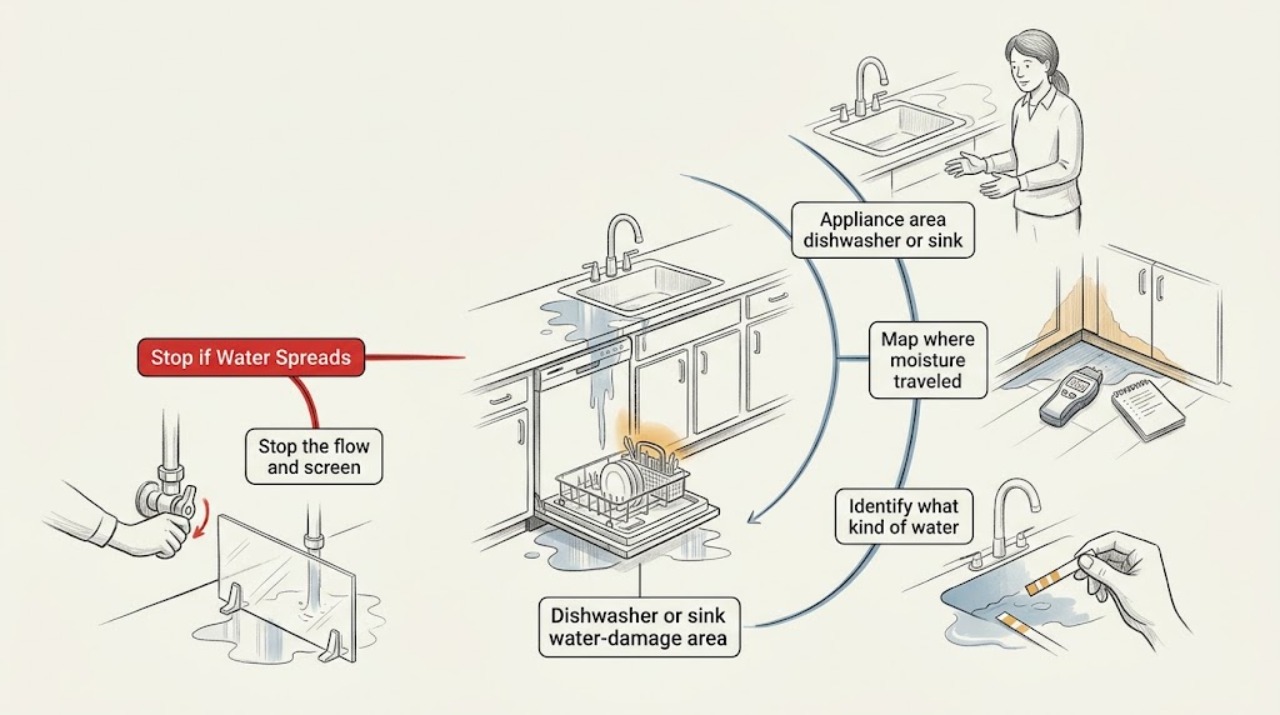
Work through in order
Diagnostic checks
Use only checks that match the exact appliance or system and its official guide.
-
Stop the flow and screen for electrical danger
Turn off the faucet and stop the dishwasher with its normal cancel or stop control if you can reach it without stepping in water; close an under-sink water valve only when the valve and floor are dry and readily accessible.
Expected result: Look from a dry position for water at outlets, power strips, the dishwasher cord or junction area, a garbage disposal, or other powered equipment; also note sparking, a burning smell, damaged wiring, or a tripped breaker.
Next step: Keep clear and do not touch wet electrical equipment or a wet breaker panel. Call a qualified electrician or emergency service for electrical isolation, and arrange plumbing or appliance service to stop the source.
Stop if: Never reach through water to operate a plug, outlet, disposal, breaker, or appliance connection.
Why this matters
Why: Water or damage at electrical equipment changes this from a cleanup task to an electrical-safety call. A source that continues after the faucet and dishwasher stop may be a supply, drain, or concealed plumbing problem.
-
Identify what kind of water overflowed
Observe the water's appearance and source without tasting or handling it unnecessarily, and note whether it came from the faucet, dishwasher tub, supply connection, drain, garbage disposal, or a sink backup.
Expected result: Water may be clear and odorless, contain detergent or food residue, or be gray, foul-smelling, or mixed with sewage or drain contents.
Next step: Record the source and stop using the sink, disposal, and dishwasher until the drain path or appliance fault is checked. Keep children, pets, and people with respiratory or immune concerns away from contaminated water.
Stop if: Do not run fans, spread contaminated water, or clean suspected sewage with ordinary household methods.
Why this matters
Why: Known clean supply water permits a limited wipe-and-dry response when no electrical or structural hazard is present. Dishwasher wastewater, sink drain water, and especially sewage or unknown water require more protective handling and may need professional remediation.
-
Map where moisture traveled
From accessible, dry surfaces, use towels and a flashlight to inspect the cabinet floor, side panels, toe-kick edge, wall behind the sink, flooring seams, baseboards, and the ceiling or cabinet below if visible.
Expected result: Look for swelling, delamination, soft wood, darkened seams, damp insulation, a musty odor, water marks, or moisture that returns after wiping.
Next step: Photograph each affected area before moving items. Leave built-in cabinets, flooring, wallboard, and the dishwasher in place for a restoration or trade professional to assess rather than demolishing or pulling them out.
Stop if: Do not probe walls, remove toe-kicks, cut cabinets, or lift flooring to chase hidden moisture.
Why this matters
Why: A dry, hard, non-porous surface with no returning moisture may need only cleaning and monitoring. Swollen cabinetry, damp flooring or subfloor edges, wet drywall, hidden cavities, or returning moisture means the visible puddle is not the full extent of the damage.
-
Remove only safely accessible standing water and begin drying
For a small amount of known clean water away from electrical equipment, blot or mop hard surfaces and open cabinet doors and drawers to expose accessible surfaces; use a wet-dry vacuum only if the equipment and area are safe for that use.
Expected result: Check whether water is removed from the floor surface or continues to seep from a cabinet, wall edge, appliance gap, or flooring seam.
Next step: Keep a written timeline and photos. Dry clean materials promptly, but do not seal, paint, caulk, or refinish a wet surface and do not start equipment that could spread visible mold or contaminated water.
Stop if: Stop cleanup if water is contaminated, the area is electrically unsafe, or anyone develops breathing or skin symptoms.
Why this matters
Why: Water that stops and leaves only cleanable hard surfaces can be monitored while drying. Continued seepage, trapped moisture, wet porous materials, or any moldy or musty area indicates a professional drying assessment is needed.
-
Check the dishwasher and sink paths without dismantling them
Visually compare the likely source: dishwasher door edge and lower front, visible supply and drain connections under the sink, the air gap or disposal connection if present, and the sink drain and trap area; do not pull the appliance or remove panels.
Expected result: A front-edge wet mark may fit a door seal, suds, loading, or spray pattern; water under or behind the unit may fit a hose, inlet, drain, pump, or tub problem; water backing up at the sink or air gap points toward a downstream drain restriction.
Next step: Give the technician the source location, whether the water appeared during fill, wash, drain, or sink use, and the appliance model if available without moving it.
Stop if: Do not run another cycle merely to reproduce an active leak.
Why this matters
Why: The location and timing narrow the trade needed, but they do not prove a failed part. Stop using the suspected appliance and sink until the source is corrected, especially if water returns during a cycle or drain operation.
Use your observations
Decision map
Find the observation that best matches what you see, then follow the next safe action.
-
PATH 01Next step
What you see
Water touched an outlet, appliance wiring, power strip, disposal, or breaker area, or there is sparking, burning odor, or repeated breaker tripping.
Do this next
Keep away from the wet area and arrange qualified electrical isolation; do not touch or reset wet electrical equipment. The water source and appliance also need professional assessment.
-
PATH 02Next step
What you see
The water is gray, foul-smelling, sewage-contaminated, or its source is unknown.
Do this next
Stop ordinary cleanup, keep occupants and pets away, and call a qualified water-damage/restoration professional with contaminated-water experience.
-
PATH 03Next step
What you see
The water is known clean, shallow, stopped, and limited to hard surfaces with no electrical contact or returning seepage.
Do this next
Blot or mop, open accessible cabinets, dry and monitor the area, and document what was wet. Escalate if dampness, odor, swelling, or staining returns.
-
PATH 04Next step
What you see
Moisture returns from under the cabinet, behind the dishwasher, from a wall or floor seam, or from swollen porous materials.
Do this next
Stop dismantling or refinishing and arrange a professional moisture and drying assessment; schedule appliance or plumbing diagnosis to prevent recurrence.
-
PATH 05Next step
What you see
A dishwasher leak is confined to the visible front, supply, drain, or suds path and no electrical or structural hazard is present.
Do this next
Leave the dishwasher unused, photograph the location, and have the correct model-specific seal, hose, drain, inlet, or pump cause checked before operating it again.
Helpful context
Understand the symptom
The decision that matters first
A dishwasher or sink overflow has two separate problems: stopping the source and determining how far moisture traveled. A puddle in front of the appliance can also be under the cabinet toe-kick, behind the dishwasher, below the sink, or inside flooring. The safest homeowner role is observation and gentle cleanup of known clean water. Do not open walls, remove cabinets, pull a built-in appliance, or disturb wet electrical connections to look farther.
Only after diagnosis
Potential parts
- Water leak alarm
Only as a monitoring aid after the source is repaired and the area is electrically safe; it does not stop an overflow or replace inspection.
- Wet-dry vacuum
Only for a small amount of known clean standing water when the tool, outlet, and area are safe and the product instructions allow it; do not use it for contaminated water or visible mold debris.
- Cabinet moisture meter
Only as a screening tool for accessible cabinet, flooring, or wall materials; a reading does not replace professional drying or a concealed-moisture assessment.
When checks do not resolve it
Need a professional?
Use urgent professional help for electrical water contact, contaminated or unknown water, active or recurring flow, hidden moisture, swollen cabinetry or flooring, visible mold, or a dishwasher or plumbing source that cannot be safely isolated. A small stopped clean-water spill on hard surfaces can be monitored while drying, but persistent dampness still needs assessment.
Safety scope: User observation and limited cleanup of known clean water only; no electrical contact, cabinet demolition, appliance removal, or mold-remediation DIY.
Have this ready
- Whether the source was faucet supply, dishwasher, sink drain, disposal, or unknown
- Whether the water was clear, detergent-containing, gray, foul-smelling, or sewage-contaminated
- Photos of the appliance area, cabinet interior, floor edges, and any water marks
- What was running and when the overflow started or stopped
- Any electrical contact, breaker event, odor, visible mold, swelling, or health symptoms
Common questions
FAQ
What should I do first after a dishwasher or sink overflow?
Stop the faucet or dishwasher from a dry, safe position, keep away from water near electricity, and identify whether the water is clean supply water or drain wastewater. Then document the area and remove only safely accessible standing water.
Can I use a fan or wet-dry vacuum right away?
For a small, known clean-water spill with no electrical hazard, safe blotting or appropriate water extraction can help. Do not use equipment on contaminated water, near wet electrical equipment, or where visible mold could be spread; use professional guidance instead.
How do I know if water got under the cabinets?
Check accessible cabinet floors, toe-kick edges, flooring seams, baseboards, and the wall below the sink for swelling, darkened seams, soft material, odor, or moisture that returns after wiping. Do not cut or remove cabinets to investigate.
Should I run the dishwasher again to find the leak?
No. Leave it unused after an overflow, photograph the wet location, and have the supply, drain, door, suds, inlet, pump, or tub cause checked according to the exact model. Repeating an active leak can increase cabinet and flooring damage.
When does an overflow need water-damage restoration?
Call for a professional assessment when water is contaminated or unknown, moisture entered porous materials or concealed spaces, materials remain damp or swollen, a musty odor or mold appears, or the affected area cannot be dried safely.
Read the exact guide
Official sources
- What are the basic mold cleanup steps?U.S. Environmental Protection Agency · General indoor clean-water and mold-prevention guidance; not a substitute for electrical, plumbing, appliance, or contaminated-water professionals.
- Dishwasher Leaking Troubleshooting GuideWhirlpool Product Help · Whirlpool guidance is model-family specific; use it for general location clues only and follow the exact appliance manual for a different brand or model.
- A Brief Guide to Mold, Moisture and Your HomeU.S. Environmental Protection Agency · Residential moisture and mold guidance relevant to cabinets, flooring, walls, and appliance-area spills; use qualified professionals for contaminated or concealed damage.
- Flood Cleanup to Protect Indoor Air and Your HealthU.S. Environmental Protection Agency · Flood guidance is broader than a small appliance overflow; the safety and drying principles apply, while contaminated or extensive damage needs experienced professionals.
- Leaking - Underneath - DishwasherWhirlpool Product Help · Whirlpool dishwasher guidance; do not infer compatibility or model-specific repair steps for another appliance.
Community feedback
Share a repair observation
Share a plain-text repair observation. Accepted observations are published automatically; this page may take a moment to update.