
On this page
Start here
Quick answer
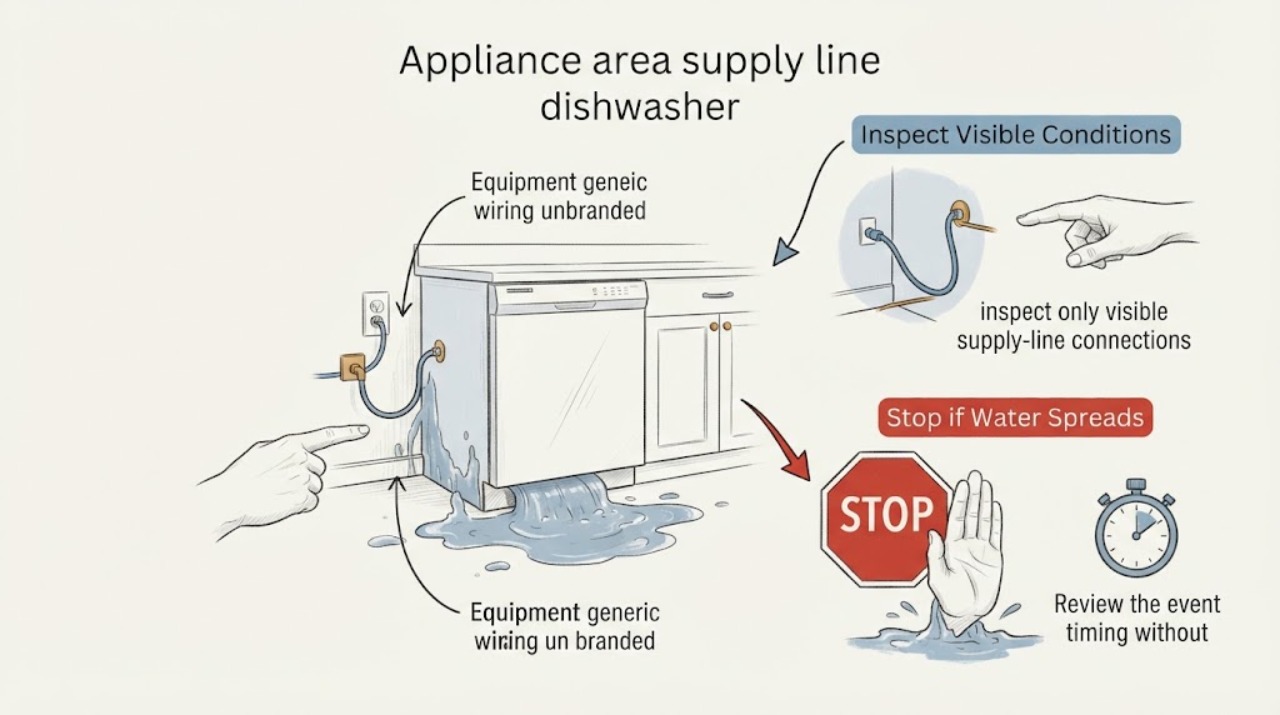
Treat water around a dishwasher or sink supply line as an active water-damage risk until the source and safety conditions are clear. Stop using the sink and appliance, observe from a dry position where water is coming from, and record whether the water is clean supply water, drain/overflow water, or contaminated wastewater. Look for visible wetness, staining, soft flooring, cabinet swelling, and the timing of the event without removing cabinets, moving a wet appliance, opening plumbing, or contacting wet electrical equipment. If water reaches an outlet, appliance cord, junction, or other electrical equipment, keep clear and obtain qualified help; if water is spreading, overflowing, or the source cannot be safely identified, request urgent plumbing and water-damage service.
Work through in order
Diagnostic checks
Use only checks that match the exact appliance or system and its official guide.
-
Check 1
Stop using the sink and dishwasher and observe from a dry, stable position where water is visibly entering or pooling; do not reach into water or touch a wet appliance, cord, outlet, or valve.
Expected result: Record whether water is still flowing, whether it appears to come from a supply connection, drain/overflow path, appliance base, cabinet wall, or floor, and whether it is clear or contaminated.
Next step: Keep the area unused, photograph the source and pooling from a safe distance, and contact a plumber or water-damage professional with the source description.
Stop if: Stop immediately for spreading water, sewage, water near electrical equipment, an unstable floor, or any need to step into standing water; keep clear and escalate.
Why this matters
Why: Active clear water suggests a continuing supply or drain event, while dirty or wastewater-like water requires stronger hygiene and professional boundaries. The visible wettest point may not be the hidden source.
-
Check 2
From outside the cabinet and appliance footprint, inspect only visible supply-line connections, sink plumbing, dishwasher edges, kickplates, and nearby floor or wall surfaces without opening, moving, or disconnecting anything.
Expected result: Look for a drip, spray mark, kinked or visibly damaged hose, wet fitting, water trail, staining, swollen cabinet material, soft flooring, or a dry visible connection next to a wet area.
Next step: Take wide and close photographs, note which areas were accessible and dry, and leave all covers, kickplates, hoses, and fixtures in place for qualified service.
Stop if: Stop if inspection would require cabinet demolition, appliance movement, contact with wet material, or access behind a panel; request professional assessment instead.
Why this matters
Why: A visible line or fitting clue helps a professional prioritize supply, drain, or cabinet-area inspection, but a dry exposed connection does not rule out a concealed leak or water that traveled along a surface.
-
Check 3
Review the event timing without deliberately running water: note whether the overflow began during sink use, a dishwasher fill or drain cycle, after a backup, or when no fixture was being used.
Expected result: Record the last known normal condition, the time water was first noticed, whether the level changed after all use stopped, and whether the event recurred.
Next step: Provide the timeline and any appliance cycle information to the plumber; do not run a test cycle or pour water into the sink to reproduce the event.
Stop if: Stop monitoring if water resumes, the overflow approaches electrical equipment, or the floor/cabinet begins to deform; isolate the area and seek urgent service.
Why this matters
Why: A symptom tied to filling or draining points toward a different diagnostic path than water that continues while fixtures are idle; timing alone cannot identify a failed supply line or drain.
-
Check 4
From accessible dry areas, inspect the floor, toe-kick, cabinet exterior, adjacent wall, and room below for moisture marks, swelling, soft spots, discoloration, or a musty odor without cutting, drilling, prying, or disturbing growth.
Expected result: Note whether damage is localized under the sink/dishwasher or extends into flooring, a neighboring cabinet, wall, or ceiling below, and whether odor or visible mold-like growth is present.
Next step: Photograph the extent, keep air and foot traffic away from wet or damaged material as practical, and request water-damage assessment after the plumbing source is made safe.
Stop if: Stop for visible growth, extensive wet materials, suspected contaminated water, structural softening, or occupant symptoms; do not disturb the area and seek qualified remediation guidance.
Why this matters
Why: Spread, softness, staining, or odor indicates that the event may have affected porous or concealed materials; it does not tell a homeowner to open the assembly or perform mold cleanup.
-
Check 5
From a dry position, observe nearby electrical equipment and appliance controls without touching them, and check whether the area has a breaker, outlet, cord, power strip, or appliance base within the wet zone.
Expected result: Record whether water has reached, splashed, or could have entered electrical equipment, and whether there is heat, odor, smoke, buzzing, sparking, or a tripped circuit.
Next step: Keep clear and contact qualified electrical/plumbing help for any contact or uncertainty; provide the location and photographs without touching the equipment.
Stop if: Immediately leave the area for smoke, fire, sparks, buzzing with heat, or an energized condition in water; call emergency services as appropriate and do not re-enter to operate controls.
Why this matters
Why: Water contact with electrical equipment changes this from a plumbing-only observation to an electrical and shock hazard; a dry, separated electrical area still requires caution while water is active.
Use your observations
Decision map
Find the observation that best matches what you see, then follow the next safe action.
-
PATH 01Safety boundary
What you see
Water is actively flowing, spreading, overflowing, or approaching electrical equipment.
Do this next
Keep people away, stop fixture use, avoid standing water, and request urgent plumbing/electrical assistance as the conditions require.
Why this path and its safety boundary
Safety stop: Do not touch wet cords, outlets, appliances, valves, or electrical panels.
-
PATH 02Safety boundary
What you see
The water is clearly contained, the area is dry to access, and no electrical equipment was contacted.
Do this next
Document the source clues and damage extent, leave cabinets and appliances undisturbed, and schedule plumbing and water-damage assessment.
Why this path and its safety boundary
Safety stop: Stop if water returns, flooring softens, odor develops, or the source cannot be identified safely.
-
PATH 03Safety boundary
What you see
The event occurred during dishwasher filling/draining or sink use and then stopped.
Do this next
Preserve the timeline and visible evidence and have a qualified plumber assess the supply, drain, overflow, and appliance connections before any test cycle.
Why this path and its safety boundary
Safety stop: Do not run the appliance or deliberately refill the sink to reproduce the leak.
-
PATH 04Safety boundary
What you see
Water damage extends into cabinets, flooring, walls, or the ceiling below, or there is visible mold-like growth or a musty odor.
Do this next
Keep the area unused and request professional water-damage assessment after the water source is controlled.
Why this path and its safety boundary
Safety stop: Do not demolish cabinets, cut walls or floors, scrape growth, mix chemicals, or perform DIY mold remediation.
-
PATH 05Safety boundary
What you see
The source is unclear or the supply line/connection is hidden behind an appliance or cabinet.
Do this next
Do not move the appliance or open the cabinet assembly; provide photos and request qualified inspection.
Why this path and its safety boundary
Safety stop: Stop if reaching the area would require contact with water, electrical equipment, or concealed plumbing.
Helpful context
Understand the symptom
Separate the water source from the damage extent
A dishwasher or sink event can involve a pressurized supply connection, a drain or overflow path, a hose, a fitting, or water that traveled from one location to another. The wettest visible point may not be the origin. Record the source clues and the extent of wet materials separately so a plumber or restoration professional can choose the right response.
Use observation-only boundaries
Do not reach into standing water, touch wet appliance cords or outlets, remove a cabinet panel, pull out a dishwasher, disconnect a hose, or break open flooring or walls. Do not scrape growth or attempt mold remediation. Keep children and pets away and use only dry, accessible sightlines.
Only after diagnosis
Potential parts
- water-leak-alarm
Consider this category only as a future notification aid after the source is repaired and the installation area is dry and safe; it does not stop an active leak or replace inspection.
Confirm the alarm's placement, moisture-sensing, power, and notification requirements for the intended dry location; do not place it in standing water near energized equipment. - wet-dry-vac
Consider this category only if a qualified professional confirms that the water is clean, electrical hazards are absent, and limited surface recovery is safe; it is not for sewage, concealed moisture, or active supply leaks.
Follow the equipment instructions and keep it away from wet electrical equipment, contaminated water, and areas requiring demolition or remediation. - cabinet-moisture-meter
Consider this category only for a professional or informed comparative assessment after the water source is controlled; a reading cannot identify concealed plumbing or establish structural safety.
Confirm the meter's material modes and limitations for cabinet, flooring, and wall materials; do not drill or probe to obtain a reading.
When checks do not resolve it
Need a professional?
Request urgent plumbing help for active overflow, supply-line water, wastewater, or an unclear source, and request qualified electrical or water-damage service when water reaches electrical equipment or porous materials are wet.
Have this ready
- Provide source type, timing, photos, active versus stopped status, affected floor/cabinet/wall/ceiling areas, electrical proximity, odor or visible-growth observations, and whether the appliance or sink was operating.
Common questions
FAQ
Should I pull the dishwasher out to find the leak?
No. Keep the appliance and cabinet assembly in place, especially if the floor or electrical area is wet. Photograph accessible evidence and have a qualified plumber or appliance professional inspect concealed connections.
What if water reaches an outlet or appliance cord?
Do not touch the water, cord, outlet, appliance, or panel. Keep people away and obtain qualified electrical and plumbing help; leave the area immediately for smoke, sparks, fire, or severe heat.
Could a dishwasher overflow be a drain problem instead of a supply-line leak?
Yes. Timing during draining, water at the sink or drain path, and a supply connection that remains dry can change the diagnostic path. Do not run a test cycle or pour water to reproduce it; provide the observations to a plumber.
Can I clean mold or demolish a wet cabinet myself?
Do not demolish cabinets, cut open walls or floors, scrape growth, or perform DIY remediation. Control the source and request professional water-damage assessment when materials are wet, soft, odorous, visibly affected, or contaminated.
Read the exact guide
Official sources
- A Brief Guide to Mold, Moisture and Your HomeU.S. Environmental Protection Agency · Wet cabinets, flooring, walls, odors, visible growth, and no-DIY-remediation decisions after an overflow
- Moisture Resistant Homes: A Best Practice GuideU.S. Department of Housing and Urban Development · Visible inspection of appliance-area supply lines, floors, cabinets, and moisture spread
- Appliances - Water Damage InformationGE Appliances · Determining when a wet appliance must not be touched or inspected by the user
Community feedback
Share a repair observation
Share a plain-text repair observation. Accepted observations are published automatically; this page may take a moment to update.