
On this page
Start here
Quick answer
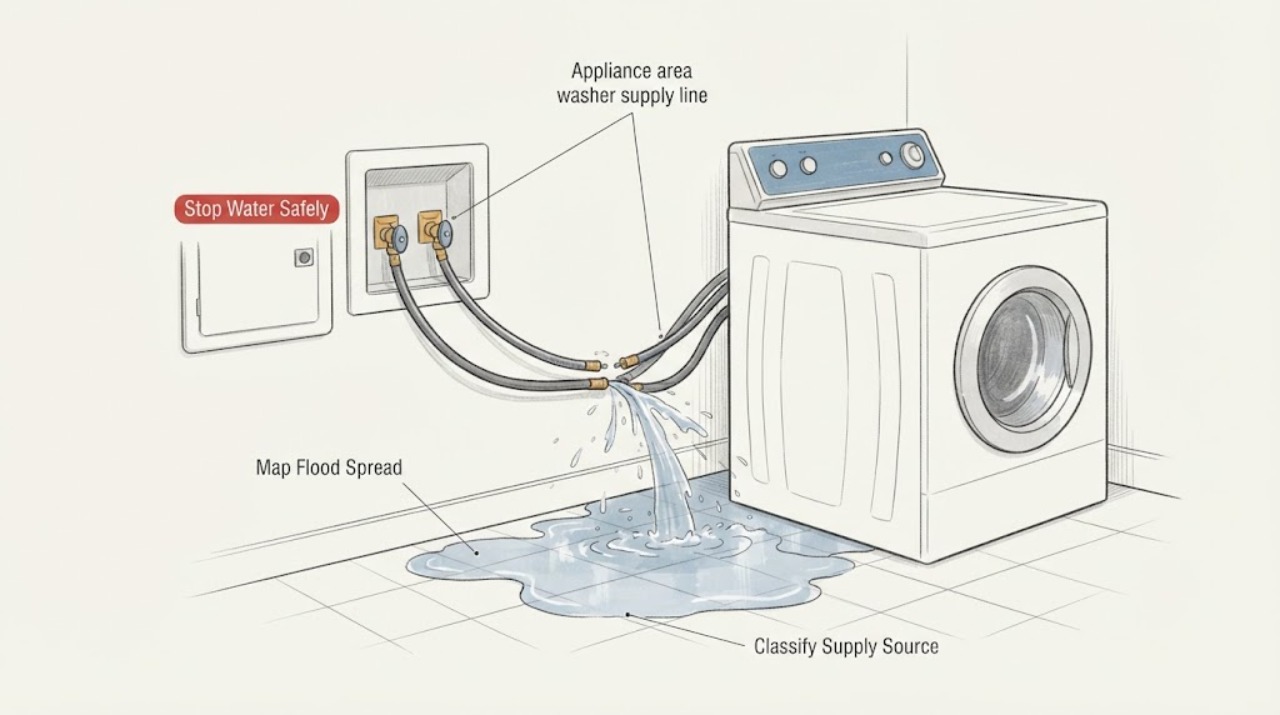
A burst washer supply line with a laundry-room flood is an emergency containment and safety problem, not a normal washer troubleshooting task. From a dry, safe position, close the washer supply valves or the household water shutoff only if you can reach them without stepping in water or approaching electrical equipment. Keep away from outlets, panels, cords, and submerged appliances; do not wade into the water, touch wet electrical equipment, move the washer, or test the line. Once people are safe, document how far the water has spread and arrange water-damage mitigation, electrical inspection when wiring is affected, and washer or plumbing repair for the failed hose, valve, or connection.
Before you begin
Safety first
- Use dry, safe visual observation only; do not wade, touch wet electrical equipment, move the washer, open panels, loosen fittings, vacuum floodwater, or enter contaminated or unstable areas.
Work through in order
Diagnostic checks
Use only checks that match the exact appliance or system and its official guide.
-
Check 1
From a dry, stable position, identify whether water is still flowing and close the washer supply valves or household water shutoff only if the handle is reachable without entering water or approaching electrical equipment. If safe shutoff is not available, leave the area and call emergency or qualified help.
Expected result: The supply may be stopped, reduced, still running, or impossible to assess without entering the water.
Next step: Keep everyone out of the flooded area and record whether the flow stopped, slowed, or remains active.
Stop if: Do not step into water, touch wet cords or appliances, approach a wet electrical panel, or handle a shutoff surrounded by water.
Why this matters
Why: A stopped flow limits additional damage; inability to reach a shutoff safely is an escalation condition, not a reason to wade in or move the washer.
-
Check 2
From outside the wet area, photograph and map the visible spread: the laundry-room floor, baseboards, wall edges, thresholds, nearby rooms, ceiling below if safely visible, and any water traveling toward outlets or other equipment. Do not walk through or mop the flood.
Expected result: The water may be confined to the laundry room, cross a threshold, reach walls or a lower level, or be spreading toward electrical equipment.
Next step: Give the map, photographs, approximate timing, and water source to the mitigation provider, property manager, or insurer as appropriate.
Stop if: Stop for standing water near power, sagging ceilings, swollen flooring, structural movement, sewage or chemical contamination, or any need to enter the water.
Why this matters
Why: Water beyond the appliance area can affect flooring, walls, ceilings below, stored items, and electrical systems, so the job may require building drying and electrical assessment in addition to hose repair.
-
Check 3
Only after the water is isolated and the area can be viewed from a dry position, compare the visible supply hose ends, shutoff valve, and washer connection for a split, detached coupling, or spray path; do not pull the washer out, loosen fittings, or open the appliance.
Expected result: The visible source may be a hose body, hose end, wall shutoff, washer connection, internal area, or an unseen point.
Next step: Photograph the first visible wet point and label it as hose, valve, connection, washer, or unknown for the plumbing or appliance professional.
Stop if: Do not touch wet components, move the appliance, remove panels, or inspect from a wet floor.
Why this matters
Why: A split hose, leaking shutoff, or loose connection is a different repair handoff from an internal washer leak; a puddle under the washer does not identify which part failed.
-
Check 4
Record whether the washer was running, whether the line burst suddenly or seeped over time, what rooms or levels were affected, and whether outlets, cords, flooring, walls, or stored items were contacted.
Expected result: The event may be a sudden burst during fill, a slow leak while idle, a connection failure, or an unknown pattern with secondary building damage.
Next step: Send the photographs, shutoff status, spread map, source clue, washer model if safely visible, and access hazards to the appropriate professionals.
Stop if: Stop documentation if it requires entering water, touching contaminated materials, approaching live equipment, or moving damaged items.
Why this matters
Why: Timing and affected systems determine whether the next call is primarily water mitigation, electrical safety, plumbing or hose repair, appliance service, or several of these in sequence.
Use your observations
Decision map
Find the observation that best matches what you see, then follow the next safe action.
-
PATH 01Safety boundary
What you see
Water is still flowing and a shutoff is reachable from a dry, stable position.
Do this next
Close the reachable supply shutoff without entering water or approaching electrical equipment.
Why this path and its safety boundary
Why it matters: Stopping the supply is the immediate containment step; the burst source still needs professional assessment.
Safety stop: Do not wade, touch wet electrical equipment, or move the washer.
-
PATH 02Safety boundary
What you see
Water has reached outlets, cords, the electrical panel, a submerged appliance, or another energized area.
Do this next
Leave the wet area and report the electrical exposure to the utility, emergency service, or a qualified electrician.
Why this path and its safety boundary
Why it matters: Water and electricity can create shock and fire hazards; drying or hose repair must wait for electrical safety clearance.
Safety stop: Never touch wet electrical equipment or stand in water while trying to isolate power.
-
PATH 03Safety boundary
What you see
The flood crossed a threshold, reached walls or ceilings below, soaked flooring or stored items, or remains widespread after shutoff.
Do this next
Keep people and pets out and provide the spread map and timing to a water-damage mitigation professional.
Why this path and its safety boundary
Why it matters: Large or migrating water damage can continue inside floors and walls even after the visible flow stops.
Safety stop: Do not mop, vacuum, remove flooring, or enter contaminated or structurally damaged areas.
-
PATH 04Safety boundary
What you see
The area is dry and safe to view, and the first wet point appears at a hose, valve, or washer connection.
Do this next
Photograph the source without touching or moving the connection.
Why this path and its safety boundary
Why it matters: The source clue can route the repair to plumbing or appliance service, but it does not prove that a replacement hose or valve is compatible.
Safety stop: Do not loosen fittings, open the washer, or reconnect water until the repair is confirmed.
-
PATH 05Safety boundary
What you see
The first wet point is hidden or cannot be viewed without entering water, moving the washer, or opening equipment.
Do this next
Stop the inspection and preserve photographs and the event timeline.
Why this path and its safety boundary
Why it matters: An unknown source may be inside the washer, behind the appliance, or at a wall connection and requires professional access.
Safety stop: Do not enter water, move the washer, remove panels, or restore operation to test the line.
Helpful context
Understand the symptom
A large laundry-room flood changes the first decision. Stop the water only from a dry, stable location, then keep people and pets out of the water and away from wet electrical equipment. Floodwater may hide electrical hazards, sharp debris, sewage, chemicals, and damaged flooring, so containment does not mean the room is safe to enter.
After the scene is safe, separate three handoffs: a water-damage professional documents and dries the affected building materials, an electrician evaluates wet wiring or outlets, and an appliance or plumbing professional identifies whether the burst began at the supply hose, shutoff valve, connection, or washer. The first wet point and the spread pattern help each service scope its work.
Safety boundary
Stop conditions
- Do not enter floodwater, touch wet electrical equipment, move the washer, or approach a wet electrical panel.
- Close a water shutoff only from a dry, stable position; otherwise leave the area and get qualified help.
- Do not vacuum, mop, remove flooring, open walls, loosen fittings, or run the washer while electrical or contamination risks are unresolved.
- Use separate qualified services for water-damage mitigation, electrical safety, and hose, valve, connection, or appliance repair.
Only after diagnosis
Potential parts
- water-leak-alarm
Consider this category only after the area is safe and the cause is addressed; an alarm detects future water but does not repair a burst supply line.
Choose a device suitable for the location, power conditions, notification method, and local safety requirements. - washing-machine-hose
Consider this category only when inspection confirms the hose body or hose end failed and the exact washer and connection are known.
Match the exact connection type, length, material, washer model guidance, and installation requirements; do not reconnect while the area or electrical equipment is wet. - wet-dry-vac
Consider this category only after a qualified professional confirms the floor and electrical conditions are safe and the equipment is rated for the cleanup; do not use a household vacuum in floodwater.
Confirm electrical safety, wet-use rating, contamination limits, and the cleanup professional's instructions before use.
When checks do not resolve it
Need a professional?
Arrange urgent water-damage mitigation for widespread or migrating water, electrical inspection when wiring or appliances were exposed, and plumbing or appliance service for the hose, valve, connection, or washer source.
Safety scope: Use dry, safe visual observation only; do not wade, touch wet electrical equipment, move the washer, open panels, loosen fittings, vacuum floodwater, or enter contaminated or unstable areas.
Have this ready
- Provide the shutoff status, event timing, wide and close photographs, first visible wet point, flood-spread map, affected walls/floors/levels, electrical exposure, washer model if safely visible, and access or contamination hazards.
Common questions
FAQ
What should I do first after a washer supply line bursts?
Keep people out of the water. From a dry, stable position, close the washer or household water shutoff only if it is safely reachable. Do not wade, touch wet electrical equipment, move the washer, or run another cycle.
Who should I call for a laundry-room flood?
A water-damage mitigation professional assesses and dries affected building materials. If water reached outlets, cords, panels, or appliances, a qualified electrician must assess electrical safety. A plumber or appliance technician then identifies and repairs the hose, valve, connection, or washer source.
How can I tell whether the hose, valve, or washer caused the flood?
After water is isolated and the area is dry and safe to view, photograph the first visible wet point and note whether the washer was filling, idle, or running. Do not move the washer, loosen fittings, open panels, or treat the puddle location as proof.
Can I vacuum up the water myself?
Not while electrical equipment may be wet or the water may be contaminated. Wait for electrical and water-damage safety guidance; never use a household vacuum for standing water.
What information should I give the professionals?
Provide the shutoff status, event timing, photos, first visible wet point, spread into rooms or levels, contact with walls or electrical equipment, washer model if safely visible, and any contamination or access concern.
Read the exact guide
Official sources
- Safety Guidelines: FloodwaterCenters for Disease Control and Prevention · Official floodwater safety guidance; it does not diagnose a washer supply line or authorize appliance repair.
Community feedback
Share a repair observation
Share a plain-text repair observation. Accepted observations are published automatically; this page may take a moment to update.