
On this page
Start here
Quick answer
Treat a burst washer supply line as an urgent water-damage and electrical-safety event. From a completely dry, safe position, stop the washer and close the hot and cold washer supply valves only if you can reach them without stepping into water or touching wet electrical equipment. If water is near an outlet, cord, appliance, panel, or other electrical equipment—or the valves cannot be reached safely—leave the area and call an electrician, utility, plumber, or emergency service as appropriate. Do not use the washer, wet-dry vacuum, fan, heater, or other powered equipment until the electrical and water hazards have been cleared. After the flow is controlled, document the hose and the affected flooring, walls, cabinets, and adjacent rooms; a water-mitigation professional can assess hidden moisture and drying needs, while a plumber or appliance professional can address the failed supply line.
Before you begin
Safety first
- Do not enter standing water, touch wet electrical equipment, restore power, run powered cleanup equipment, disconnect the burst hose, or perform mold-remediation work as a homeowner response.
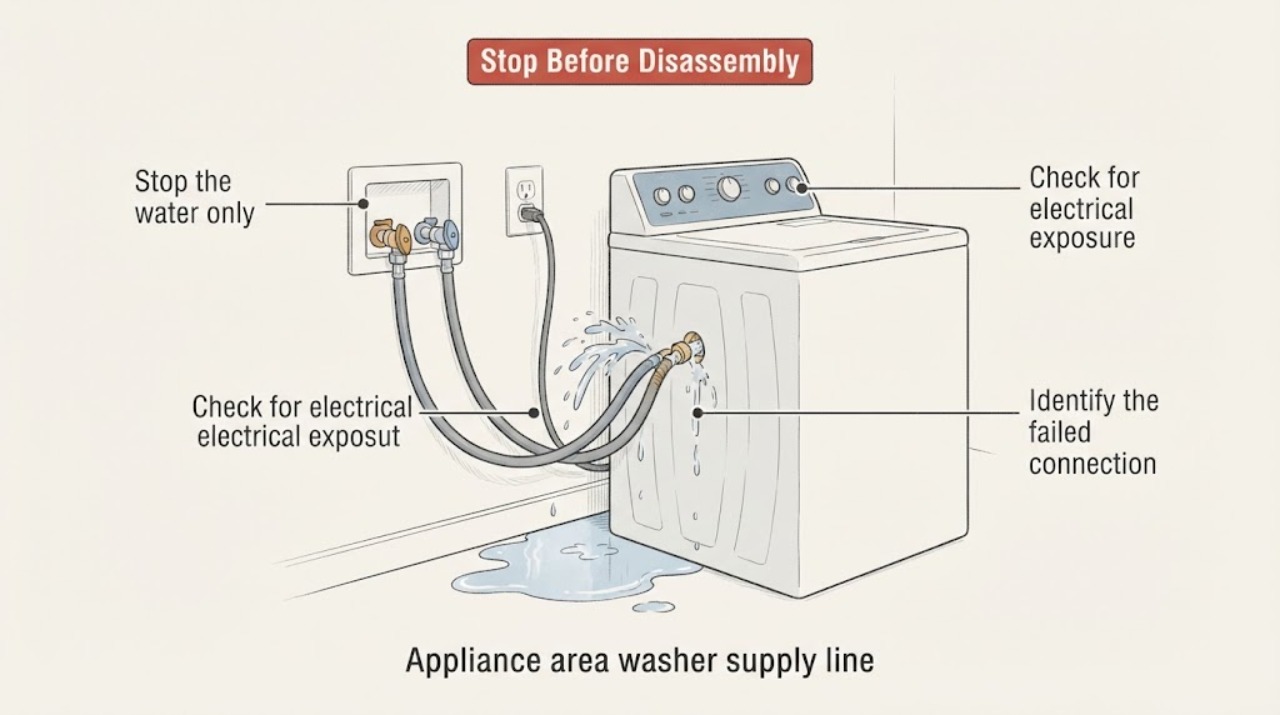
Work through in order
Diagnostic checks
Use only checks that match the exact appliance or system and its official guide.
-
1. Stop the water only from a dry, safe position
If you are standing on a dry surface with a clear path out, stop the washer using its controls and close both washer supply valves if they are reachable without touching water, the hose, the washer, or any wet electrical equipment. Do not crawl behind the appliance, move it through water, or disconnect a burst hose.
Expected result: The flow stops; the flow continues; or the valves are inaccessible without entering water or approaching a wet electrical area.
Next step: Keep people and pets out of the area, note which valve or source was involved from a dry location, and proceed only with safe visual documentation.
Stop if: Stop immediately and leave the area if you would need to step in water, touch wet equipment, move the washer, or reach through a flooded space.
Why this matters
Why: A stopped flow limits additional damage, but water remaining in the hose or appliance area can still be present. Continuing flow or unsafe access means the immediate response is a plumbing or emergency service call, not a repair experiment.
-
2. Check for electrical exposure without touching the system
From a dry threshold, look for standing water near outlets, the washer cord, power strips, panels, switches, or other electrical equipment, and look for sparks, smoke, burning odor, or frayed wiring. Do not touch a cord, outlet, appliance, breaker, or water to test whether it is safe.
Expected result: Water is clearly separate from electrical equipment and there are no warning signs; water is near or in contact with electrical equipment; or the electrical condition cannot be seen safely.
Next step: If electrical exposure is possible, keep clear and call a qualified electrician or utility/emergency service. If the area is dry and visibly separated from electrical equipment, do not run powered cleanup equipment until the source and electrical condition are confirmed safe.
Stop if: Stop and evacuate the area for sparks, smoke, burning odor, a fallen line, standing water at electrical equipment, or any uncertainty about safe power isolation.
Why this matters
Why: A wet electrical device can remain hazardous even after the visible water recedes. The CDC advises not to enter standing water to reach a main power switch and not to restore power until affected equipment has been inspected by a qualified electrician.
-
3. Identify the failed connection from a safe distance
Use a photo or visual observation from a dry position to distinguish a split or bulging inlet hose from a leak at the faucet valve, washer connection, wall plumbing, drain hose, or inside the washer cabinet. Do not loosen fittings, remove the hose, pull the washer forward, or run a test cycle.
Expected result: The hose body is visibly damaged; a connection or wall valve is the apparent source; water appears to come from inside the washer; or the source remains uncertain.
Next step: Keep both supply valves closed, leave the washer unused, and provide the source photo and model information to the plumber or appliance service professional. Do not reuse a visibly damaged hose.
Stop if: Stop source tracing if it requires moving the washer, opening a cabinet, handling a wet cord, or entering standing water.
Why this matters
Why: A burst hose may require a plumbing-side hose and connection assessment, while a leak inside the washer or at a wall valve may require a different qualified professional. An uncertain source is not a reason to turn the supply back on for testing.
-
4. Record the affected area without powered cleanup
From dry, safe locations, photograph the hose, water line, flooring, baseboards, cabinets, wall surfaces, and any water that reached an adjacent room. Note when the burst occurred, whether water reached electrical equipment, and whether the water is mixed with drain or sewage material. Do not run an electric vacuum, fan, heater, or washer to move water while the electrical condition is unknown.
Expected result: Water is confined to a small visible area; flooring or wall materials are saturated; water reached another room or concealed space; or contamination and electrical exposure cannot be ruled out.
Next step: Give the photographs, timeline, and affected-material list to a water-mitigation professional and the plumbing or appliance professional. Keep the area isolated until safe drying equipment and electrical clearance are confirmed.
Stop if: Stop cleanup and call for professional help when water reached walls, flooring layers, cabinets, outlets, the appliance, or any area you cannot inspect without entering water.
Why this matters
Why: A visible puddle does not show how far moisture traveled under flooring, behind baseboards, or below cabinets. Saturation, concealed-space exposure, or possible contamination calls for water-mitigation assessment rather than only replacing the hose.
Use your observations
Decision map
Find the observation that best matches what you see, then follow the next safe action.
-
PATH 01Safety boundary
What you see
The burst is active and both supply valves are reachable from a dry position without touching wet equipment.
Do this next
Close the valves, stop using the washer, and arrange urgent plumbing or appliance service for the failed line.
Why this path and its safety boundary
Why it matters: Closing the supply can limit continued flow, but it does not make wet electrical equipment safe or confirm that hidden moisture is absent.
Safety stop: Do not reopen the valves or test the washer until the failed line and surrounding hazards have been assessed.
-
PATH 02Safety boundary
What you see
Water is near electrical equipment, standing water blocks the panel or valve, or sparks, smoke, or burning odor are present.
Do this next
Leave the area, keep others away, and contact a qualified electrician, utility, or emergency service; do not touch the water or electrical system.
Why this path and its safety boundary
Why it matters: Water-damaged electrical equipment can shock, arc, or ignite even when the washer is switched off.
Safety stop: Do not enter or restore power until qualified personnel confirm the area and equipment are safe.
-
PATH 03Safety boundary
What you see
The water flow is stopped but flooring, cabinets, walls, or adjacent rooms are wet.
Do this next
Arrange a water-mitigation assessment and document the affected materials while keeping powered cleanup equipment off.
Why this path and its safety boundary
Why it matters: Moisture can travel into concealed spaces and damage materials after the supply line is closed.
Safety stop: Do not cover, seal, or conceal wet materials before the drying and moisture assessment.
-
PATH 04Safety boundary
What you see
The hose is damaged but the area is dry, isolated from electrical hazards, and the source is clearly identified.
Do this next
Keep the supply valves closed and have a qualified plumber or appliance professional replace and verify the line using the washer's model-specific instructions.
Why this path and its safety boundary
Why it matters: A replacement hose must match the washer and connection requirements; a visual match alone does not establish fit or condition.
Safety stop: Do not run a test cycle or reconnect power until the professional confirms the connection and electrical area are safe.
Helpful context
Understand the symptom
Why this is an urgent service request
A supply line can release water while the washer is idle because the hose and faucet can remain under pressure. The failure may be at the hose body, a washer connection, a wall valve, or nearby plumbing. Closing a valve can stop the source, but it does not diagnose the full extent of water migration or make wet electrical equipment safe.
Water and electricity change the response
If electrical circuits or equipment are wet or near water, treat the area as unsafe. Do not enter standing water to reach a breaker, operate a powered vacuum or fan in the wet area, touch a wet cord or appliance, or restore power by trial. A qualified electrician must determine when affected equipment can be inspected, dried, repaired, or replaced.
When to call water-mitigation help
Call a water-mitigation professional promptly when water reached flooring layers, walls, cabinets, adjacent rooms, or concealed spaces, or when the amount and path of water are uncertain. Share the timeline and photos. Keep the washer and supply valves out of service until the plumbing and electrical conditions are cleared.
Only after diagnosis
Potential parts
- water-leak-alarm
Only consider an alarm after the immediate burst has been repaired and a safe location for monitoring is identified.
Confirm the alarm's sensing, power, and placement requirements; it is a warning aid, not a shutoff or repair. - washing-machine-hose
Only consider a replacement after the failed hose, connections, and washer model are confirmed by the appropriate professional or model instructions.
Match the hose, washers, connection type, and installation requirements to the actual washer and faucet; do not assume a visually similar hose fits. - wet-dry-vac
Only consider powered extraction after electrical hazards are cleared and a qualified professional confirms the equipment and area are safe to use.
A wet-dry vacuum does not make a wet outlet, cord, appliance, or concealed electrical space safe.
When checks do not resolve it
Need a professional?
Water is still flowing or the supply valves cannot be reached safely., Water contacted outlets, cords, the washer, panels, switches, or other electrical equipment., Standing water, sparks, smoke, burning odor, or a fallen line is present., Flooring, walls, cabinets, adjacent rooms, or concealed spaces were saturated, or the source remains uncertain.
Safety scope: Do not enter standing water, touch wet electrical equipment, restore power, run powered cleanup equipment, disconnect the burst hose, or perform mold-remediation work as a homeowner response.
Have this ready
- Washer brand and model if known
- A dry-position photo of the hose or connection and the affected area
- Whether hot, cold, or both supply valves were closed and whether flow stopped
- Whether water contacted electrical equipment, flooring layers, walls, cabinets, or adjacent rooms
Common questions
FAQ
What should I do first when a washer supply line bursts?
From a dry, safe position, stop the washer and close the hot and cold supply valves only if they are reachable without entering water or touching wet electrical equipment. If not, leave and call the appropriate emergency, plumbing, utility, or electrical service.
Can I unplug the washer after the area floods?
Do not touch a wet cord, appliance, outlet, or standing water. If electrical equipment is wet or near water, keep clear and have a qualified electrician determine how power can be isolated and when equipment is safe to inspect or restore.
Can I use a wet-dry vacuum to clean up the laundry room?
Not while electrical safety is unknown. A powered vacuum, fan, or heater can create a shock or fire hazard around wet electrical equipment. Use powered cleanup only after the area and equipment are cleared by qualified personnel and the equipment is appropriate for the conditions.
Does replacing the burst hose solve the water damage?
It may stop the plumbing source, but it does not show how far water traveled or whether flooring, walls, cabinets, the washer, or electrical components were affected. Document the area and arrange water-mitigation and electrical assessment when those exposures are possible.
Read the exact guide
Official sources
- Product Guide — Connect Inlet HosesWhirlpool · Whirlpool product-guide instructions for the identified washer family; not a universal fitment claim for every washer.
- Returning Home After a FloodCenters for Disease Control and Prevention · Government public-health guidance applied conservatively to a washer area after a supply-line burst.
- Reasons why your washing machine is leakingWhirlpool · Manufacturer guidance used for general washer leak source identification; model-specific instructions and professional service may differ.
- What to Do to Protect Yourself From Electrical HazardsCenters for Disease Control and Prevention · Government safety guidance used for the urgent water-and-electricity boundary in a home appliance area.
Community feedback
Share a repair observation
Share a plain-text repair observation. Accepted observations are published automatically; this page may take a moment to update.