
On this page
Start here
Quick answer
Treat a burst washer supply line as an urgent water-damage and electrical-safety event. From a dry, safe position, observe whether water is still moving, where the water is traveling, whether it has reached outlets or appliances, and whether the floor drain is accepting it. If the washer shutoff valves can be reached without stepping into water or approaching wet electrical equipment, close the normal water supply; otherwise withdraw and call an emergency plumber or water-mitigation professional. Do not stand in the water, operate electrical equipment or a wet breaker, cut the pipe, move the washer, open wet equipment, or attempt DIY mold remediation.
Before you begin
Safety first
- Do not enter standing water, operate wet electrical equipment or breakers, move the washer, disconnect the burst line, cut pipe, remove flooring or walls, use drain chemicals, run a wet vacuum near unverified power, or perform DIY mold remediation.
Work through in order
Diagnostic checks
Use only checks that match the exact appliance or system and its official guide.
-
Check 1
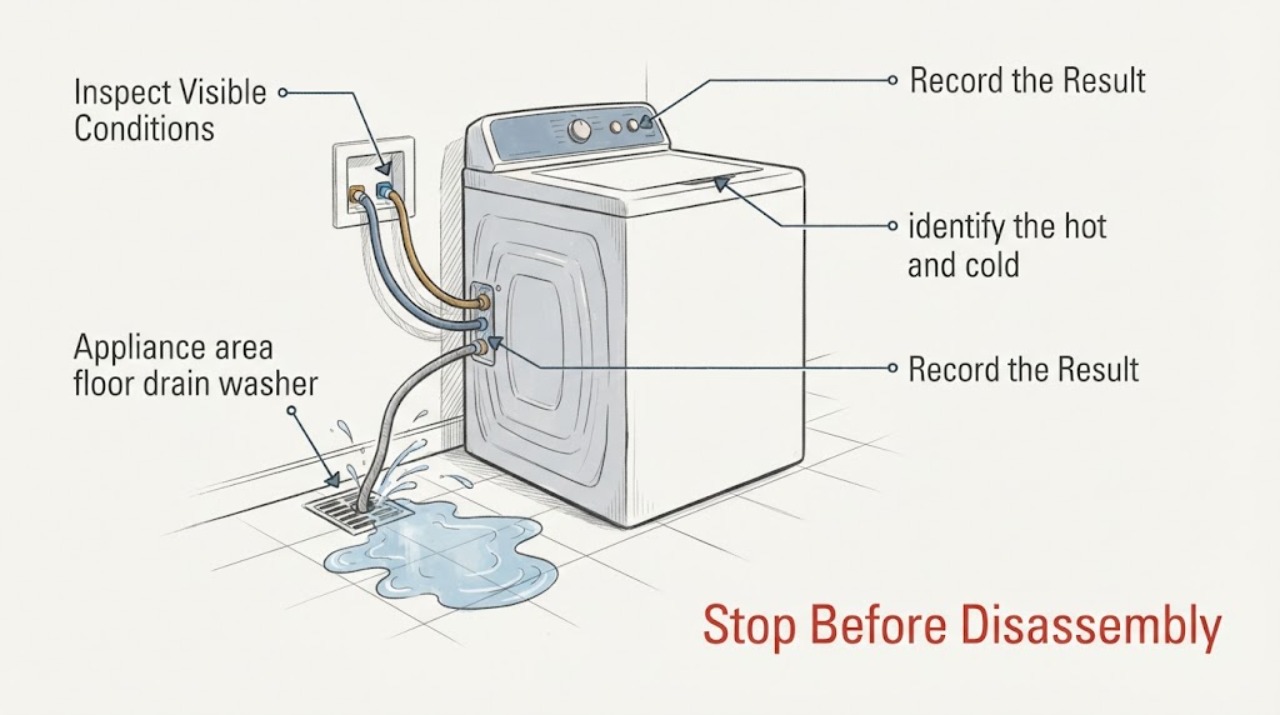
From a dry doorway or other safe position, look at the appliance area and note whether water is still flowing, spraying, pooling, or spreading toward the floor drain, walls, outlets, or nearby appliances; do not step into the water.
Expected result: Record the apparent source, direction of flow, depth as a visual description, and whether the water is approaching any electrical equipment or wiring.
Next step: Keep everyone out. If the normal washer shutoff is visible and reachable without entering water or touching wet equipment, close it; otherwise withdraw and call an emergency plumber or water-mitigation professional. Do not enter the water to reach a valve.
Stop if: Stop immediately if water reaches outlets, cords, appliances, the service panel, or any person, or if there is sparking, smoke, a burning odor, or a shock. Leave the area and use emergency or electrician help from a safe location.
Why this matters
Why: Continuing flow needs the water supply isolated urgently. Water touching or approaching electrical equipment is an electrical hazard, not a routine mopping task.
-
Check 2
From the dry side of the room, identify the hot and cold washer supply shutoffs and note whether each appears open, closed, damaged, or inaccessible; do not force a stiff valve or reach through water.
Expected result: Note whether the valves are on the wall, in a recessed box, behind the washer, or hidden by the flooded area, and whether water continues after a safely accessible shutoff is closed.
Next step: Give the valve location and flow behavior to the plumber. Do not pull the washer out, remove hose fittings, cut the line, or attempt a repair in a wet area.
Stop if: Stop if reaching the valve would require stepping in water, touching a wet appliance or cord, moving the washer, or using tools.
Why this matters
Why: A visible, reachable shutoff may isolate the burst supply, while a hidden, damaged, or stuck valve requires professional isolation. Continued flow after a safe shutoff suggests another active source or a valve problem.
-
Check 3
From a dry position, look for electrical contact without operating anything: note water near outlets, cords, the washer, a dryer, power strips, or the service panel, and note whether any lights or appliances have stopped working.
Expected result: Record visible wetness, flicker, loss of power, sparks, smoke, an odor of burning, or a breaker that appears to have changed position; do not touch or reset it.
Next step: Do not turn power on or off while standing in water and do not handle a wet cord or breaker. Call an electrician from a safe location; report any smoke, sparks, or burning odor as an emergency.
Stop if: Stop and withdraw for any electrical contact, arcing, smoke, burning odor, or uncertainty about whether the floor or equipment is energized.
Why this matters
Why: Wet electrical equipment or a power symptom requires an electrician to determine a safe de-energized condition before anyone enters or cleans the area. A dry-looking outlet does not prove concealed wiring is safe.
-
Check 4
From the dry threshold, observe the floor drain opening and surrounding floor without removing a grate, pouring water, using drain chemicals, or reaching into the drain.
Expected result: Note whether water is moving toward and disappearing into the drain, standing around it, backing up, or carrying visible sewage or debris.
Next step: Keep the drain and water untouched, tell the plumber whether backup is present, and arrange professional extraction and sanitation if contaminated water or extensive pooling is suspected.
Stop if: Stop if the water is foul-smelling or visibly contaminated, the floor is slippery, or reaching the drain would require entering water.
Why this matters
Why: A drain that accepts water may limit spread but does not make the burst line safe. Backflow or sewage changes the cleanup and health response and may indicate a separate plumbing blockage.
-
Check 5
Document the affected area from a safe, dry position, including the washer supply-line location, floor-drain area, baseboards, cabinets, stored items, and any water that has traveled beyond the appliance area.
Expected result: Record when the burst was noticed, whether the washer was running, how long water may have flowed, visible swelling or staining, and whether the water source appears clean supply water or mixed with drain backup.
Next step: Keep the room isolated and schedule urgent professional water mitigation and plumbing service; let the professional determine safe drying and any mold-related response.
Stop if: Do not open walls, lift flooring, move heavy appliances, disturb suspected mold, or continue documentation if the area becomes unsafe.
Why this matters
Why: These details help a mitigation professional prioritize extraction, drying, plumbing repair, and electrical inspection. Visible dryness does not rule out trapped moisture behind finishes or under the appliance.
Use your observations
Decision map
Find the observation that best matches what you see, then follow the next safe action.
-
PATH 01Next step
What you see
Water is touching or approaching outlets, cords, appliances, the service panel, or other electrical equipment
Do this next
Do not enter or touch the water and do not operate electrical controls. Call an electrician from a dry safe location; use emergency services for sparks, smoke, fire, or a shock.
-
PATH 02Next step
What you see
The normal washer shutoff is visible and reachable from a dry position without tools or force
Do this next
Close the normal water supply and leave the washer and burst line alone. Call a plumber or water-mitigation professional for isolation, hose replacement, extraction, and drying.
-
PATH 03Next step
What you see
The shutoff is hidden, stuck, damaged, behind the washer, or reachable only by entering water
Do this next
Do not move the appliance or force the valve. Withdraw and request urgent professional water isolation.
-
PATH 04Next step
What you see
The floor drain backs up or the water may contain sewage
Do this next
Keep people and pets away and avoid contact. Request professional plumbing and sanitation assessment; do not use drain chemicals or perform mold cleanup.
-
PATH 05Next step
What you see
The water has stopped and no electrical contact is visible
Do this next
Do not resume the washer or use electrical drying equipment. Photograph the area from dry ground and arrange professional inspection for hidden moisture, plumbing damage, and safe drying.
Helpful context
Understand the symptom
Make the area safe before looking for the leak
A burst washer supply line can continue feeding water even when the washer is not running. Manufacturer guidance begins leak troubleshooting by stopping the washer, shutting off its water supply, and disconnecting power only when that can be done safely. For this urgent floor-drain scenario, observations must be made from a dry position. Water near electrical circuits, outlets, appliances, or the service panel changes the response to electrician and emergency help rather than cleanup.
Contain information, not a hazardous cleanup
Record the source and spread with photos from a dry doorway if possible, keep people and pets out, and tell the responding professional whether the water was clean supply water or may have mixed with drain or sewage backup. Do not open walls, cut pipe, use electrical tools, run a wet vacuum near unverified power, or treat suspected mold yourself.
Only after diagnosis
Potential parts
- water-leak-alarm
Consider a leak alarm only after the burst has been professionally isolated and the placement can be kept away from unsafe water and electrical contact; it does not stop an active supply-line failure.
Confirm the device's environment rating and placement with the mitigation or plumbing professional; do not install or handle it while standing in water. - washing-machine-hose
A replacement hose is relevant only after the water is isolated and a professional confirms the failed supply line and connection type; a similar-looking hose may be unsuitable.
Match the washer model, valve connections, hose routing, and manufacturer requirements; installation should wait until the area and electrical equipment are declared safe. - wet-dry-vac
Use only as part of a professional drying plan after electrical safety is confirmed; do not operate a wet vacuum in or near unverified electrical water contact.
The mitigation professional must select equipment and safe power arrangements for the affected area; a household vacuum is not a substitute for electrical inspection.
When checks do not resolve it
Need a professional?
Request urgent plumbing and water-mitigation help for any burst washer supply line or continuing water. Add an electrician immediately if water is in or near electrical equipment, and use emergency services for smoke, fire, sparks, or electric shock.
Safety scope: Do not enter standing water, operate wet electrical equipment or breakers, move the washer, disconnect the burst line, cut pipe, remove flooring or walls, use drain chemicals, run a wet vacuum near unverified power, or perform DIY mold remediation.
Have this ready
- Share the water source and flow status, safe shutoff visibility, floor-drain behavior, electrical contact or power symptoms, approximate duration, photos from a dry position, and whether the water appears clean or contaminated.
Common questions
FAQ
What should I do first when a washer supply line bursts?
Stay on dry ground, keep people and pets away, and observe whether water is still flowing or approaching electrical equipment. Close a normal washer shutoff only if it is reachable without entering water or touching wet equipment; otherwise call urgent plumbing and water-mitigation help.
Can I unplug the washer if the floor is wet?
Do not touch a plug, cord, appliance, or breaker from standing water. If electrical equipment is wet or near water, stay out and have an electrician establish a safe de-energized condition.
Should I use the floor drain or pour cleaner into it?
Only observe whether the drain is accepting water or backing up from a dry position. Do not remove the grate, reach into the drain, pour chemicals, or enter the water; a backup needs professional plumbing assessment.
Can I cut out wet drywall or clean mold after the burst?
Not as an immediate DIY step. Keep the area isolated and let water-mitigation professionals determine safe drying, material removal, and any mold-related response after plumbing and electrical hazards are addressed.
Read the exact guide
Official sources
- Reasons why your washing machine is leakingWhirlpool · General washer-leak context for identifying supply-hose damage and stopping the washer and water supply before troubleshooting; not a guide to entering a flooded appliance area.
- What to Do to Protect Yourself From Electrical HazardsCenters for Disease Control and Prevention · Government safety boundary for keeping people out of standing water and routing wet electrical conditions to qualified electricians; it does not authorize appliance or plumbing repair.
- Washer - Leaking in RearGE Appliances · General manufacturer troubleshooting context for distinguishing fill-hose leaks from drain or household plumbing problems; observations here remain limited to safe dry positions.
Community feedback
Share a repair observation
Share a plain-text repair observation. Accepted observations are published automatically; this page may take a moment to update.