
On this page
Start here
Quick answer
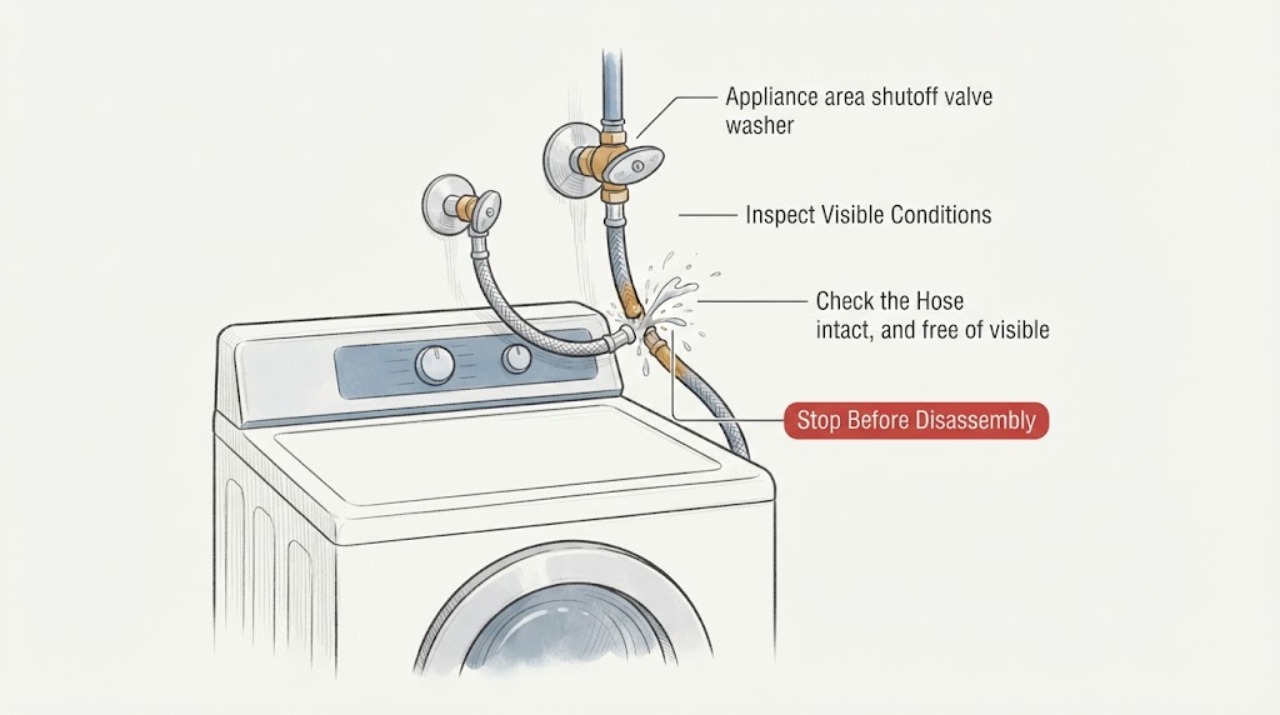
Treat a burst washer supply line at the shutoff valve as an active water emergency. Keep away from standing or moving water, especially if it reaches an outlet, cord, appliance, or electrical panel. From a dry, safe position, stop the washer if its controls are safely reachable, and close the hot and cold washer supply valves only if they are accessible, intact, and turn normally; never force a damaged or stuck valve. If water continues, the valve or wall connection is damaged, electricity is involved, or the area is unsafe, leave it isolated and call emergency plumbing and water-damage professionals. Do not cut pipe, disconnect a damaged connection, or attempt mold cleanup.
Work through in order
Diagnostic checks
Use only checks that match the exact appliance or system and its official guide.
-
Check 1
From a dry, stable position, look at the laundry area without stepping into water. Note whether water is still spraying or flowing, how far it has spread, and whether it reaches an outlet, power cord, washer, dryer, extension lead, or electrical panel.
Expected result: Water is still moving, standing water touches electrical equipment, the floor is slippery or contaminated, or the leak has stopped.
Next step: Keep people and pets away. If any electrical contact or standing water makes the area unsafe, do not touch the washer, cord, outlet, or panel; leave the area and use emergency or utility guidance. Otherwise continue only from a dry position.
Stop if: Stop all approach if water contacts electrical equipment, the floor cannot be crossed safely, sewage or chemical contamination is suspected, or there is any shock, spark, smoke, or burning odor.
Why this matters
Why: Active flow needs immediate isolation, while water near electricity creates a shock hazard even when the washer appears off. A stopped leak can restart if the supply remains open or the damaged connection shifts.
-
Check 2
From the dry side of the room, identify the two washer supply valves and the visible connection path without pulling the washer, bending the hose, touching the burst, or opening the appliance cabinet. Note whether the damage appears at a hose, valve body, fitting, or wall-side connection.
Expected result: The leak appears at the flexible supply line, at the shutoff valve, behind the appliance, or at a wall connection that cannot be seen safely.
Next step: Photograph the visible area from a safe position and report the suspected location. Do not loosen the hose, remove the washer, cut pipe, or place hands near the burst.
Stop if: Stop if identifying the location requires entering water, moving the appliance, touching a wet connection, opening a wall or cabinet, or approaching a damaged pipe.
Why this matters
Why: The location helps a plumber bring the right replacement and assess whether the valve, connection, or supply piping may also be damaged. It does not make a hidden or pressurized connection safe to handle.
-
Check 3
If the hot and cold washer shutoff handles are both clearly accessible from a dry position, intact, and free of visible pipe damage, check whether each handle can begin a normal hand turn without resistance. Do not use a wrench, leverage, repeated force, or a valve that is cracked or moving with the pipe.
Expected result: Both valves close with normal hand operation, one valve is stuck or damaged, the handle turns without stopping the flow, or the valves are not safely reachable.
Next step: If the valves close normally, keep the washer unused and observe from a dry position for continued flow. If either valve resists, leaks at the stem, spins, or fails to stop water, do not try again; call emergency plumbing help for the local or main shutoff.
Stop if: Stop immediately if the valve resists, the pipe twists, the handle breaks, water accelerates, or any part of the operation would put hands or feet in water.
Why this matters
Why: A normally operating local shutoff may isolate the washer, but a stuck or ineffective valve can worsen a leak if forced. Continued flow after a normal closure indicates that the valve or another upstream connection needs professional isolation.
-
Check 4
After water flow is safely isolated or while waiting for help, document the spread from dry locations: wet flooring, baseboards, cabinets, walls, the room below, stored items, and any visible staining or odor. Do not enter standing water or disturb wet materials.
Expected result: Water is limited to a small surface area, has reached porous building materials, has traveled below the room, or appears contaminated or musty.
Next step: Take photos and record when the burst occurred, how long water flowed, and which materials were affected. Isolate the area and arrange water-damage assessment; do not remove flooring, drywall, insulation, or trim yourself.
Stop if: Stop if moisture is near electrical systems, materials are unstable, sewage or chemicals are present, mold is visible, or anyone develops breathing or skin symptoms around the area.
Why this matters
Why: Porous materials and hidden cavities can retain water after the surface looks better. Water below the room, contamination, or a musty odor increases the need for professional drying and assessment rather than household cleanup.
-
Check 5
Prepare the professional handoff without restarting the washer or testing the repaired-looking connection: record the washer location, hot or cold side, valve position, visible hose or fitting identity, water extent, electrical exposure, and any recent movement or installation work.
Expected result: The leak is isolated, continues despite a normal shutoff, or cannot be isolated safely from the local valves.
Next step: Keep the washer out of service and provide the notes and safe photos to emergency plumbing and restoration professionals. Follow their instructions for utility isolation and re-entry.
Stop if: Do not resume the washer or perform a flow test until a qualified professional has inspected the valve, supply line, surrounding electrical conditions, and water-damaged materials.
Why this matters
Why: This history tells the plumber and water-damage professional whether the immediate priority is valve isolation, supply-line replacement, electrical safety, or drying and material assessment. A dry-looking connection is not proof that it can be reused.
Use your observations
Decision map
Find the observation that best matches what you see, then follow the next safe action.
-
PATH 01Next step
What you see
Water contacts an outlet, cord, washer, dryer, electrical panel, or other energized equipment.
Do this next
Do not touch the equipment, water, or panel. Leave the area and obtain emergency or utility guidance for electrical isolation before anyone enters.
-
PATH 02Next step
What you see
Both local washer valves are intact, dry-accessible, and close normally without resistance.
Do this next
Keep the washer unused, observe from a dry position for continued flow, and arrange urgent plumbing inspection; do not disconnect the line yourself.
-
PATH 03Next step
What you see
A valve is stuck, cracked, spinning, leaking at the stem, or fails to stop flow.
Do this next
Do not force or repair the valve. Keep clear and request emergency plumbing isolation of the appropriate upstream supply.
-
PATH 04Next step
What you see
Water has reached flooring, walls, cabinetry, the room below, or other porous materials.
Do this next
Isolate the area, document the extent, and request qualified water-damage drying and assessment. Do not remove materials or perform mold cleanup.
-
PATH 05Next step
What you see
The leak is stopped but the connection, valve, or pipe is visibly damaged or the cause is uncertain.
Do this next
Leave the washer out of service and have a plumber inspect before any replacement, reconnection, or flow test.
Helpful context
Understand the symptom
Make the scene safe before looking for the exact leak
A washer normally has separate hot and cold supply valves on the wall or in a recessed box, while the machine's inlet valve is inside the cabinet. A burst hose, leaking valve body, or failed wall connection can look similar from a wet floor. The first priority is distance from water and electricity, not identifying the failed part by touch.
A normal shutoff is conditional
If the two washer valves are plainly accessible from a dry position and their handles are intact, a normal hand operation may stop the supply. If a handle is seized, cracked, spinning, or connected to a visibly damaged pipe, do not apply force. Use the household main shutoff only if its location and operation are already known to be safe; otherwise wait for qualified help.
Do not turn a water emergency into a cleanup exposure
Do not walk through contaminated or electrically unsafe water, move the washer, cut a hose or pipe, remove damaged materials, mix cleaning chemicals, or scrub suspected mold. Photograph the scene from a safe location and let a qualified water-damage professional determine drying, material removal, and remediation needs.
Only after diagnosis
Potential parts
- water-leak-alarm
Consider this only after the immediate leak is professionally isolated and the alarm can be placed in a dry, safe location where it will not contact electrical hazards.
Confirm the alarm's sensing method, placement limits, and notification features; it is supplemental and does not replace a working shutoff or inspection. - washing-machine-hose
Consider this only after a plumber identifies the flexible supply line as the failed part and confirms that the wall valve and fittings are safe to reuse.
Match the connection type and length to the washer and shutoff, and follow the appliance and plumbing professional's compatibility requirements. - wet-dry-vac
Consider this only when a water-damage professional confirms that the water is clean, electricity is safe, and the equipment can be used without disturbing contaminated or unstable materials.
Use only equipment rated for the material and water condition; do not operate electrical recovery equipment in standing water or near wet electrical systems.
When checks do not resolve it
Need a professional?
Request emergency plumbing help when water continues, a shutoff fails or is damaged, or the burst is at the valve or wall connection. Request water-damage restoration assessment when water reaches porous materials, the room below, contaminated areas, or hidden cavities. Use emergency electrical guidance for any water contact with electrical equipment.
Common questions
FAQ
Can I turn the washer shutoff valve if the supply line has burst?
Only if the valve is dry-accessible, intact, and turns normally without force. If it is stuck, cracked, spinning, leaking, or attached to a moving pipe, stop and request emergency plumbing isolation.
Should I unplug the washer when water is on the floor?
Do not touch a wet cord, outlet, washer, or electrical equipment. If water has reached electrical equipment, leave the area and obtain safe electrical isolation guidance rather than attempting to unplug it.
Can I disconnect the broken hose after the valves are closed?
Do not disconnect a damaged connection as a homeowner response. A valve may not fully isolate the line, residual pressure may remain, and the wall-side fitting may be damaged. Have a plumber inspect and replace it safely.
What should I do about wet flooring or musty materials?
Keep the area isolated, document the spread, and request qualified water-damage assessment. Do not remove building materials, scrape suspected mold, mix chemicals, or seal wet surfaces.
Read the exact guide
Official sources
- How to Turn off Washer Water ValvesWhirlpool · Supports identifying hot and cold wall-side valves and avoiding force when a shutoff is stuck or damaged.
- Text Version of the Flooded HomeU.S. Environmental Protection Agency · Supports staying out of unsafe water, isolating hazards, documenting damage, and using qualified help when cleanup is dangerous or extensive.
- Flood Cleanup to Protect Indoor Air and Your HealthU.S. Environmental Protection Agency · Supports keeping cleanup and mold handling out of this user-observation workflow and avoiding chemical mixing or disturbance.
- Coming HomeU.S. Environmental Protection Agency · Supports treating wet outlets and electrical equipment as a reason not to enter or touch the area until safe isolation is established.
Community feedback
Share a repair observation
Share a plain-text repair observation. Accepted observations are published automatically; this page may take a moment to update.