
On this page
Start here
Quick answer
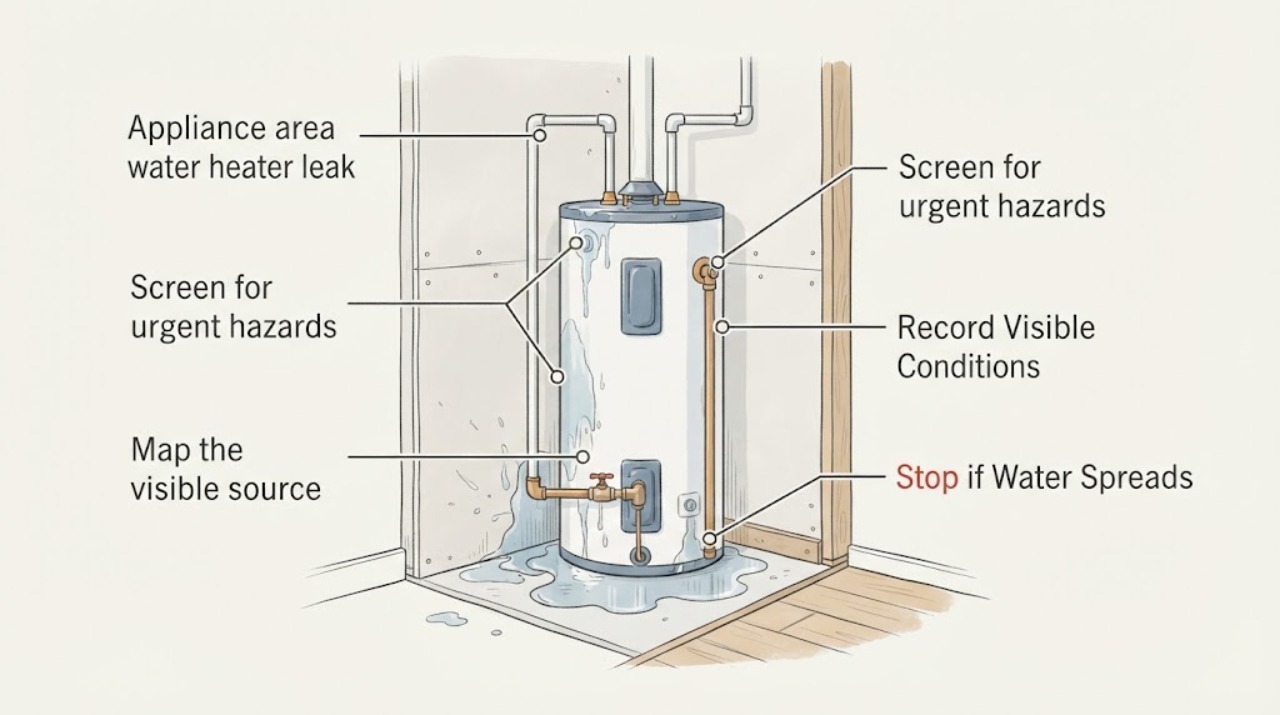
Treat water around a water heater as an urgent safety and damage-assessment problem, not a tank-repair project. From a dry, stable location, look for active flow, standing water, gas odor, wet electrical components, heat or steam, tank movement, and how far water has reached. Keep people away, do not touch wet energized equipment, open the heater, work on gas controls, remove building materials, or start mold cleanup. If there is gas odor, electrical danger, structural instability, or contaminated water, leave and call the appropriate emergency or utility service; otherwise arrange a licensed plumbing and water-damage assessment promptly.
Work through in order
Diagnostic checks
Use only checks that match the exact appliance or system and its official guide.
-
Screen for urgent hazards from a dry location
From a doorway or other dry, stable position, look without touching the heater, water, wiring, valves, controls, or surrounding materials. Note active spraying or flowing water, standing water, a gas odor or hissing sound, smoke or unusual heat, a hot discharge, exposed or wet electrical equipment, a leaning or displaced heater, and any sagging or damaged floor, wall, or ceiling.
Expected result: Any gas odor, suspected electrical hazard, smoke, severe heat, unstable structure, or rapidly increasing water is an emergency branch. No visible hazard does not establish that the area is safe to enter or that the leak is minor.
Next step: If the area is visibly calm and dry at the observation point, continue only with the non-contact documentation below. Keep children, pets, and occupants away from the appliance area until the source and safety conditions are assessed.
Stop if: Stop immediately for gas odor, sparking, smoke, hot vapor, standing water around electrical equipment, a collapsing surface, or any need to step into water or touch the heater. Leave as appropriate and contact emergency services, the gas utility, an electrician, or a qualified plumber.
Why this matters
Why: The hazard screen determines whether ordinary documentation should stop and emergency, utility, electrician, plumber, or structural help is needed before water-damage work can begin.
-
Map the visible source and water path without disassembly
From the safe boundary, take overview and close-up photographs of the heater base, drain pan if visible, nearby supply piping, relief discharge area, floor, wall, ceiling below, and the direction water has traveled. Record whether the visible wet point appears at a connection, pan, discharge route, tank body, or only farther away; do not remove covers or insulation to look behind it.
Expected result: Water at a connection or pan, water emerging from the tank body, a discharge route, and water appearing only in adjacent materials are different observations that require different professional checks. A dry-looking exterior does not rule out hidden or intermittent leakage.
Next step: Save dated photos and note when the leak was first seen, whether it follows hot-water use or a pressure event, and whether the flow is increasing. Do not test a fitting, drain the tank, operate a relief valve, or open the heater.
Stop if: Stop if documenting the source would require touching wet components, entering standing water, lifting the heater, opening panels, working on a gas control, or removing flooring, drywall, insulation, or other building material.
Why this matters
Why: A qualified plumber needs the observed pattern to identify the source, while a mitigation professional needs the water path and materials to assess secondary damage. A photograph is evidence, not a diagnosis.
-
Record the extent of secondary water damage
From dry ground, inspect the visible perimeter rather than the wet materials themselves. Note swollen flooring or baseboards, staining, peeling finishes, damp odors, wet stored contents, water at a wall or ceiling below, and whether air or HVAC openings are nearby. Photograph the boundary and mark the last visibly affected area in your notes without probing it.
Expected result: Damage limited to a visible hard-surface area is a different scope from water inside flooring, drywall, insulation, cabinets, or an HVAC path. Odor, recurring dampness, or a spreading boundary suggests that hidden moisture or mold risk needs professional assessment.
Next step: Share the affected materials, room below or beside the heater, time since the leak, and any odor or health concern with a water-damage professional. Keep the area isolated and avoid running equipment that may spread contamination or use electricity in a wet area.
Stop if: Stop for suspected sewage or chemical contamination, visible mold over a broad or hidden area, respiratory symptoms, a flooded HVAC path, or any need to disturb finishes. Request professional water-damage and, when indicated, mold assessment.
Why this matters
Why: CDC identifies leaks and moisture as conditions that can support mold growth and recommends professional checks for affected systems before returning them to service. The result changes the mitigation scope; it does not authorize DIY mold cleanup.
-
Decide whether professional access must be arranged urgently
Answer yes or no from a dry location: is there active or recurring flow, standing water, gas or electrical concern, a hot or pressurized discharge, a displaced or unsupported heater, water reaching another level, hidden-material damage, or no safe way to identify the water shutoff and energy type without touching the equipment?
Expected result: Yes means arrange urgent professional access and keep the area out of service; no means still schedule a prompt plumbing and water-damage assessment because the source and hidden extent remain unverified.
Next step: Give the professional the photos, heater type if readable without entering the wet area, source pattern, water path, timing, and any utility or building-safety concern. Follow only clearly labeled emergency instructions that can be reached from dry ground; otherwise wait for qualified help.
Stop if: Do not touch wet energized equipment, operate an unknown gas control, open the heater, drain or move the tank, remove walls or flooring, or begin mold remediation. Escalate immediately for water, electrical, gas, heat, or structural hazards.
Why this matters
Why: The heater combines water, heat, pressure, and possibly gas or high-voltage electricity. A visual decision can prioritize help but cannot authorize tank disassembly, live testing, gas work, or structural drying work.
Use your observations
Decision map
Find the observation that best matches what you see, then follow the next safe action.
-
PATH 01Safety boundary
What you see
Water is flowing, the pan or floor is filling, the leak returns, or water has reached another room, level, wall, ceiling, or stored contents.
Do this next
Keep people and pets out of the area, stay on dry ground, and request urgent plumbing and water-damage service. If a clearly accessible water shutoff can be reached without entering water or touching the heater, follow local emergency guidance; do not improvise a valve operation.
Why this path and its safety boundary
Safety stop: Never enter water to reach a shutoff, use an electrical appliance there, move the heater, or remove wet materials.
-
PATH 02Safety boundary
What you see
Water is near outlets, wiring, a breaker, controls, or an electric heater, or there is gas odor, hissing, flame trouble, or suspected combustion damage.
Do this next
Do not touch, switch, test, or restart the equipment. For gas odor, leave without operating lights or anything that can spark and contact the gas utility or emergency services. For wet electrical equipment, stay out of the water and have an electrician determine when it is safe.
Why this path and its safety boundary
Safety stop: Do not turn power on or off while standing in water, perform live testing, relight or adjust gas equipment, or use tools in the area.
-
PATH 03Safety boundary
What you see
The heater leans or has shifted, the floor or platform sags, a tank or pipe is hot or discharging forcefully, or water is damaging a ceiling or structural finish.
Do this next
Keep the area clear and request a qualified plumbing and building-safety assessment. Do not brace, lift, drain, open, or dismantle the appliance; provide photos from a safe boundary.
Why this path and its safety boundary
Safety stop: Stop for movement, collapse risk, steam, scalding water, pressure discharge, or falling material and contact emergency or qualified professional help.
-
PATH 04Safety boundary
What you see
Drywall, flooring, insulation, cabinets, stored contents, or an HVAC opening is wet, stained, odorous, or inaccessible behind the heater.
Do this next
Keep the area isolated and request water-damage assessment before cleaning, drying, removing, or covering materials. Report health symptoms and vulnerable occupants so the service scope accounts for exposure.
Why this path and its safety boundary
Safety stop: Do not scrape, spray, bleach, mix cleaners, pull flooring, open walls, or run HVAC or fans that could spread contamination without professional direction.
Helpful context
Understand the symptom
The first question is safety, not the leak part
A leak can involve a supply connection, relief discharge, drain pan, tank body, or a route that has already reached floors and walls. Those observations do not prove which component failed. Water and electricity, gas odor, hot discharge, unstable equipment, and contaminated water change the response immediately, so stay at the threshold or another dry location while documenting what is visible.
Separate source control from damage mitigation
Stopping the source and making the building safe come before drying or replacing finishes. DOE-hosted water-heater guidance emphasizes an accessible water shutoff, drainage provisions, and qualified service when the owner is uncomfortable with a repair. CDC guidance says not to operate power or electrical equipment while standing in water and to have affected electrical equipment checked before return to service.
Do not turn a wet area into a mold project
Moisture around a heater can wet flooring, drywall, insulation, cabinets, or stored materials that are not visible from the appliance. Photograph and report those materials instead of opening walls, pulling flooring, applying chemicals, or disturbing suspected mold. A qualified water-damage professional can determine the affected extent and a safe drying and remediation scope.
Only after diagnosis
Potential parts
- water-leak alarm
Consider an alarm only after the active leak and safe placement are addressed; it can provide future notification but cannot stop a leak or replace a professional assessment.
Confirm the alarm's sensing method, power requirements, and placement suitability for the room and water-heater installation; do not place or handle it in standing water. - wet-dry vacuum
Consider this only if a qualified electrician or mitigation professional confirms that the electrical supply and area are safe and the equipment is appropriate for the water type; it is not a source-repair tool.
Follow the equipment and site-safety instructions, keep it out of unsafe water and gas-hazard areas, and do not use it for contaminated water without professional direction. - moisture meter
A professional may use moisture measurement after the source and electrical hazards are controlled to map hidden drying needs; a consumer reading does not prove that a wall, floor, or insulation is dry.
Use only as directed on the tested material and do not probe wet, energized, contaminated, or inaccessible areas.
When checks do not resolve it
Need a professional?
Call urgently for active or recurring water, standing water, water near electricity, gas odor, hot or pressurized discharge, a shifted or unstable heater, damage reaching another level, hidden wet materials, HVAC exposure, or suspected mold. Use emergency or utility services first for gas, electrical, fire, collapse, or immediate life-safety hazards.
Have this ready
- Provide dry-location photos, heater type and label information only if readable safely, the apparent water path, leak timing, active versus stopped status, water depth if observable without entry, affected floors/walls/ceilings/contents, gas or electrical clues, and any symptoms or vulnerable occupants.
Common questions
FAQ
Should I open the water heater panel to find the leak?
No. Keep the inspection visual and from dry ground. Opening panels or touching a wet heater can expose you to electricity, heat, or pressure; have a qualified plumber or electrician assess it.
Can I use a wet-dry vacuum on the water?
Only after a qualified electrician or mitigation professional confirms the electrical system and water type are safe for that equipment. Never use an electrical appliance while standing in water or near an unassessed electrical hazard.
What should I do if I smell gas near the water heater?
Leave without operating lights, switches, or anything that could spark, and contact the gas utility or emergency services. Do not relight, adjust, or test the heater yourself.
When does a water-heater leak require water-damage service?
Request water-damage assessment when flooring, drywall, insulation, cabinets, stored contents, another level, or HVAC may be wet, or when odor or visible mold appears. The source must be controlled and safety checked before remediation.
Read the exact guide
Official sources
- Homeowners and Renters Guide to Mold Cleanup After DisastersCenters for Disease Control and Prevention · moisture-related mold exposure and professional-safe cleanup boundaries
- Safety Guidelines: Reentering Your Flooded HomeCenters for Disease Control and Prevention · water, electrical, gas, drying, HVAC, and mold safety after water intrusion
- Electric Water Heater Installation, Operation, and Maintenance ManualU.S. Department of Energy · water-heater leak consequences, drainage provisions, accessible shutoff, and qualified service guidance
Community feedback
Share a repair observation
Share a plain-text repair observation. Accepted observations are published automatically; this page may take a moment to update.