
On this page
Start here
Quick answer
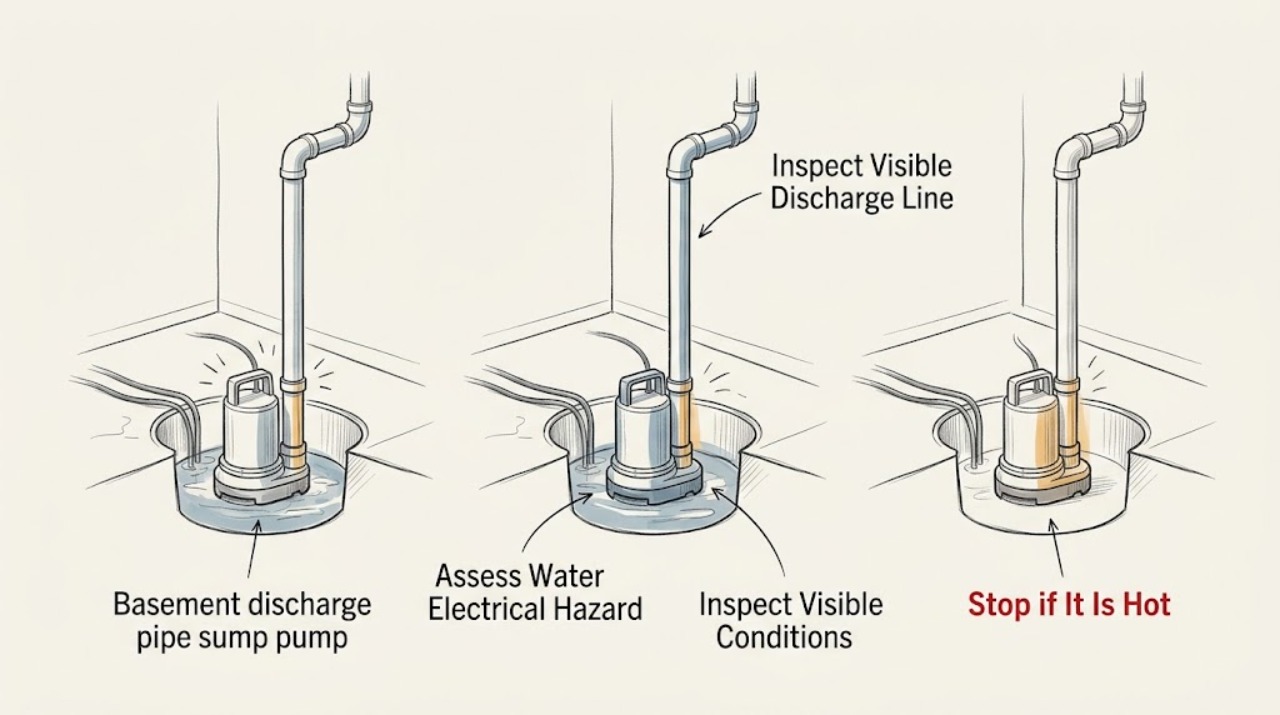
Treat a failed basement sump pump and discharge pipe as an urgent water and electrical-safety problem, not a routine pipe repair. From a dry, safe position, observe whether water is rising, whether the pump is silent or cycling, and whether the visible discharge pipe is disconnected, crushed, frozen, leaking, or returning water toward the foundation. Do not enter standing water, touch wet electrical equipment, open the pump or electrical enclosure, disconnect piping, excavate, or test live wiring. Keep people and valuables away from the water, and call an emergency plumber or water-mitigation professional promptly if the level is rising, the pump will not run, the pipe has failed, or the basement has already flooded.
Work through in order
Diagnostic checks
Use only checks that match the exact appliance or system and its official guide.
-
Check 1
From the stairs or another dry position, observe the basement floor, sump area, nearby outlets and appliances, and the water level; do not step into water or approach a wet electrical panel, receptacle, cord, pump plug, furnace, or other powered equipment.
Expected result: The floor may be dry, damp, or flooded; water may be stable or rising; electrical equipment may be distant and dry or partly surrounded by water; there may be smoke, arcing, a burning odor, or sewage-like contamination.
Next step: Keep people and pets out, move valuables only from a dry safe area, and call emergency water mitigation or a qualified plumber. Do not use a wet vacuum, extension cord, generator, or other powered equipment in the affected area.
Stop if: Stop immediately for standing water near electrical equipment, exposed wiring, smoke, sparks, burning odor, structural damage, sewage, or an unsafe route to the basement.
Why this matters
Why: Rising water or water near electrical equipment makes this an immediate safety and mitigation issue. Smoke, arcing, burning odor, or suspected contamination is not a pump troubleshooting branch and requires people to stay clear and obtain appropriate emergency or professional help.
-
Check 2
Without removing the sump cover or touching the pump, cord, outlet, breaker, float, or wiring, listen and look from a dry position for whether the pump is silent, humming, cycling, or visibly moving water while the pit level changes.
Expected result: The pump may be silent with water rising, hum without visible discharge, run and stop normally, run continuously, or be inaccessible because the pit is covered or the area is unsafe.
Next step: Record the sound, cycle behavior, water level trend, and any visible indicator without performing a live electrical test. Give those observations to the plumber or mitigation technician.
Stop if: Stop for wet electrical equipment, a hot or sparking cord or outlet, a moving or unsecured cover, an inaccessible pit, or any need to reach into the pit or operate a switch.
Why this matters
Why: Silence with rising water can be consistent with power, switch, pump, or control trouble; humming without flow can be consistent with a pump or discharge restriction; rapid cycling or continuous operation can be consistent with backflow, a blocked line, inflow, or a switch condition. None of these observations identifies a safe repair.
-
Check 3
From safe standing positions, visually follow the accessible discharge pipe from the basement wall or pump area toward its outlet; do not disconnect joints, cut pipe, remove a check valve, excavate, climb, or reach behind equipment.
Expected result: The visible line may be continuous and dry, disconnected at a joint, crushed or kinked, sagging, leaking, iced or obstructed, or ending where water can return toward the foundation.
Next step: Photograph the visible pipe and note the location of any break, leak, obstruction, or questionable termination. Leave the line in place and call a plumber; do not improvise a discharge route while water or electrical hazards are present.
Stop if: Stop for water near electrical equipment, a pipe that must be cut or disconnected, an underground obstruction, ice that requires heat, a ladder or crawlspace, or any need to move the pump or cover.
Why this matters
Why: A disconnected, crushed, frozen, leaking, or poorly terminated line can stop a working pump from protecting the basement. A line that looks intact does not rule out an internal blockage, a failed check valve, a pump problem, or a hidden underground section.
-
Check 4
If the area is dry and safe and the pump has already completed a normal cycle without you operating it, observe whether water appears at the discharge outlet and whether the sump level falls, stays high, or rises again after the pump stops; do not start a test by adding water or lifting the float.
Expected result: Water may reach the intended outlet, fail to appear outside, flow back toward the pit, or the pump may stop while the level remains high.
Next step: Stop observing if the water rises or the outlet cannot be viewed safely. Tell the technician whether discharge was seen, whether it returned, and how the water level changed; do not dismantle the line to confirm the cause.
Stop if: Stop for rising water, an unsafe exterior route, discharge onto electrical equipment or a neighboring property, sewage, or any need to manipulate the pump, float, valve, or pipe.
Why this matters
Why: No visible outlet flow with pump activity keeps a blocked, frozen, disconnected, or failed check-valve path in consideration. Return flow or rapid refill can point to backflow, a short discharge termination, or ongoing inflow. A high level after the pump stops is an urgent unresolved condition.
-
Check 5
From ground level and without climbing, digging, or entering snow, ice, vegetation, or a drainage structure, visually inspect the discharge outlet and nearby foundation area for pooling, erosion, debris, ice, or a termination that points back toward the building.
Expected result: The outlet may be clear with water flowing away, blocked or frozen, buried or not visible, pooling close to the foundation, or discharging into an area that could affect another structure or drainage system.
Next step: Photograph the outlet and surrounding water pattern from a safe position and call a plumber for a compliant discharge solution. Keep people away from eroded ground, open pits, and contaminated water.
Stop if: Stop for ice requiring heat, unstable soil, open excavations, traffic, a ladder, a neighbor's property, sewage, or any need to dig or alter the outlet.
Why this matters
Why: An unsafe termination or nearby pooling can send discharged water back to the foundation and make the sump cycle repeatedly. A hidden or blocked outlet needs a professional line assessment rather than a guessed reroute.
Use your observations
Decision map
Find the observation that best matches what you see, then follow the next safe action.
-
PATH 01Next step
What you see
Water is near electrical equipment, the basement may contain sewage, or there is smoke, arcing, burning odor, exposed wiring, or other immediate danger.
Do this next
Do not enter or touch the affected equipment. Keep people and pets away and call emergency services or qualified water-mitigation and electrical professionals appropriate to the hazard. Do not restore power or use powered cleanup equipment in the wet area.
-
PATH 02Next step
What you see
The sump or basement water level is rising, the pump is silent, or the pump cannot be observed safely.
Do this next
Treat this as urgent. Stay dry, protect only valuables that can be reached without entering water, and call emergency water mitigation or a plumber. Ask about a safe temporary backup plan; do not improvise wiring or pump operation.
-
PATH 03Next step
What you see
The pump can be heard or seen cycling, but no water reaches the visible outlet or the level stays high.
Do this next
Stop repeated cycles and call a plumber for the pump, discharge pipe, check valve, and hidden-line diagnosis. Do not disconnect the pipe, open the pump, clear an underground line, or remove a valve as a test.
-
PATH 04Next step
What you see
Water returns toward the pit after a cycle, the line ends near the foundation, or exterior pooling suggests the discharge is recirculating.
Do this next
Keep the system out of service if water is rising and arrange prompt plumbing service. The discharge termination and backflow protection need a site- and rule-specific assessment; do not reroute it into a sanitary drain or another property without professional approval.
-
PATH 05Next step
What you see
The accessible discharge line is disconnected, crushed, frozen, leaking, or visibly obstructed.
Do this next
Do not cut, heat, reconnect, or dismantle the line while the sump or electrical area is wet. Photograph the condition and call a plumber for a safe repair and an assessment of the pump and check valve.
-
PATH 06Next step
What you see
The pump is silent but the pipe looks intact, or the power, float, switch, outlet, or wiring cannot be verified from a dry safe position.
Do this next
Do not perform live electrical testing or operate wet controls. Keep the basement clear and have a qualified professional diagnose the power supply, pump, switch, and wiring with the area made safe.
-
PATH 07Next step
What you see
The basement is dry, the pump is cycling normally, and discharge is visibly reaching an acceptable outlet without return flow, but a past failure or weak discharge remains suspected.
Do this next
Document the pump and outlet observations and schedule a plumber to inspect the system before the next heavy inflow. A water alarm or battery backup may reduce risk, but selection and installation should match the pump and site.
Helpful context
Understand the symptom
Decide first whether the basement is safe to enter
A sump system collects groundwater in a low pit and sends it away through a discharge line. A failed pump, blocked or disconnected line, power loss, or backflow can let water accumulate quickly. If water is near outlets, appliances, a furnace, an electrical panel, extension cords, or other powered equipment, stay out of the water and do not reach for a plug or switch. A basement flood can also hide sewage or other contamination, so rising water and unsafe conditions need professional help rather than a do-it-yourself electrical check.
What the discharge pipe should accomplish
The discharge line should carry sump water away from the building and, where installed, a check valve helps prevent discharged water from flowing back into the pit. A pipe that ends beside the foundation can recycle water into the drainage system; a blocked, frozen, sagging, crushed, or disconnected section can look like a pump failure because water never reaches a safe outlet. Local rules and site drainage determine the acceptable termination, so do not reroute the line or connect it to another drain based on a general rule.
Use observations to choose the next professional path
The useful distinction is whether the water is rising, whether the pump is attempting to run, whether the pipe carries water to its intended outlet, and whether water returns after a cycle. These observations can separate an immediate water-mitigation call from a plumber's discharge-line diagnosis, but they cannot prove that a pump, switch, check valve, or wiring is safe or failed. Keep the sump cover and electrical protection intact while you document what is visible.
Safety boundary
Stop conditions
- Do not enter standing water or touch wet outlets, cords, panels, pump wiring, generators, or appliances; do not perform live electrical testing.
- Do not remove the sump cover, reach into the pit, lift a float, open the pump, disconnect or cut discharge piping, remove a check valve, excavate, apply heat to a frozen line, or improvise a wiring or drain connection.
- Stop for rising water, smoke, sparks, burning odor, exposed wiring, sewage, structural damage, unstable ground, or any condition that makes the basement or outlet unsafe.
- If the pump or discharge line cannot be confirmed safe by dry external observation, call an emergency plumber or water-mitigation professional and provide the recorded water level, pump behavior, pipe condition, and outlet observations.
Only after diagnosis
Potential parts
- water-alarm
Consider this category as a monitoring accessory after the immediate water and electrical hazards are addressed and a technician confirms where an alarm can be placed safely.
Confirm the alarm's sensing method, power source, notification features, and placement requirements for the basement; it detects water but does not repair a pump or discharge failure. - sump-pump-battery-backup
Consider this category only after a technician evaluates inflow, pump capacity, discharge routing, power conditions, and whether a backup system can be installed safely.
Match the backup system to the primary pump arrangement, pit, discharge plumbing, battery requirements, alarms, and site conditions; do not treat it as a substitute for repairing a blocked or unsafe discharge line. - check-valve
Consider this category only when a plumber confirms that backflow or a failed check valve is causing return flow or rapid cycling and rules out pipe routing and pump faults.
Confirm the exact pump, pipe configuration, flow direction, installation orientation, and manufacturer or plumbing requirements before ordering; do not remove or replace a valve as a homeowner test.
When checks do not resolve it
Need a professional?
Call an emergency plumber or water-mitigation professional promptly when basement water is rising, the pump is silent or runs without discharge, the discharge line is disconnected, crushed, frozen, leaking, blocked, or returning water, or the basement has flooded. Do not enter water near electrical equipment; obtain qualified electrical help for any power or wiring issue. Provide the property and pump model if visible without opening equipment, water-level trend, pump sound and cycling, whether water reached the outlet, return-flow or pooling observations, visible pipe and check-valve condition, prior backup or power events, and safe photographs. Do not wait for a replacement part before containing an active water threat.
Common questions
FAQ
What should I do first if a basement sump pump fails?
Check safety from a dry position. Do not enter standing water or touch wet electrical equipment. If water is rising, keep people and pets out, protect valuables only from a dry area, and call emergency water mitigation or a plumber.
How can I tell whether the discharge pipe is the problem?
Only inspect it visually from safe standing positions. Look for a disconnected joint, crush, kink, leak, ice, sag, blocked outlet, return flow, or pooling near the foundation. Do not disconnect, cut, excavate, heat, or dismantle the line; a plumber should confirm the cause.
Why does water flow back into the sump pit?
Possible explanations include backflow, a failed or missing check valve, a short or poorly directed termination, or a discharge restriction. Return flow is not proof of one failed part, so record when it happens and have the discharge system assessed.
Can I test the sump pump by adding water or lifting the float?
Not while the area is wet, electrically unsafe, inaccessible, or otherwise uncertain. Do not reach into the pit or operate a float as a test. Ask a plumber for a safe, model- and site-specific test.
Should I install a battery backup sump pump after a failure?
A backup may reduce future risk, but it must match the primary pump, pit, discharge arrangement, inflow, and power conditions. Repair the active failure and have a qualified professional evaluate the backup design rather than selecting one from the symptom alone.
Can I route sump water into a nearby drain or sewer?
Do not make that connection based on a general online suggestion. Acceptable discharge points and backflow protection depend on local rules and the property's drainage design. A plumber should confirm the route and any required valve or protection.
Read the exact guide
Official sources
- Drain or Sump Pump Installed in Basements or CrawlspacesU.S. Department of Energy Building America Solution Center (PNNL) · General residential building guidance; exact pump, discharge, electrical, and local drainage requirements vary by system and jurisdiction.
- How Sump Pumps WorkCity of Fargo · City educational guidance used for system concepts; local discharge rules and the actual property's design govern repairs.
- Guide To FloodproofingIllinois Department of Natural Resources · General floodproofing guidance; local site, plumbing, and drainage requirements govern any installation or rerouting.
Community feedback
Share a repair observation
Share a plain-text repair observation. Accepted observations are published automatically; this page may take a moment to update.