
On this page
Start here
Quick answer
Treat a sump pump that does not start, stop, or keep up as an urgent water and electrical-safety issue, not a DIY float-switch repair. From a completely dry location, observe the water level, whether the float appears obstructed, any safe status indication, and where the discharge ends. Do not enter standing water, touch a wet cord or outlet, lift the float, reset a wet circuit, open the pump, or intentionally fill the pit. If water is rising, the pump is silent or running continuously, or power equipment may be wet, stay out of the area and call qualified water-mitigation, plumbing, and electrical professionals.
Work through in order
Diagnostic checks
Use only checks that match the exact appliance or system and its official guide.
-
Check 1
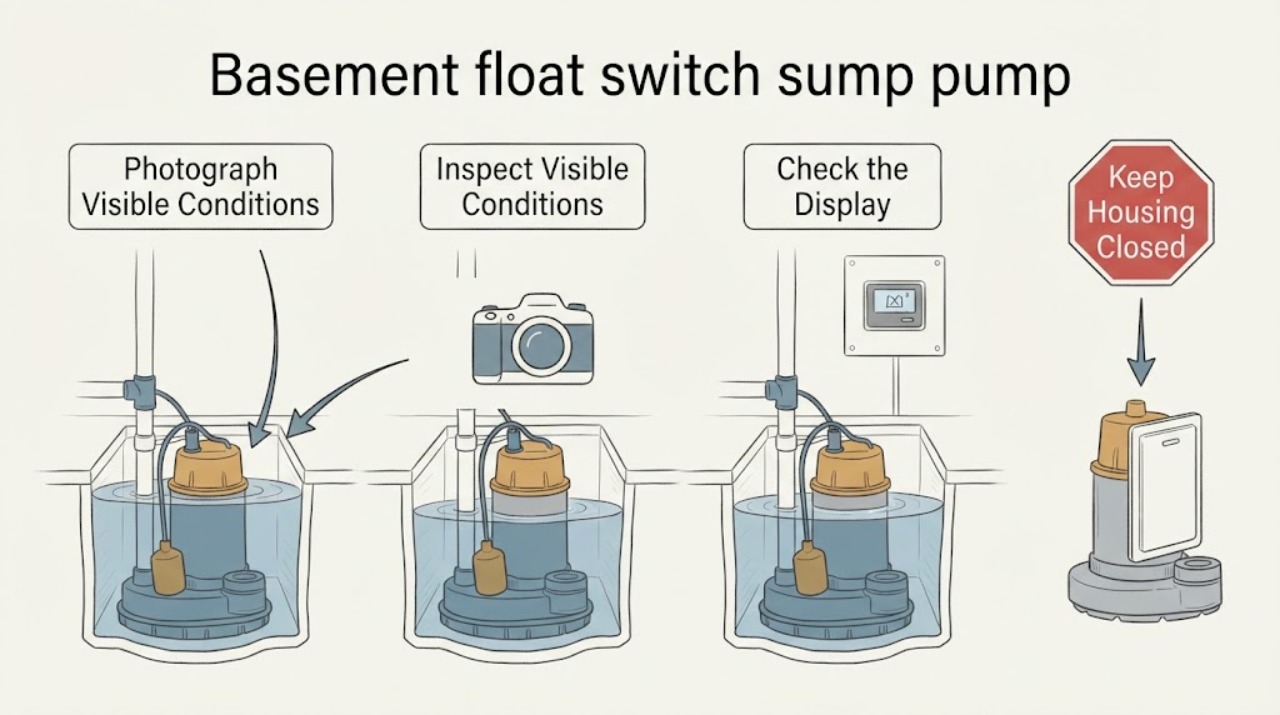
From a completely dry location, observe the basement floor and pit area without entering pooled water. Note whether the water is absent, below the pump inlet, rising, near electrical equipment, or visibly contaminated, and photograph the water line from a safe distance.
Expected result: The area is dry, there is a small amount of contained water, water is rising or spreading, or water is contacting electrical equipment or cords.
Next step: Leave the wet area, keep people and pets out, and call urgent water-mitigation and electrical help when water is rising or near power equipment.
Stop if: Never enter standing water or touch an electrical device, cord, receptacle, breaker, or pump while standing in water.
Why this matters
Why: A contained level may allow a professional to inspect the system, but rising or spreading water is an active mitigation problem. Water near electrical equipment creates shock and fire risk that overrides float troubleshooting.
-
Check 2
Look at the float or floatless switch only from above and from outside the pit, if it is visible without reaching. Record whether it appears free, pinned against the basin wall or discharge pipe, surrounded by debris, or impossible to see; do not lift, pull, shake, or reposition it.
Expected result: The switch appears free, visibly obstructed, contaminated, physically damaged, or hidden below the water line.
Next step: Photograph the view and tell the technician whether the condition is localized to the switch or accompanied by rising water and other symptoms.
Stop if: Do not reach into the pit, remove debris, disassemble the switch, or touch it while power or water safety is uncertain.
Why this matters
Why: An obstruction or buildup can prevent the switch from changing state, while a hidden or damaged switch needs model-specific service. The observation does not prove the switch is electrically good or bad.
-
Check 3
From a dry position, note whether the pump is silent, starts and stops normally, runs continuously, hums without moving water, or has a visible status light or alarm. Do not press controls, touch plugs, or conduct a live voltage test.
Expected result: There is no sound, intermittent cycling, continuous running, a hum without visible water movement, or an alarm or fault indication.
Next step: Record the sound and timing, and provide any visible status message or alarm code to the technician without interacting with wet controls.
Stop if: Do not reset a circuit, unplug a pump, move a cord, or touch a wet control to make this observation.
Why this matters
Why: No sound can be consistent with no power, a switch or control problem, or a failed motor; continuous running can indicate excessive inflow, a discharge problem, or a switch that does not release. A hum without movement needs professional pump diagnosis.
-
Check 4
Trace the visible discharge pipe only from a dry, safe route. Note whether the outlet is connected, visibly crushed, blocked-looking, disconnected, or releasing water where it could return toward the foundation; do not loosen the pipe or reach into the outlet.
Expected result: The discharge appears intact and directed away, or it is disconnected, damaged, obstructed-looking, or causing pooling near the building.
Next step: Photograph the outlet and pooling, note whether water is moving, and ask the professional to assess the full discharge route and check valve.
Stop if: Do not excavate, disconnect piping, remove a check valve, or walk through wet areas to improve the view.
Why this matters
Why: A discharge restriction or return path can make a working pump appear ineffective or cause continuous cycling. A bad outlet does not prove the float switch failed, so both conditions belong in the service scope.
-
Check 5
Review recent conditions without entering the pit: heavy rain or snowmelt, a recent power outage, prior alarm, recent pump or switch work, repeated short cycling, and whether a backup pump or water alarm was already present. Photograph labels only from a dry, safe position.
Expected result: The failure followed heavy inflow, power loss, recent equipment work, repeated cycling, or no clear event is known.
Next step: Include the timeline and equipment history in the urgent service request; do not infer compatibility or order a replacement switch from the symptom alone.
Stop if: Do not add a temporary wire, bypass a switch, connect a generator, or alter pump wiring.
Why this matters
Why: Heavy inflow can exceed capacity, while a power event or recent work changes the likely diagnostic path. A history of short cycling can point to inflow, switch, check-valve, or discharge issues rather than one confirmed part.
-
Check 6
Prepare the emergency handoff with the water level, photos, pump sound, switch visibility, discharge condition, power or alarm history, and any damage to floors, walls, stored items, or electrical equipment. State clearly what could not be inspected safely.
Expected result: The pump is not protecting the basement, the water level is rising, or the evidence is incomplete because the pit or electrical area is unsafe.
Next step: Request urgent water-mitigation and sump-pump service, and involve a qualified electrician whenever wiring, outlets, panels, or pump power may have been wet.
Stop if: Stop all homeowner troubleshooting once the handoff is complete; keep clear until professionals declare the area and equipment safe.
Why this matters
Why: A professional needs to triage water removal, electrical isolation, pump and switch diagnosis, discharge, and secondary damage together. Incomplete access is a safety finding, not a reason to improvise a test.
Use your observations
Decision map
Find the observation that best matches what you see, then follow the next safe action.
-
PATH 01Safety boundary
What you see
The basement is dry, the switch is visibly free, and the pump has no water or safety symptom but does not respond.
Do this next
Schedule sump-pump service to diagnose the pump, switch, controls, and power path without homeowner live testing.
Why this path and its safety boundary
Safety stop: Do not bypass the float or alter wiring to force operation.
-
PATH 02Safety boundary
What you see
The float appears pinned, obstructed, contaminated, or damaged, or it cannot be seen safely.
Do this next
Request professional switch and basin inspection and provide the exact view and equipment model information.
Why this path and its safety boundary
Safety stop: Do not reach into the pit, move the float, or disassemble a switch.
-
PATH 03Safety boundary
What you see
The pump runs continuously, hums without moving water, or water continues rising.
Do this next
Treat this as urgent water mitigation and sump-pump service; include inflow, discharge, and water-level observations.
Why this path and its safety boundary
Safety stop: Do not enter standing water, touch the pump or controls, or keep experimenting while the level rises.
-
PATH 04Safety boundary
What you see
The discharge outlet is damaged, disconnected, blocked-looking, or returning water toward the foundation.
Do this next
Ask a professional to assess the discharge pipe, check valve, outlet, and pump capacity as one system.
Why this path and its safety boundary
Safety stop: Do not disconnect or excavate the discharge route in wet or unstable conditions.
-
PATH 05Safety boundary
What you see
Water is touching electrical equipment, cords, outlets, panels, or appliances, or the electrical system was flooded.
Do this next
Leave the area and call a qualified electrician and water-mitigation professional; power restoration requires electrical inspection.
Why this path and its safety boundary
Safety stop: Never touch or operate electrical equipment while standing in water or before it is confirmed dry and safe.
-
PATH 06Safety boundary
What you see
A recent outage, backup-system alarm, or prior pump work preceded the failure.
Do this next
Provide the event timeline and ask for inspection of power, backup equipment, switch, pump, and discharge rather than replacing one part by guesswork.
Why this path and its safety boundary
Safety stop: Do not connect a generator to house circuits, bypass protection, or modify pump wiring.
Helpful context
Understand the symptom
Why a float-switch failure can become a water emergency
The float or water-level switch tells an automatic sump pump when to start and stop, but a no-run symptom can also come from a power interruption, tripped protection, obstruction, discharge restriction, damaged switch, or a pump that cannot keep up with inflow. The manufacturer troubleshooting guidance for a floatless switch lists power, contamination, mounting, and switch damage among possible causes. A homeowner cannot safely separate those causes by probing a wet pit or performing live electrical tests.
Make the safety decision before the equipment decision
The Centers for Disease Control and Prevention warns never to turn power on or off yourself or use an electrical tool or appliance while standing in water, and recommends an electrician check a flooded home's electrical system before power is restored. That boundary applies even when the pump appears to be the source of the problem. If the basement is flooded or water is approaching outlets, cords, panels, or appliances, leave the wet area and arrange professional help.
What you can document from a dry, safe location
Use the checks below only when a stable, dry route and safe distance are available. The goal is to give a technician useful evidence without touching the float, pump, wiring, water, or discharge connection.
Only after diagnosis
Potential parts
- water-alarm
Relevant as an independent alert only when a professional or safe product review confirms placement is dry, audible, and suitable for the basement; it does not repair a failed float or pump.
Confirm the alarm's power, sensing, and placement requirements and keep it separate from wet electrical equipment; do not treat an alarm as a pump backup. - sump-pump-battery-backup
Relevant only after a site assessment confirms the primary pump, discharge, battery location, and backup capacity needs; it is not a substitute for diagnosing the failed float switch.
Confirm pump, basin, discharge, power, and battery compatibility with the manufacturer or installer; installation and wiring belong to qualified professionals. - check-valve
Relevant only if inspection finds reverse flow, a damaged valve, or discharge behavior consistent with a check-valve problem.
Verify pipe size, flow direction, pump model, and installation requirements with the manufacturer or technician; do not select a valve from the float symptom alone.
When checks do not resolve it
Need a professional?
Call urgently when the pump will not start, runs continuously, water is rising, the float is obstructed or damaged, the discharge is not moving water away, or any water contacts electrical equipment. Use water-mitigation and plumbing help for active flooding and a qualified electrician for wet or questionable electrical systems.
Have this ready
- Provide the water level and trend, dry-distance photographs, pump sound or alarm behavior, visible float condition, discharge and pooling observations, recent rain or power events, prior work, equipment labels, and any affected walls, flooring, stored items, or electrical equipment.
Common questions
FAQ
How can I tell whether the float switch is the failed part?
You usually cannot confirm that safely from a wet pit. Document whether the float is visibly obstructed, whether the pump is silent or continuous, the water trend, and the discharge condition; a professional must separate switch, power, pump, and discharge causes.
Can I lift the float to make the sump pump start?
Do not reach into the pit or lift the float. Water and electricity may be present together, and the manufacturer warns that switch service requires power isolation and that the switch should not be disassembled. Call for service instead.
What should I do if the basement water is near an outlet or pump cord?
Leave the wet area and keep others out. Do not touch the outlet, cord, pump, breaker, or standing water; arrange qualified electrical and water-mitigation help. Power restoration after flooding requires electrical inspection.
Does a continuously running pump prove the float switch is bad?
No. Continuous running can also reflect heavy inflow, a restricted or returning discharge, pump capacity, or a control problem. Record the water trend and outlet condition and have the full system assessed.
Should I buy a replacement float switch or backup pump now?
Only conditionally. Confirm the pump and switch design, basin, discharge, power, and backup requirements with the manufacturer or technician first. A water alarm can provide notification, but it does not correct a failed pump or unsafe wiring.
Read the exact guide
Official sources
- Zoeller Floatless Water Level Switch Installation Instructions and TroubleshootingZoeller Pump Company · Supports the distinction between switch, power, contamination, mounting, check-valve, and pump symptoms and the warning to disconnect power before service and not disassemble the switch.
- Preparing for FloodsCenters for Disease Control and Prevention, National Center for Environmental Health · Supports preparing for standing water and power hazards and considering backup power for sump pumps without turning installation or wiring into a homeowner troubleshooting step.
- Safety Guidelines: Reentering Your Flooded HomeCenters for Disease Control and Prevention, National Center for Environmental Health · Supports staying out of standing water, using an electrician for power isolation or restoration, avoiding wet electrical equipment, and treating basement drainage and mold risks as a professional safety matter.
Community feedback
Share a repair observation
Share a plain-text repair observation. Accepted observations are published automatically; this page may take a moment to update.