
On this page
Start here
Quick answer
Treat wet basement materials as a safety and professional-restoration assessment, not a drying or demolition project. From a dry location and only when local authorities say re-entry is safe, document whether the water is still entering, whether it appears clean or may contain sewage or chemicals, which material types are visibly affected, how far the damage extends, and whether electricity or structural stability could be involved. Do not walk into standing water, touch wet electrical equipment, handle sewage-contaminated materials, disturb suspected mold or older building materials, or start demolition. Stop at the threshold and call a qualified water-damage restoration professional when the source, contamination, extent, or safe access is uncertain.
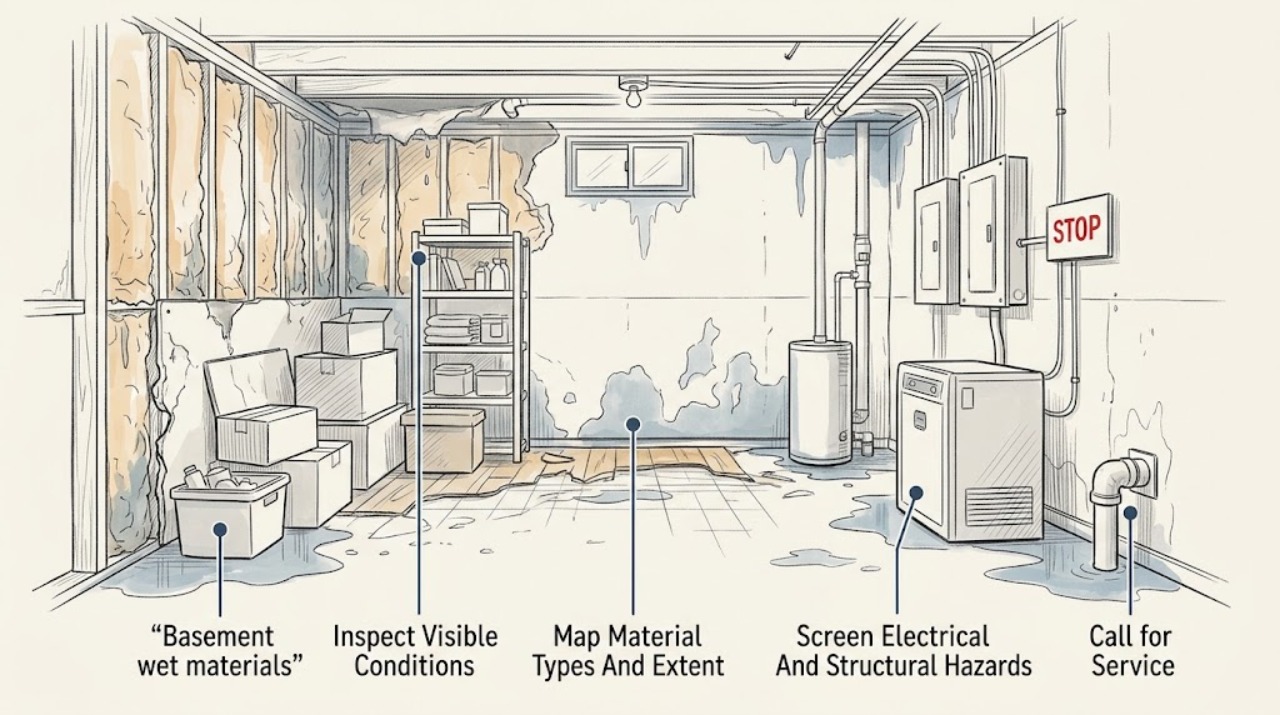
Work through in order
Diagnostic checks
Use only checks that match the exact appliance or system and its official guide.
-
Check 1
From the top of the stairs, a dry doorway, or another stable dry location, visually identify whether water is actively entering and where it appears to originate; do not step into water or reach toward the source.
Expected result: Record a visible plumbing leak, foundation or floor seepage, storm entry, appliance or utility source, drain backup, or an unknown source, and note whether the water is clear-looking, dirty, or potentially contaminated.
Next step: Stop at the dry boundary, photograph the source and water path, and provide the observations to a qualified water-damage restoration professional; do not operate valves, pumps, or equipment from a wet area.
Stop if: Stop immediately for standing water, sewage or chemical odor, gas odor, unstable flooring, or any need to enter or touch the wet area.
Why this matters
Why: An active, unknown, sewage-related, or chemically contaminated source requires urgent professional water control; a dry scene with residual dampness still needs a material and moisture assessment.
-
Check 2
From a dry, safe position, visually map the affected area by material type—masonry or concrete, drywall, insulation, wood, carpet, paper, furnishings, or other porous contents—without moving or disturbing anything.
Expected result: Note visible water lines, staining, swelling, sagging, soft-looking surfaces, damp contents, and whether the affected area is confined to one corner, follows a wall or floor, or extends through the room.
Next step: Photograph each material category and the room boundaries, then ask the restoration professional to assess moisture spread without starting demolition or disposal yourself.
Stop if: Do not pull up flooring, open walls, remove insulation or drywall, carry wet contents, or disturb material that may contain mold, asbestos, lead, or other hazards.
Why this matters
Why: Porous and absorbent materials can retain moisture and may require professional evaluation for drying or removal; a broad, hidden, or vertically spreading pattern suggests a larger water path than a single surface spill.
-
Check 3
From outside the wet area, visually check for outlets, panels, wiring, appliances, fuel-burning equipment, fallen materials, cracks, bulging surfaces, or blocked exits; do not touch or switch any equipment.
Expected result: Record whether electrical equipment is near water, whether a surface appears unstable, whether a fuel or gas concern is present, and whether the normal path out is clear.
Next step: Leave the basement and contact emergency services or the appropriate qualified electrical, gas, structural, or restoration professional when a hazard is present; provide photos only from a safe location.
Stop if: Never enter standing water, touch wet electrical components, use a generator or fuel-burning device indoors, or inspect a visibly unstable area.
Why this matters
Why: Wet electrical equipment, fuel or gas concerns, unstable materials, or a blocked exit can turn water damage into an emergency and make entry unsafe; the absence of visible hazards does not certify the area safe.
-
Check 4
Record when the water event or dampness began, whether the source has recurred, and whether odor or visible mold-like growth appeared before the inspection; observe only and do not sample, scrub, spray, or disturb the surface.
Expected result: Classify the condition as a recent isolated event, recurring dampness, materials that have remained wet, a persistent musty odor, visible mold-like growth, or an unknown timeline.
Next step: Give the timeline and photos to a restoration professional and disclose any health concerns or vulnerable occupants before work is planned; do not attempt mold remediation.
Stop if: Stop if anyone develops symptoms, the area contains visible growth or hidden-mold suspicion, or the next step would require contact with or disturbance of wet materials.
Why this matters
Why: Longer or recurring moisture increases the need for a professional moisture mapping and material assessment; odor or visible growth can indicate hidden or affected areas that should not be opened by the occupant.
-
Check 5
Decide whether the source, contamination status, affected materials, electrical and structural conditions, and safe access are all clearly known from a dry observation point.
Expected result: Answer yes only when every item is clear and no standing water, sewage, electrical hazard, structural concern, visible mold-like growth, or concealed damage is present; answer no for any unknown or unsafe condition.
Next step: For no, leave the basement and use the “When to call a professional” checklist. For yes, preserve the documentation and arrange professional drying and material evaluation before any repair decision.
Stop if: Do not proceed to drying equipment placement, chemical cleaning, demolition, disposal, or electrical operation without qualified direction and safe access.
Why this matters
Why: Yes still calls for a qualified restoration assessment when materials are wet; no means the area must be left alone and escalated urgently rather than tested or cleaned by the occupant.
Use your observations
Decision map
Find the observation that best matches what you see, then follow the next safe action.
-
PATH 01Safety boundary
What you see
Water is actively entering, the source is unknown, or the water may contain sewage, chemicals, or other contaminants.
Do this next
Leave the wet area, prevent people and pets from entering, and contact a qualified water-damage restoration professional; address emergency gas, electrical, or medical hazards through the appropriate emergency channel.
Why this path and its safety boundary
Safety stop: Do not wade, pump, handle contaminated materials, or operate wet utilities or equipment.
-
PATH 02Safety boundary
What you see
Drywall, insulation, carpet, paper, wood, furnishings, or other porous materials are visibly wet, swollen, stained, or damp beyond the immediate spill area.
Do this next
Document the material types and extent and arrange professional moisture mapping, drying, and restoration assessment; keep the materials undisturbed.
Why this path and its safety boundary
Safety stop: Do not remove, cut, discard, paint, caulk, or scrub porous or mold-like materials as a DIY remedy.
-
PATH 03Safety boundary
What you see
Water is near electrical equipment, a fuel or gas concern exists, the structure appears unstable, or the exit path is compromised.
Do this next
Leave immediately and call the appropriate qualified emergency, electrical, gas, structural, or restoration professional; do not re-enter until it is cleared.
Why this path and its safety boundary
Safety stop: Never touch wet electrical equipment, enter an unstable area, or use indoor combustion equipment for drying.
-
PATH 04Safety boundary
What you see
There is a persistent musty odor, visible mold-like growth, recurring moisture, or an uncertain period of wetness.
Do this next
Keep occupants away from the affected area, disclose health concerns, and obtain a qualified restoration or mold assessment; hidden material should not be opened casually.
Why this path and its safety boundary
Safety stop: Do not perform mold remediation, mix cleaners, disturb suspect materials, or rely on paint or caulk to conceal the condition.
Helpful context
Understand the symptom
Document the condition before anyone disturbs it
A basement can contain concrete, masonry, drywall, insulation, wood, carpet, stored paper, and electrical equipment, and those materials do not respond to water in the same way. From a dry, stable location, photograph the water line, wet areas, affected contents, and visible equipment without touching or moving them. The goal is a restoration assessment and a safe handoff, not a do-it-yourself cleanup plan.
Water source and contamination change the response
A plumbing leak, seepage, storm water, and a backed-up drain are different source categories. Water that may contain sewage, chemicals, or unknown contaminants should not be treated as ordinary clean water. EPA guidance emphasizes avoiding floodwater contact and using professionals when water or mold damage is contaminated or extensive.
Mold risk is about moisture and material exposure
EPA identifies moisture control as the key to mold control and notes that wet or damp materials can develop mold when they remain wet. A stale or moldy odor, visible growth, repeated dampness, or wet porous material makes the timing and extent important to document. Do not paint, caulk, scrub, spray, or remove suspect materials to hide the condition; leave remediation methods to the qualified professional.
Only after diagnosis
Potential parts
- dehumidifier
Consider only as part of a qualified drying plan after safe access, water type, electrical conditions, and material extent have been assessed; a household appliance is not a substitute for restoration.
Confirm electrical safety, capacity, drainage, and placement with the restoration professional; do not place equipment in standing water or a contaminated area. - air-mover
Consider only when a qualified professional determines that air movement is appropriate for the material and contamination conditions and will not spread contaminants.
Confirm safe power, placement, airflow direction, and cleanup requirements; do not operate an air mover in an unsafe or potentially contaminated basement. - moisture-meter
Consider only as an assessment or progress tool used by a qualified professional to map concealed moisture and determine whether materials are drying.
Readings depend on material, instrument, and reference conditions; do not use one reading as proof that a wall, floor, or insulation is safe to keep.
When checks do not resolve it
Need a professional?
Call a qualified water-damage restoration professional for any wet basement materials, active or unknown water entry, sewage or chemical concern, recurring dampness, visible mold-like growth, porous-material damage, or an extent that cannot be assessed from a dry location. Add emergency electrical, gas, structural, or medical help when those hazards are present.
Have this ready
- Provide the source and timeline, whether the water may be contaminated, photos from a dry location, affected material types, visible water line or extent, electrical and structural observations, access limitations, odor or mold-like growth, and any health concerns or vulnerable occupants.
Common questions
FAQ
Can I walk into a wet basement to see how far the water reached?
No. Observe from a dry, stable location only. Standing water can hide electrical, sewage, chemical, slip, and structural hazards, so document the visible boundary and call a qualified restoration professional.
What basement materials are most important to document?
Record concrete or masonry, drywall, insulation, wood, carpet, paper, furnishings, and any electrical or fuel equipment. Note swelling, staining, water lines, odor, and whether the affected area spreads beyond one room.
Should I remove wet drywall or insulation myself?
Not under this safety scope. Do not cut, pull, dispose of, or disturb wet or mold-like materials. A qualified professional should assess contamination, hidden moisture, structural conditions, and any older-material hazards first.
Does a musty smell mean the basement needs mold remediation?
It indicates that moisture or hidden affected material needs professional assessment, but smell alone does not identify the source or extent. Do not open walls or use chemicals to cover it; document timing and arrange qualified help.
Read the exact guide
Official sources
- A Brief Guide to Mold, Moisture and Your HomeU.S. Environmental Protection Agency · Supports documenting material type, timing, hidden-mold suspicion, contaminated water, and professional escalation without prescribing occupant remediation for this safety-scoped topic.
- Dealing with Debris and Damaged BuildingsU.S. Environmental Protection Agency · Supports avoiding floodwater, contaminated materials, wet electrical equipment, chemical mixing, and unsafe building entry; it is not a DIY demolition or cleanup authorization.
- What are the basic mold cleanup steps?U.S. Environmental Protection Agency · Supports the article's emphasis on moisture control, porous-material caution, avoiding exposure, and specialist help; this article narrows the user action to dry-location observation and professional service.
Community feedback
Share a repair observation
Share a plain-text repair observation. Accepted observations are published automatically; this page may take a moment to update.