
On this page
Start here
Quick answer
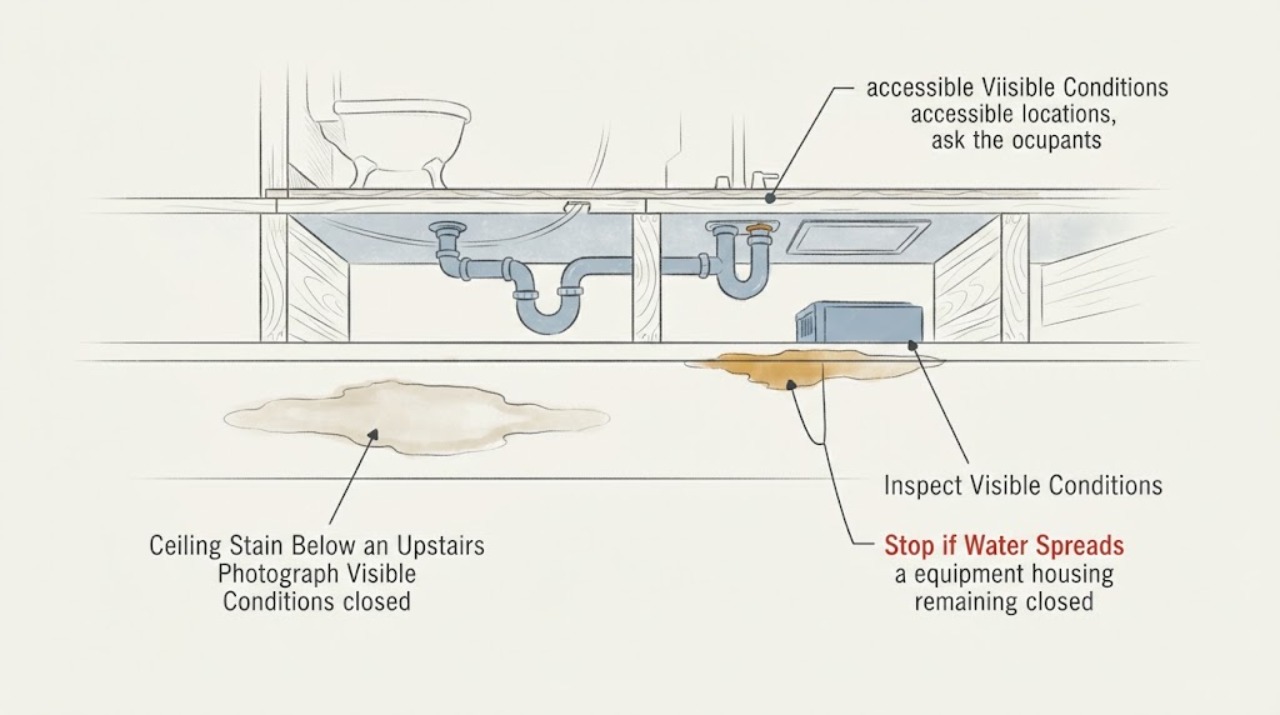
A stain on a ceiling below a bathroom means water may be entering from a toilet, tub or shower, basin, waste pipe, supply connection, failed seal, or another concealed path; the stain alone cannot identify the source. First keep people away from a sagging or wet ceiling and treat fast-flowing water or water near a light, socket, switch, or appliance as an emergency. From safe, dry positions, document whether the stain is growing, whether water changes when the upstairs bathroom is used, and whether accessible bathroom fittings show fresh moisture. Stop using the suspected fixture, isolate water or electricity only when it can be done safely without touching wet equipment, and arrange qualified plumbing and water-damage assessment. Do not puncture the ceiling, open the ceiling cavity, or paint over the stain before the leak and moisture are fixed.
Work through in order
Diagnostic checks
Use only checks that match the exact appliance or system and its official guide.
-
Check 1
From a safe position outside the affected area, look at the ceiling and nearby electrical fittings without touching them or standing beneath a bulge. Record whether the mark is dry or wet, dripping or only stained, spreading, sagging, cracked, soft-looking, or accompanied by a musty odor; take wide photographs from a stable floor position.
Expected result: The ceiling is stable and dry, or it is actively dripping, bulging, sagging, cracking, soft-looking, rapidly spreading, or wet near a light, socket, switch, or appliance.
Next step: Keep people and pets out of the area. For fast-flowing water, a sagging ceiling, or water near electrical equipment, treat the situation as urgent, use only a safe remote isolation point if available, and call qualified emergency plumbing and electrical help as needed.
Stop if: Stop immediately if the ceiling moves, bows, cracks, sheds material, water reaches electrical equipment, or the inspection would require a ladder or standing below the damaged area.
Why this matters
Why: A stable dry stain can be documented while the source is investigated, but active water or changed ceiling geometry raises the risk of further damage or falling material. Water near electricity adds shock and fire risk and cannot be treated as a cosmetic repair.
-
Check 2
From dry, accessible locations, ask the occupants of the bathroom above to note whether the mark or drip changes while the bathroom remains unused. Do not deliberately run water, overflow a fixture, flood a shower, or perform a test that could add water to the ceiling.
Expected result: The ceiling moisture continues with no bathroom use, stops after the bathroom is unused, or changes soon after a shower, bath, basin, toilet flush, or other fixture is used.
Next step: Stop using the suspected fixture and arrange a plumber. If water continues or the ceiling worsens, use the property's safe main shutoff or fixture isolation only when clearly identified and reachable without wet electrical contact; do not open the ceiling to confirm the route.
Stop if: Stop the observation for rapid flow, a worsening bulge, water near electricity, an unsafe bathroom floor, or any need to remove flooring, panels, sealant, or a ceiling surface.
Why this matters
Why: A change linked to one fixture makes that fixture, its supply, waste, seal, or nearby concealed connection more likely; continued moisture with no use keeps a pressurised supply, concealed pipe, stored water, or another route in consideration. Timing narrows the search but does not prove the exact failed part.
-
Check 3
In the upstairs bathroom, inspect only visible, dry surfaces with the fixtures unused: around the toilet base and supply connection, tub or shower edges and enclosure, basin connections, exposed traps, and accessible valves. Look for fresh droplets, a wet floor, lifted sealant, staining, or a loose-looking connection; do not remove covers or disturb the fittings.
Expected result: A visible fitting is wet or the floor is wet near one fixture, or all accessible surfaces are dry despite the ceiling mark.
Next step: Stop use of the implicated fixture and give the plumber the exact location and timing. If no accessible source is visible, do not escalate to destructive investigation; request leak tracing and ceiling-moisture assessment.
Stop if: Stop for standing water, sewage-contaminated water, a loose or unstable fixture, damaged flooring, a wet electrical fitting, or any need to remove a toilet, tub, access panel, or wall or ceiling finish.
Why this matters
Why: A wet accessible fitting provides a useful handoff clue, but water can travel behind finishes and a dry surface does not clear concealed pipework, a drain, waterproofing, or a failed seal. The stain may also persist after the source has stopped.
-
Check 4
Document the affected ceiling without scraping or drilling: photograph the stain from the room entrance, mark its approximate boundary on the photo or a separate note, and record when it appeared, whether it grows after bathroom use or rain, any odor, and any prior repair or repainting.
Expected result: The mark is a single stable discoloration, expands or darkens, develops a soft or sagging area, or returns after repainting or a previous repair.
Next step: Give the timeline and photographs to the plumber and water-damage professional. Keep the area ventilated only when electrical equipment is dry and safe; do not cover, paint, caulk, or apply chemicals to hide the evidence.
Stop if: Stop for mold growth over a broad area, a musty odor with hidden moisture suspected, loose ceiling material, respiratory symptoms, or any need to remove drywall or insulation.
Why this matters
Why: A growing or recurring mark means moisture is still entering or the materials have not dried. A stable old stain may still conceal damaged porous material, so appearance alone does not establish that it is safe to close up.
-
Check 5
Choose the response from the combined ceiling, electrical, water-use, fixture, and moisture observations. Preserve the safe route below, keep the suspected bathroom fixture unused, and make only non-contact notes while arranging the appropriate professional assessment.
Expected result: The leak is fast or uncontrolled, the ceiling is unstable, electricity is affected, sewage may be involved, or the source is small and controlled with no structural or electrical warning.
Next step: Use emergency plumbing and electrical help for rapid water, unsafe ceiling, electrical involvement, or contamination; use prompt plumbing and water-damage assessment for a controlled or unexplained stain. Follow local landlord or building-manager reporting rules when applicable.
Stop if: Do not open the ceiling, cut drywall, enter a wet electrical area, climb to inspect above the ceiling, or attempt a fixture repair beyond a clearly identified safe shutoff.
Why this matters
Why: Urgency depends on flow, ceiling stability, electrical exposure, contamination, and whether the source can be safely controlled—not on stain color or size alone. A small stain can still represent a concealed active leak.
Use your observations
Decision map
Find the observation that best matches what you see, then follow the next safe action.
-
PATH 01Next step
What you see
Water is flowing quickly, the ceiling is bulging or sagging, or water is near a light, socket, switch, or appliance.
Do this next
Keep everyone away, do not touch wet electrical equipment or stand below the ceiling, and use safe remote water or power isolation only if it can be reached without exposure. Arrange emergency plumbing and electrical assessment.
-
PATH 02Next step
What you see
The stain or drip changes soon after one upstairs fixture is used, while other accessible fittings are dry.
Do this next
Stop using that fixture and report the timing and visible location to a plumber. Treat the likely fixture as a clue, not proof; do not flood-test, dismantle it, or open the ceiling.
-
PATH 03Next step
What you see
Moisture continues while the bathroom is unused, returns after a prior repair, or no accessible fitting explains the ceiling mark.
Do this next
Treat a concealed supply, drain, waterproofing, or other water path as possible and request leak tracing plus moisture assessment. Stop repeated use of the bathroom if it increases the damage.
-
PATH 04Next step
What you see
The ceiling is dry and stable but the stain has a musty odor, visible mold, or porous material that stayed wet.
Do this next
Fix the water source before cosmetic work, keep vulnerable people away from cleanup, and arrange appropriate water-damage or mold assessment when the area is extensive, hidden, contaminated, or difficult to dry safely.
Helpful context
Understand the symptom
The mark below an upstairs bathroom is evidence of moisture, not a diagnosis. Water can travel along framing, pipes, or ceiling materials, so the wettest or darkest point may be downstream from the entry point. A leak that stops when the bathroom is unused may still have damaged the ceiling cavity; a leak that continues with no fixture use points more toward a supply line, concealed pipe, or another source. Record the pattern before anyone opens the ceiling.
Protect the area before investigating. Keep people below a bulging, sagging, cracking, soft, or actively dripping ceiling, and do not stand under it to place a container or take a close photograph. If water is near a light, socket, switch, or appliance, do not touch the wet electrical equipment; use a safe, known isolation point only if it can be reached without entering water or contacting damaged equipment, and arrange qualified help.
Drying and mold prevention begin only after the water source is controlled and the area is safe. EPA advises acting quickly on wet materials and fixing the moisture problem; CDC notes that mold cleanup can carry health and injury risks and that people with allergies, asthma, chronic lung disease, or immune suppression should not take part in cleanup. Do not seal, paint, or caulk over a recurring stain.
Safety boundary
Stop conditions
- Stop immediately for a bulging, sagging, cracked, or shedding ceiling, active fast-flowing water, water near electricity, sewage, or a slippery or unsafe floor.
- Do not touch wet lights, sockets, switches, appliances, wiring, or ceiling materials; do not enter water to reach a shutoff.
- Stop any check requiring a ladder, opening drywall or a ceiling cavity, removing a fixture, disturbing insulation or mold, or deliberately flooding a bathroom to reproduce the leak.
Only after diagnosis
Potential parts
- bathroom fixture or waste connection seal
Only consider this category if a qualified plumber confirms that the toilet, basin, tub, shower waste, or its seal is the source linked to the ceiling moisture.
Confirm the fixture type, dimensions, connection arrangement, local code and manufacturer requirements before selecting a component. - plumbing supply connection or isolation valve
Only consider this category after diagnosis identifies a leaking supply connection or valve; a ceiling stain by itself does not establish which fitting has failed.
Confirm pipe size, connection type, access, material and approved fitment with the plumber before ordering or installing anything.
When checks do not resolve it
Need a professional?
Arrange emergency help for fast-flowing water, a sagging or unstable ceiling, water near electrical equipment, suspected sewage contamination, or any condition that prevents safe access or exit., Arrange prompt plumbing and water-damage assessment when the stain grows, returns, persists while the bathroom is unused, or has no clear accessible source., Keep the suspected fixture unused until assessed when its use changes the drip or stain. Do not puncture, cut, drill, repaint, caulk, or open the ceiling to find the leak., If mold is extensive, hidden, contaminated by sewage or floodwater, or affecting someone with asthma, chronic lung disease, allergies, or immune suppression, obtain professional cleanup advice rather than doing destructive cleanup yourself.
Common questions
FAQ
Is a ceiling stain below a bathroom always an active leak?
No. It may be an old stain, but it can also be an active or concealed leak. Check safely whether it is wet, spreading, or changes after bathroom use; do not assume a dry surface clears the plumbing or ceiling cavity.
What should I do if water is coming through the ceiling near a light?
Keep people away, do not touch the wet light, switch or ceiling, and do not enter water to reach a shutoff. If a safe remote isolation point is available, use it only without exposure and arrange emergency plumbing and electrical help.
Can I cut a small hole in the ceiling to find the bathroom leak?
No. Cutting can expose wiring, release wet or mold-damaged material, and still may not reveal the entry point because water can travel. Photograph the pattern and have a qualified plumber trace the source before ceiling work.
Should I paint over a water stain after the bathroom leak stops?
Not until the water source is fixed and the ceiling is dry and assessed. EPA guidance says the moisture problem must be resolved before cleanup is considered finished; a returning stain means the problem is not cosmetic only.
Read the exact guide
Official sources
- A Brief Guide to Mold, Moisture and Your HomeU.S. Environmental Protection Agency · EPA guidance on leaks, moisture control, drying wet materials, hidden mold, bathroom ventilation and fixing the water problem before cosmetic work
- Mold Clean Up Guidelines and RecommendationsCenters for Disease Control and Prevention · CDC guidance on health and injury risks during mold cleanup, people who should not clean mold, protective equipment and cleaning-product safety
- Problems with your water supply and leaksOxford City Council · Oxford City Council guidance on water coming through ceilings, bathroom fitting leaks, emergency conditions near electrical equipment, safe isolation and reporting
- Introduction to electrical safetyHealth and Safety Executive · HSE electrical hazards in wet surroundings, stopping use of faulty equipment, competent repairs and electrical precautions
Community feedback
Share a repair observation
Share a plain-text repair observation. Accepted observations are published automatically; this page may take a moment to update.