
On this page
Start here
Quick answer
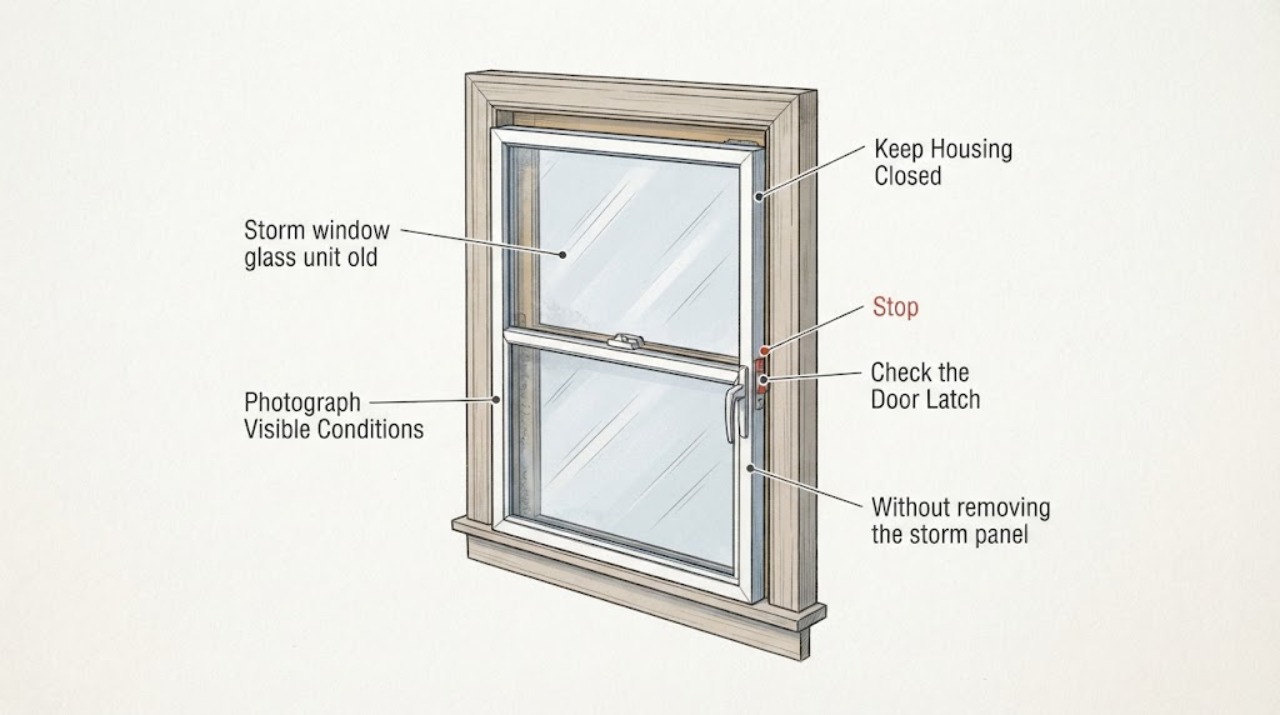
An old storm window does not automatically require a complete window replacement. First document whether the glass unit is cracked, loose, fogged between panes, or only showing removable surface condensation; then check from indoors or the ground whether the frame, tracks, latches, seals, and drainage path look sound. Do not remove the storm panel, handle broken glass, climb, or perform an installation procedure. A sound frame with a damaged or failed glass unit may support a replacement-glass estimate, while corrosion, distortion, failed hardware, unsafe looseness, or damage extending into the primary window may make a complete storm-window or window-system assessment more appropriate. Isolate any cracked or loose glass and ask a qualified window professional to identify the unit and prepare a replacement estimate.
Before you begin
Safety first
- Do not remove the storm panel, handle broken glass, climb, pry trim, force a latch, drill or vent the glass, or perform a replacement installation. The professional should identify the glass unit and decide between glass, panel, storm assembly, or broader window replacement.
Work through in order
Diagnostic checks
Use only checks that match the exact appliance or system and its official guide.
-
Check 1
From inside the room or from the ground outside, look at the storm-window glass without touching it. Photograph any crack, chip, starburst, loose-looking pane, missing piece, or visible edge gap, and keep people and pets away from the window if the glass appears unstable.
Expected result: Record whether the glass is intact, visibly damaged, or too obscured to judge. Note whether the defect is in the storm unit, the primary window behind it, or both, and whether any fragments are on the sill or floor.
Next step: Leave a damaged or loose unit unused and request a qualified window professional. Do not remove the panel, pick up fragments with bare hands, or try to hold the glass in place.
Stop if: Stop immediately if glass is cracked through, shifting, falling, or within reach of occupants; isolate the area and obtain professional help.
Why this matters
Why: A defect confined to the storm glass may support a glass-unit or panel replacement estimate. Damage to the primary window, a loose panel, or falling fragments raises the safety and scope beyond a simple glass substitution.
-
Check 2
Without removing the storm panel, compare the moisture appearance on the room-facing surface, the space between panes if visible, and the exterior-facing surface. Note the condition when the room is dry and again after a weather change, without wiping or pressing on questionable glass.
Expected result: Record whether moisture is a removable surface film, recurring fogging between panes, water at the sill, or no moisture at all. Note whether the pattern follows cold weather, indoor cooking or bathing moisture, rain, or a persistent leak.
Next step: Photograph the pattern and provide its timing to the estimator. Do not drill, vent, caulk over, or disassemble the glazing to make the moisture disappear.
Stop if: Stop and isolate the area if moisture is accompanied by a cracked pane, active water entry, staining, peeling finish, or a damp wall or sill.
Why this matters
Why: Surface condensation can reflect indoor moisture and a cold glass surface rather than a failed glass unit. Persistent fogging between panes or water collecting at the sill may indicate a glazing seal, drainage, or weather-sealing issue that needs professional assessment.
-
Check 3
From a safe indoor position, inspect the visible frame, rails, corner joints, latches, weather seals, and sill area. From the ground outside, look for corrosion, bowing, missing trim, a displaced screen or panel, blocked-looking drainage openings, or gaps around the storm frame; do not climb or remove anything.
Expected result: Note whether the frame is straight and seated, the latches appear present, the panel stays in its track, and the sill looks dry and supported. Record any rust, distortion, loose trim, damaged seal, or opening that could let water enter.
Next step: Send close and wide photos to a window professional and ask them to identify the replacement scope before ordering anything. Do not force the panel, adjust hardware, or attempt an installation repair.
Stop if: Stop if the panel can fall, the frame is detached, the sill or wall is soft or wet, or the window cannot be kept safely closed.
Why this matters
Why: A sound frame and hardware make a glass-unit estimate more plausible. Corrosion, distortion, failed latches, missing drainage features, or water damage may require a complete storm assembly or surrounding window assessment instead.
-
Check 4
Review any visible manufacturer label, model information, prior invoice, or building record from a safe location, and photograph the complete opening with the frame and surrounding trim. Do not remove trim or measure by opening the assembly.
Expected result: Record the storm-window style, whether it includes a screen or multiple panels, the visible material and finish, the room and opening location, and whether the primary window behind it still opens and latches normally without force.
Next step: Request a replacement estimate that lists the assumed unit identity, glass condition, frame and hardware condition, and any related sill or wall work to be assessed on site.
Stop if: Stop if obtaining the information would require climbing, removing the panel or trim, forcing a latch, or working near unstable glass.
Why this matters
Why: Identification and context help the professional determine whether a replacement glass unit, replacement storm panel, or complete assembly is realistically available. A primary window that is also damaged or unreliable broadens the estimate.
Use your observations
Decision map
Find the observation that best matches what you see, then follow the next safe action.
-
PATH 01Next step
What you see
The glass is cracked, loose, missing, or shedding fragments.
Do this next
Keep people and pets away, avoid touching the unit, and arrange prompt professional glass or storm-window service. Treat the opening as a safety issue, not a cleaning or maintenance task.
-
PATH 02Next step
What you see
The frame is straight and secure, hardware is present, and the visible defect appears confined to the glass unit.
Do this next
Ask for a glass-unit or storm-panel replacement estimate after the professional confirms the assembly identity and fit. Do not order an unverified substitute.
-
PATH 03Next step
What you see
The frame is corroded, bowed, detached, or the latches or tracks do not hold the panel reliably.
Do this next
Request a complete storm-window assessment; replacing only the glass may not restore safe attachment, drainage, or weather performance.
-
PATH 04Next step
What you see
Moisture is trapped between panes, repeatedly returns at the sill, or stains the trim or wall.
Do this next
Have the glazing seal, drainage, surrounding window, and moisture source assessed before selecting replacement scope. Keep the area dry and avoid covering the symptom.
-
PATH 05Next step
What you see
The primary window behind the storm unit is also cracked, difficult to operate, or unable to latch without force.
Do this next
Include the primary window in the replacement estimate and do not force it open or closed. A storm-panel replacement alone may not resolve the safety or operation problem.
-
PATH 06Next step
What you see
The glass and frame look intact but the unit is simply old or drafty.
Do this next
Document the frame style, visible gaps, condensation pattern, and operating behavior and ask a professional to compare repairable maintenance conditions with replacement options. Age alone does not identify the failed component.
Helpful context
Understand the symptom
Separate glass-unit age from a whole-window problem
A storm window can be old yet still have a serviceable frame, or it can look intact while the glass unit, seal, or attachment has failed. The useful distinction is whether the defect is confined to the glazing, affects the storm frame and hardware, or has allowed moisture to reach the primary window, wall, or sill. Photos from a safe position and a description of when the problem appears give a replacement professional better information than a forced removal.
Condensation is a clue, not proof of a failed unit
Moisture on a window can come from indoor humidity and a cold surface, while moisture trapped between panes or a recurring foggy area can indicate a glazing or seal condition. Storm windows can change surface temperatures and airflow, so note which side of the glass is wet and whether the pattern changes with weather or indoor moisture. Do not drill, vent, or seal over the glass to test it.
Replacement estimates depend on the existing assembly
A professional will need to know whether the unit is an exterior storm, an interior panel, or a combination storm-and-screen assembly, along with the visible frame condition and any identifying label. A replacement estimate may be for the glass unit, the storm panel, or the complete assembly. The correct choice depends on fit, frame condition, drainage, hardware, and the condition of the primary window—not age alone.
When checks do not resolve it
Need a professional?
Arrange professional window service for cracked or loose glass, a detached or corroded storm frame, recurring fogging between panes, water entry, damaged trim or wall, unreliable latches, or a primary window that is unsafe or difficult to operate. A replacement estimate is appropriate when the unit is old and its glass, frame, or hardware condition is uncertain.
Safety scope: Do not remove the storm panel, handle broken glass, climb, pry trim, force a latch, drill or vent the glass, or perform a replacement installation. The professional should identify the glass unit and decide between glass, panel, storm assembly, or broader window replacement.
Have this ready
- Provide wide and close photos from indoors or the ground, the opening location, storm-window style, visible label or records, the moisture or damage pattern, frame and hardware observations, and whether the primary window operates and latches normally.
Common questions
FAQ
Does an old storm window always need complete replacement?
No. A sound frame may only need a compatible glass-unit or panel assessment, while corrosion, distortion, failed hardware, unsafe looseness, or surrounding moisture damage can require a broader replacement. Age alone does not identify the failed component.
Is fogging proof that the storm glass unit has failed?
Not by itself. Surface condensation can come from indoor moisture and a cold glass surface. Fogging trapped between panes or recurring moisture at the sill is more useful as a reason to have the glazing seal, drainage, and surrounding window assessed.
Can I remove the storm panel to check the glass?
Not for this observation-only assessment. Do not remove the panel, force tracks or latches, climb, or handle damaged glass. Photograph the unit from a safe indoor or ground-level position and ask a professional to inspect it.
What information helps get a replacement estimate?
Provide wide and close photos, the opening location, visible labels or records, whether the unit includes a screen or multiple panels, the frame and latch condition, the moisture pattern, and whether the primary window still operates safely.
What should I do if the storm glass is cracked or loose?
Keep people and pets away, do not touch or tape the pane as a repair, and arrange professional service. If fragments are falling or the panel cannot remain safely supported, isolate the area and seek prompt help.
Read the exact guide
Official sources
- Purchasing Energy-Efficient Residential Storm WindowsU.S. Department of Energy · Federal purchasing and selection guidance for residential storm windows; used for the distinction between storm-window types, air leakage, condensation, durability, maintenance, and fit considerations.
- Clean and Maintain Andersen Combination UnitsAndersen Corporation · Manufacturer guidance for Andersen combination units only; used to show that a storm unit may combine glass panels and insect screens, that condensation patterns need interpretation, and that uncertain replacement identity should be confirmed with the manufacturer.
- What are the main ways to control moisture in your home?U.S. Environmental Protection Agency · General residential moisture guidance, not a storm-window replacement manual; used to distinguish condensation from water intrusion and to explain why storm windows can affect glass temperature and moisture.
Community feedback
Share a repair observation
Share a plain-text repair observation. Accepted observations are published automatically; this page may take a moment to update.