
On this page
Start here
Quick answer
Repeated drafts around an old storm window need a comparison of the storm panel and the primary window, not an automatic replacement order. From a stable interior or ground-level exterior position, record the draft location, wind direction, weather, and whether the air path is at the frame, sash, seal, glass, or hardware. Check visible weep holes and drainage, and note condensation or water staining without removing the panel or window. If one seal or latch is failing while both frames and the primary window remain sound, a local repair may be reasonable; broken glass, a warped or corroded frame, blocked drainage, or drafts across many windows point toward a measured replacement or building-envelope assessment. Do not climb, remove glazing or windows, force hardware, or use flame, smoke, or other unsafe draft tests.
Before you begin
Safety first
- Observation and planning only: do not climb, remove windows or glazing, force stuck panels or hardware, drill, block weep holes, use flame or smoke, scrape old paint, or disturb unstable trim or glass.
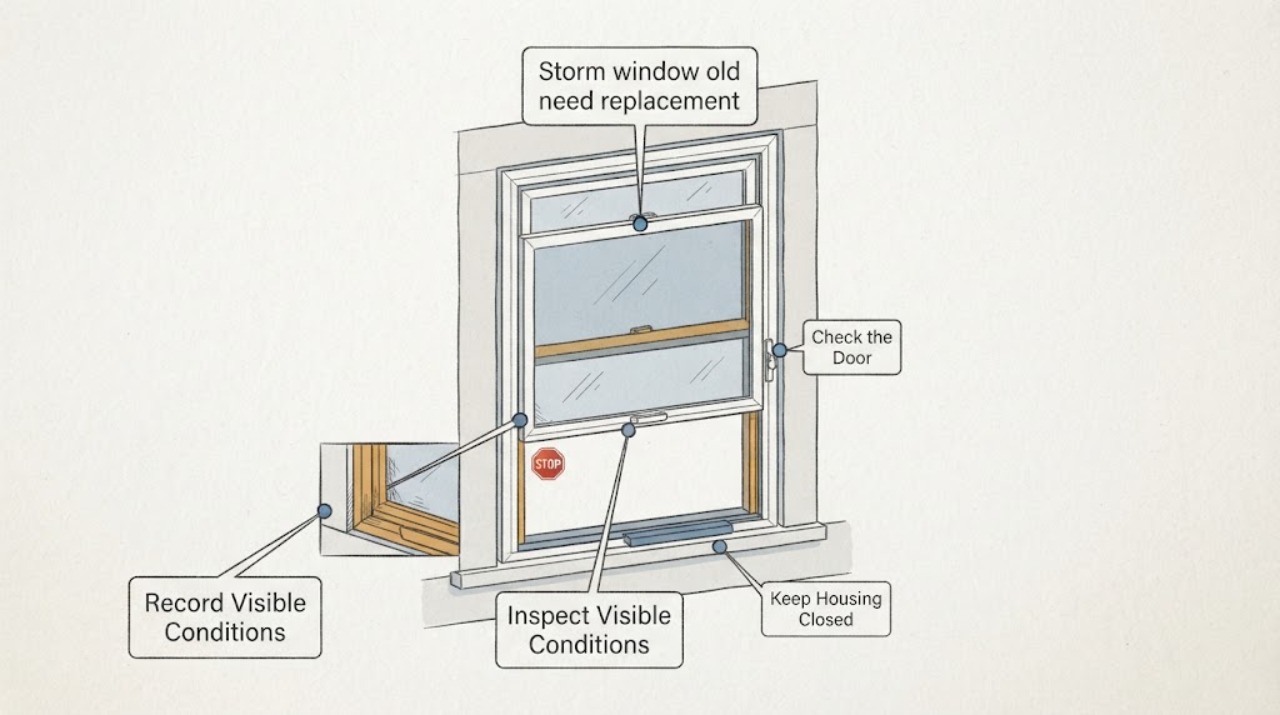
Work through in order
Diagnostic checks
Use only checks that match the exact appliance or system and its official guide.
-
Check 1
From a stable interior position, note exactly where the draft is felt around the storm window and record the weather, wind direction, temperature trend, and whether the same location leaks during more than one event. Do not use flame or smoke to find the leak.
Expected result: Map whether the air appears at the storm panel perimeter, meeting rail, sash, primary window edge, trim, or adjacent wall, and compare windward and sheltered sides of the home when those windows are safely reachable.
Next step: Photograph the interior edge and mark the draft location on a room sketch for a window professional; keep the storm and primary windows in their normal position.
Stop if: Stop if the observation requires opening a stuck panel, reaching outside, climbing, moving furniture unsafely, or approaching cracked glass or unstable trim.
Why this matters
Why: A repeatable draft at one joint points toward a local seal or fit issue; drafts that move with wind direction or occur around many windows may indicate frame, installation, or broader air-sealing conditions.
-
Check 2
Inspect visible frame and seal conditions on the storm window and the primary window without removing either one: look at perimeter seals, meeting rails, corners, trim, fasteners, and the contact between the two systems.
Expected result: Record cracked, shrunken, missing, compressed, or displaced seals; frame gaps, warping, corrosion, loose trim, or paint binding; and whether the storm frame or the primary sash is the first visible air boundary.
Next step: Give close photographs and the frame-versus-seal observation to a qualified window professional for a repairability assessment.
Stop if: Do not pry trim, pull fasteners, scrape old sealant, force a sash, or touch sharp, loose, or flaking material.
Why this matters
Why: A failed storm seal can be a local repair scope, while a damaged primary frame, warped opening, or deteriorated trim can make a storm-panel fix temporary or inappropriate.
-
Check 3
Compare the storm panel with the primary window: inspect visible glass or glazing, condensation, fogging, cracks, broken edges, open sashes, and whether the primary window still opens and closes normally from a safe indoor position.
Expected result: Note which layer shows condensation or damage, whether the draft remains when the storm panel is visibly seated, whether the primary sash is painted shut or warped, and whether emergency egress or ventilation could be affected.
Next step: Ask the professional to price the appropriate scope—seal or hardware repair, storm-panel replacement, primary-window repair, or full replacement—using the two-layer diagnosis.
Stop if: Stop for broken glass, water between layers that cannot drain, a window that may fall, or any need to remove glazing or the window from its opening.
Why this matters
Why: Storm windows are attachments to primary windows; a storm replacement cannot correct a rotted, non-operating, or damaged primary window, while a sound primary window may not require full replacement.
-
Check 4
Inspect visible hardware and moisture-management details from a safe position: latches, clips, tracks, corners, weep holes, sill edges, and any drainage outlet on the storm frame.
Expected result: Record a latch that does not engage, clips that are missing, a panel that sits unevenly, blocked or absent weep openings, water staining, or moisture trapped between the storm and primary window.
Next step: Photograph the hardware and drainage details and ask a window professional to confirm the correct repair or replacement configuration.
Stop if: Do not drill, enlarge weep openings, remove clips, lift the panel, or apply sealant over a drainage path.
Why this matters
Why: Loose hardware or blocked drainage can create both drafts and moisture damage; sealing every opening or adding a storm panel without preserving drainage can worsen the problem.
-
Check 5
Prepare a repair-versus-replacement brief with window and storm-panel age, dimensions visible without removal, draft maps by weather direction, frame, seal, glass, hardware, condensation, drainage, and primary-window observations.
Expected result: Confirm whether the issue is one opening or several, one weather exposure or many, and one storm component or the primary window as well; note any opening that could not be safely reached.
Next step: Request a measured quote and installation or access plan from a qualified window professional, including local code and any historic-preservation or lead-paint considerations.
Stop if: Do not order a replacement by rough size, remove the window, climb, or disturb old paint or glazing before the professional confirms the scope.
Why this matters
Why: This evidence lets a professional separate a local seal or hardware repair from storm-panel replacement, primary-window replacement, or a coordinated air and water-envelope scope.
Use your observations
Decision map
Find the observation that best matches what you see, then follow the next safe action.
-
PATH 01Next step
What you see
A single storm-window perimeter seal or latch is visibly displaced, the primary window operates normally, and the frame and glass appear sound.
Do this next
Request a local seal or hardware repair assessment; replacement is not established until fit and drainage are checked.
-
PATH 02Next step
What you see
The storm frame is warped or corroded, the panel is cracked or broken, or the storm no longer seats evenly while the primary window remains sound.
Do this next
Obtain a measured storm-panel replacement quote that preserves drainage and matches the existing primary opening; do not remove the panel yourself.
-
PATH 03Next step
What you see
The primary sash or frame is rotted, painted shut, badly warped, damaged, or still drafty after the storm panel appears seated.
Do this next
Treat the primary window as the main scope and request a repair-versus-full-replacement assessment rather than adding another storm layer.
-
PATH 04Next step
What you see
Condensation, water staining, trapped moisture, or blocked weep holes appears between the storm and primary window.
Do this next
Pause sealing and obtain a professional moisture and drainage assessment; do not block drainage openings or conceal wet material.
-
PATH 05Next step
What you see
The draft repeats across several windows, elevations, or the same windward exposure, with no single failed seal explaining it.
Do this next
Request a broader window and building-envelope air-sealing assessment with measured comparisons instead of replacing one panel by guesswork.
-
PATH 06Next step
What you see
The opening is above safe reach, glass or trim is unstable, the home may have lead paint, or local egress, historic, or code requirements are uncertain.
Do this next
Keep the inspection at stable interior or ground-level viewpoints and use a qualified window professional who can address access, glazing, lead-safe work, and local requirements.
Helpful context
Understand the symptom
Find the air boundary first
A storm window sits over a primary window, so a repeated draft can originate at the storm panel, the primary sash, the frame, the seal, or the surrounding wall. Record the draft position and weather direction before deciding that the old storm itself needs replacement.
Separate frame, seal, glass, and hardware
A cracked seal, loose latch, warped frame, damaged glass, blocked weep opening, and rotted primary sash lead to different scopes. Compare the two window layers and record condensation or water staining. Do not seal over a drainage path or force a stuck panel to obtain proof.
Local repair versus replacement
One sound storm frame with a displaced seal or latch may be a local repair. A panel that is damaged or no longer fits may need measured storm replacement. A deteriorated primary window, repeated failures across elevations, or moisture behind the assembly calls for a wider professional assessment.
Keep access and glazing work professional
This page is limited to stable interior and ground-level observation. Window removal, glazing work, ladder access, disturbed old paint, and repairs to unstable frames belong to a qualified window professional. Ask about local code, emergency egress, historic requirements, and lead-safe practice when they apply.
When checks do not resolve it
Need a professional?
Call a qualified window professional when the primary window is damaged or inoperable, the frame or glass is unstable, moisture is trapped, drafts recur across openings, a repair requires height or removal, or local code or lead-safe requirements are uncertain.
Safety scope: Observation and planning only: do not climb, remove windows or glazing, force stuck panels or hardware, drill, block weep holes, use flame or smoke, scrape old paint, or disturb unstable trim or glass.
Have this ready
- Provide the room and opening, draft map, weather and wind direction, storm-versus-primary observations, frame and seal condition, glass and condensation notes, hardware and drainage photographs, window age, dimensions visible without removal, and any lead, egress, historic, or access concern.
Common questions
FAQ
How do I tell whether the storm window or primary window is causing the draft?
From a stable position, map the air path at the storm perimeter, meeting rail, primary sash, frame, trim, or adjacent wall and compare it across weather events. Note whether the draft remains when the storm panel appears seated, but do not force or remove either window; a professional should confirm the layer at fault.
What does condensation between a storm and primary window mean?
It can indicate trapped moisture, blocked drainage, a failed seal, or an indoor humidity and temperature condition. Photograph the location, check only visible weep and sill details, and do not block openings or remove the panel before a window professional assesses the moisture path.
When is a storm-panel repair better than full window replacement?
A local seal or hardware repair may fit when one storm component is displaced but the storm frame, glass, and primary window are sound. A damaged panel may need measured storm replacement, while rot, a warped primary sash, or drafts across many openings can require a broader or full-window scope.
Should I seal around an old storm window to stop the draft?
Not before confirming the leak boundary and drainage. Sealant over a weep opening, wet material, or a moving sash can trap moisture or prevent operation. Have the professional identify the correct repairable joint and compatible material.
Can I remove the storm window to inspect the primary window?
No. Do not remove panels or glazing, force stuck hardware, climb, or work around unstable glass or trim. Photograph what is visible from a stable interior or ground-level position and request a qualified inspection, especially where egress, old paint, or local code may matter.
Read the exact guide
Official sources
- Storm WindowsENERGY STAR, U.S. Environmental Protection Agency · Supports distinguishing storm attachments from primary windows and checking fit, operating condition, moisture drainage, and local requirements; site-specific diagnosis remains professional work.
- High Performing Windows or Storm WindowsENERGY STAR, U.S. Environmental Protection Agency · Supports observing draft and degradation patterns before choosing repair or replacement; savings and suitability vary with climate and the existing assembly.
Community feedback
Share a repair observation
Share a plain-text repair observation. Accepted observations are published automatically; this page may take a moment to update.