
On this page
Start here
Quick answer
Before requesting a replacement estimate, inspect the storm window from inside and from safe ground-level views only. Record whether the frame is bent or corroded, the glazing is cracked or cloudy, the panel fits and latches, drafts or rattling are present, and moisture or condensation is trapped between the storm and primary window. A damaged or poorly fitting storm may justify replacement, but the primary window, sill, surrounding trim, or the opening itself may also need assessment. Do not climb outside, remove glass, force a stuck panel, disturb old paint or suspected asbestos, or follow an installation manual. Have a qualified window professional assess the opening and provide a replacement scope.
Before you begin
Safety first
- The reader should limit work to interior and ground-level observation. Do not climb outside, remove glass or panels, force hardware, disturb lead or asbestos, cut, drill, or follow an installation procedure.
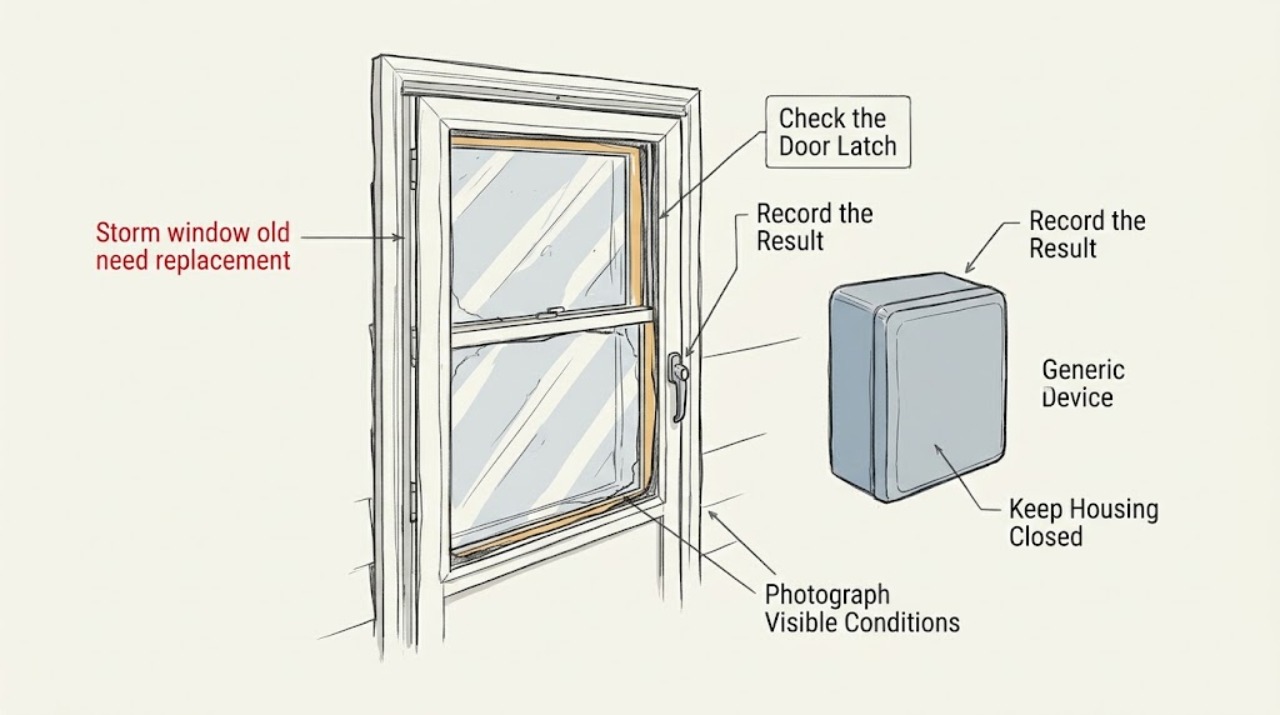
Work through in order
Diagnostic checks
Use only checks that match the exact appliance or system and its official guide.
-
Check 1
From inside, inspect the visible storm-window frame, corners, sill, and fastener or latch areas without removing the panel, scraping paint, or applying force.
Expected result: The frame looks straight and intact, is visibly bent or separated, shows corrosion or rot nearby, or has a gap at a corner or perimeter.
Next step: Photograph each affected corner and describe whether the issue is limited to the storm frame or continues into the primary window and trim.
Stop if: Stop if the frame moves, sharp metal or glass is exposed, or inspection would require reaching outside or removing a component.
Why this matters
Why: A localized frame or perimeter defect may be part of a storm-panel replacement. Damage at the sill, trim, or opening suggests the professional should inspect the surrounding assembly instead of quoting glass alone.
-
Check 2
Look through the storm window from a safe interior position and photograph the glazing without pressing, tapping, or trying to clean between sealed layers.
Expected result: The glazing is clear and intact, cracked or chipped, cloudy between layers, loose in its frame, or visibly scratched or discolored.
Next step: Keep people away from cracked or loose glazing and tell the professional the panel position, visible damage, and whether the primary window behind it appears intact.
Stop if: Do not touch cracked glass, remove glazing, apply tape as a structural fix, or disassemble the frame.
Why this matters
Why: Cracked, loose, or failed-looking glazing supports a professional replacement assessment. Cloudiness may indicate a sealed-glazing or moisture issue, but the visible pane condition alone does not identify the repair scope.
-
Check 3
Observe whether the storm panel sits evenly in its opening and whether its visible latches, sliders, or operating parts move normally with light ordinary use; do not force a stuck part.
Expected result: The panel fits and latches evenly, has a visible gap or rattle, binds, will not latch, or cannot be tested safely.
Next step: Record the exact position and symptom and ask for an assessment that includes the opening, hardware, and replacement options.
Stop if: Stop operation if the panel sticks, shifts, cracks, or could fall; do not force, pry, or lean on it.
Why this matters
Why: A gap, rattle, or failed latch can affect air leakage, noise, and weather resistance. Binding or an uneven fit may reflect a frame or opening problem that needs professional measurement.
-
Check 4
Inspect the room-side sill, trim, and the visible space between the storm and primary window for condensation, water marks, dampness, peeling finish, or a musty odor without opening the assembly.
Expected result: The area is dry, has intermittent condensation, has a recurring water mark or damp edge, or shows deterioration that continues into the wall or sill.
Next step: Photograph the boundary and tell the professional when moisture appears, after which weather or cleaning conditions, and whether the primary window is also affected.
Stop if: Stop if water is actively entering, the sill is soft, mold-like growth is visible, or the condition reaches electrical equipment or a concealed wall.
Why this matters
Why: Moisture changes the scope: a new storm panel cannot correct a leaking primary window, blocked drainage path, damaged sill, or surrounding water damage by itself.
-
Check 5
Compare the old storm window with a neighboring window from inside and from a safe ground-level exterior view, noting drafts, rattling, visible daylight, operation, and general frame condition without climbing or reaching.
Expected result: Only one storm window differs, several windows show the same age-related issue, or the primary windows also show poor fit or deterioration.
Next step: List each affected opening and ask the professional to separate storm-panel replacement, primary-window work, trim repair, and weather-sealing in the estimate.
Stop if: Do not access upper levels, climb, remove screens or storms, or disturb painted or unknown building materials to make the comparison.
Why this matters
Why: A single-window difference supports a localized quote. A repeated pattern or primary-window deterioration may require a broader window assessment and different replacement scope.
Use your observations
Decision map
Find the observation that best matches what you see, then follow the next safe action.
-
PATH 01Safety boundary
What you see
The storm frame or glazing is visibly damaged, but the primary window and surrounding sill appear intact from inside.
Do this next
Request a storm-window replacement assessment that records the existing panel type, opening, glazing, and operation requirements.
Why this path and its safety boundary
Safety stop: Do not order a generic panel or remove the old glazing before fit and safe access are verified.
-
PATH 02Safety boundary
What you see
The storm window fits poorly, rattles, binds, or will not latch.
Do this next
Ask the window professional to assess both the storm frame and the primary opening for distortion, hardware, or weather-seal issues.
Why this path and its safety boundary
Safety stop: Do not force the panel or modify the frame to make it latch.
-
PATH 03Safety boundary
What you see
Condensation, water marks, dampness, or deterioration extends to the sill, trim, wall, or primary window.
Do this next
Request a moisture and opening assessment before choosing replacement; involve the appropriate water-damage professional if the source is unclear.
Why this path and its safety boundary
Safety stop: Do not seal over wet materials or treat a moisture path as a storm-window-only problem.
-
PATH 04Safety boundary
What you see
Several old storm windows show similar drafts, glazing failure, or poor operation.
Do this next
Ask for a room-by-room window assessment and an estimate that distinguishes storm attachments from full primary-window replacement.
Why this path and its safety boundary
Safety stop: Do not assume that one product or installation method fits every opening.
-
PATH 05Safety boundary
What you see
The home is old, painted surfaces are deteriorating, or work would disturb suspected lead or asbestos-containing material.
Do this next
Stop at observation and hire an appropriately qualified, lead-safe or hazardous-materials-aware professional for the work scope.
Why this path and its safety boundary
Safety stop: No scraping, sanding, cutting, glass removal, drilling, or disturbance of unknown old materials by the reader.
Helpful context
Understand the symptom
An old storm window is an attachment over a primary window, so replacement is not always a simple glass or screen swap. The storm frame, glazing, latches, seals, weep paths, primary window, sill, and surrounding trim all affect fit, drafts, moisture, and safe operation. A replacement estimate is more useful when these observations are recorded first.
Keep the inspection inside or at ground level. Photograph the room-side frame, sill, glazing, latches, and any visible gap; do not climb, reach over an exterior edge, remove the panel, press on cracked glass, or force a latch. If the home is old and painted surfaces may contain lead or another hazardous material, leave the surface undisturbed and tell the professional before any work.
Energy and comfort decisions depend on the whole window condition. ENERGY STAR notes that storm windows work best over primary windows in good condition and that correct product selection depends on the existing window, climate, operability, moisture drainage, and installation. Those are assessment questions, not a reason to choose a generic replacement by appearance alone.
Use the checks below to distinguish a localized storm-panel defect from a broader window-opening or moisture problem, then give the record to a qualified window professional for a replacement or repair estimate.
When checks do not resolve it
Need a professional?
Safety scope: The reader should limit work to interior and ground-level observation. Do not climb outside, remove glass or panels, force hardware, disturb lead or asbestos, cut, drill, or follow an installation procedure.
Have this ready
- Share the opening locations, frame and glazing condition, fit and latch behavior, draft or rattle observations, moisture boundary, primary-window condition, photos, approximate installation history if known, and any old painted or suspect materials.
Common questions
FAQ
Does an old storm window always need to be replaced?
No. Age alone does not establish the scope. Check frame, glazing, fit, operation, drafts, and moisture from safe interior or ground-level positions, then have a professional determine whether the storm, primary window, trim, or opening needs work.
Can a new storm window fix drafts from an old primary window?
It may help only when the attachment and primary window are suitable and the installation fits correctly. ENERGY STAR guidance distinguishes storm attachments from full primary-window replacement and recommends considering the existing window's condition and operation.
What should I do before replacing windows in an older home?
Do not disturb old paint or unknown materials while inspecting. Tell the contractor the home's age and any deteriorated paint, and use an appropriately qualified lead-safe professional when the work could disturb painted window components.
Read the exact guide
Official sources
- Renovation, Repair and Painting (RRP) Program: ConsumersU.S. Environmental Protection Agency · Supports stopping before disturbing old paint and referring pre-1978 window work to lead-safe professionals; it does not determine whether a specific home contains lead or prescribe window installation.
- Purchasing Energy-Efficient Residential Storm WindowsU.S. Department of Energy, Federal Energy Management Program · Supports assessing storm-window type, air leakage, moisture drainage, climate, and fit before specifying a replacement; it is not an installation manual.
- Storm WindowsENERGY STAR · Supports asking whether the primary window is in good condition, whether the storm fits and operates, whether moisture can drain, and whether professional installation is needed; product choices remain site-specific.
Community feedback
Share a repair observation
Share a plain-text repair observation. Accepted observations are published automatically; this page may take a moment to update.