
On this page
Start here
Quick answer
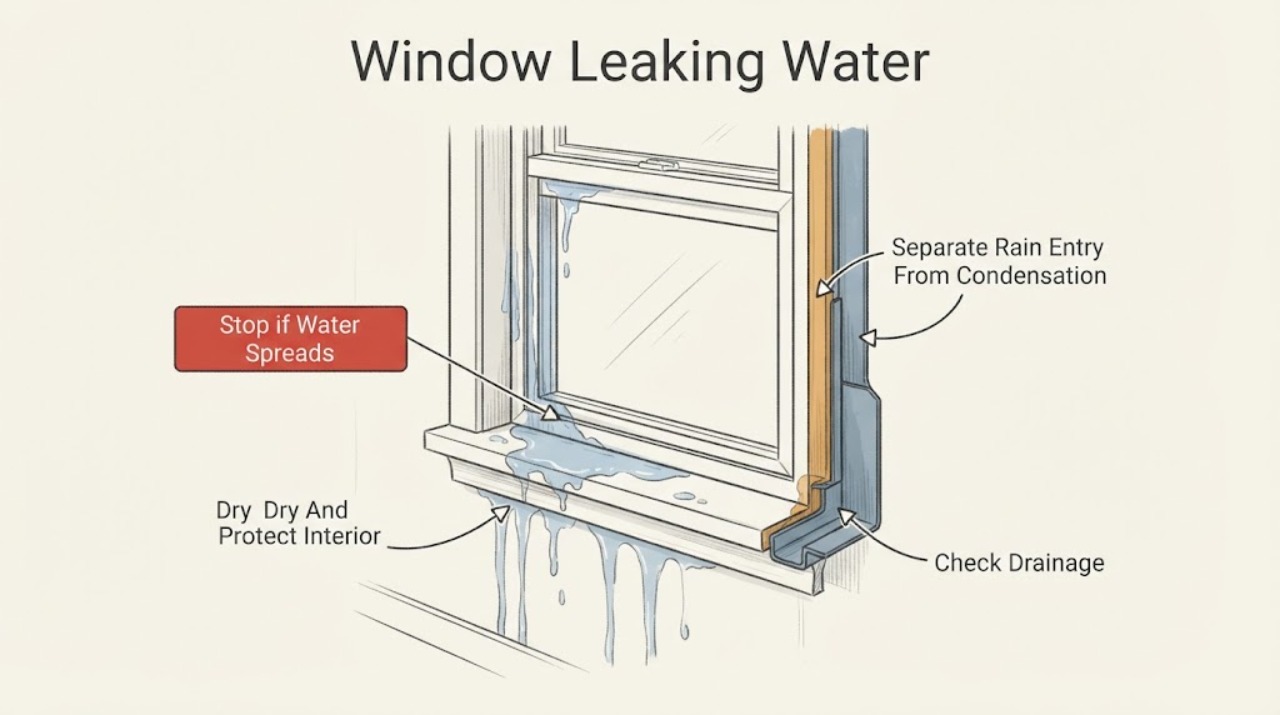
First decide whether water is entering from outdoors during rain or is condensation forming on the indoor glass. During or after rain, trace the highest wet point from inside and inspect the exterior only from a safe, reachable position for blocked drainage, failed seals, damaged flashing, siding or roof runoff. Dry the sill and nearby materials promptly, keep weep or drainage openings clear, and do not seal over a path that is meant to drain. Condensation needs moisture and ventilation control rather than exterior caulk. If water is behind trim or in the wall, the frame or sill is soft or stained, mold is extensive, the leak persists, or the work requires a ladder, trim removal or flashing reconstruction, stop and call a qualified window or building-envelope professional.
Work through in order
Diagnostic checks
Use only checks that match the exact appliance or system and its official guide.
-
Check 1
Record when the water appears and where it first becomes visible: only during or after rain, wind or snow; after showers or cooking; or on cold indoor glass without outdoor wetting.
Expected result: Outdoor weather-linked water favors an opening, flashing or exterior drainage path. Droplets on the room-side glass with no rain favor condensation; water at a wall, trim joint or pooled sill needs further tracing.
Next step: Photograph the first wet point and nearby stains, then use the weather-linked branch for exterior checks or the condensation branch for drying and humidity control.
Stop if: Stop and arrange professional help if water is near electrical equipment, the ceiling or wall is bulging, the frame is soft, or the source is hidden.
Why this matters
Why: The timing prevents treating indoor condensation as a failed exterior seal or treating a rain leak as a humidity problem.
-
Check 2
Move furnishings away, catch active drips, blot the sill and dry reachable trim and wall surfaces promptly; leave the area ventilated while watching for staining, swelling, peeling paint or a musty odor.
Expected result: A surface that dries and stays sound after a small isolated event is different from recurring dampness, soft wood, bubbling finish, spreading stain or visible mold.
Next step: Keep a dated record of wetness and drying. If materials stay damp, damage spreads or mold is present beyond a small surface area, stop cleanup and contact a water-damage or building professional.
Stop if: Do not disturb hidden mold, contaminated water, saturated drywall or materials that may conceal structural damage; keep occupants with health concerns away and seek professional advice.
Why this matters
Why: Drying limits secondary damage, but it does not repair the water path. Persistent moisture means the source remains active or hidden.
-
Check 3
From the ground or another safe reachable position, inspect the window’s head, side joints, sill edge, nearby siding, overhangs, gutters and downspouts for obvious gaps, damaged flashing, overflow or water being directed toward the opening.
Expected result: A blocked gutter, overflowing downspout, failed joint above the window or visible damaged flashing can provide a path for rainwater. No visible defect does not rule out a concealed opening or wall-cavity path.
Next step: Correct only a clearly accessible gutter or downspout obstruction without climbing or dismantling the opening, then observe during the next safe rain event. Escalate visible flashing or siding damage.
Stop if: Do not use an unsafe ladder, climb a roof, remove siding or disturb flashing; stop if the window is high, the cladding is loose or water is entering the wall.
Why this matters
Why: Window flashing is part of the wall drainage system; water may enter above or beside the window and travel before appearing inside.
-
Check 4
With the window operating normally, check that the sash or panel closes and latches, that accessible tracks and weep openings are not blocked, and that no temporary screen, film or object is directing water inward.
Expected result: A window that will not close, has blocked drainage openings or has a shifted sash may admit water even when the perimeter seal looks intact. A clear drainage path with water still entering points toward flashing or installation.
Next step: Remove only loose surface debris from accessible tracks or weep openings without tools or sealant. If operation is stiff, the sill is damaged or the path is behind the frame, arrange service.
Stop if: Do not force the sash, remove glazing beads, drill the sill, caulk weep holes or alter hardware to make the leak stop.
Why this matters
Why: The assembly must close while allowing incidental water to drain outward; sealing every opening can redirect water into the frame or wall.
-
Check 5
After drying and any clearly accessible correction, compare the marked wet points during similar weather and check whether the wall, trim and sill remain dry between events.
Expected result: No recurrence at the same weather exposure supports the correction. Recurring water, a stain that grows, moisture behind trim, mold, soft framing or water that appears far from the window indicates an unresolved path.
Next step: Call a qualified window installer, building-envelope contractor or water-damage professional and provide photos, weather timing, wet-point map and any exterior observations.
Stop if: Stop DIY work immediately if the repair requires trim removal, flashing reconstruction, wall opening, work at height, structural repair or handling extensive mold or contaminated water.
Why this matters
Why: A surface retest cannot certify hidden flashing, the rough opening or wall drainage; persistent symptoms need a building-envelope diagnosis.
Use your observations
Decision map
Find the observation that best matches what you see, then follow the next safe action.
-
PATH 01Next step
What you see
Water appears on the room-side glass without rain or exterior wetting and is associated with humid indoor conditions.
Do this next
Dry the surface, reduce indoor moisture and improve practical ventilation; seek service if water enters the frame or wall or condensation persists despite moisture control.
Why this path and its safety boundary
Why it matters: Condensation is more likely than rain penetration.
-
PATH 02Next step
What you see
Water appears during wind-driven rain or after precipitation at the sill, trim or wall.
Do this next
Map the first wet point and inspect only safe reachable exterior conditions; escalate concealed or elevated work.
Why this path and its safety boundary
Why it matters: An exterior opening, flashing, drainage or installation path is possible.
-
PATH 03Next step
What you see
A gutter or downspout visibly overflows toward the window and the window itself appears sound.
Do this next
Correct the accessible drainage obstruction without unsafe climbing, then monitor the original wet point during the next comparable event.
Why this path and its safety boundary
Why it matters: Roof runoff may be wetting the opening rather than the window seal being the sole cause.
-
PATH 04Next step
What you see
The frame, sill or nearby wall is soft, stained, swollen, moldy, or wet behind trim.
Do this next
Stop opening or sealing the assembly and arrange qualified window or water-damage assessment.
Why this path and its safety boundary
Why it matters: Water damage may be hidden and a surface bead of caulk will not resolve it.
-
PATH 05Next step
What you see
The leak persists after safe external checks or requires a ladder, roof access, flashing work, trim removal or wall opening.
Do this next
Use a qualified professional and provide the wet-point map, photos, weather timing and any moisture or mold observations.
Why this path and its safety boundary
Why it matters: The remaining work is a coordinated installation or building-envelope repair.
Helpful context
Understand the symptom
Rain entry and condensation need different fixes
Water that appears after rain, wind or snow is an exterior water-management problem until proven otherwise. Droplets that form on the indoor glass without outdoor wetting can be condensation from humid indoor air. Both can damage trim and walls, but adding caulk to the wrong surface can trap water or block a window’s drainage path.
Protect people and the wall before opening anything
Move furnishings, catch active drips and dry reachable surfaces. Do not climb onto a roof or unsafe ladder, remove exterior cladding, pry trim, drill through the sill, or apply sealant over weep openings or active water damage. Treat suspected mold or contaminated water as a professional boundary.
The highest visible wet point may not be the entry point
Water can travel through flashing, framing or a wall cavity before appearing at the sill. A dry-looking upper frame does not clear the exterior opening. If the path cannot be traced from safe accessible areas, document it and escalate rather than sealing the first wet seam.
Only after diagnosis
Potential parts
- window perimeter gasket or seal
A worn perimeter seal may contribute to leakage, but water can also originate in flashing, drainage or the wall opening.
Confirm the exact window construction and seal location; do not cover drainage paths or assume a generic seal fits. - window flashing or sill-pan material
Flashing is part of a coordinated drainage-plane system and may require opening the assembly rather than applying a surface patch.
No material or fit is asserted. Hidden, broad or elevated flashing work should be performed by a qualified professional. - compatible exterior sealant for a documented stationary joint
A small exposed joint may need compatible sealant, but sealing an active leak or drainage opening can redirect water into the wall.
Use only when the joint is identified, sound and accessible; do not seal weep openings or over damaged materials.
When checks do not resolve it
Need a professional?
Call a qualified window or building-envelope professional if the leak returns, water is behind trim or in the wall, the frame or sill is soft or stained, mold or contaminated water is present, the source cannot be traced safely, or repair requires height access, flashing reconstruction, trim removal or wall opening.
Common questions
FAQ
How can I tell if a leaking window has a rain leak or condensation?
Rain-linked water at the sill, trim or wall favors an exterior opening or flashing path. Droplets on the indoor glass without outdoor wetting favor condensation from indoor moisture. Photograph and map the first wet point before sealing anything.
Should I caulk around a leaking window?
Only a clearly identified, sound, accessible stationary joint should be considered for compatible sealant. Do not caulk weep openings or active water damage; window flashing and wall drainage may need professional repair.
Why does water appear below the window when the top looks dry?
Water can travel through flashing, framing or the wall cavity before appearing at the sill. A dry visible head does not rule out a hidden opening, so persistent or displaced wetness needs professional tracing.
What should I do if the leaking window has mold or soft trim?
Dry and protect the area without disturbing hidden mold or saturated materials, then arrange qualified water-damage or building-envelope assessment. Fixing the moisture source is required before cleanup is considered complete.
Read the exact guide
Official sources
- Windows and Doors are Installed: Fully Flashed Window and Door OpeningsU.S. Department of Energy Building Science Education · DOE guidance on sill, side and top flashing and integration with the wall drainage plane.
- Window FlashingU.S. Department of Energy Building Science Education · DOE guidance that windows interrupt the drainage plane and flashing directs water out of the wall cavity.
- A Brief Guide to Mold, Moisture and Your HomeU.S. Environmental Protection Agency · EPA guidance on moisture collecting on windows, drying after leaks, condensation, hidden mold and professional boundaries.
Community feedback
Share a repair observation
Share a plain-text repair observation. Accepted observations are published automatically; this page may take a moment to update.