
On this page
Start here
Quick answer
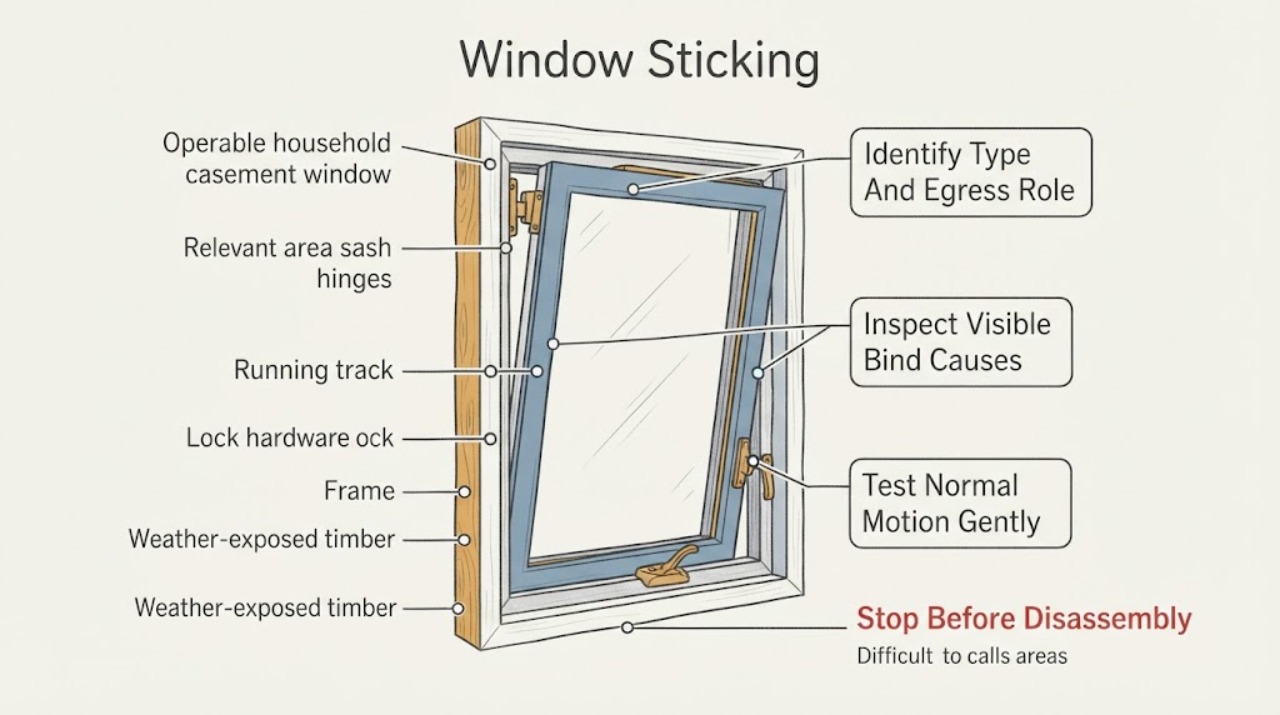
Do not force a sticking window or pry on its glass. First identify whether it is a sliding sash, casement, or another design, and whether it is a bedroom or other emergency-escape window. With the handle in its normal unlocked position, make one gentle movement and note whether the bind is at the sill, side, head, hinge, lock, or track. Look for paint buildup, dirt, moisture-swollen timber, a dropped sash, loose or worn hinges, frame distortion, or a damaged lock without removing hardware. For a traditional timber sash with only slight drag, Cadw says candle wax on the running surfaces may help, but manufacturer instructions take priority for modern windows. If the window is required for escape, cannot open from inside without unusual force, has cracked glass, a broken sash cord, severe distortion, or needs tools or ladder work, stop and arrange a qualified window professional; keep children away and do not disable guards or restrictors.
Before you begin
Safety first
- User checks stop at identifying the window type and egress role, clearing movable obstructions, inspecting accessible surfaces, one gentle normal movement, and design-approved light cleaning or traditional-sash wax only when the exact guidance permits it. Do not pry, force, climb, remove a sash, cut or sand paint, drill, adjust structural shims, disable guards/restrictors, or work near cracked glass or a falling sash.
Work through in order
Diagnostic checks
Use only checks that match the exact appliance or system and its official guide.
-
Check 1
From inside, identify the operating style—vertical or horizontal sash, side-hinged casement, awning, tilt, or another design—and whether the room's window is designated or relied on for emergency escape. Check that furniture, a screen, guard, restrictor, storm panel, or exterior obstruction is not preventing the normal opening path. Do not remove a safety device or climb outside.
Expected result: The window is an egress window; the style is known; a guard, restrictor, storm panel, or furniture blocks movement; or the style and opening path are unclear.
Next step: Clear only movable interior furniture or a plainly removable screen from the normal path, then continue with a gentle inspection. If an egress window cannot open normally or a guard/restrictor is involved, arrange professional assessment rather than disabling it.
Stop if: Stop if the window is above a fall hazard, glass is cracked or loose, a sash may fall, the opening is an egress route that cannot be restored safely, or exterior access would require a ladder or climbing.
Why this matters
Why: Window design determines whether the moving part is a sash, hinge, operator, balance, or track. If it is an emergency-escape window, a sticking condition has a life-safety consequence. An unclear design means generic adjustment instructions could damage hardware or glass.
-
Check 2
With the window closed and hands clear of pinch points, inspect the accessible frame, sash edges, sill, track, hinges, lock keepers, and weatherstripping. Look for paint bridging the seam, dirt or grit, moisture or swollen timber, rust, missing hinge screws, a visibly dropped sash, uneven gaps, or recent caulking/painting that may have sealed the moving part. Do not remove screws or cut paint yet.
Expected result: Paint or debris is visible at the bind; the timber appears swollen or damp; a hinge or lock looks loose or worn; the sash sits unevenly; the frame is distorted; or no cause is visible.
Next step: Use the matching branch below. A plainly accessible, light surface clean may be appropriate only when it does not require force; leave paint removal, hinge adjustment, sash removal, and structural or balance work to a professional unless the exact manufacturer guide explicitly supports the user's ability.
Stop if: Stop for cracked glass, active water intrusion, rotten or split timber, severe frame movement, a loose sash, broken cord, or hardware that requires opening the frame or applying force.
Why this matters
Why: Cadw associates sticking casements with paint, worn hinges, swelling, or frame problems and sticking sashes with paint, running surfaces, pulley/balance, stop-bead, or sash wear. Recent distortion can signal settlement or structural movement, while no visible cause means internal hardware or balance trouble remains possible.
-
Check 3
Put the handle or lock in its normal unlocked/open position and make one slow, gentle attempt through the normal range of motion. For a casement, observe whether the operator turns freely while the sash stays put; for a sash, observe whether the bind starts at one rail or whether the sash drops, tilts, or moves unevenly. Do not jerk, pry, push the glass, or continue if resistance increases.
Expected result: The window moves after the lock is correctly released; it catches at one edge; the handle turns without moving the sash; the sash moves unevenly or drops; or the glass/frame flexes.
Next step: Record the exact position and stop. Follow only the exact-model operating guide for a documented user adjustment; otherwise arrange a window professional, especially for a sash that can fall or a casement operator that turns without moving the sash.
Stop if: Stop immediately if the glass flexes or cracks, the sash drops, the handle slips, a hinge pulls away, the lock will not release, or the window needs more than gentle hand pressure.
Why this matters
Why: A lock or keeper position can prevent normal movement, while a one-edge bind suggests alignment, paint, swelling, or hinge/track contact. A free-spinning handle, dropped sash, falling cord, or flexing glass points to hardware, balance, or structural trouble that should not be forced.
-
Check 4
If the window is a traditional timber sash and the drag is slight, consult the window's care guidance before applying a small amount of plain candle wax to accessible running surfaces as Cadw describes. Otherwise, limit the user check to removing loose surface dust from an accessible track or frame without tools, solvents, oily spray, sanding, or paint removal. Do not lubricate a lock, operator, hinge, balance, or weatherstrip unless the exact manufacturer guide specifies it.
Expected result: The approved light maintenance reduces slight drag; the window is unchanged; the surface is painted shut; or the window is modern, damaged, damp, or structurally distorted.
Next step: Stop after one gentle recheck. If the window remains difficult, arrange professional adjustment or repair; do not escalate from wax or cleaning to scraping, sanding, drilling, or removing the sash.
Stop if: Do not apply oily lubricant, heat, solvent, aggressive cleaner, power tools, or force; stop for lead-paint concerns, rotten timber, broken glass, or any need to remove the sash or hardware.
Why this matters
Why: A small improvement on a suitable sash supports friction at the running surface as the immediate issue, but it does not repair worn cords, hinges, balances, or frame movement. No improvement, a painted seam, or an unsuitable design means further treatment could damage finish, seals, or hardware.
-
Check 5
Decide whether the window now opens and closes through its normal range, latches securely, and—if it is an emergency-escape window—opens from inside without special effort or separate tools. Record the window style, bind location, visible condition, any approved maintenance performed, and whether it is needed for escape.
Expected result: The window operates normally and remains secure; or it still sticks, cannot be latched, cannot serve as egress, has damaged glass/hardware, or needs force, tools, ladder work, or frame removal.
Next step: If the window remains unsafe or inoperable, keep people away from it and arrange a qualified window contractor, glazier, joiner, or installer as appropriate. Do not use it as an emergency exit until its operation is restored and verified.
Stop if: Do not screw the window shut, disable a guard or restrictor, remove a sash near a fall hazard, break a paint seal with force, or continue using damaged or unsecured glass/hardware.
Why this matters
Why: Normal movement after a documented, design-appropriate light check can be monitored, but recurring sticking may reflect moisture, alignment, wear, or structural movement. An inoperable escape window or damaged hardware is a safety and repair issue, not a cosmetic inconvenience.
Use your observations
Decision map
Find the observation that best matches what you see, then follow the next safe action.
-
PATH 01Next step
What you see
Paint, caulk, or finish visibly bridges the moving seam or the window appears painted shut.
Do this next
Do not force the sash or casement. Have a qualified window professional release the paint safely, especially if the opening is an egress window or the coating may contain lead.
-
PATH 02Next step
What you see
The bind is worse in damp weather or the frame/timber is swollen, soft, split, or shows water intrusion.
Do this next
Keep the window movement gentle and arrange a qualified window or building professional to address moisture and repair the affected frame before planing, sanding, or repainting.
-
PATH 03Next step
What you see
A casement drops or catches at the side, the operator turns without moving the sash, or hinges/lock hardware are loose, worn, or misaligned.
Do this next
Stop forcing the handle and arrange a qualified window professional or follow only the exact manufacturer's adjustment guide if it explicitly covers the installed model and the user's ability.
-
PATH 04Next step
What you see
A sliding sash binds along a running surface, moves unevenly, drops, or has a broken cord, pulley, balance, or stop-bead symptom.
Do this next
Support the area and keep the window closed or secured without blocking required escape. Arrange a qualified sash/window professional; do not remove the sash or access a balance or cord near a fall hazard.
-
PATH 05Next step
What you see
The frame is visibly out of square, the bind has no accessible cause, or the window needs force, tools, or structural adjustment.
Do this next
Stop user troubleshooting and arrange a qualified window contractor, joiner, glazier, or structural professional as appropriate. Provide photos and the exact bind location without dismantling anything.
-
PATH 06Next step
What you see
The sticking window is required for emergency escape, has cracked/loose glass, cannot latch securely, or presents a fall hazard.
Do this next
Treat it as a safety repair: keep occupants away, preserve another safe exit, and arrange prompt qualified inspection. Do not disable guards/restrictors or use force to open it.
Helpful context
Understand the symptom
Find where the window binds
A window that sticks at the bottom is not diagnosed the same way as one that catches at a hinge, lock, or head. Paint, debris, swelling from damp, a dropped sash, worn hardware, a twisted frame, or a failed balance can each change the safe next step. Identify the operating style and observe the contact point before applying any force.
Protect glass and emergency escape
Keep hands clear of the glass edge and support a sash that could fall. A bedroom egress window must remain openable from inside without special effort or tools; a window that cannot be opened is a safety issue even if it is not visibly damaged. Do not remove a guard or restrictor, screw a window shut, or use a ladder to reach an exterior mechanism while troubleshooting.
Use only design-specific maintenance
A dry running surface on a traditional timber sash may respond to a small amount of candle wax, as Cadw describes, but that advice is not a universal treatment for vinyl, aluminum, modern balances, locks, or casement operators. Do not use force, oily spray, tools, or sanding until the window maker or a qualified professional confirms the procedure for the exact design.
Only after diagnosis
Potential parts
- window hinge, sash balance, or operating hardware
Consider a replacement only after a qualified professional identifies worn or failed hardware as the cause of the sticking and confirms the window design and repair method.
Confirm the exact window type, dimensions, hardware configuration, load, and manufacturer's fit information before ordering; a similar-looking hinge or balance may not be safe or compatible.
When checks do not resolve it
Need a professional?
Arrange qualified window service for persistent sticking, loose or worn hinges, a sash that drops, broken cords or balances, frame distortion, swelling or decay, damaged glass, a window that will not latch, or any emergency-escape window that cannot open normally. Escalate promptly for a fall hazard or unsecured glass.
Safety scope: User checks stop at identifying the window type and egress role, clearing movable obstructions, inspecting accessible surfaces, one gentle normal movement, and design-approved light cleaning or traditional-sash wax only when the exact guidance permits it. Do not pry, force, climb, remove a sash, cut or sand paint, drill, adjust structural shims, disable guards/restrictors, or work near cracked glass or a falling sash.
Have this ready
- Provide the window style, room and egress role, exact bind location, whether the symptom changes with damp weather, photos of accessible frame/hardware, glass condition, recent painting or repairs, and the result of one gentle normal-operation check. Do not remove hardware to obtain details.
Common questions
FAQ
Why is my window sticking?
Common decision points include paint or debris, moisture-swollen timber, loose or worn hinges, a dropped sash, track or balance trouble, and frame distortion. Identify the window type and bind location without forcing it; the repair depends on that observation.
Can I force a stuck window open?
No. Force can crack glass, pull hardware from the frame, or let a sash fall. Make one gentle normal-operation check, then arrange professional help if it still binds or needs tools, prying, or exterior access.
Can candle wax help a sticking sash window?
Cadw mentions candle wax for slight drag on traditional sash running surfaces. Use that only when the window design and care guidance permit it; do not transfer it to modern tracks, locks, balances, or casement operators, and stop if the window remains difficult.
What if a bedroom egress window is stuck?
Treat it as a safety repair. Egress windows should open from inside without special effort or tools and remain in good repair. Keep the area clear, do not disable guards or restrictors, and arrange prompt qualified window service.
When should a sticking window be professionally repaired?
Call when the bind persists, the sash drops, cords or hinges are worn, the frame is swollen or distorted, glass is damaged, the window will not latch, or the repair requires removing hardware, cutting paint, climbing, or structural adjustment.
Read the exact guide
Official sources
- Windows and DoorsCadw, Welsh Government · Traditional timber and historic window guidance; modern window manufacturer instructions take priority.
- Service Guide - Windows - Operation & Adjustment -- 400 Series - Complementary French Casement, Clad - 106145Andersen Corporation · Andersen 400 Series complementary French casement windows covered by the guide; not a generic adjustment procedure.
- Chapter 29.30 Housing Maintenance RequirementsCity of Portland, Oregon · Portland housing-code requirements; local jurisdictional requirements may differ.
- Windows safetyBuilding and Construction Authority, Singapore Government · General homeowner window safety and maintenance guidance; local requirements and approved contractors control.
Community feedback
Share a repair observation
Share a plain-text repair observation. Accepted observations are published automatically; this page may take a moment to update.