
On this page
Start here
Quick answer
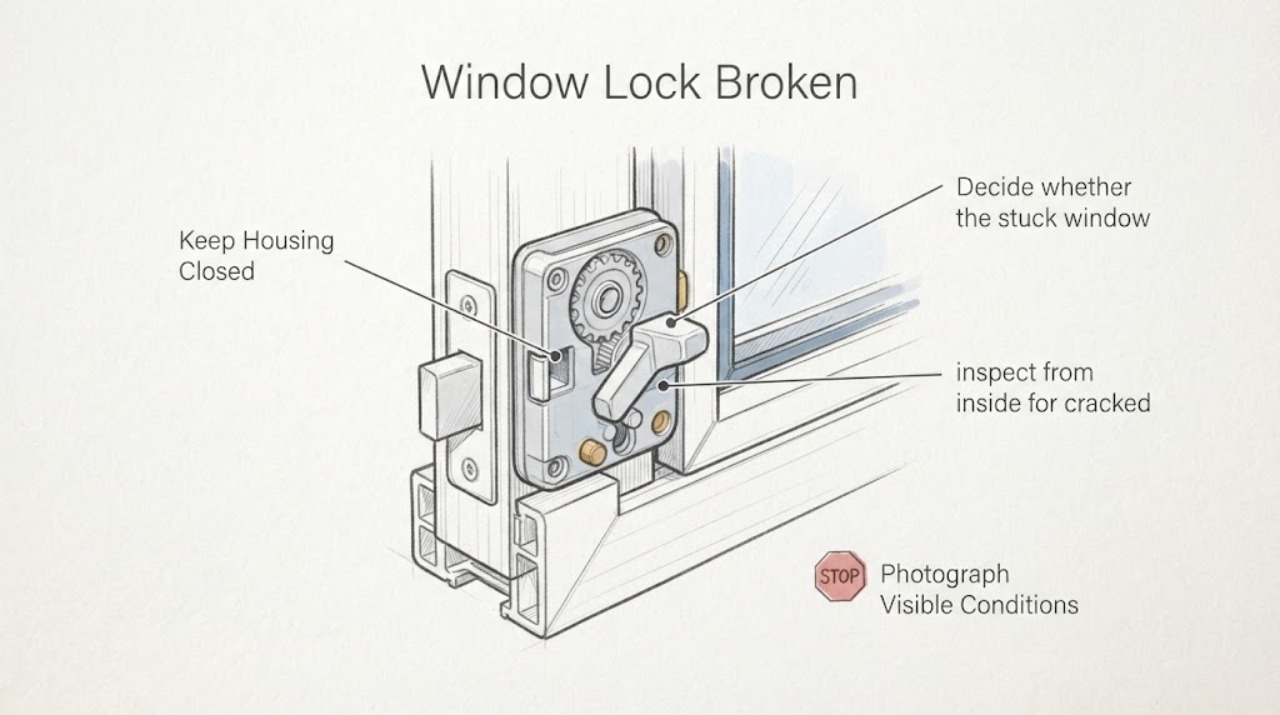
Do not pry, force the sash, drill the lock, or break the glass to open a window whose lock is stuck in the locked position. First decide whether that window is a required escape or rescue opening: if it is in a bedroom or part of your fire-escape plan, use another safe exit and arrange urgent repair; if there is an active fire or smoke, leave by the safest available route and call emergency services. From a safe position, keep children away, check for cracked or loose glass and a visibly damaged sash or frame, and record the window style, lock type, and any label. A glazier or window manufacturer can identify the correct lock and release procedure; without the brand, series, and window type, a generic unlocking method could damage the sash or create a fall or glass hazard.
Work through in order
Diagnostic checks
Use only checks that match the exact appliance or system and its official guide.
-
Check 1
Decide whether the stuck window is a bedroom egress or another designated emergency escape/rescue opening. If so, tell everyone in the home that it is unavailable and identify another safe exit without testing the broken lock.
Expected result: The window is part of the escape plan, or it is the only practical exit from a room; alternatively, another code-compliant exit is available and the window is not needed for emergency escape.
Next step: For an escape window, arrange prompt service from a qualified window contractor or the manufacturer. In a fire or smoke emergency, leave by the safest available route and call emergency services; do not spend time defeating the lock.
Why this matters
Why: An inoperable escape window creates a life-safety gap even when the lock is the only visible defect. A second route reduces immediate dependence on the damaged unit but does not make the lock safe to ignore.
-
Check 2
With the window closed and without applying force, inspect from inside for cracked glass, a loose sash, a distorted frame, a lock lever that is detached or visibly broken, or a keeper that has shifted. Do not insert tools, pry the sash, drill, or pull hard on the handle.
Expected result: Glass is cracked or loose, the sash or frame is distorted, or hardware is detached; or the window is intact but the lock remains engaged.
Next step: Keep people away from the window and leave it closed. If glass is damaged, do not handle fragments; arrange a glazier or qualified window service. If the unit is intact, document the hardware without trying to release it.
Why this matters
Why: Glass or frame damage adds a cut, fall, and possible structural risk. An intact-looking unit still needs type-specific hardware identification because the visible lock may not be the only engaged part.
-
Check 3
Record the window's brand or label, series if shown, opening style (such as sliding, single-hung, double-hung, casement, or awning), lock shape, and which sash or panel is involved. Take photos from a stable floor position; do not climb on furniture or place a ladder against the window.
Expected result: A brand/series and opening style are available, or the window has no readable identity and the lock type remains uncertain.
Next step: Use the identified manufacturer's support path or give the photos and measurements to a qualified glazier. If identity is unavailable, request an on-site assessment rather than buying a generic lock or following another window's procedure.
Why this matters
Why: The correct release or replacement hardware depends on the window design. A missing identity prevents safe confirmation that a lock is a simple sash lock rather than an operator, keeper, multi-point mechanism, or opening-control device.
-
Check 4
Keep children and pets away from the sill and do not rely on the insect screen as a barrier. Do not leave the window partly forced open, and do not add a keyed padlock, nail, screw, or improvised stop to a window that may be needed for escape.
Expected result: Children or pets can reach the window, the screen is the only apparent barrier, or an improvised restraint has already been added; or the area is controlled and no extra restraint is present.
Next step: Keep the area supervised and closed until the lock is repaired. Have any safety-device question checked against the exact product and local code by a qualified installer; never modify the emergency-release path yourself.
Why this matters
Why: An open or partly open window can create a fall risk, while an added restraint can block emergency release. Safety devices and opening-control devices are product- and code-specific.
Use your observations
Decision map
Find the observation that best matches what you see, then follow the next safe action.
-
PATH 01Next step
What you see
There is fire or smoke, the stuck window is a designated escape opening, or no safe exit is available from the room.
Do this next
Use the safest available exit and call emergency services. Do not pry the window, break the glass, climb onto furniture, or wait for a repair tutorial.
Why this path and its safety boundary
Why it matters: The lock defect is now an immediate life-safety issue; attempting a repair can cost time and cause cuts or a fall.
-
PATH 02Next step
What you see
The glass, sash, frame, or lock hardware is visibly damaged or loose.
Do this next
Keep the window closed and the area clear, then arrange a qualified glazier or window contractor. Do not tape over a structural break and continue operating the sash.
Why this path and its safety boundary
Why it matters: The unit may not safely support force or normal operation, and broken glass can injure anyone attempting an improvised release.
-
PATH 03Next step
What you see
The window is intact, is not needed as an immediate escape route, and the lock identity can be documented without forcing it.
Do this next
Send the brand/series, opening style, photos, and any label to the manufacturer or a qualified window service. Leave the lock closed until the correct procedure is confirmed.
Why this path and its safety boundary
Why it matters: A professional may be able to match the lock and provide a model-specific release or replacement, but the visible symptom does not identify the mechanism.
Helpful context
Understand the symptom
Treat the stuck lock as a safety and egress problem
A lock that stays engaged can leave a window unusable as an exit even if the glass and frame look intact. Andersen advises repairing broken sash locks and operating parts promptly because escape can become difficult or impossible. The first decision is therefore whether this window is part of a bedroom or household fire-escape plan, not which tool might defeat the lock.
Window hardware is type- and product-specific
A sash lock, keeper, operator, multi-point lock, and window opening-control device are different parts. Andersen's glossary defines the keeper as the receiver engaged by the lock and distinguishes venting windows from fixed windows; its safety guidance also says opening-control devices must have an emergency release when they are used for fall prevention. Without the window style, brand, series, and hardware, a generic release instruction could bend the sash, damage glass, or defeat a safety device.
When checks do not resolve it
Need a professional?
Contact the manufacturer or a qualified glazier/window contractor with the brand or label, opening style, sash/panel involved, lock position, photos, glass/frame condition, and whether the opening is designated for emergency escape.
Common questions
FAQ
Can I force the window open if the lock is broken?
Do not force it. Prying can damage the sash or glass and can create a fall hazard. If the window is needed for escape during a fire, use the safest available exit and call emergency services; otherwise have the exact hardware identified by a qualified window professional.
Is a window with a stuck lock still an emergency exit?
Treat it as unavailable until it opens and closes safely through the normal manufacturer-approved operation. Andersen says broken sash locks and operating parts can make escape difficult or impossible, and it recommends planning two ways out of every room.
Can I use a screen or add a temporary latch for safety?
A screen is not fall protection, and an improvised latch, nail, screw, or keyed device can interfere with emergency release. Keep the area supervised and ask a qualified installer to match any safety device to the exact window and local code.
Read the exact guide
Official sources
- Non-Operable Lock Component Instructions—EssentialMarvin · Used only as a manufacturer example that a lock-limiting device can block escape and is not a security device; its installation steps and dimensions are not transferred to the unknown window.
- Window and Door SafetyAndersen Windows · Used for general window-safety boundaries and escape planning; it does not identify the unknown window's lock mechanism or authorize a generic repair.
- Window & Door GlossaryAndersen Windows · Used to explain why lock and window style must be identified before selecting a release or replacement; it is not a model-specific repair guide.
Community feedback
Share a repair observation
Share a plain-text repair observation. Accepted observations are published automatically; this page may take a moment to update.