
On this page
Start here
Quick answer
Treat “return seal” as an unverified description, not a confirmed Amana part name. The NTW4605EW0 is a top-load washer, so start by stopping the washer, closing both water valves, and tracing the highest or first wet point from a dry, safe position without pulling the machine out. A rear inlet or drain connection points to installation or household plumbing; water that splashes over the basket points to level, load, or water-level conditions; water appearing from the cabinet bottom or while the washer is idle needs appliance service. Do not replace a tub seal, hose, clamp, pump, or gearbox from the puddle location alone.
Before you begin
Safety first
- Do not tip or pull out the washer, reach under the cabinet, remove panels or a pump cover, loosen a pressurized hose, touch wet electrical parts, or reopen the water supply to reproduce an uncontrolled leak. Stop immediately for water at the cord or outlet, smoke, sparking, burning odor, or an uncontrolled flow.
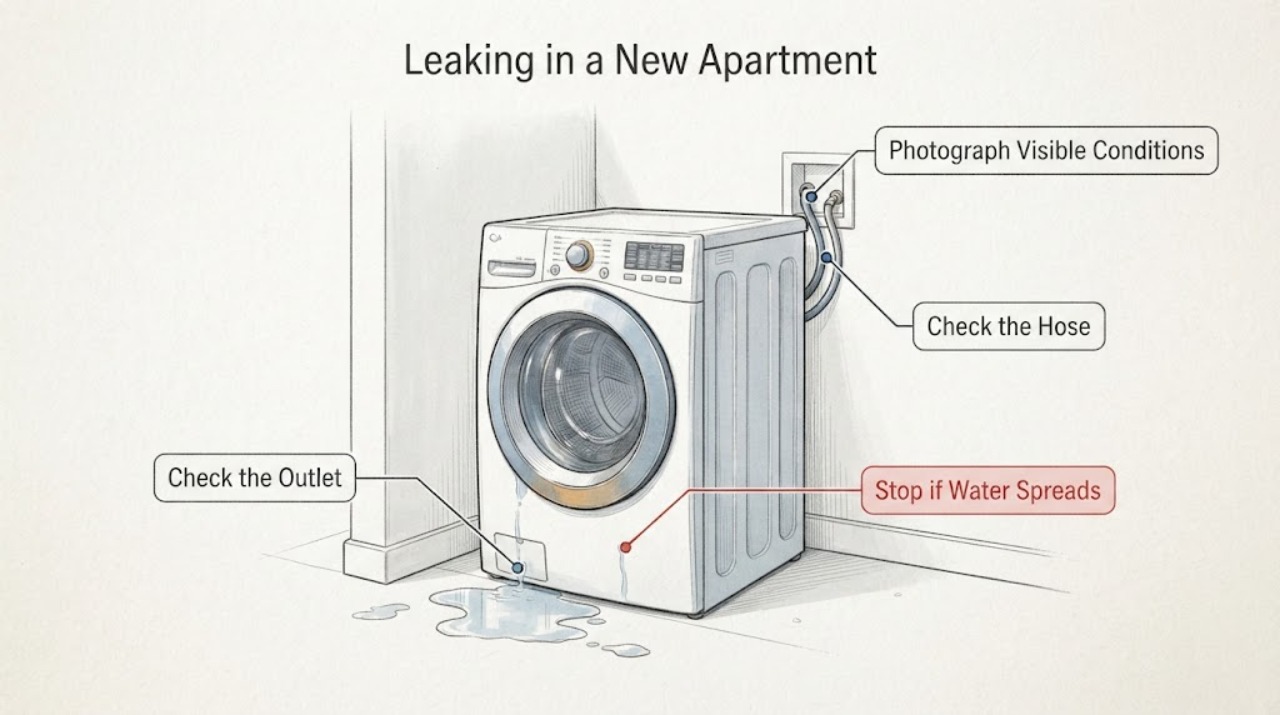
Work through in order
Diagnostic checks
Use only checks that match the exact appliance or system and its official guide.
-
Check 1
Stop the cycle with the normal control, keep feet and hands out of standing water, and close both household water valves from a dry, reachable position. Disconnect power only if the plug and outlet are completely dry and safely accessible; otherwise leave the electrical area alone.
Expected result: Water stops when the washer is off and the valves are closed, or water continues to enter the tub or appear at a connection while idle.
Next step: Keep the valves closed and the washer out of service while arranging Amana or qualified appliance service, especially if the tub continues filling. Never reopen the valves simply to reproduce an uncontrolled leak.
Why this matters
Why: Water entering while idle makes a supply-side or washer inlet-valve problem more likely than a drain-only event. A leak that stops with the valves closed still requires the first wet point to distinguish an external connection, splash, drain, or internal leak.
-
Check 2
Without running another cycle or moving the machine, use a flashlight and dry paper towels from the front and each safely visible side to find the highest or first wet point. Photograph that point, the floor path, and the complete model label.
Expected result: The first visible water is at a rear inlet, drain or standpipe, basket/load edge, cabinet bottom, or an area that cannot be seen without pulling the washer out.
Next step: Use the matching phase and location branch below. Stop and request service when the source is under the cabinet, behind a panel, inaccessible without moving the washer, or near wiring.
Why this matters
Why: The first wet point is more diagnostic than the size or final location of the puddle. A visible rear point supports an installation/plumbing branch; a basket edge supports splash; a hidden bottom point should not be named as a seal or gearbox from location alone.
-
Check 3
If the first wet point is at the rear inlet connection or the leak begins during fill, inspect only the visible hose ends for a washer at each end, a loose or cross-threaded connection, a crack, kink, or water tracking from the household tap. Keep the water valves closed while inspecting.
Expected result: The tap, hose, or washer-side inlet connection is the highest wet point, or all visible inlet connections are dry and the water starts elsewhere.
Next step: Correct only an obvious external connection when it can be done without a wet floor, pressurized hose, or inaccessible installation; otherwise keep the valves off and request service. Do not reopen water to a cracked or unobservable connection.
Why this matters
Why: A missing hose washer, loose connection, or damaged external hose can explain a fill leak. A dry external hose with water beginning inside the cabinet does not prove a tub seal or transmission; it needs appliance service.
-
Check 4
If water first appears at the basket rim or on the load during fill or wash, note whether the washer is visibly unlevel, the load is bulky, water-resistant, or uneven, or clothing was added after the cycle began. Check level only from a stable, dry, accessible position; do not reach below the cabinet.
Expected result: Water is visibly splashing over the basket/load, or water begins underneath, at the rear, or while the washer is idle.
Next step: Stop adding items after the cycle begins and follow the matching model's load guidance. Request service if the washer is unstable, water comes from underneath, or the same leak occurs with a suitable load and stable installation.
Why this matters
Why: Amana says an unlevel top-load washer and large, oversized, water-resistant, or unevenly distributed loads can splash over the basket. Underneath, rear, or idle water is not explained by splash alone and should not be assigned to a return seal.
-
Check 5
If water first appears during drain-out or at the rear/floor, inspect only the visible drain hose, standpipe or laundry-tub area, and household drain. Look for a displaced hose, a blocked or backing-up drain, or water escaping from the drain rather than from the washer cabinet.
Expected result: The household drain backs up or the drain hose is visibly displaced, or the drain area stays dry while water begins inside or under the washer.
Next step: Secure only an obviously displaced external drain hose without moving the washer or entering water, and have a plumber address household backflow. Keep the washer off and request appliance service for any cabinet, pump, internal hose, or recurring leak.
Why this matters
Why: A loose drain hose or slow household drain can put water on the floor without an internal washer seal failure. Water that begins in the cabinet bottom, pump area, or another hidden point is an appliance-service decision, not proof of a particular seal.
-
Check 6
After the external checks, compare whether the leak occurs during fill, agitation, drain, spin, or while idle, and note whether the first wet point remains hidden under the cabinet. Do not run repeated cycles to force a diagnosis.
Expected result: The leak repeats from a hidden cabinet location or occurs while idle, or it was an isolated visible splash/connection issue that has stopped after correction.
Next step: For a repeat hidden or idle leak, arrange qualified service and provide the phase, first wet point, model, and photos. Do not order a “return seal,” gearbox, pump, or clamp solely from the symptom wording.
Why this matters
Why: A repeat hidden or idle leak makes an internal hose, pump, tub seal, valve, or related assembly possible, but the phase and position still do not select a part. A stopped visible splash or external connection supports monitoring only after the area is dry and safe.
Use your observations
Decision map
Find the observation that best matches what you see, then follow the next safe action.
-
PATH 01Next step
What you see
Water begins at a visible rear inlet connection during fill, and the hose washer, fitting, tap, or hose is visibly loose or damaged.
Do this next
Keep both valves closed and correct only the obvious external connection if it is safe and accessible. Request service for a washer-side fitting, cracked hose, hidden tracking, or any recurrence.
Why this path and its safety boundary
Why it matters: An external supply connection is more likely than an internal tub or gearbox seal; a new-apartment installation issue remains plausible.
-
PATH 02Next step
What you see
Water first splashes over the basket or load during fill/wash, especially with a bulky, water-resistant, uneven, or added-after-start load, and no rear or bottom source is visible.
Do this next
Stop adding items after the cycle begins, follow the NTW4605EW0 load guidance, and correct only a clearly safe level condition. Do not tip or lift the washer.
Why this path and its safety boundary
Why it matters: Top-load splash from level, load size, or placement is more likely than a lower seal. A splash that continues with a suitable load and stable washer needs service.
-
PATH 03Next step
What you see
Water appears during drain-out at a backing-up household drain or displaced drain hose, while the washer cabinet remains dry.
Do this next
Keep the washer off until the drain is corrected; have a plumber inspect a slow or blocked standpipe/tub and request appliance service if the hose or cabinet also leaks.
Why this path and its safety boundary
Why it matters: Household drain backflow or an external drain installation problem is more likely than a washer tub seal.
-
PATH 04Next step
What you see
The first wet point is under the cabinet, inside the cabinet, at a hidden hose or pump area, or water enters the tub while the washer is idle after the valves were reopened.
Do this next
Close both water valves, keep the washer out of service, and arrange qualified Amana appliance service. Give the provider the full model, phase, first wet point, and photos; do not open panels or buy a part from the location alone.
Why this path and its safety boundary
Why it matters: An internal hose, pump, tub seal, inlet valve, or another assembly is possible, but a floor puddle or the phrase “return seal” cannot distinguish those parts.
-
PATH 05Next step
What you see
Water reaches the cord, outlet, controls, or other electrical area, or there is smoke, sparking, burning odor, an uncontrolled leak, or a wet floor that makes the appliance inaccessible.
Do this next
Move away from the wet electrical area, do not touch the cord, outlet, breaker, or washer through water, and contact qualified service or appropriate emergency help. Keep the water supply closed if it can be reached without entering the hazard.
Why this path and its safety boundary
Why it matters: Further inspection or unplugging could create shock, fire, or slip risk.
Helpful context
Understand the symptom
“Return seal” is not enough to identify the leak
The phrase “return seal” can describe a user's view of a hose, clamp, black rubber part, or water path, but it does not establish which component on an NTW4605EW0 is leaking. A floor puddle can travel along the base, hoses, or cabinet before becoming visible. Because this is a top-load washer, do not apply front-load door-gasket advice to a lower or rear leak. Find where water starts and when it appears before considering any seal or hose part.
A new apartment makes installation and plumbing part of the first branch
A recently installed or newly occupied laundry area can have a hose washer missing, an inlet connection that is not seated, a drain hose that is loose or too far into the standpipe, or a household drain that backs up. Amana's rear-leak guidance specifically separates inlet-hose washers and connections from drain-hose and household-plumbing problems. That is why the rear connection and drain should be checked before assuming an internal tub, pump, or transmission seal.
Do not test an internal leak by running another cycle
Keep the washer out of service while water is uncontrolled, entering while idle, or appearing under the cabinet. Do not tip or pull out a tight machine, put hands underneath, open a pump or cabinet panel, loosen a pressurized hose, or reach through water to unplug it. If the plug, outlet, cord, or controls are wet, move away and arrange qualified service or appropriate emergency help rather than touching the electrical area.
Only after diagnosis
Potential parts
- external or internal drain hose and clamp
Consider a hose or clamp only when tracing shows the exact hose connection is the first wet point and the full model documentation or a technician confirms fit. A black seal or water trail elsewhere does not prove this part.
Confirm NTW4605EW0 and the complete part number before ordering; do not loosen a pressurized or inaccessible hose. - water inlet valve or fill hose
This is conditional only when water enters while idle or the washer-side inlet is the first wet point after external hose connections are dry; it is not established by a puddle under the machine.
Verify the exact model and market. Keep both water valves closed and leave electrical diagnosis to qualified service. - tub seal, pump, or internal hose assembly
An internal part is a service hypothesis only after the hidden source and phase are confirmed. The unverified phrase “return seal” and the position of a floor puddle cannot select a tub seal, pump, or gearbox.
Do not purchase or replace an internal assembly without a model-matched parts diagram and qualified diagnosis; cabinet access and water/electrical hazards apply.
When checks do not resolve it
Need a professional?
Arrange Amana or qualified appliance service for water from inside or under the cabinet, a washer-side inlet connection or valve, a repeat leak after an external correction, a hidden first wet point, water entering while idle, or any suspected tub seal, pump, gearbox, or internal hose. Use a plumber for household drain backflow or building-side supply problems.
Safety scope: Do not tip or pull out the washer, reach under the cabinet, remove panels or a pump cover, loosen a pressurized hose, touch wet electrical parts, or reopen the water supply to reproduce an uncontrolled leak. Stop immediately for water at the cord or outlet, smoke, sparking, burning odor, or an uncontrolled flow.
Have this ready
- Provide model NTW4605EW0, apartment and installation details, whether the washer was recently installed or moved, the cycle phase, whether the washer was idle, both water-valve status, first wet point, photos, load type, and any visible hose, drain, or basket splash findings. Explain that “return seal” is the user's description and has not been verified as a part name.
Common questions
FAQ
What is the “return seal” on an Amana NTW4605EW0?
“Return seal” is not enough to identify a verified NTW4605EW0 part. It may be a user's name for a hose, clamp, rubber seal, or water path. Trace the first wet point and cycle phase before discussing a replacement; do not order a seal or gearbox from the phrase alone.
Could a new-apartment installation cause this washer to leak?
Yes. A missing hose washer, loose inlet connection, displaced drain hose, or backing-up household drain can leak after installation. Check only visible connections from a dry position with the water valves closed, and involve the building plumber when the drain or tap is the source.
Can water under this top-load washer prove that the tub seal is bad?
No. Water can travel from an inlet, drain, basket splash, pump, internal hose, or tub area before reaching the floor. An underneath puddle is a reason to trace safely and often call service, not a reliable way to choose a tub seal or gearbox.
Should I run another cycle to see where the leak starts?
Not when the source is hidden, the leak is uncontrolled, water is near electrical parts, or the floor is wet. Close the water valves, photograph the first safely visible point, and have the source inspected. Repeated cycles can worsen floor damage and obscure the original leak path.
Read the exact guide
Official sources
- Leaking from Front or Top - WasherAmana Product Help · Directly applicable to top-load splash and load/level checks for the NTW4605EW0 symptom; it does not identify an internal seal or part.
- Manuals and GuidesAmana · Supports using the complete NTW4605EW0 model to locate the matching guide and not borrowing a seal or drain procedure from another washer; it does not define “return seal.”
- Leaking Water Underneath - WasherAmana Product Help · Directly applicable to the distinction between installation/drain causes, top-load splash from adding clothes, and a hidden cabinet leak; it does not assign a tub seal or gearbox.
- Leaking Inside the Tub - WasherAmana Product Help · Directly applicable to the safety and service branch when water enters the NTW4605EW0 tub while idle; it does not name the failed valve or seal.
- Leaking from Behind - WasherAmana Product Help · Directly applicable to the new-apartment installation branch; it separates hose washers/connections, hose routing, and household drain backflow.
- Find Your Model NumberAmana · Supports recording the complete model identity before service; it is not a leak diagnosis.
Community feedback
Share a repair observation
Share a plain-text repair observation. Accepted observations are published automatically; this page may take a moment to update.