
On this page
Start here
Quick answer
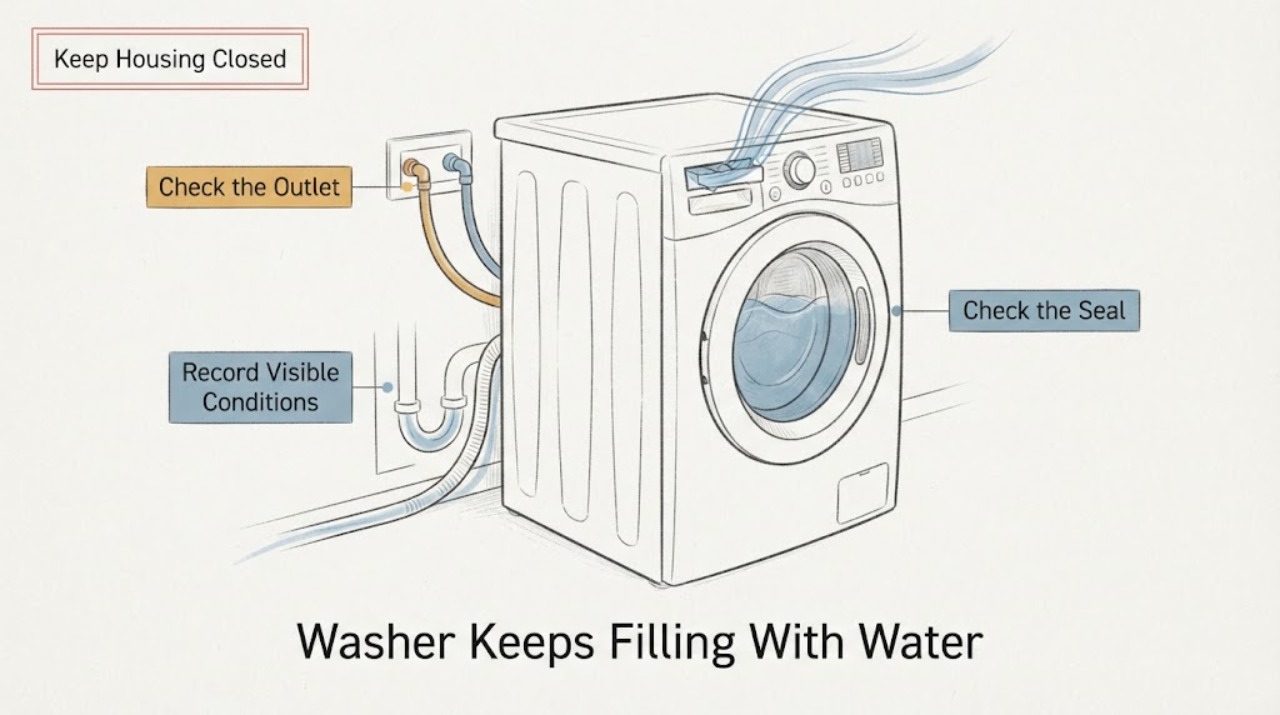
If an Amana washer is genuinely continuing to admit water or is filling while water leaves, stop the cycle and close both household water valves first. If water is near an outlet or electrical connection, do not touch a wet plug or area; leave the appliance disconnected only when that can be done without entering water and use qualified help if it cannot. Then identify whether the washer is normally sensing or using a deep-fill cycle, or whether an incorrectly positioned drain hose is siphoning water out as the washer fills. Amana’s opened top-load guidance supports checking the hose insertion depth, U-shaped form, air gap and standpipe height for the applicable installation, while its sensing guidance explains that fill can pause and resume. A persistent fill with the supply valves closed, overflow, a leak, or any internal valve/sensor/control question needs qualified service; do not open the console or disconnect water lines while pressurized.
Work through in order
Diagnostic checks
Use only checks that match the exact appliance or system and its official guide.
-
Check 1
Stop the cycle and close both household hot and cold washer supply valves. If water is near an outlet, plug or electrical connection, keep clear of the wet area and disconnect power only when the disconnect can be reached without contact with water.
Expected result: Water stops when the household valves are closed, or water continues/overflows despite the valves being closed; the floor and electrical area are dry or wet.
Next step: If the water stops and the area is dry, continue with identification and visible hose checks without opening the appliance. If it does not stop or the area is wet, leave the washer isolated and call qualified service.
Stop if: Do not touch the plug, console, valves or wet floor to keep testing.
Why this matters
Why: Closing the supply valves separates an active water supply from a control symptom. Continued water with the valves closed or water near electricity is outside a normal user check and requires prompt service or emergency help as appropriate.
-
Check 2
Record the complete model number, washer type, selected cycle, fill or sensing light, and whether the tub is filling, pausing, or filling while water visibly drains away.
Expected result: The washer is a top-load or front-load model; the cycle is Auto Sensing, Bulky, Deep Water or another setting; the fill is staged or continuous.
Next step: If the behavior matches a documented sensing/deep-fill cycle and the level does not rise toward overflow, let that cycle follow the exact manual. If water keeps entering beyond the expected stage, use the safety and service branch.
Stop if: Do not infer a failed water-level sensor or valve from an unfamiliar light sequence.
Why this matters
Why: Amana documents model- and cycle-dependent water behavior. Sensing and Bulky cycles can add water in stages or use a deeper fill, while a true fill-and-drain symptom points to the drain path.
-
Check 3
With the washer isolated and the floor dry, inspect only the visible drain-hose installation: the U-shaped form, hose insertion, a loose air gap at the standpipe or tub, and whether the hose is taped or sealed into the drain.
Expected result: The hose is pushed too far down, sealed with tape, kinked, lacks an air gap, or is installed as shown by the exact model instructions.
Next step: Correct the visible installation only to the exact model’s installation instructions; do not reach behind the washer through water or disconnect a pressurized hose. If the symptom remains, request service.
Stop if: If the hose is correctly installed but water still fills continuously, stop treating the issue as a simple siphon and use the service branch.
Why this matters
Why: Amana says an overly deep or sealed drain hose can create siphoning, so water is pulled out while the washer fills and the control keeps adding water.
-
Check 4
Compare the drain outlet height and hose routing with the exact model installation instructions; the opened Amana continuous-fill page describes a 30-inch minimum for its applicable top-load guidance, while another Amana fill page gives a different model-family height requirement.
Expected result: The model manual agrees with the visible standpipe height and routing, or the installation does not match the manual.
Next step: If the installation does not match the exact manual, correct only the accessible hose/standpipe arrangement or have it corrected. Do not use the 30-inch value as a universal specification.
Stop if: If the installation matches the exact manual and the washer still fills or overflows, request qualified diagnosis.
Why this matters
Why: Amana’s published requirements vary by page and washer family, so a height value must not be transferred to an unidentified model. A low or incorrectly routed drain can allow gravity flow and siphoning.
-
Check 5
If the issue is a normal-looking fill stage, verify the selected water-level option and cycle against the model manual; do not add extra water or switch to Deep Water merely because the clothing is not submerged.
Expected result: The machine is in Auto Sensing or a cycle known to use more water, the level pauses and resumes, or water continues rising beyond the expected level.
Next step: Use the documented cycle setting only if the water remains controlled and no overflow occurs. If the level continues rising, close the supply valves and arrange service.
Stop if: Do not bypass sensing, add water manually or open the control area.
Why this matters
Why: Amana explains that low-water and deep-fill cycles behave differently and that sensing can take multiple fill-and-pause stages. Extra water can make clothes float and does not correct a control fault.
-
Check 6
After the supply is safely isolated, arrange service if the washer still fills with the valves closed, overflows, leaks, shows an unresolved fill indication, or would require access to an inlet valve, pressure system, control, wiring or pressurized hose.
Expected result: The symptom stops after a documented hose correction, or it persists without an external installation explanation.
Next step: If it persists, provide the technician with the model, cycle, valve-isolation result, water level, hose arrangement and photos of any leak or overflow.
Stop if: If the issue was only an incorrect visible hose installation and the machine now fills normally without leakage, monitor one exact-manual cycle and stop if the symptom returns.
Why this matters
Why: The official sources support external water-supply and drain-installation checks but do not identify an internal component from this task’s unspecified model and symptom.
Use your observations
Decision map
Find the observation that best matches what you see, then follow the next safe action.
-
PATH 01Next step
What you see
Water is still entering, the tub is near overflow, or water is near an outlet or electrical connection.
Do this next
Close both supply valves, stay out of the wet area, and arrange qualified service or emergency assistance if the water cannot be safely controlled. Do not keep testing.
Why this path and its safety boundary
Why it matters: This is an active water and possible electrical safety condition, not a normal fill-stage question.
-
PATH 02Next step
What you see
The washer fills and drains at the same time, and the drain hose is too deep, taped/sealed, or lacks an air gap.
Do this next
Restore the hose routing only to the exact model installation instructions; if the fill-and-drain symptom remains, request service.
Why this path and its safety boundary
Why it matters: Amana identifies this installation pattern as a siphon path that can make the control keep adding water.
-
PATH 03Next step
What you see
The fill light is on during Auto Sensing or a documented deep-fill/Bulky cycle, the level pauses and resumes, and there is no overflow.
Do this next
Let the matching cycle proceed while monitoring safely; use the model manual for expected behavior and stop if water rises abnormally.
Why this path and its safety boundary
Why it matters: Amana says these cycles can sense load size and use staged or deeper fills, so apparent pauses or a higher level may be normal.
-
PATH 04Next step
What you see
The hose and standpipe match the exact manual, but the washer continues to fill or the supply-valve isolation test does not stop the symptom.
Do this next
Keep the water supply closed, do not open the console or water valve, and request qualified Amana service with the exact model and observations.
Why this path and its safety boundary
Why it matters: The opened evidence does not support an external installation explanation or an internal component diagnosis for an unidentified model.
-
PATH 05Next step
What you see
The washer is front-load or the cycle/light behavior does not match the opened top-load pages.
Do this next
Use the exact model’s manual and keep the water supply closed if filling is uncontrolled; arrange service for unresolved or unsafe behavior.
Why this path and its safety boundary
Why it matters: Amana’s front-load and top-load guidance use different installation and control contexts; a top-load step cannot be assumed to apply.
Helpful context
Understand the symptom
Stop overflow before troubleshooting
Treat a washer that is still admitting water as a water-safety problem first. Close the hot and cold supply valves. If water is on the floor near an outlet, cord or other electrical connection, do not reach through the water or handle a wet plug; leave the area and arrange qualified help if a safe disconnect is not accessible. Record whether the symptom is true filling, simultaneous filling and draining, or a normal sensing pause.
Continuous fill is different from staged sensing
Amana says an Auto Sensing top-load washer can fill, pause while it senses load size and balance, then add more water; Bulky and other cycles can use deeper or repeated fills. That behavior is not enough to prove a failed valve. A symptom that continues after the expected sensing stage, overfills, or fills while water visibly leaves the machine follows a different branch.
Fill-and-drain often points to installation
When water enters and leaves at the same time, Amana’s opened guidance first checks the drain hose rather than naming an internal part. The exact installation page describes the U-shaped hose form, a loose but secure connection with an air gap, limited insertion into the standpipe and a model-specific minimum standpipe height. Use the exact installation instructions for the model before changing the setup.
When checks do not resolve it
Need a professional?
Call qualified service immediately for active overflow, water near electricity, a leak, water that continues after both supply valves are closed, or any symptom requiring internal valve, pressure-system, control, wiring or pressurized-hose access. Otherwise request service if the exact hose installation is correct but continuous filling persists.
Have this ready
- complete model number
- top-load or front-load type
- selected cycle and fill/sensing light
- whether both supply valves stopped the water
- drain-hose and standpipe arrangement
- water level or overflow observations
- photos of any wet electrical area or leak when safe
Common questions
FAQ
Is every long fill an Amana washer failure?
No. Amana says Auto Sensing and some Bulky or deep-fill cycles can fill in stages, pause and resume, or use more water. A true uncontrolled fill, overflow or fill-and-drain symptom follows a different safety and installation branch.
Why does the washer keep filling while water leaves?
Amana’s opened guidance first checks for siphoning from drain-hose insertion, a sealed connection, missing air gap or standpipe height that does not match the applicable installation instructions. If the hose is correct, service is needed rather than an assumed part diagnosis.
Should I unplug a washer that is overflowing?
Close the household water valves first. If the floor or plug is wet, do not reach through water or handle the plug; disconnect power only when it can be done without contact with water, otherwise leave the area for qualified help.
Can I use the 30-inch drain height from an Amana page for any model?
No. The opened continuous-fill page describes a 30-inch minimum for its applicable top-load guidance, while another Amana fill page shows a different model-family requirement. Use the exact model installation instructions.
Read the exact guide
Official sources
- Continuously Fills / Fills and Drains - WasherAmana Product Help · Official Amana top-load washer guidance for continuous fill and simultaneous filling/draining; hose and standpipe details are kept within this page’s installation scope.
- Not Filling or Long Fill - WasherAmana Product Help · Official Amana top-load washer guidance; it distinguishes cycle-dependent water use and gives a different installation-page standpipe requirement, so values are not generalized across models.
- Water Levels by Cycle - WasherAmana Product Help · Official Amana top-load HE water-level guidance; cycle availability and exact settings vary by model.
- Fill or Sensing Light OnAmana Product Help · Official Amana top-load sensing guidance; exact controls and model behavior remain manual-dependent.
- Not Filling or Filling Slowly - Front Load WasherAmana Product Help · Official Amana front-load washer guidance; used only to keep front-load steps separate from the opened top-load continuous-fill material.
- Washer Leaks and Other Washer Water IssuesAmana · Official Amana washer water-issues article; supports visible hose/drain checks, siphon distinction and professional escalation, not internal repair diagnosis.
Community feedback
Share a repair observation
Share a plain-text repair observation. Accepted observations are published automatically; this page may take a moment to update.