
On this page
Start here
Quick answer
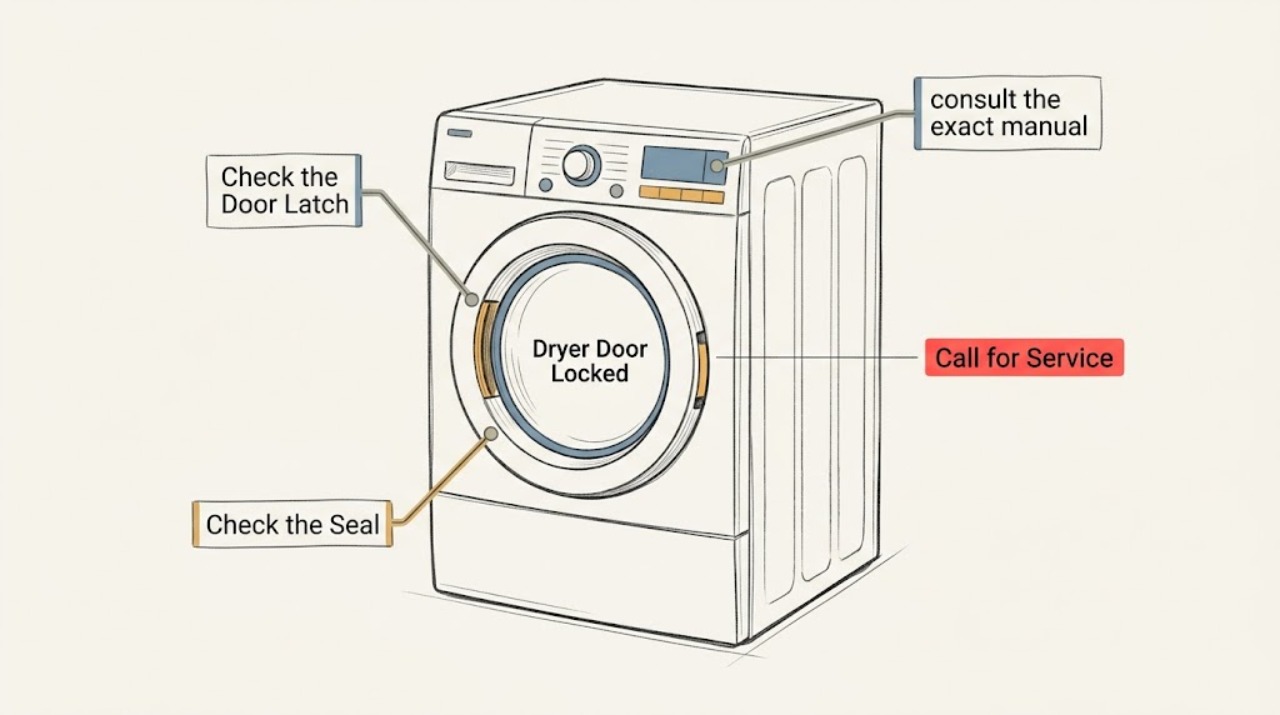
Do not force a Beko dryer door. First identify whether the padlock symbol means the child lock is active, whether laundry is caught in the door seal, whether a program is still running, or whether the dryer has lost power. Beko says child-lock controls vary by model; use the button combination shown in your model's manual. If the door will not click shut, the controls will not respond after the model-specific child-lock check, or the door remains physically latched after a stopped program, stop and arrange authorized service. This is guidance for a standalone tumble dryer, not a Beko washer-dryer emergency-door procedure.
Work through in order
Diagnostic checks
Use only checks that match the exact appliance or system and its official guide.
-
Check 1
Look at the display or control panel and test the door only by its normal handle; record whether a padlock or child-lock indicator is lit, whether the display is on, and whether the door opens normally or remains physically latched.
Expected result: You see a padlock with unresponsive controls, a powered dryer with no padlock, a dark display, or a door that will not move with normal handle pressure.
Next step: Use the matching branch below; do not insert tools into the latch or bypass a safety switch.
Why this matters
Why: A padlock with unresponsive buttons makes child lock more likely. A powered panel without that indication makes a caught item, latch alignment, active program, or technical fault more likely. A dark panel adds a power-supply question. A physically latched door is not something to pry open.
-
Check 2
If a padlock or child-lock indicator is present, consult the exact Beko manual for the model and press only the documented child-lock button or buttons for the documented interval.
Expected result: The indicator clears and the controls respond, or the indicator and unresponsive controls remain after the documented procedure.
Next step: If the indicator clears, operate the dryer normally. If it does not, stop repeated attempts, verify the model manual, and arrange service if the controls still do not respond.
Why this matters
Why: Clearing the indicator supports an active child lock rather than a broken door latch. No change means the procedure may not match the model, the control may not be accepting input, or another fault may be present; it does not justify trying random button combinations.
-
Check 3
With the program stopped and the drum not moving, inspect the visible door edge, seal, and catch area for a trapped garment or lint; remove only a loose, accessible obstruction and close the door gently until it clicks.
Expected result: The door now clicks shut and the dryer recognizes it, or it still will not click, sits out of alignment, or remains latched.
Next step: If the door closes and the dryer responds, run a short supervised program. If it does not, stop using the dryer and arrange authorized service; do not force the handle or remove panels.
Why this matters
Why: A trapped item or misalignment can prevent the door from closing and can also make the dryer refuse to start. A door that will not click or remains physically latched after the visible check makes a latch, hinge, seal, or internal interlock problem more likely.
-
Check 4
If the dryer is powered and the controls respond, press and hold the model's Start/Pause/Cancel control for five seconds to cancel the current program, then wait for the drum to stop before trying the normal door handle again.
Expected result: The program cancels and the door releases normally, or the program does not cancel and the door remains latched.
Next step: If the door releases, remove laundry and restart only after the door closes correctly. If it remains latched, stop and arrange service rather than repeating the reset or prying the door.
Why this matters
Why: A successful cancellation makes a program-state issue more likely than a permanently failed latch. Failure to cancel leaves an active control fault, child lock, power/control issue, or physical interlock possible; Beko does not support forcing the door as a remedy.
-
Check 5
If the display is dark, check whether nearby lights or another known-working appliance have power and inspect the dryer's power cord only for visible damage; do not open the plug, fuse holder, or cabinet.
Expected result: Other appliances also lose power, the cord is visibly damaged, or the home has power but the dryer remains dark and the door locked.
Next step: For a supply problem, restore power only through normal household controls. For cord damage or a dryer that stays dead, disconnect use and contact a qualified electrician or authorized Beko service; do not attempt an electrical bypass.
Why this matters
Why: A wider outage points to the household supply. A damaged cord or a powered home with a dark dryer points to an electrical or appliance fault, and a locked door cannot be safely diagnosed from the panel alone.
Use your observations
Decision map
Find the observation that best matches what you see, then follow the next safe action.
-
PATH 01Next step
What you see
A padlock indicator is lit and the panel ignores button presses, while the door itself is not visibly obstructed.
Do this next
Use the child-lock instructions for the exact model. If the indicator remains after that documented attempt, arrange service instead of forcing the door or trying unrelated combinations.
-
PATH 02Next step
What you see
The panel is on, no child-lock indication is present, and the door will not click shut or remains latched after a stopped program.
Do this next
Remove only a loose visible obstruction and retry the normal handle once. If the door still will not click or release, stop use and book authorized service; do not pry, bypass, or disassemble the latch.
-
PATH 03Next step
What you see
The dryer has power and responds to controls, but a current program will not cancel or the door stays latched after the five-second cancel attempt.
Do this next
Stop repeating resets, keep the door closed, and arrange authorized service with the model and serial details available.
-
PATH 04Next step
What you see
The display is dark and the household has power, or the power cord is damaged while the door remains locked.
Do this next
Do not operate the dryer. Disconnect use and contact a qualified electrician or authorized Beko service. Do not use washer-dryer emergency-door instructions for this standalone dryer.
Helpful context
Understand the symptom
Separate the control lock from the physical door latch
A padlock symbol or unresponsive buttons can be a control-panel child lock; it is not proof that the loading door itself is mechanically jammed. Conversely, a door that will not click into its catch points to the door edge, seal, hinge, or latch area. The same words can describe different faults, so note the indicator and the door's physical behavior before trying anything.
Why the exact model matters
Beko states that child-lock buttons differ across dryer models. Use the model manual for the exact button pair and timing; do not apply a washer-dryer emergency-handle instruction to a standalone tumble dryer. A door that remains latched after the safe, model-specific checks needs service rather than force.
When checks do not resolve it
Need a professional?
Arrange authorized Beko service if the child-lock procedure in the exact manual does not restore control, the door will not click shut or remains physically latched, the cancel attempt does not release the program state, or the dryer has a power or cord fault.
Common questions
FAQ
Does a padlock symbol on a Beko dryer mean the door is broken?
Not necessarily. Beko says a padlock indicator can mean the child lock is active and that the button procedure varies by model. Check the exact manual before treating the symbol as a mechanical latch failure.
Can I force open a Beko dryer door that is locked?
No. Do not pry the door, insert tools into the catch, or bypass the interlock. Check only for a loose visible obstruction and use the model-specific controls; an unresolved physical lock needs authorized service.
What if my Beko dryer has no display and the door is locked?
Check for a wider power outage using nearby lights or a known-working appliance, and look for visible cord damage without opening electrical parts. If the home has power but the dryer stays dark, contact a qualified electrician or authorized service.
Read the exact guide
Official sources
- My Beko tumble dryer will not workBeko · Door closure, five-second Start/Pause/Cancel reset, power/control checks, and unresolved door or power faults
- How to activate and deactivate the childlock function on your tumble dryerBeko · Child-lock indicator and model-dependent button procedure on Beko tumble dryers
- How to fix a tumble dryer that won’t startBeko · Power, fully closed door, caught laundry, child lock, and authorized-service checks
Community feedback
Share a repair observation
Share a plain-text repair observation. Accepted observations are published automatically; this page may take a moment to update.