
On this page
Start here
Quick answer
First determine where the water starts: inside the refrigerator or freezer, beneath the front, behind the cabinet, or around a water connection. Gladiator manuals say water dripping into the defrost drain pan during automatic defrost is normal, but water escaping onto the floor is not. From a dry, safe position, wipe the area dry, check for a tipped container or food package blocking the door, inspect the gasket, and confirm the unit is stable. If the exact model has an icemaker, dispenser, filter, or rear water line, inspect only visible dry connections and filter seating; a crack, loose connection, or kink can leak. Stop for a large or continuing leak, water near the cord or outlet, smoke, sparks, damaged wiring, or a bulging cabinet. Close the accessible water shutoff and isolate power only from a dry, safe position; do not pull the refrigerator, remove covers, thaw an internal drain with heat, or disconnect a pressurized line.
Before you begin
Safety first
- This article covers model identification, dry external tracing, spill and gasket observation, and visible water-line checks only. Do not move the refrigerator, remove panels or the base grille, clear an internal drain with heat or sharp tools, disconnect pressurized tubing, or work near wet electrical parts.
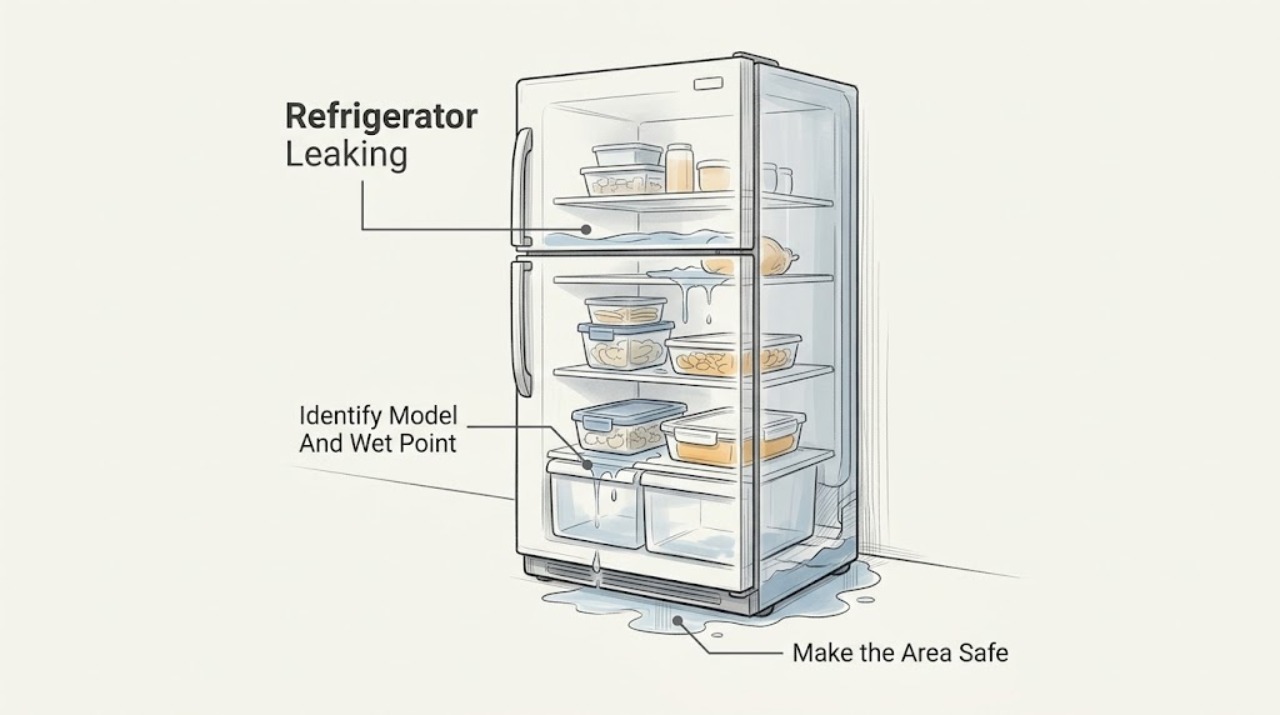
Work through in order
Diagnostic checks
Use only checks that match the exact appliance or system and its official guide.
-
Check 1
Read the full Gladiator model number from the rating label without moving the appliance. Note whether the leak is inside, at the front underside, behind the cabinet, under a door, or around an icemaker, dispenser, filter, or supply line. Dry the floor and mark the first wet point.
Expected result: The unit is an all-refrigerator, upright freezer, Chillerator, Freezerator, or another configuration; water returns internally, at the front, at the rear, or only after dispensing or ice making.
Next step: Use the matching branch and exact model manual. Do not inspect or order a water-line part unless the model has that hardware.
Stop if: Stop for a large or active leak, water near electrical parts, smoke, sparks, a hot/damaged cord, or any need to move the appliance.
Why this matters
Why: Gladiator configurations differ: documented all-refrigerator/upright-freezer manuals describe auto-defrost pans, while a water-connected model adds filter, tubing, valve, and dispenser paths.
-
Check 2
Keep people away from the wet area. If the floor and plug access are dry, unplug or switch off power only from a safe position; if water is near the cord or outlet, do not touch it. Close the accessible household water shutoff only when the model has a water supply and the valve can be reached without pulling the refrigerator.
Expected result: The leak stops with the water shutoff, the floor is dry after wiping, water reaches the cord or outlet, or the shutoff and power access are unsafe.
Next step: Leave a hazardous or continuing leak isolated and arrange service. For a dry, stable unit with no water connection, continue with interior, gasket, and pan observations.
Stop if: Do not handle a wet plug, stand in water, restore power to a wet appliance, or pull the unit forward.
Why this matters
Why: A supply leak can continue while the refrigerator is idle. Water near electricity changes the task to shock and fire prevention; moving a wet appliance can worsen the hazard.
-
Check 3
Inspect shelves, bins, containers, and the door gasket without removing panels. Look for a tipped container, condensation below food, packages blocking full door closure, or a gasket that is dirty, folded, torn, or uneven. Wipe a sound gasket and accessible spill with a soft cloth, then dry it.
Expected result: Water begins beneath a container or shelf, the door was blocked, the gasket is dirty or damaged, or the interior is dry and the gasket seals evenly.
Next step: Correct only an obvious spill, package obstruction, or surface contamination. If moisture returns with no spill or the gasket is damaged, keep the appliance unused and arrange service.
Stop if: Do not stretch, glue, cut, heat, or remove the gasket; do not probe a drain opening with a sharp tool.
Why this matters
Why: A spill or warm-air leak can create water inside the cabinet and later run to the floor. Gladiator lists blocked doors, shelf/bin position on some models, gaskets, and stability as checks; these do not prove a drain or valve failure.
-
Check 4
For a model documented as auto-defrost, observe the underside and base-grille area from outside only. Note whether water is confined to the drain-pan area during or after defrost, whether the pan overflows, or whether water appears elsewhere. Do not remove an interior panel or apply heat or chemicals to thaw a suspected drain.
Expected result: Water is only visible in the pan, the pan overflows or is damaged, water returns from inside the fresh-food/freezer compartment, or no pan water is visible.
Next step: If the pan is simply collecting water, monitor without intervention. If it overflows or moisture returns from inside, leave the appliance off if safe and arrange qualified service.
Stop if: Do not pour boiling water into the cabinet, use a heat gun or hair dryer near plastic or wiring, pierce ice, or open panels while powered.
Why this matters
Why: Gladiator says water entering the defrost pan and evaporating is normal, including slower evaporation in high humidity. Overflow or water escaping elsewhere makes a blocked drain, damaged pan, or separate spill more likely, but the internal path is model-specific.
-
Check 5
Only if the exact model has a dispenser, icemaker, filter, or rear water line, inspect the filter cap and visible tubing from a dry, stationary position. Look for incomplete filter seating, a crack, kink, or moisture at wall and refrigerator fittings; do not disconnect tubing or remove a pressurized filter head.
Expected result: The model has no water connection, the filter was recently changed, the line or fitting is wet or damaged, the filter is fully seated and dry, or water appears only after dispensing or ice making.
Next step: Use a model-approved filter procedure only when the exact manual directs it. Close the water shutoff and arrange appliance or plumbing service for a wet/damaged line, valve, filter head, or recurring post-dispense leak.
Stop if: Do not force a filter, disconnect a pressurized line, tighten hidden fittings, move the refrigerator, or assume an all-refrigerator model has an inlet valve.
Why this matters
Why: Official Whirlpool guidance identifies incorrect or overdue filters and cracked, kinked, or poorly seated lines as possible leak sources, but these apply only when the Gladiator model contains the corresponding hardware.
-
Check 6
From outside, check whether the refrigerator or freezer rocks, rolls, or has a door that fails to close evenly. Do not adjust feet, remove the base grille, or pull a heavy unit. Record whether the leak recurs during defrost, after dispensing, after door opening, or continuously while idle.
Expected result: The unit is unstable, the door does not seal, water recurs only during a particular event, a rear connection leaks, or the source remains unknown.
Next step: Have an authorized Gladiator provider or qualified technician correct stability and diagnose a persistent leak. Use a licensed plumber for household supply problems and qualified electrical help for wet electrical infrastructure.
Stop if: Do not continue operating with a floor leak, bypass a water shutoff, open the sealed refrigeration system, or perform live electrical tests.
Why this matters
Why: Gladiator lists stability, gaskets, and door closure in its troubleshooting path. An event-specific leak may localize the path, but a drain, pan, valve, line, or internal cabinet fault needs model-specific diagnosis.
Use your observations
Decision map
Find the observation that best matches what you see, then follow the next safe action.
-
PATH 01Safety boundary
What you see
Water is confined to the defrost drain pan and there is no floor leak, damaged pan, or water near electricity.
Do this next
Leave the pan undisturbed and monitor the floor. Arrange service if it overflows, cracks, or begins escaping.
Why this path and its safety boundary
Why it matters: This can be normal automatic-defrost water; Gladiator manuals say it may evaporate more slowly in high humidity.
Safety stop: Do not remove panels or speed defrost with heat or boiling water.
-
PATH 02Safety boundary
What you see
Water starts beneath a container or shelf, or condensation is visible around a blocked door or dirty/damaged gasket.
Do this next
Remove the spill or package obstruction and clean a sound gasket gently. If moisture returns or the gasket is torn, arrange service.
Why this path and its safety boundary
Why it matters: A spill or air leak is more likely than a rear supply failure; Gladiator directs checks of packages, gaskets, and stability.
Safety stop: Do not glue, cut, heat, or remove the gasket.
-
PATH 03Safety boundary
What you see
The exact model has a filter, icemaker, dispenser, or rear water line and moisture appears at that path or after dispensing or ice making.
Do this next
Inspect only visible dry connections and use the exact model's filter instructions. Close the water shutoff and arrange service for a wet, cracked, or recurring connection.
Why this path and its safety boundary
Why it matters: A filter seating, tubing, connection, valve, or dispenser path is more likely; official guidance says incorrect filters and damaged or kinked lines can leak.
Safety stop: Do not disconnect pressurized tubing, move the refrigerator, or replace a valve from the symptom alone.
-
PATH 04Safety boundary
What you see
Water returns from inside the cabinet or the defrost pan overflows, while no spill, gasket, or water-line source is visible.
Do this next
Keep the appliance off if safe and arrange qualified appliance service; provide the model and first wet point.
Why this path and its safety boundary
Why it matters: A blocked or damaged internal drain path or pan is possible, but access and construction depend on the Gladiator model.
Safety stop: Do not pierce ice, pour boiling water, apply heat, or remove interior panels to reach the drain.
-
PATH 05Safety boundary
What you see
Water reaches the cord, outlet, controls, or an electrical compartment, or a large leak continues while the refrigerator is idle.
Do this next
Stop using the unit. From a dry, safe position isolate power and close the accessible water shutoff if applicable, then arrange qualified service.
Why this path and its safety boundary
Why it matters: Shock, fire, food-safety, and property-damage risks override troubleshooting; the source may be a connection, pan, drain, or internal component.
Safety stop: Do not touch wet electrical parts, restore power, pull the unit out, or run another cooling or dispensing cycle.
Helpful context
Understand the symptom
Map the first wet point, not just the largest puddle
Dry the floor and observe without sliding the refrigerator. Check whether moisture returns from the cabinet interior, front underside, rear line, or a door/dispenser area. Water can travel along the base, so the puddle edge does not prove the source.
Water in an auto-defrost pan can be normal
The Gladiator all-refrigerator and upright-freezer manuals describe frost melting during automatic defrost and flowing into a pan behind the base grille, where it evaporates. They also say high humidity can slow evaporation. A pan collecting water is different from water overflowing onto the floor; an overflow or inaccessible internal drain needs model-specific service.
Door seal, load, and stability affect moisture
Gladiator troubleshooting directs checks of packages blocking the door, shelves or bins on some models, clean gaskets, and stability. Warm humid air through a dirty or damaged gasket can create condensation, but a torn gasket does not prove a blocked drain. Clean only an accessible sound gasket with a soft damp cloth.
Water-connected models need a separate branch
Not every Gladiator refrigerator in the official manuals has a dispenser or water filter. If the exact model has an icemaker, dispenser, filter, or rear supply line, use its manual first. Whirlpool guidance says an incorrect or overdue filter can drip at the filter head and a cracked, kinked, or poorly seated line can leak from the rear or under a door. Inspect only visible dry connections.
Water near electricity ends owner diagnosis
Gladiator manuals require power to be disconnected before servicing and warn against adapters and extension cords. If water has reached the cord, outlet, controls, or electrical compartment, do not touch the wet area or restore power. Close an accessible water shutoff only if it can be reached without moving the unit and arrange qualified service.
Safety boundary
Stop conditions
- Stop using the refrigerator for a large or continuing floor leak, water near the cord or outlet, smoke, sparks, a hot or damaged cord, damaged wiring, or a bulging/damaged cabinet.
- Do not restore power to a wet appliance. Isolate power only from a dry, safe position and close an accessible water shutoff only when it can be reached without moving the unit.
- Do not pull the refrigerator, disconnect pressurized tubing, remove water-line, base, door, or interior panels, or perform live electrical tests.
- Do not use a heat gun, hair dryer, boiling water, sharp tool, chemical, or improvised probe to clear a suspected internal drain.
Only after diagnosis
Potential parts
- model-specific door gasket
Consider only when the exact model gasket is torn, hardened, displaced, or fails to seal after spill and door-obstruction checks.
Gasket shapes and mounting methods vary by Gladiator configuration; do not order by brand alone. - model-specific defrost drain pan or drain component
Consider only when a qualified technician confirms a cracked pan or inaccessible blocked/damaged drain in the exact model.
All-refrigerator and upright-freezer layouts differ; do not pour chemicals or select a drain part from a floor puddle alone. - model-specific water filter, inlet valve, or supply tubing
Consider only for a confirmed water-connected model after visible filter and tubing checks identify a leaking or failed component.
Many documented Gladiator all-refrigerator/upright-freezer models do not use these parts; confirm the complete model and water hardware first.
When checks do not resolve it
Need a professional?
Arrange qualified Gladiator appliance service when water returns after spill, gasket, stability, and model-approved visible water-line checks; when the defrost pan overflows or the internal source is inaccessible; or when a drain, pan, valve, filter head, dispenser path, or cabinet component needs access. Use a licensed plumber for a household supply problem and qualified electrical help for water near power. Treat a large leak, wet electrical area, smoke, sparks, or damaged cord as an immediate stop-use condition.
Safety scope: This article covers model identification, dry external tracing, spill and gasket observation, and visible water-line checks only. Do not move the refrigerator, remove panels or the base grille, clear an internal drain with heat or sharp tools, disconnect pressurized tubing, or work near wet electrical parts.
Common questions
FAQ
Is water in my Gladiator refrigerator's defrost pan normal?
Yes, the official Gladiator manuals say automatic-defrost water flows into the drain pan and may evaporate more slowly in high humidity. Water escaping onto the floor or an overflowing/damaged pan is different.
Why is my Gladiator refrigerator leaking onto the floor?
Trace the first wet point. A spill, blocked or dirty door gasket, instability, overflowing defrost pan, or—only on water-connected models—a filter, tubing, valve, or dispenser path can produce a floor puddle.
Does every Gladiator refrigerator have a water filter or inlet line?
No. The official all-refrigerator and upright-freezer manuals do not document a filter path. Check the exact model before applying filter, icemaker, or dispenser advice.
Can I pull out the refrigerator to find the leak?
Not if the floor is wet or the appliance is heavy or connected to a water line. Isolate power and water only from a safe dry position and arrange qualified service rather than disconnecting a line or working near electricity.
Read the exact guide
Official sources
- How to Check the Water Supply LineWhirlpool Product Help · Generic Whirlpool-family water-line guidance; applies to a Gladiator refrigerator only if the exact model has an external water supply, dispenser, or icemaker.
- What to Do if There is Water on the FloorWhirlpool Product Help · Whirlpool-family guidance used conditionally for a Gladiator model only when the corresponding filter, dispenser, or water-line hardware exists; the exact Gladiator manual controls.
- GLADIATOR All Refrigerator and Upright Freezer Use and Care GuideGladiator / Whirlpool · Official Gladiator manual for GARF30FDGB and GAFZ30FDGB; it does not establish water-line hardware for those models.
- GLADIATOR All Refrigerator and Upright Freezer Use and Care GuideGladiator / Whirlpool · Official Gladiator W11320200A manual; use it for its documented family, not as proof every older Gladiator model has the same layout.
Community feedback
Share a repair observation
Share a plain-text repair observation. Accepted observations are published automatically; this page may take a moment to update.