
On this page
Start here
Quick answer
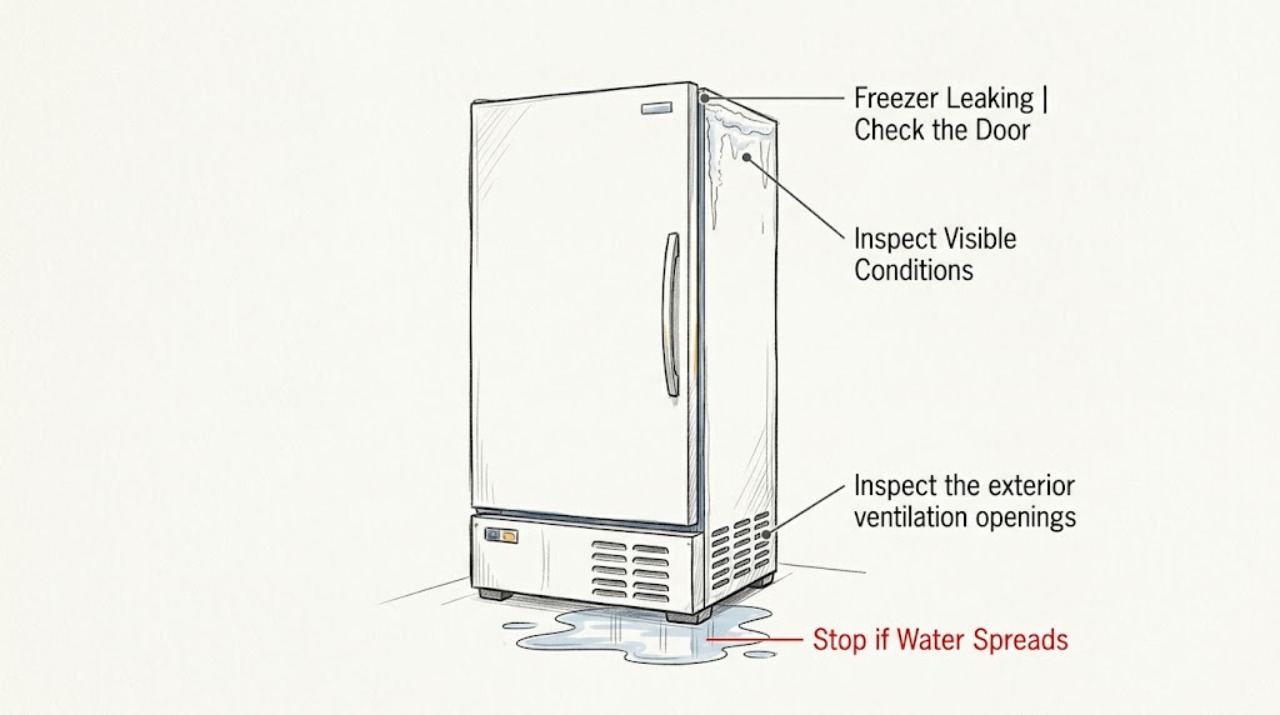
For an Insignia freezer that appears to be leaking, first identify whether the liquid is water, melted ice, or another substance and whether it is inside the cabinet, at the door, or on the floor. Protect the food and floor, then check that the door closes without an obstruction, the freezer is level, and the seal has no visible gap. Inspect only the user-accessible area for excessive frost, blocked ventilation openings, or a defrost or sensor alert described by the exact model guide. A small amount of moisture may follow condensation or defrost conditions, but a continuing puddle, liquid from the cabinet or electrical area, loss of cooling, damaged seal, smoke, or hot electrical smell is a stop condition. Keep the freezer powered only when it is safe and arrange qualified service for an unresolved leak.
Work through in order
Diagnostic checks
Use only checks that match the exact appliance or system and its official guide.
-
Check 1
Place absorbent material under the wet area and trace the highest or first wet point without tipping or moving the freezer. Note whether the liquid starts inside the compartment, at the door edge, from the underside, or near the rear power area; do not touch an unknown liquid or wet electrical connection.
Expected result: The liquid is clear water at the door or base, appears after frost or temperature changes, or is oily, discolored, persistent, or near an electrical area.
Next step: For a persistent, oily, contaminated, or electrical-area leak, stop using the freezer and arrange service. For clear water away from electricity, continue with the door, frost, and leveling checks.
Why this matters
Why: Location and character separate a possible moisture or frost event from a cabinet, sealed-system, contamination, or electrical hazard that cannot be diagnosed by wiping the floor.
-
Check 2
With the freezer stable, inspect the door or lid perimeter for food packages, ice, or a gasket section preventing full closure. Close it normally and look for a continuous seal; do not force the lid, peel out the gasket, or use a tool to chip ice.
Expected result: The door is obstructed, does not sit squarely, the gasket has a visible gap or tear, or it closes evenly with no visible gap.
Next step: Remove only a safe packaging obstruction and confirm the door closes. If the gasket is damaged, the door remains out of alignment, or moisture returns, keep the freezer from prolonged operation and request service.
Why this matters
Why: A blocked or unsealed opening admits warmer air and can contribute to frost and moisture; a good visible seal makes a different source more likely.
-
Check 3
Inspect the exterior ventilation openings and the visible interior for heavy frost buildup, while keeping food and shelves in place. Do not scrape ice with a sharp object, pour hot water into the cabinet, or remove an interior panel.
Expected result: Ventilation is blocked or dusty, frost is excessive or melting, or the accessible area is clear while the freezer is losing temperature and leaking.
Next step: Clear only external obstructions as the model guide permits. If the manual specifies a complete defrost, follow it only after protecting food and confirming that no electrical or food-safety hazard exists; otherwise request service.
Why this matters
Why: Blocked airflow and heavy frost are official Insignia-listed temperature conditions and can change where moisture appears; a clear accessible area does not rule out an internal defrost or drain fault.
-
Check 4
Check the freezer's display or indicator for a high-temperature, out-of-range, defrost-sensor, or open-door alert, and confirm the appliance is on a stable, level surface. Do not change concealed wiring or repeatedly reset an alert without recording it.
Expected result: An alert is present, the freezer is not level or the door cannot close properly, or the controls show normal status while the leak continues.
Next step: Follow only the alert explanation and leveling instructions for the exact model. If the alert returns, cooling is weak, or the leak continues despite a level, sealed cabinet, arrange qualified service.
Why this matters
Why: An alert or leveling problem can explain temperature and seal changes; normal status with a continuing puddle points toward a model-specific water path or physical leak.
-
Check 5
Record the model number, freezer or convertible mode, time and location of the leak, temperature or alert state, frost pattern, door-seal condition, and whether the leak returns after the unit is dried. Move food to safe cold storage before extended troubleshooting.
Expected result: The leak repeats, food is warming, the cabinet or liner is damaged, or liquid reaches the plug, outlet, controls, or compressor area.
Next step: Stop using the freezer when unsafe or when the leak persists, isolate power only when safe, and provide the record to qualified Insignia service. Do not open sealed refrigeration tubing or cabinet panels.
Why this matters
Why: A repeatable leak or food-temperature loss needs model-specific service; liquid near electricity or a damaged cabinet is an immediate safety boundary.
Use your observations
Decision map
Find the observation that best matches what you see, then follow the next safe action.
-
PATH 01Next step
What you see
The liquid is a small amount of clear moisture, the door seals fully, cooling is normal, and no electrical area is wet.
Do this next
Dry the area, monitor the first wet point and temperature, and follow the exact model guide for frost and defrost care. Escalate if it returns or grows.
Why this path and its safety boundary
Why it matters: A temporary condensation or frost-related moisture event remains possible, but the source is not proven.
-
PATH 02Next step
What you see
The door or lid is blocked, visibly unsealed, damaged, or prevented from closing by an unlevel cabinet.
Do this next
Remove only a safe obstruction and restore stable closure or leveling according to the model guide. Request service for a damaged gasket, hinge, or cabinet.
Why this path and its safety boundary
Why it matters: Warm-air entry and frost or moisture buildup are plausible contributors.
-
PATH 03Next step
What you see
Heavy frost, blocked ventilation, a defrost-sensor alert, or a rising temperature accompanies the leak.
Do this next
Protect the food and follow only the exact manual's defrost and alert instructions. Do not chip ice or remove panels; arrange service if the condition returns.
Why this path and its safety boundary
Why it matters: The freezer has a temperature or defrost condition that may be producing meltwater and needs model-specific handling.
-
PATH 04Next step
What you see
The puddle returns with a good seal, level cabinet, clear ventilation, and no user-accessible cause.
Do this next
Stop using the freezer if cooling or food safety is affected and arrange service. Do not drill, scrape, or open sealed refrigeration components.
Why this path and its safety boundary
Why it matters: An internal defrost path, drain, cabinet, or sealed-system issue requires qualified diagnosis.
-
PATH 05Next step
What you see
Liquid reaches the outlet, plug, controls, compressor area, or damaged cabinet, or there is smoke, a burning smell, sparking, or a hot electrical odor.
Do this next
Keep clear, isolate power only if safe, move food to safe cold storage, and obtain qualified service. Do not touch wet electrical connections or continue operating the appliance.
Why this path and its safety boundary
Why it matters: This is an electrical and food-safety stop.
Helpful context
Understand the symptom
Trace the liquid before choosing a repair
A puddle under a freezer does not by itself identify a failed part. Water may be associated with melting frost, moisture entering around a door that is not sealing, or a model-specific defrost path. A clear, odorless liquid at the base is different from oily residue, a liquid near a power connection, or food contamination. Blot a small sample with a clean paper towel and note where the first wet point appears; do not taste it or touch an unknown liquid with bare hands.
Check the door and cabinet conditions
Insignia's upright and chest freezer guidance calls out blocked doors, leveling, door-seal gaps, heavy frost, and blocked or dusty ventilation openings as conditions that can affect temperature control. These checks are external and model-safe when performed with the appliance stable. Do not pry ice from a liner, use a sharp tool, remove sealed panels, or work around wiring to find a drain.
Protect food and electricity
Move food to a safe cold-storage location if the temperature is rising, the door cannot seal, or the freezer is being taken out of service. Keep water away from the plug, outlet, controls, and extension connections. If a leak reaches an electrical area, the cabinet is hot, or there is smoke or a burning smell, stop using the freezer and isolate power only if doing so is safe.
Only after diagnosis
Potential parts
- door gasket or hinge hardware
Consider this category only if inspection confirms a torn gasket, misaligned door, or failed hinge that prevents a continuous seal.
Confirm the complete Insignia model and the manufacturer's fit information before ordering; a puddle alone does not identify a seal part. - defrost sensor or control component
Consider this category only if the exact model shows a defrost-related alert or a qualified diagnosis links repeated frost and meltwater to that control path.
Use model-specific service diagnosis and fitment information; do not open sealed or live electrical areas. - defrost drain or drain-path component
Consider this category only if a qualified inspection finds that recurring meltwater is not reaching the model's intended drain path after safe external checks.
Do not drill or probe the liner. Confirm model-specific access and compatibility through qualified service.
When checks do not resolve it
Need a professional?
Call qualified Insignia appliance service when water returns after the door, level, frost, and ventilation checks; the freezer loses cooling; an alert persists; the gasket, hinge, liner, or cabinet is damaged; or the source is behind a panel or in the sealed refrigeration system. Stop immediately for liquid near electricity, smoke, sparking, a burning smell, a hot cabinet, or food-safety temperature loss.
Common questions
FAQ
Why is my Insignia freezer leaking water?
Trace the first wet point. A blocked or unsealed door, heavy frost, or a defrost-related condition can accompany moisture, but a recurring puddle with good closure needs model-specific service.
Can a bad freezer door seal cause water on the floor?
A door-seal gap admits warmer air and can contribute to frost and moisture buildup. Check for obstructions and a visible gap; do not remove a damaged gasket or force the door.
Should I keep using an Insignia freezer that is leaking?
Only for brief observation when the liquid is clear, away from electricity, cooling is normal, and there is no safety symptom. Stop and arrange service for a recurring leak, warming food, liquid near wiring, smoke, sparking, or a burning smell.
Read the exact guide
Official sources
- Chest Freezer FAQsInsignia · Insignia chest freezer door, frost, ventilation, temperature, and power checks relevant to leakage triage
- Upright Freezer FAQsInsignia · Insignia upright freezer door, level, frost, ventilation, alert, and safe escalation checks
- FAQsInsignia · Insignia freezer support selection and model-specific documentation boundary
Community feedback
Share a repair observation
Share a plain-text repair observation. Accepted observations are published automatically; this page may take a moment to update.