
On this page
Start here
Quick answer
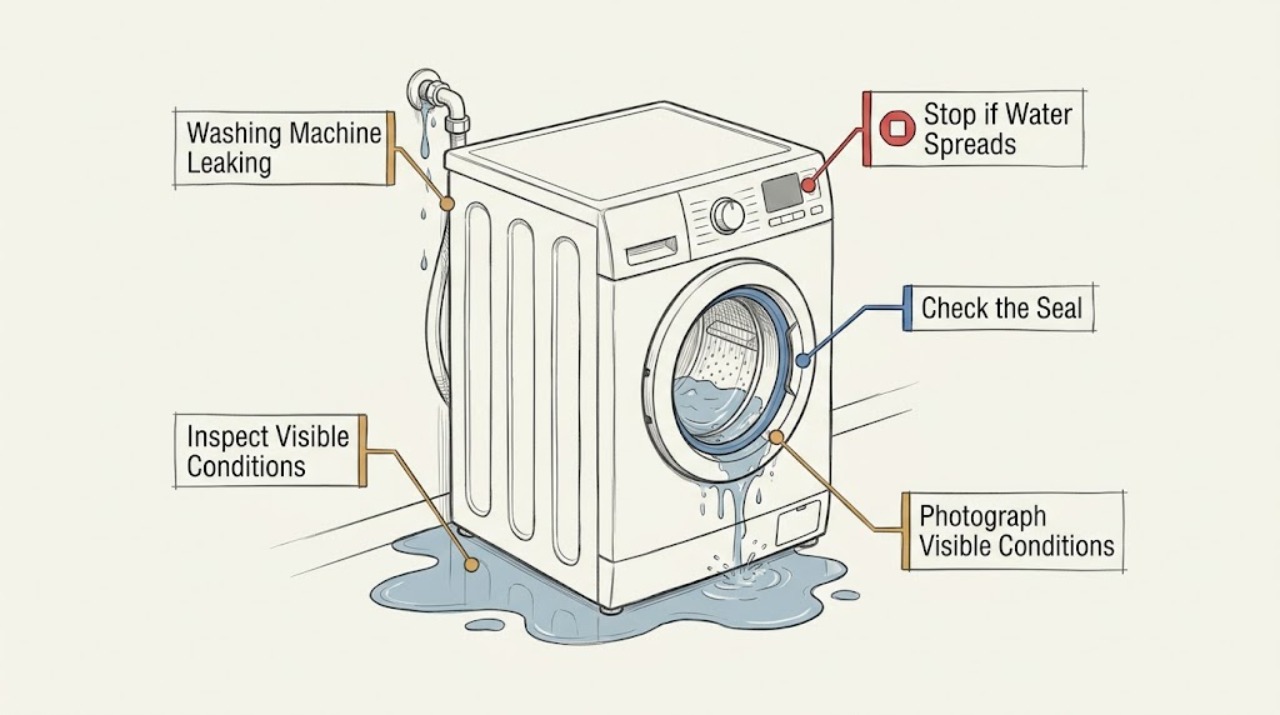
Treat a leaking Miele washing machine as a water-and-electricity problem first. Stop the cycle, close the water inlet if water is still entering, and disconnect power only when it can be done safely without touching wet electrical parts. Do not tilt the washer or perform a live inspection. Record whether water appears at the inlet connection, detergent drawer, door seal, drain hose or standpipe, lower access flap, or underneath the cabinet, and whether it leaks during filling, dispensing, washing, draining, or spinning. Miele says its Waterproof System display means water was detected inside and directs the owner to close the water inlet, disconnect power, and contact Miele Service. A visibly loose external hose or clogged drawer can sometimes be corrected only as the exact Miele instructions describe; a leak from the cabinet base, damaged hose or door seal, standing water near electrics, hot water, smoke, burning odor, arcing, or an inlet that cannot be shut off needs immediate escalation.
Work through in order
Diagnostic checks
Use only checks that match the exact appliance or system and its official guide.
-
Check 1
Stop the current program and observe from a dry, safe position. If water is still entering, close the washer's water inlet faucet; if the Miele display says Waterproof System activated, follow Miele's external emergency sequence by closing the inlet and disconnecting power only when the plug or disconnect can be reached without touching water or wet electrical parts. Do not tilt the machine.
Expected result: The water stops when the inlet is closed, water continues from the cabinet or floor, the drum still contains water, or the Waterproof System message remains.
Next step: Keep the washer out of service. If water is near electrics, the inlet cannot be closed, or the source is inside the cabinet, use qualified appliance or plumbing help rather than restarting the cycle.
Why this matters
Why: Water continuing with the inlet closed points away from a simple supply-hose leak and may be residual water or an internal fault. Miele treats a Waterproof System activation as water detected inside and directs the owner to service.
-
Check 2
Record the exact Miele model, whether it is a freestanding or built-in installation, the display message if any, and when the first water appeared: while filling, during detergent dispensing, through the door during tumbling, while draining, or during spinning. Photograph the dry-to-wet boundary without moving the washer.
Expected result: The first wet point is at the rear inlet, upper drawer, front door, lower access flap, drain hose or standpipe, or underneath the cabinet; the stage may be unknown if the floor was already wet.
Next step: Use the matching branch below and the exact model manual. If the first wet point cannot be seen without moving or tilting the appliance, stop and arrange service.
Why this matters
Why: Miele's leak causes are stage- and location-specific. Water under the washer can result from a drain hose or site drain connection, while an access-flap leak can involve a drain filter; these are different from a door or inlet leak.
-
Check 3
If water is at the rear inlet connection or supply hose, inspect only the visible nut, seal area, and hose for drips, kinks, bulges, cracking, or damage with the inlet closed. Do not loosen a pressurized connection. If the exact Miele instructions permit it, correct only an external loose connection and reopen the water slowly while watching from a dry position.
Expected result: A visible connection drips as soon as the faucet is opened, the hose is damaged or bulged, the seal is displaced, or the inlet connection stays dry while water appears elsewhere.
Next step: Close the inlet again and replace or service a damaged hose through Miele or a qualified plumber. If the inlet is dry, continue to the drawer, door, drain, or under-cabinet branch instead of tightening unrelated parts.
Why this matters
Why: A connection leak can be external and may respond to the model-specific hose and seal procedure. A damaged hose or leak that persists after the documented external correction is not a reason to run a full wash test.
-
Check 4
If water appears at the top front during filling or dispensing, remove and clean the detergent drawer and its siphon only as the exact Miele manual allows; also clean the accessible drawer slot. Check that the drawer is fully seated and that detergent has not formed a blockage. Do not pour water into the machine or continue a cycle while the drawer is leaking.
Expected result: The drawer or siphon is visibly clogged or the leak stops after the drawer is correctly cleaned and seated; alternatively, the drawer is clean but water still escapes from the top or cabinet.
Next step: If the leak persists, keep the water inlet closed and contact Miele Service. Do not remove panels or attempt to repair the internal feed path.
Why this matters
Why: Miele identifies a dirty or clogged drawer and siphon as a cause of drawer overflow. A clean drawer with a continuing leak may indicate an internal feed path or housing fault rather than a cleaning issue.
-
Check 5
If water appears around the door, inspect the visible door glass and sealing ring only when the drum is stationary and the machine is disconnected safely. Look for deposits, trapped fabric, cuts, distortion, or a door that does not seat normally. Wipe deposits only as Miele describes; do not force the door, stretch the seal, or use the washer with damaged glass or rubber.
Expected result: Deposits or a trapped item are visible and the door seats normally after the documented cleaning, or the seal/glass is damaged, the door is misaligned, or the leak returns.
Next step: If the door area is damaged or still leaks, close the inlet, leave the washer off, and arrange Miele Service. Do not run a short test wash to check it.
Why this matters
Why: Miele identifies deposits on the door or sealing ring as a possible external cause, but a damaged seal, glass, or latch needs service and can allow water to reach unsafe areas.
-
Check 6
If water appears at the lower access flap, drain hose, standpipe, or underneath during draining, compare the visible hose routing and connection with the exact Miele manual. Check for a kinked drain hose, a loose standpipe or sink connection, a blocked site drain, or a drain-filter flap that is not closed. A pump filter may be cleaned only on models whose manual provides that user procedure, with the washer off, water cooled, a suitable container ready, and no tilting or live inspection.
Expected result: The drain connection slips or leaks, the site drain backs up, the hose is kinked or damaged, the filter flap is wet, or water emerges from the cabinet base rather than an accessible connection.
Next step: Stop and close the inlet for a persistent or internal leak. Contact a qualified plumber for a blocked site drain and Miele Service for a damaged hose, cabinet-base leak, or model without an explicitly allowed filter procedure.
Why this matters
Why: Miele documents drain-hose routing and site-drain problems for water under the washer, and says a drain filter that is not correctly tightened can leak. Water from the cabinet base or a persistent access-flap leak may indicate an internal fault.
-
Check 7
After the visible source is corrected, perform no more than one model-authorized confirmation. The machine must be dry outside, the inlet connection and access flap must be secure, the drum must be stationary, and the exact manual must permit a supervised check. Stop immediately if water reappears, the Waterproof System activates, the pump behaves abnormally, or any electrical or burning sign occurs.
Expected result: A supervised confirmation stays dry and the machine completes the permitted stage, or any drip, warning, odor, unusual sound, standing water, or electrical symptom returns.
Next step: Close the inlet, leave the washer disconnected when safe, and give Miele Service the model, message, leak location, cycle stage, water temperature, and result of the one confirmation.
Why this matters
Why: A dry confirmation supports an external connection or residue explanation but does not prove an internal component is sound. A returning leak means the underlying condition remains.
Use your observations
Decision map
Find the observation that best matches what you see, then follow the next safe action.
-
PATH 01Next step
What you see
Water is entering, the inlet cannot be shut off, or the leak is close to a socket, cord, or other electrical connection.
Do this next
Do not touch wet electrical parts or keep testing. Leave the area safe, close the supply only if safely reachable, and contact qualified emergency plumbing or appliance help.
-
PATH 02Next step
What you see
Miele displays Waterproof System activated or water is suspected inside the base.
Do this next
Close the water inlet, disconnect power only without contacting water, do not tilt or open the cabinet, and contact Miele Service to remove the water and correct the leak.
-
PATH 03Next step
What you see
The first wet point is the visible inlet hose or its shut-off connection.
Do this next
With the inlet closed, follow the exact Miele external hose and seal guidance. Reopen water slowly only for the single permitted observation; stop for a damaged hose or a continuing drip.
-
PATH 04Next step
What you see
Water rises from the detergent drawer during filling or dispensing.
Do this next
Clean the drawer, siphon, and accessible slot as Miele describes and reseat the drawer. If water still escapes, keep the inlet closed and request service.
-
PATH 05Next step
What you see
Water appears at the door.
Do this next
Inspect only the stationary, safe external door area for deposits or trapped fabric. Do not use the washer if the glass, seal, or latch is damaged or if the leak returns after the documented cleaning.
-
PATH 06Next step
What you see
Water appears during draining at the access flap, drain hose, standpipe, or underneath.
Do this next
Check visible routing and connections against the exact manual. A pump-filter procedure is conditional on model instructions and cool, controlled drainage; a cabinet-base leak, damaged hose, blocked site drain, or repeat leak needs qualified service.
Helpful context
Understand the symptom
A puddle is not enough to identify the failed part. Water can travel along the cabinet or floor, so note the first wet point and the cycle stage rather than replacing a seal by guesswork. Miele's official support separates leaks at the drawer, door, inlet connection, drain path, access flap, and underneath the washer.
Keep the washer level and stationary. Do not pull a built-in machine forward, tilt it, remove cabinet panels, reach into a moving drum, or check wiring while power is connected. If water is close to a socket or electrical connection, treat the area as unsafe until a qualified person makes it safe.
Common questions
FAQ
What should I do first when my Miele washing machine is leaking?
Stop the cycle, close the water inlet if water is entering, and isolate power only when it can be done without touching wet electrical parts. Do not tilt the washer. Locate the first wet point from a safe position and follow the exact model path.
Can I use a Miele washer after the Waterproof System activates?
Do not resume normal washing while the system is active. Miele says water was detected inside, the inlet should be closed, power disconnected, and Miele Service contacted to remove the water and correct the leak.
Can I clean the Miele drain filter when the washer is leaking?
Only if the exact model manual provides that user procedure and the washer is off, the drum is stationary, the water is cool enough to handle, and drainage can be controlled. Otherwise leave the access flap closed and request service; never perform a live or tilted inspection.
Read the exact guide
Official sources
- Miele Washer | Water is leaking out under the washing machine/washer-dryer.Miele USA · Miele washer and washer-dryer water under the appliance
- Miele Washer | The screwed connection where the water-inlet hose connects to the water-connection shut-off valve is leaking.Miele USA · Miele washer external water-inlet hose connection
- Miele Washer | Waterproof system activated appears in the washing machine display.Miele USA · Miele washer Waterproof System activation and leak response
- Miele Washer | The bottom-left access flap on the front of the washing machine/washer-dryer is leaking.Miele USA · Miele washer drain-pump access flap leak guidance
- Troubleshooting for Leaks problem with Miele WasherMiele USA · Miele washer leak categories
- Miele Washer | Water drainage fault appears in the washing machine display. The drain is restricted.Miele USA · Miele washer drainage hose, delivery height, pump, and filter guidance
- Miele Washer | The detergent drawer of the washing machine/washer-dryer is leaking. Water is used to flush powdered and liquid products through during dispensing.Miele USA · Miele washer and washer-dryer detergent drawer leak guidance
- CPSC Guide to Home Wiring HazardsU.S. Consumer Product Safety Commission · Household electrical hazard recognition and qualified-service boundaries
- Miele protection system against waters leaks | LaundryMiele USA · Miele laundry water-protection features and common leak locations
- Operating and Installation InstructionsMiele USA · Miele WWH 860 washing machine operating, installation, water protection, and safety instructions
Community feedback
Share a repair observation
Share a plain-text repair observation. Accepted observations are published automatically; this page may take a moment to update.